
If you’ve ever finished an IB study session and thought, “I did so much… but I’m not sure I grew,” you’re not alone.
Most students can feel themselves improving right before an exam: you write faster, you spot command terms more quickly, you panic a little less. But the deeper stuff, confidence, resilience, judgment, and self-awareness, is harder to see. It’s there, quietly steering your decisions. And in the IB, that “quiet steering” is basically the whole point of the Learner Profile.
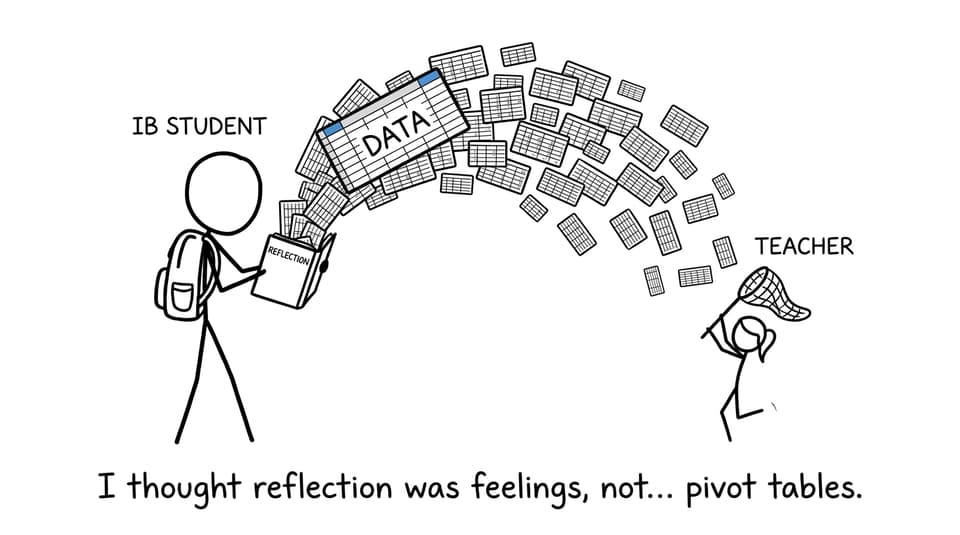
Here’s the twist: reflection isn’t only a diary entry. Reflection can be data. And when reflection becomes data, you can use it like you use marks: to spot patterns, make changes, and improve on purpose.
This post shows you how to harness reflection data to support IB Learner Profile development while you prepare for exams, with a simple weekly routine and tools inside RevisionDojo that make it easier to stay consistent.
The quick checklist: turning reflection into IB growth
If you want the fast version, use this 10-minute loop after each revision block:
-
Choose one Learner Profile trait to focus on today (e.g., reflective, risk-taker, communicator).
-
Write a 4-sentence reflection (template below).
-
Tag it with the trait and the topic you revised.
-
Pull one actionable next step (not a motivational quote).
-
Retest that next step in your next Questionbank session.
Do that consistently and you’ll build reflection data that actually improves how you revise for IB exams.
What “reflection data” means for an IB student
Reflection data is simply your reflections recorded in a way that can be reviewed later: tagged, searchable, comparable, and connected to outcomes.
In the IB, you’re surrounded by information: marks, predicted grades, teacher comments, rubric criteria. Reflection data adds something different: your own internal feedback. Not vibes, evidence.
Think of it like this:
-
A grade tells you what happened.
-
A reflection tells you why it happened.
-
Reflection data tells you what keeps happening, and what to do next.
If you want to build the Learner Profile as you revise, you’ll need that “what keeps happening” layer.
For a deeper understanding of what “reflective” really looks like in practice, see What Is a Reflective IB Learner Profile?.
How reflection data supports IB Learner Profile development (without extra work)
The Learner Profile can feel abstract until you attach it to a real moment:
-
You changed your approach after feedback (reflective).
-
You attempted a harder question set instead of re-reading notes (risk-taker).
-
You explained a topic to a friend using clean language (communicator).
When you capture those moments as reflection data, you create a record of how you learn, not just what you know.
That matters for exams because IB performance is partly a skill game: timing, clarity, command terms, and decision-making under pressure.
Reflection data helps you improve those skills deliberately, especially when paired with:
-
The RevisionDojo Questionbank (to generate mistakes worth reflecting on)
-
IB Flashcards with spaced repetition (to lock in fixes)
-
AI feedback loops (so your reflection becomes action)
A simple IB reflection template you can reuse all year
Use this after any timed practice set, mock, or topic drill:
-
What happened? (one sentence, factual)
-
What caused it? (one sentence, honest)
-
Which IB Learner Profile trait showed up? (choose one)
-
What will I do next time? (one sentence, specific)
Example:
-
I lost marks on Biology data questions even though I knew the content.
-
I rushed and didn’t label my diagram clearly.
-
Communicator.
-
Next time I’ll write labels first, then draw, then check against the command term.
That’s reflection data: short, repeatable, and useful.
If you want prompt ideas that don’t lead to fluffy answers, use Creating Actionable Reflection Prompts for IB Students.
The secret advantage: reflection data connects study effort to exam results
A lot of IB stress comes from invisible progress. You revise for hours, but the next test doesn’t move much. It feels personal, like you’re “not improving.”
Reflection data makes progress visible in a calmer way. Over a few weeks, you start noticing patterns like:
-
You do worse when you switch topics too fast.
-
Your timing collapses on long responses.
-
Your accuracy drops when you study late.
-
Your confidence rises after you do mixed-topic practice.
That’s not just self-knowledge. That’s strategy.
RevisionDojo is built for these loops: Study Notes to understand, Flashcards to retain, Questionbank to apply, and AI Chat plus Grading tools to tighten your answers. Then your reflections tell you which lever to pull next.
If you want a broader study structure, combine this with How to Study for IB Exams: Step-by-Step Guide.
How to “tag” reflection data to the IB Learner Profile (fast)
You don’t need a complicated tracker. You need consistency.
Try this weekly system:
Pick two Learner Profile traits for the week
Choose one performance trait and one wellbeing trait, for example:
-
Thinker + Balanced
-
Communicator + Reflective
-
Risk-taker + Principled
Attach each trait to a revision behavior
This is where it becomes exam-relevant:
-
Thinker: I justify steps and evaluate alternatives, not just compute.
-
Communicator: I write answers like an examiner is tired and needs clarity.
-
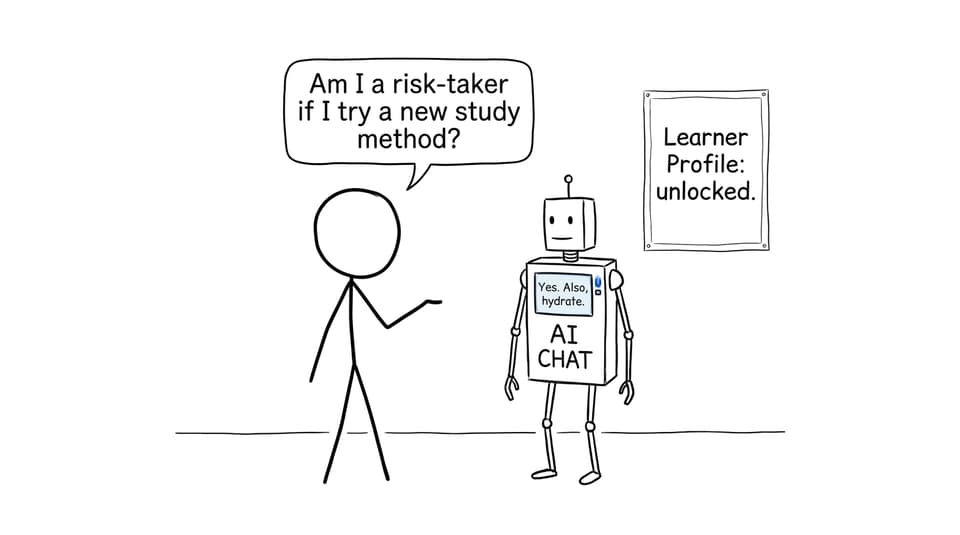
Risk-taker: I attempt harder Questionbank sets and learn from errors.
-
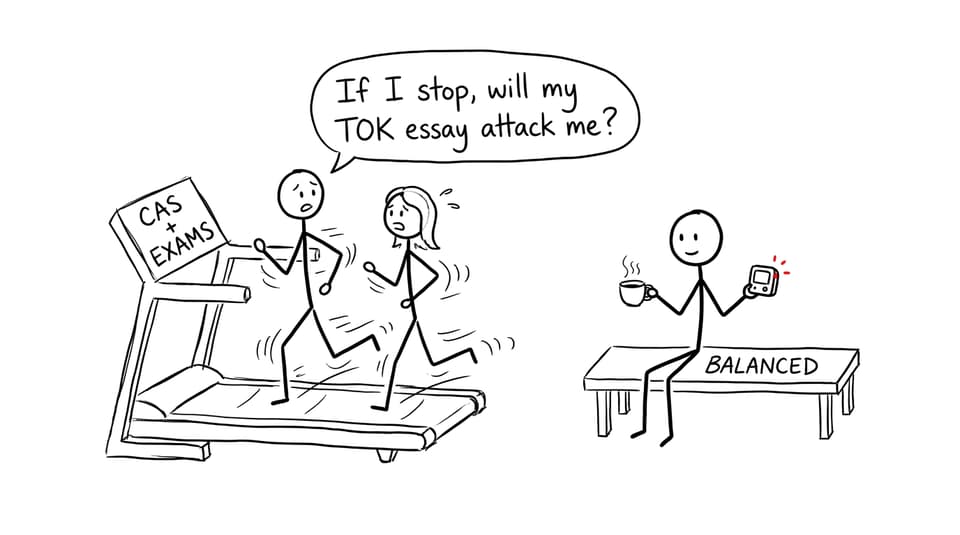
Balanced: I stop studying at a pre-set time and sleep.
Track one data point per session
Keep it simple: one sentence plus a tag.
Over time, you get a map of how you’re becoming an IB learner, not just how you’re scoring.
For perspective on how the Learner Profile shows up in grading and assessment, read How Is the IB Learner Profile Reflected in Assessments?.
Turning reflection into points: using RevisionDojo features as a feedback engine
Reflection data is only powerful when it leads to action. Here’s a clean workflow many IB students can run inside RevisionDojo:
-
Questionbank: do a focused set, then a mixed set.
-
AI Chat: ask why your answer missed marks, in mark-scheme language.
-
Grading tools: get structured feedback on written responses.
-
Flashcards: create 3 “error rule” cards from your mistakes.
-
Study Notes: re-read only the section that fixes the error.
-
Mock Exams and Predicted Papers: practice under pressure, then reflect on pacing.
-
Coursework Library: connect reflection habits to IA/EE/TOK style writing and analysis.
-
Tutors: use your reflection data to ask better questions, faster.
If burnout is creeping in, pair reflection with a lighter structure from How to Study for IB Exams Without Burning Out or the very specific problem in IB: I Study All Day but Remember Nothing.
Closing: make IB reflection data your unfair advantage
The IB rewards students who can learn like scientists: observe, test, adjust, repeat. Reflection data is how you do that with your own brain.
Start small: one trait, four sentences, one next step. Then use RevisionDojo to turn that next step into practice with Study Notes, Flashcards, the Questionbank, AI Chat, Grading tools, Predicted Papers, Mock Exams, the Coursework Library, and Tutors.
When exam season gets loud, reflection data stays calm. It tells you what to do next.
If you want the all-in-one place to run this system, explore RevisionDojo for IB and build a revision loop that develops the Learner Profile while raising your scores.