
The quiet moment when you realize what the IB is really scoring
Most IB students meet the Learner Profile as a poster on a classroom wall. It feels aspirational, maybe even a little abstract. Then you sit down to write an IA conclusion, or you try to hit an “evaluate” question under time pressure, and you notice something: the Learner Profile isn’t decoration. In IB assessments, it shows up as behaviors that earn marks.
That’s the useful shift for exam season. You don’t need to “sound like” a Learner Profile trait. You need to produce evidence of it, in the exact places rubrics look for it.
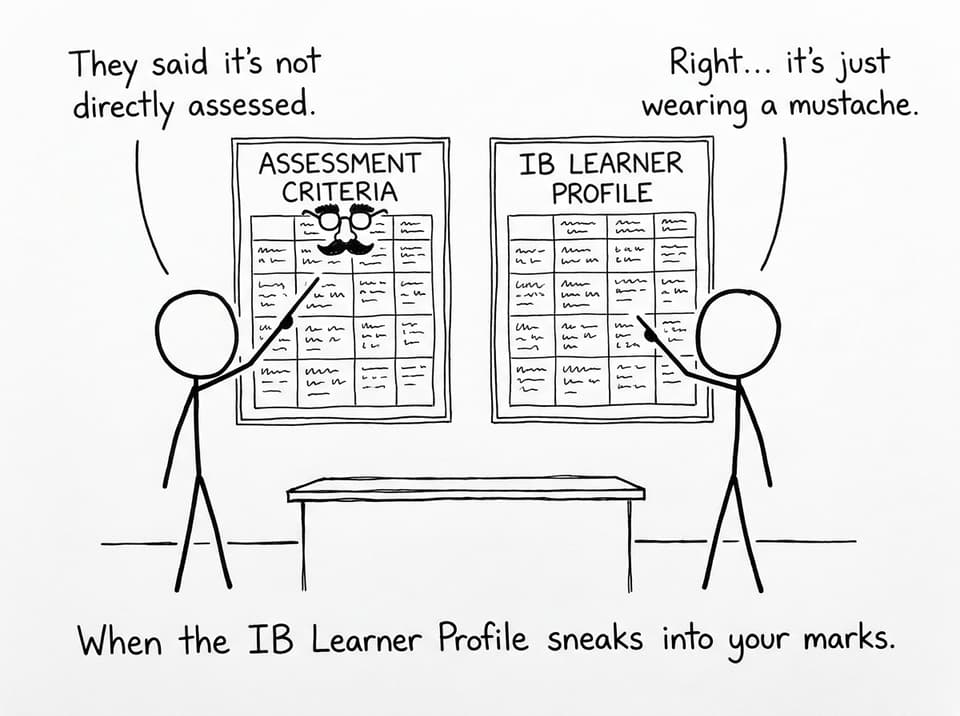
Quick checklist: where the IB Learner Profile hides in marks
Use this checklist before any major IB assessment or revision session:
-
Inquirer: clear research question, purposeful method, curious “why” follow-ups
-
Thinker: analysis that goes beyond description; reasons, trade-offs, limitations
-
Communicator: structure that makes your argument easy to mark
-
Principled: honest evaluation, accurate citations, no invented evidence
-
Reflective: explicit what-worked/what-didn’t and what you’d change next
When you revise with tools like RevisionDojo’s Questionbank and Grading tools, you’re basically training those traits in a measurable way.
How the IB Learner Profile shows up in IAs
In an IB Internal Assessment, the Learner Profile is most visible in the logic of your decisions. Examiners reward students who investigate with intention.
-
Inquirers earn credit when the research question is focused and the method actually answers it. If you’re stuck here, use guidance like How to Write a Strong IA Research Question.
-
Thinkers show up in analysis: patterns, interpretation, and the “so what?” that connects evidence to the claim.
-
Reflective becomes real in evaluation: limitations that are specific, and improvements that are realistic, not generic.
RevisionDojo helps you make this practical with the IB IA Guides, plus AI Chat for quick “What criterion is this paragraph serving?” checks.
How the IB Learner Profile appears in TOK and the EE
TOK and the Extended Essay are where the IB most clearly rewards intellectual character.
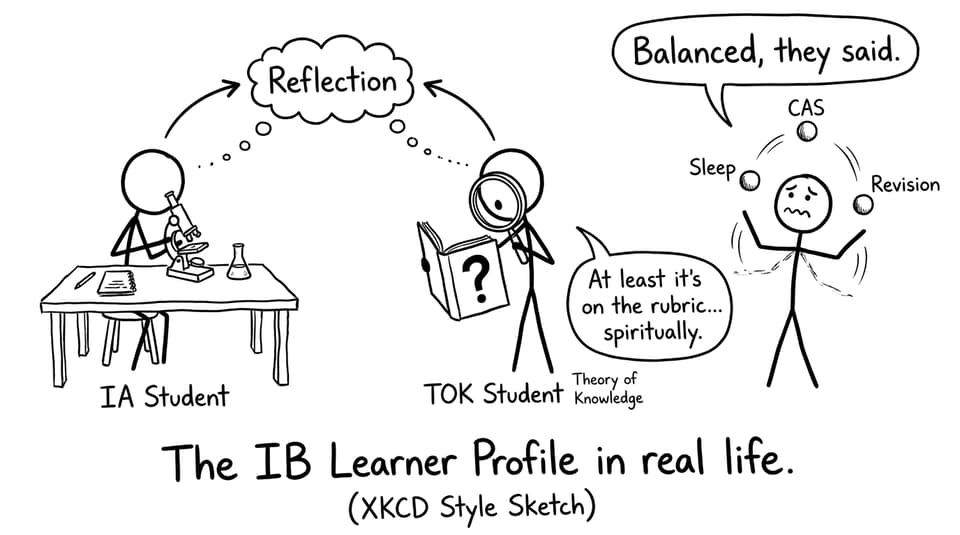
In TOK, being a Thinker and Open-minded isn’t a vibe; it’s the presence of counterclaims, perspective shifts, and careful language about certainty. If you’re preparing, start with IB Theory of Knowledge Resources and sharpen question quality using Strong TOK Knowledge Questions: Examples + Tips.
In the EE, the Learner Profile becomes visible in ethical research choices (Principled), sustained argument (Communicator), and honest evaluation (Reflective). For structure support, use IB Extended Essay Guides and planning help like How to Structure an Extended Essay (EE).
How the IB Learner Profile is rewarded in exams
Exams feel like speed tests, but the IB is usually scoring decision-making.
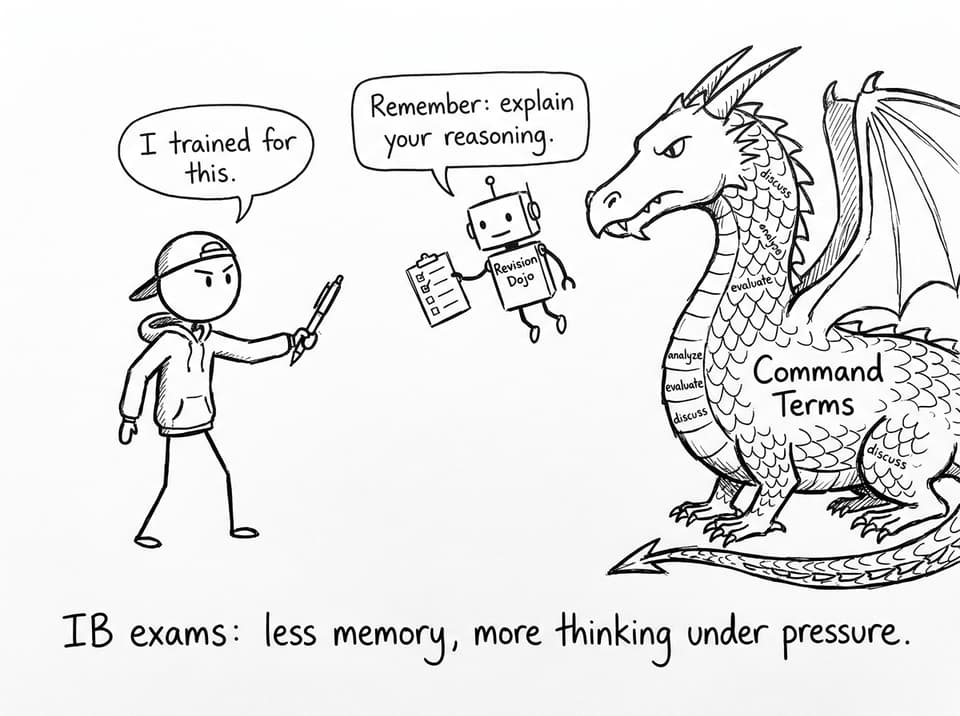
Command terms like analyze, evaluate, and discuss are basically Learner Profile traits under pressure: thinking clearly, communicating precisely, and reflecting on limitations. That’s why timed practice matters. RevisionDojo’s Mock Exams, Predicted Papers, and Study Notes help you train accuracy first, then speed, then stamina.
For a practical exam-season rhythm, see IB: The Last 2 Weeks Before Exams (What Matters).
How RevisionDojo turns Learner Profile traits into exam results
The hardest part of the IB is that you can work a lot and still feel unsure. RevisionDojo reduces that uncertainty by turning traits into repeatable routines:
-
Questionbank practice makes you a sharper Thinker (you learn patterns, not just content).
-
Flashcards build Knowledgeable consistency with spaced repetition.
-
AI Chat helps you stay Reflective by converting mistakes into next steps.
-
Grading tools and the Coursework Library show you what criteria-level evidence looks like.
-
Tutors add human strategy when you need it.
You can also zoom out and connect planning to traits with Aligning Curriculum Mapping with the IB Learner Profile.
Bringing it home: use the IB Learner Profile as a marking strategy
The Learner Profile is the IB telling you what kind of thinking it trusts. If you treat it as a checklist for “how marks are earned” in IAs, TOK, the EE, and exams, it becomes calming rather than abstract.
Build one weekly loop: learn with Study Notes, drill with the Questionbank, lock recall with Flashcards, and refine with AI Chat plus Grading tools. Then, when you walk into your next IB assessment, you’re not hoping you have the right traits. You’ve practiced them.