

If you have ever opened your MYP portfolio folder and felt that quiet panic -- the kind that says “I did a lot of work, but none of it looks like a story” -- you are not alone.
The best MYP portfolios do not win by being bigger. They win by being truer. They show learning the way it actually happens: messy drafts, wrong turns, small breakthroughs, and the moment you realize you can explain something clearly under pressure. And if you are an IB student preparing for exams, that skill -- turning learning into evidence -- is one of the most transferable advantages you can build.
This guide shares outstanding MYP student portfolio ideas you can borrow today: what to include, how to reflect, and how to make growth visible without turning your portfolio into a scrapbook.
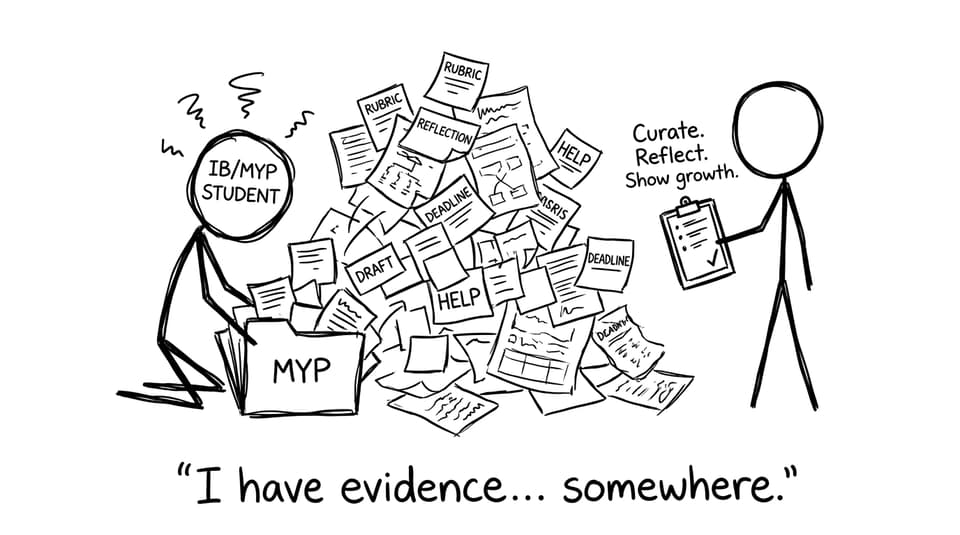
Quick checklist for an outstanding MYP portfolio
Use this as your “minimum viable excellence” list for any MYP portfolio:
-
A balanced spread of artifacts across subject groups (and years, if relevant)
-
Each artifact tagged to at least one ATL skill and one Learner Profile trait
-
Reflections that explain why it matters (not just what you did)
-
At least one example showing feedback and improvement over time
-
Clear navigation: titles, dates, short context blurbs, and consistent formatting
If you want a reference point for what “outstanding” looks like, start with examples of outstanding MYP student portfolios and then build your own voice from there.
What makes an MYP portfolio outstanding (not just complete)
An outstanding MYP portfolio usually has three invisible qualities that become obvious the moment someone reads it.
Purposeful curation
Curation is a mature skill: it means choosing the pieces that prove learning, not the pieces that simply happened. In MYP terms, you are showing conceptual understanding and skills development, not compiling every worksheet you have ever touched.
A helpful rule: for each subject, pick artifacts that show (1) a strong outcome, (2) a struggle, and (3) an improvement.
Reflection with teeth
MYP reflection is not a mood report. It is analysis. It names what changed in your thinking, which ATL skills carried you, and what you would do differently next time.
If you need reflection structures that feel natural (and not forced), borrow ideas from encouraging reflection in MYP assessments.
Visible growth over time
Growth becomes visible when you include version history: first draft to final, prototype to improved model, early quiz errors to corrected method, feedback to revision.
RevisionDojo is built around that same improvement loop: Study Notes for clarity, Flashcards for recall, Questionbank for practice, AI Chat for fast fixes, and Grading tools for rubric-aligned feedback. That is not just “exam prep” -- it is portfolio evidence, too.
Outstanding MYP student portfolio ideas (with themes you can steal)
Below are four portfolio “archetypes” that consistently stand out in the MYP. You do not have to copy them exactly. The point is to pick a theme that helps your work feel connected.
The reflective researcher
This MYP portfolio idea works well if your best strength is inquiry.
What to include
-
A research question that evolves (show your early version and final version)
-
Credibility checks on sources (brief annotations)
-
A data display (graph, table screenshot, or summarized findings)
-
One paragraph titled “What I believed at the start vs what I believe now”
How it stands out
It shows thinking skills and research skills in action. It also feels like exam preparation because exams reward the same thing: evidence-based reasoning.
If your research is tied to the Community Project or Personal Project, use writing an outstanding MYP Personal Project report as a structure guide, and deepen your process with the MYP Personal Project ultimate student guide.
The creative communicator
This is one of the most reliable outstanding MYP portfolio ideas because it proves you can adapt to audience and purpose.
What to include
-
One written piece (essay, feature article, commentary)
-
One oral or multimedia piece (recording, slides, storyboard)
-
One “translation” artifact: the same idea explained in two formats (for example: a paragraph and an infographic)
-
A reflection that explicitly names choices: tone, structure, evidence, and impact
How it stands out
It is easy to see the Learner Profile traits (communicator, open-minded, reflective) and the ATL communication skills. It also helps with exam writing because you practice clarity under constraints.
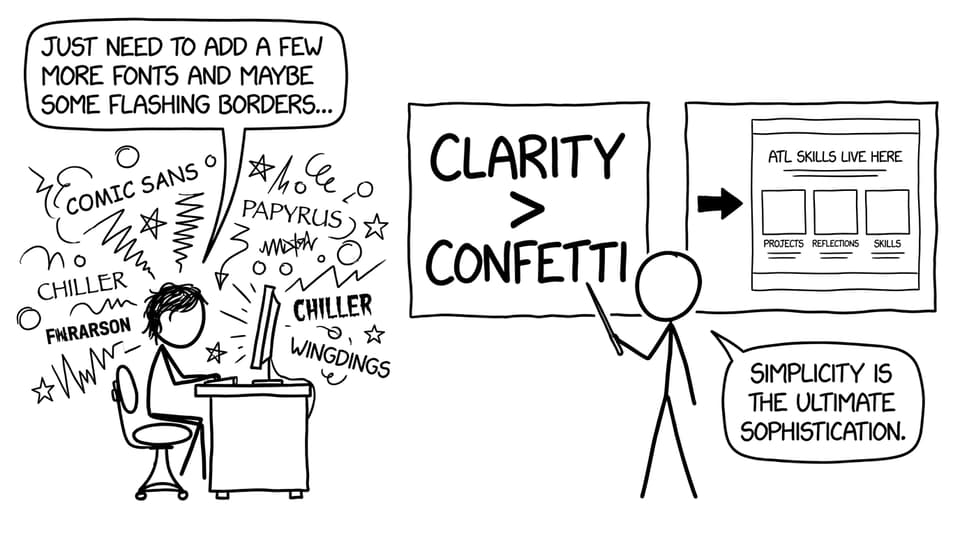
To keep the layout clean, remember: design should support meaning, not compete with it.
The service leader (Service as Action that feels real)
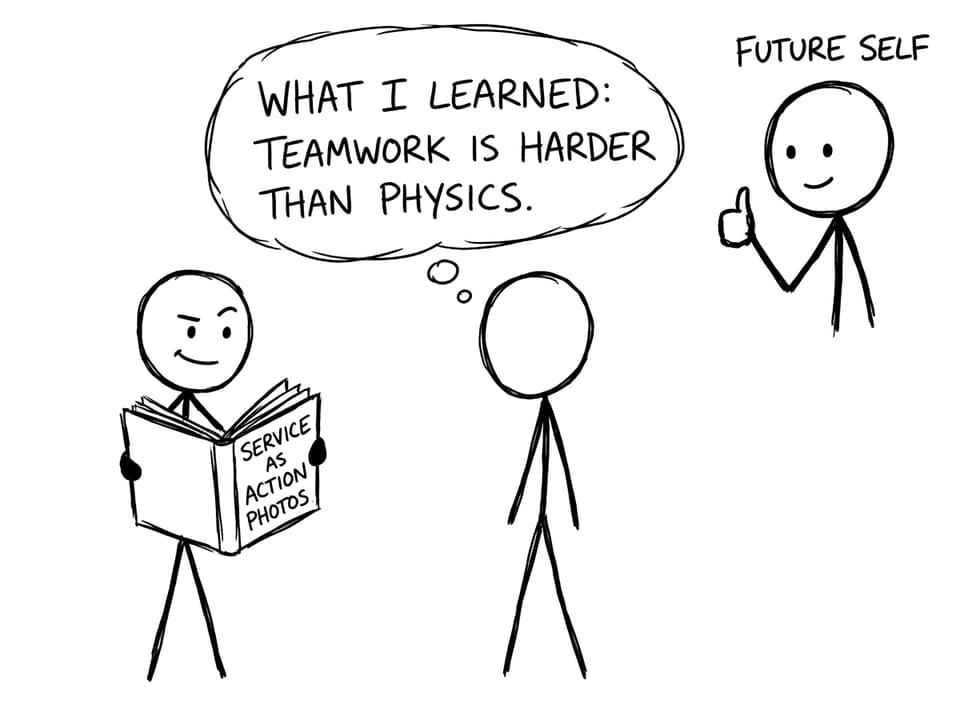
Service can look vague in a portfolio unless you document it like a project: inquiry, action, reflection.
What to include
-
The need you identified and how you verified it (survey, interview notes, observation)
-
Evidence of planning (timeline, roles, risk management)
-
Evidence of impact (photos, participation numbers, feedback quotes)
-
A final reflection that answers: “What changed in me?” and “What changed around me?”
How it stands out
It connects learning to the world outside school -- which is a core MYP promise.
If you want a clear documentation model, use how to document community engagement in MYP portfolio.
The interdisciplinary thinker
Interdisciplinary work is where an MYP portfolio can quietly become impressive, because it proves transfer.
What to include
-
A shared inquiry question across two subjects
-
A division of roles and collaboration evidence (meeting notes, shared planning doc screenshots)
-
Two mini-reflections: one from each subject lens
-
One synthesis reflection: “What I could not have done with only one subject”
How it stands out
It shows conceptual connections and higher-order thinking. If you are unsure how to name the skill growth precisely, use linking ATL skills to conceptual understanding in the MYP as a vocabulary guide.
How to write MYP reflections that feel specific (not generic)
A strong MYP portfolio reflection can be short. It just has to be anchored.
Try this 4-sentence structure:
-
Context: What was the task and what was the goal?
-
Strategy: Which ATL skills did you use, and where?
-
Evidence: What is one concrete example of improvement or challenge?
-
Next step: What would you do differently next time, and why?
If you want to make this even sharper, use RevisionDojo’s AI Chat to turn vague reflections into criteria-aligned language, then store your best phrasing as Flashcards so you can reuse the vocabulary across subjects.
Closing: make your MYP portfolio a story you would reread
An outstanding MYP portfolio is not a trophy case. It is a narrative of how you became the kind of student who can learn, adapt, and explain. That is why the best MYP portfolios are calm and precise: curated artifacts, honest reflection, and visible growth.
If you want to build that kind of portfolio while also preparing for exams, use RevisionDojo as your structure: drill skills with the Questionbank, patch gaps with Study Notes, keep language sharp with Flashcards, get unstuck with AI Chat, improve written work with Grading tools, and train realism with Mock Exams and Predicted Papers. Then bring the best evidence back into your MYP portfolio, and let your work tell the story for you.
Start here: Middle Years Programme (MYP) resources on RevisionDojo and build a portfolio that proves who you are becoming.