

If you have ever watched a confident student freeze when a teacher says, “Link it to the criteria,” you have seen the MYP in its natural habitat.
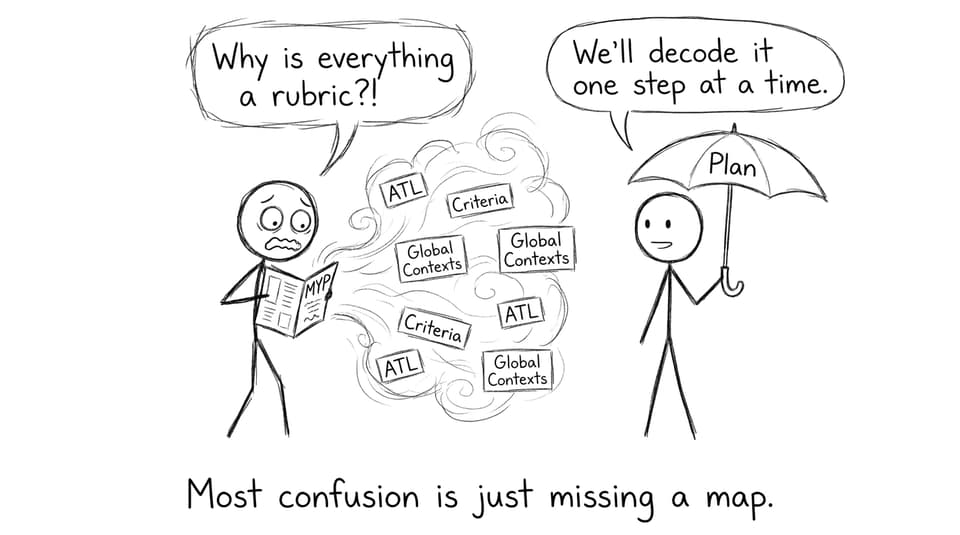
The MYP (IB Middle Years Programme) often sounds like a neat label on a school website. But in real life it can feel like a new language: criteria, command terms, global contexts, reflection. The good news is that once you understand what the MYP is trying to train, studying gets simpler, not harder. And if you are an IB student preparing for exams, the MYP is quietly building the exact habits that later decide your marks.
What is the MYP (in plain English)?
The MYP is the International Baccalaureate’s Middle Years Programme for students aged 11 to 16 (typically five years). Some schools offer it as the bridge into the Diploma Programme, while others run it as a complete secondary framework.
At its core, the MYP is designed to make school feel less like collecting facts and more like learning how to think:
-
Concepts over memorisation: you learn the “why” behind the content.
-
Skills over short-term performance: you practice explaining, analysing, researching, creating.
-
Transfer over repetition: you apply ideas in unfamiliar contexts, not just familiar worksheets.
If you want the official RevisionDojo starting point for the programme, begin at the MYP hub, then branch into the subject resources you actually take.
Quick MYP overview checklist (save this)
When the MYP feels vague, come back to five questions:
-
What skill is this task testing (not just what topic)?
-
Which criteria are being assessed?
-
What evidence would prove I can do that skill well?
-
What feedback did I get last time, and what changed because of it?
-
What practice will I do this week that looks like the real assessment?
This is also why students improve quickly once they start practicing like exam day. A good place to build that habit is the MYP Revision Guide: Study Tips for Success.
What subjects do MYP students study?
Most MYP schools teach across eight subject groups:
-
Language and Literature
-
Language Acquisition
-
Individuals and Societies
-
Mathematics
-
Sciences
-
Arts
-
Physical and Health Education
-
Design
The point is breadth. The MYP delays early specialisation so you build foundations before you narrow choices later.
If you want a concrete example of how RevisionDojo structures MYP learning by topic and skill, explore a subject hub like MYP Biology Resources or MYP Standard Mathematics Resources. Even a quick skim shows how “study” becomes a loop: notes, practice, feedback, repeat.
How MYP assessment works (and why it feels unfamiliar)
The MYP commonly uses criterion-based assessment. Instead of ranking students against each other, teachers judge your work against descriptors in specific criteria. That changes how you should prepare.
In practice, criterion-based marking means:
-
You can raise results by improving how you answer, not only what you know.
-
Feedback is more useful when you translate it into a repeatable rule.
-
Consistency matters because the MYP wants reliable evidence of skill.
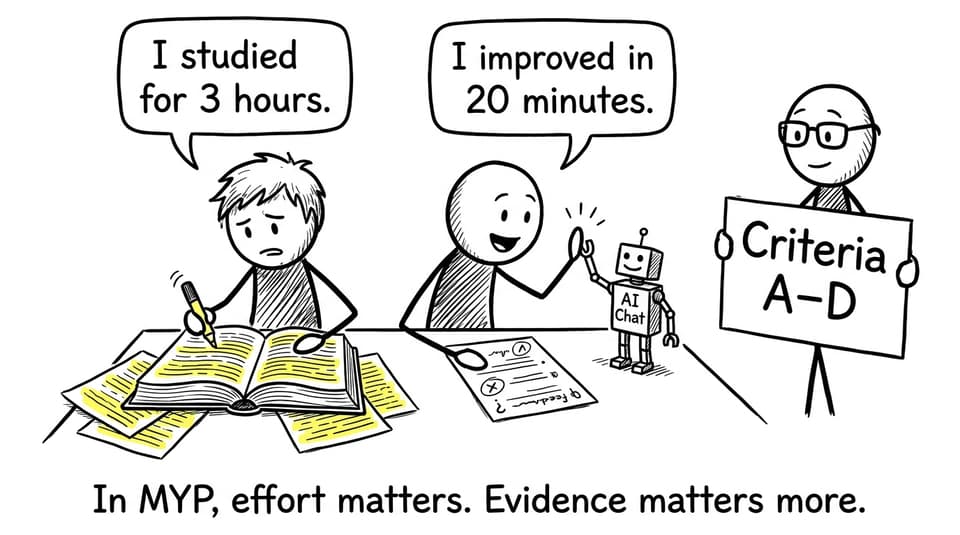
This is the part many students miss: in the MYP, studying is not mainly about “covering content.” It is about producing evidence that matches criteria language.
Why the MYP can feel harder than it “should”
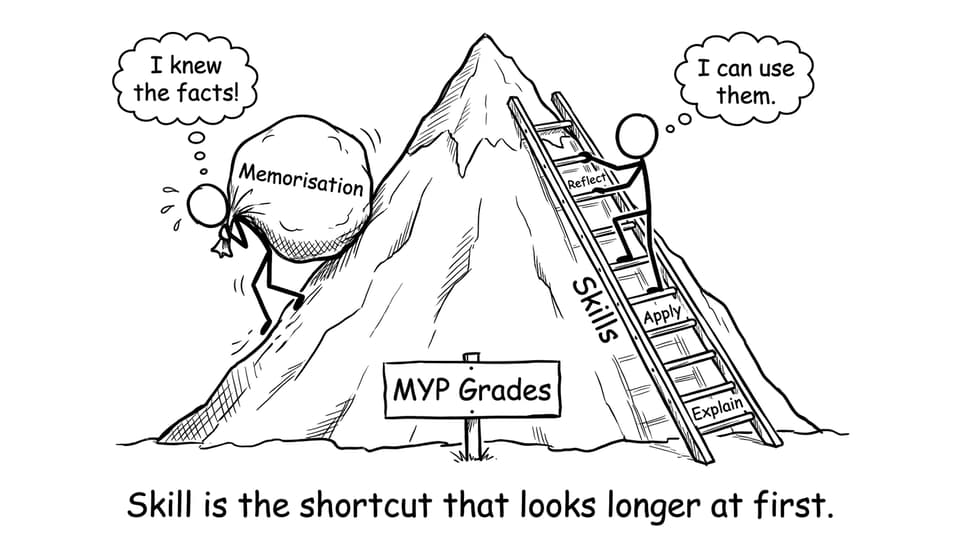
Capable students often struggle early in the MYP for one simple reason: what got you top marks before (fast memorisation, neat notes, last-minute intensity) is no longer the whole game.
The MYP asks for things that do not always have one model answer:
-
explanation and justification
-
real-world application
-
reflection that actually changes your next attempt
That can feel uncomfortable because it exposes a gap between knowing and using. But that gap is exactly where exam performance is built.
How the MYP prepares you for later IB exams
The MYP does not prepare you by rushing advanced content. It prepares you structurally.
By the time you face heavier assessment later, you are already used to:
-
reading tasks through the lens of criteria
-
responding to command terms with the right depth
-
improving through feedback loops instead of hope
-
building independent projects and sustained writing
If you want a broader exam mindset that carries into later years, keep the weekly loop simple and repeatable. Two helpful reads are 10 Proven Study Techniques for IB Students and How to Study for IB Exams: Step-by-Step Guide.
A practical study routine that actually fits the MYP
Here is a calm routine that matches how the MYP rewards you:
Build understanding fast (10-20 minutes)
Use short, syllabus-aligned explanations, then move on. For the wider system that supports this, see RevisionDojo App: The Smarter Way to Prep for IB Exams.
Prove it with practice (25-40 minutes)
Do exam-style questions or task-style prompts. Start with the RevisionDojo Questionbank so your practice stays targeted.
Review like a grader (15-20 minutes)
Use criteria language. Write one sentence: “I lost marks because…” Then write a rule you can reuse.
Lock it in (5-10 minutes daily)
Convert repeated mistakes into Flashcards. If you need a notes workflow that supports memory, Digital IB Study Notes: Access Anywhere, Anytime is a strong framework.
How RevisionDojo helps MYP students (without adding pressure)
The MYP becomes manageable when you stop guessing what “good” looks like and start training it.
RevisionDojo is built around the same loop the MYP demands:
-
Study Notes for quick clarity when concepts are shaky
-
Flashcards for daily active recall
-
Questionbank practice that turns understanding into marks
-
AI Chat for instant explanations when you get stuck mid-session
-
Grading tools to align your writing with criteria expectations
-
Mock Exams and Predicted Papers to rehearse timing and stamina
-
Coursework Library for models that show structure and evidence
-
Tutors when you want human strategy, accountability, and calm
If you want to go deeper into timed preparation habits, How to Study for IB Mocks (Without Burning Out) teaches the same “practice-first” logic that works in the MYP.
Closing thought: what the MYP is really teaching
The MYP is not trying to produce perfect students. It is trying to produce students who can adapt, explain, and improve.
If you are an IB student preparing for exams, take that seriously: the biggest wins come from small loops repeated often. Practice, feedback, adjustment, retest. Start at the MYP hub, choose one subject area, and build a one-week routine using RevisionDojo’s Questionbank, Study Notes, Flashcards, AI Chat, and Grading tools. The MYP rewards the student who shows evidence. RevisionDojo helps you create it.