
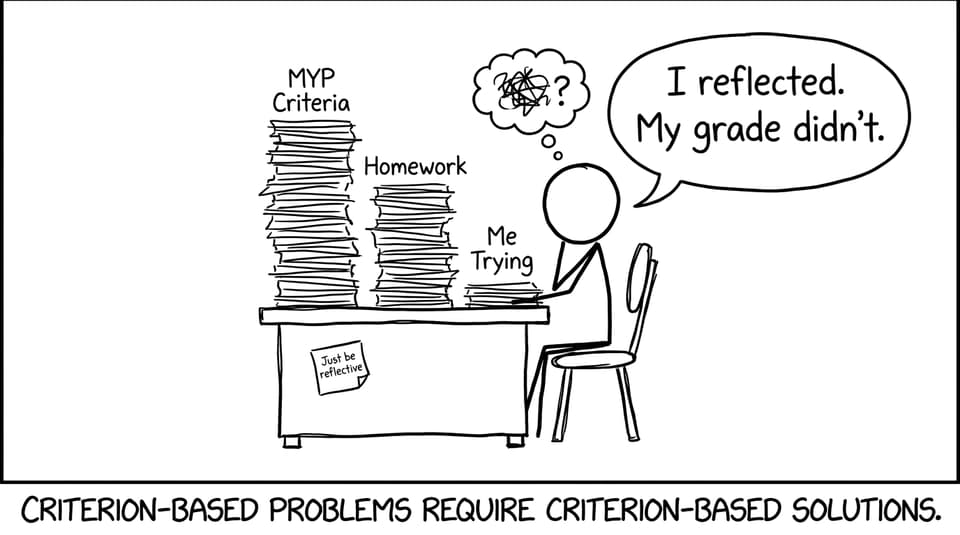
If you’ve ever stared at a rubric and thought, “I did the work… so why doesn’t the grade agree?” you’re already meeting the MYP on its home turf.
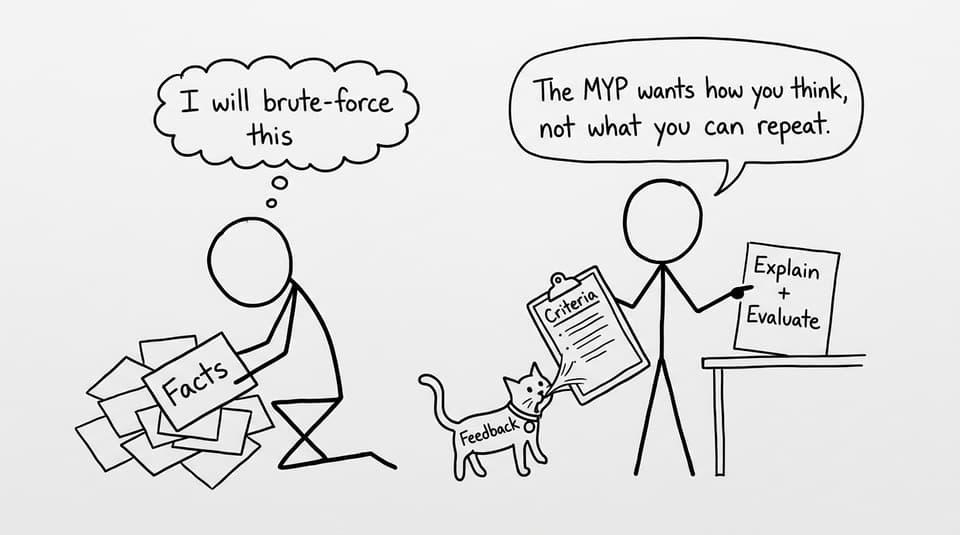
The question “Is the MYP worth it?” shows up most often when school feels hard in a specific way: not harder content, but harder thinking. The MYP asks you to explain, justify, evaluate, and reflect even when you’d rather just learn the facts and move on.
For IB students preparing for exams, the honest answer is this: the MYP is worth it for many students, but not automatically. The payoff depends on what you expect it to deliver, and whether your revision method matches how MYP assessment actually works.
The quick checklist: when the MYP is “worth it”
The MYP tends to be worth it when you can say “yes” to most of these:
-
You’re willing to improve through feedback (not just repeat effort).
-
You can learn the assessment criteria and use it like a map.
-
You want skills that transfer to the DP: analysis, writing, and independence.
-
You revise actively (questions, practice tasks, timed work), not passively.
If you want a practical starting point for exam season, use the MYP hub on RevisionDojo as your home base: Middle Years Program (MYP).
What the MYP genuinely does well
The best part of the MYP is also the part that feels invisible at first: it trains you to think in “criteria language.” Over time, you stop asking, “Did I study a lot?” and start asking, “Did I answer what the task rewards?”
That shift builds:
-
Analytical thinking (you learn to make a case, not just state points)
-
Clear communication (structure becomes part of the mark)
-
Reflection that leads to action (feedback becomes a tool, not a judgment)
-
Independence (you plan your own improvement)
If you’re heading into DP later, this alignment matters. DP exams love students who can interpret command terms, structure arguments, and adapt under pressure.
A helpful way to start building that habit is simple: practice with real questions, then review what the rubric wanted. That’s exactly what RevisionDojo’s Questionbank is built for.
Where the MYP frustrates students (and why that’s normal)
The MYP can feel unfair when you’re used to a more predictable system. Three frustrations come up again and again:
“My grades dropped, even though I tried harder.”
In the MYP, effort is important, but performance is measured against descriptors. If your work doesn’t hit the strands, it won’t score the way your effort feels.
“Tasks are open-ended. I don’t know what a ‘perfect’ answer looks like.”
That’s partly the point. The MYP is training you to make decisions: what to include, what to prioritize, what evidence matters.
“I study a lot, but it doesn’t convert into marks.”
This usually means the revision method is too passive. Reading, highlighting, and rewriting notes can feel productive while producing very little exam-ready skill.
If you want a student-friendly plan that matches how MYP exams work, keep this nearby: MYP eAssessments: 30-Day Study Plan That Works.
Who the MYP is best suited for (and who needs more structure)
The MYP is a strong fit if you:
-
Improve over time (your growth curve matters)
-
Respond well to feedback
-
Can tolerate ambiguity long enough to learn the pattern
-
Like understanding “why,” not only “what”
The MYP can feel rougher if you:
-
Rely heavily on memorisation
-
Prefer step-by-step instructions with one model solution
-
Get discouraged when progress is slow
None of that means you can’t succeed. It just means you need more structure than the programme naturally gives.
One practical form of structure is using subject hubs that keep practice, notes, and feedback in one place, like MYP Standard Mathematics Resources or MYP Individuals and Societies Resources.
The real deciding factor: support and revision style
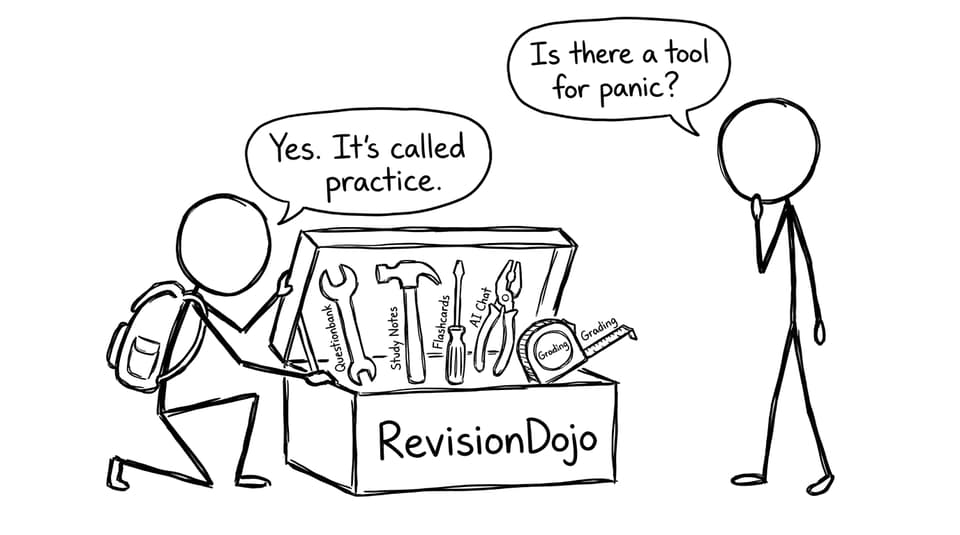
In real classrooms, the “worth it” question rarely comes down to intelligence. It comes down to whether a student builds a tight feedback loop:
-
Learn a concept quickly (Study Notes)
-
Test it immediately (Questionbank)
-
Fix mistakes using criteria language (Grading tools)
-
Repeat with spacing (Flashcards)
-
Get unstuck fast (AI Chat)
RevisionDojo is designed around that loop. It’s not only content. It’s a system: Questionbank, Study Notes, Flashcards, AI Chat, Grading tools, Predicted Papers, Mock Exams, a Coursework Library, and Tutors when you need a human to diagnose what’s going wrong.
For students juggling big projects alongside exams, this guide often saves weeks of confusion: MYP Personal Project: The Ultimate Student Guide, plus exemplars inside the Coursework Library.
The honest conclusion: is the MYP worth it?
The MYP is worth it when you judge it by the right standard. It’s not built to reward memorisation or instant payoff. It’s built to train you into someone who can improve, explain, and adapt.
If you want the MYP to feel fair, you need a fair method: criteria-aware practice, frequent feedback, and repetition that actually changes your answers. Start at the MYP collection of articles, build your plan, and use RevisionDojo to turn revision into results.
