

The photo looked impressive. The caption sounded noble. But a week later, when your supervisor asks, “What did you actually learn?” your mind goes blank.
That moment is the whole point of the MYP portfolio.
In the MYP, community engagement is not just “doing something good.” It is learning you can prove: inquiry, choices, challenges, adjustments, and reflection. Your portfolio is where that learning becomes visible. And if you treat it like an afterthought, you will end up with a folder of random screenshots and a reflection that reads like a rushed diary entry.
This guide shows you how to document community engagement in an MYP portfolio with clarity, credibility, and enough structure to make your final write-up feel almost inevitable.
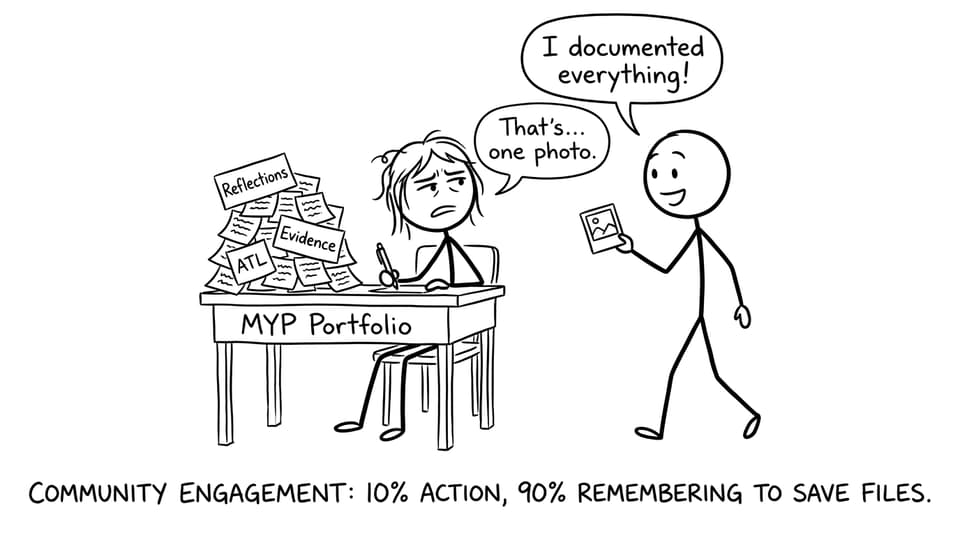
MYP community engagement portfolio: the fast checklist
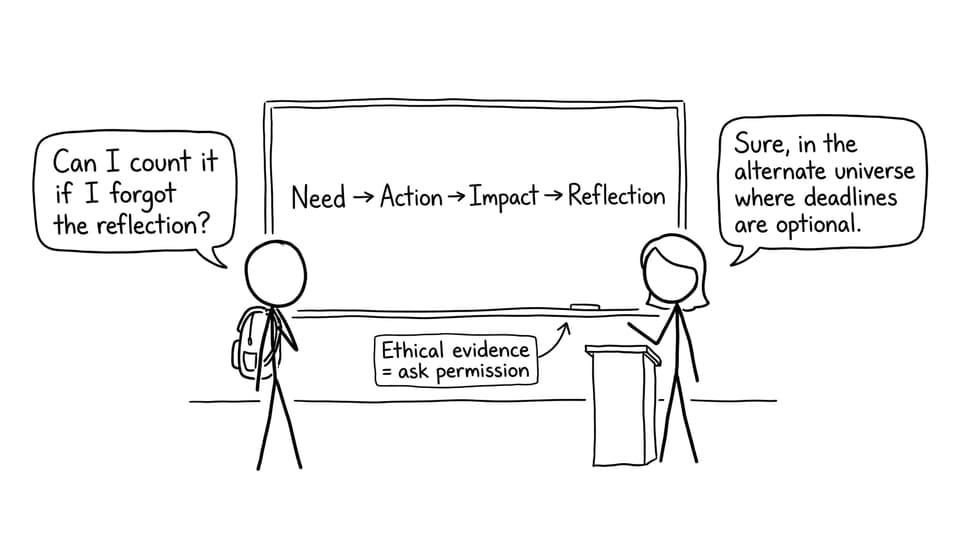
If you want a clean MYP portfolio that holds up under review, build every experience around this simple loop:
-
Need: What community need did you investigate?
-
Plan: What was your goal, and how did you design action?
-
Action: What did you do (with dates)?
-
Impact: What changed, and how do you know?
-
Reflection: What did you learn, and what will you do differently?
Keep the loop beside you as you work. It mirrors how the MYP expects learning through action to be recorded.
To anchor your understanding of the programme language, keep the main overview open: Middle Years Program (MYP).
What “good documentation” means in MYP (and what it isn’t)
A strong MYP portfolio entry reads less like a highlight reel and more like a short case study. Not dramatic. Not perfect. Just verifiable.
Good documentation is:
-
Dated (so growth over time is obvious)
-
Specific (what you did, not what you “helped with”)
-
Evidence-based (proof, not vibes)
-
Reflective (judgment, not just feelings)
-
Ethical (permissions, privacy, academic honesty)
What it is not: a list of hours, a pile of photos, or a single paragraph that says “I learned teamwork.” In the MYP, learning has to show its working.
If you’re also completing a longer service initiative, you’ll recognize the same logic in: Designing Effective MYP Service as Action Programs.
What to include in an MYP portfolio entry (the evidence stack)
Think in layers. Each MYP community engagement entry can be small, but it should include the same core components.
A clear record of the experience
Include:
-
activity name
-
date(s)
-
role (what you were responsible for)
-
time spent (if your school tracks it)
-
one-sentence purpose
Keep it readable. A teacher should be able to scan your log and understand your year.
Evidence of action (not just attendance)
Collect “small proofs” while you go:
-
a planning screenshot (task list, timeline, meeting notes)
-
a draft (poster, script, email, agenda)
-
feedback (a short form, comments, supervisor note)
-
a before/after comparison (numbers, photos, or observations)
Avoid uploading everything. Curate. If you need inspiration for what strong portfolios look like, see: Outstanding MYP Student Portfolios Ideas.
Reflection that connects to learning language
In the MYP, reflection should connect your actions to skills and growth. Useful links:
-
ATL skills (communication, research, self-management, social, thinking)
-
Learner Profile traits (caring, principled, reflective, etc.)
-
Global Contexts (where relevant)
For a deeper explanation of how portfolio evidence works across the programme, read: Using Student Portfolios for Evidence of Learning in the MYP.
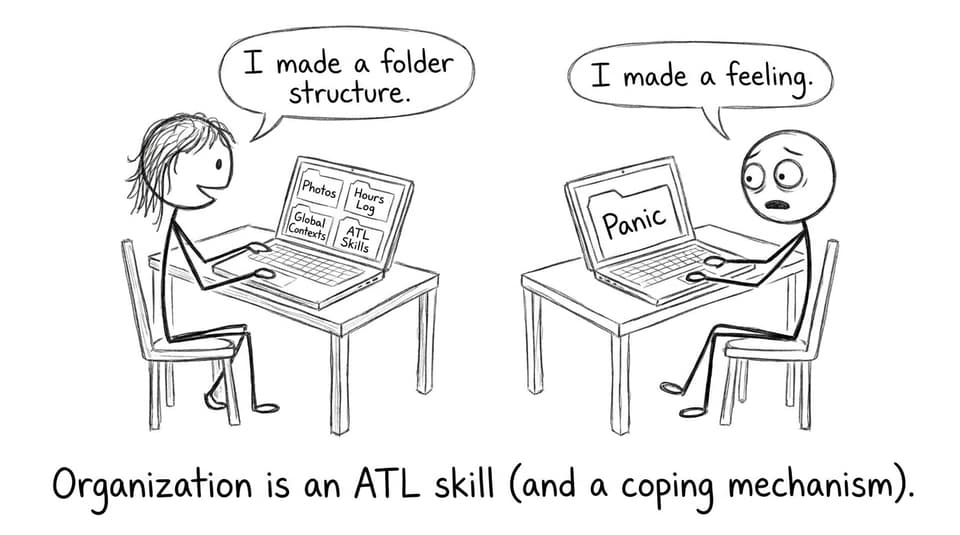
How to organize your MYP portfolio so it stays updateable
Most students don’t fail the MYP portfolio because they “didn’t do enough.” They fail because they can’t find anything when it’s time to submit.
Use a structure you can maintain in under 10 minutes after each action:
-
Folder 1: Log (one running document or spreadsheet)
-
Folder 2: Entries (one page per experience)
-
Folder 3: Evidence (dated subfolders)
-
Folder 4: Reflections (drafts and final versions)
Name files with dates first: 2026-03-12_feedback-form.pdf beats feedback final FINAL(2).pdf.
If you’re working on a bigger project alongside Service as Action, steal the process-journal habits from: MYP Personal Project: The Ultimate Student Guide.
Reflection prompts that sound like MYP (not like a diary)
Try a repeatable template. It keeps your MYP portfolio consistent and helps you avoid vague statements.
The “CER + Next Step” reflection
Write 6--10 sentences using:
-
Claim: What did you learn or realize?
-
Evidence: What proof shows that?
-
Reasoning: Why does that evidence matter?
-
Next step: What will you change next time?
If you want stronger prompts, borrow from: Creating Actionable Reflection Prompts for IB Students and Encouraging Reflection in MYP Assessments.
A short example of an MYP community engagement entry
Experience: Peer tutoring for new MYP students (indirect service)
Need (inquiry): New students reported confusion about assessment criteria and workload organization.
Action: Planned two lunch sessions, created a one-page “survival guide,” and ran a Q&A.
Evidence: Session plan, guide draft with edits, anonymous feedback form results, photo of the whiteboard (with permission).
Reflection (ATL focus): I used communication skills by adapting explanations after noticing that students misunderstood command terms. Feedback showed that most students wanted more examples, so I redesigned the guide with two model responses. Next time, I will run a short pre-survey before the session so the activities match what students actually need.
That is an MYP entry that an adult can verify and assess.
Using RevisionDojo to make MYP documentation easier (and help exams too)
Here’s the quiet advantage: the same habits that make an MYP portfolio strong also lift exam performance. Clear evidence, structured reflection, and honest evaluation are basically revision skills.
RevisionDojo supports that loop in a practical way:
-
Use AI Chat to turn a messy experience into a clear reflection paragraph that actually names ATL skills.
-
Use Study Notes to research community issues accurately before you act.
-
Use Flashcards to remember ATL terminology, Learner Profile traits, and command terms.
-
Keep your academics moving with the Questionbank, Mock Exams, Predicted Papers, and Grading tools while your project weeks get busy.
-
If you need higher-level guidance, the Tutors and Coursework Library help you model strong writing and structure.
If you’re tracking outcomes for certificate requirements, this is helpful context: Impact of Community Service on MYP Certificate Eligibility.
Closing: make your MYP portfolio a story you can prove
In the MYP, community engagement is supposed to shape you, not just occupy you. Your portfolio is where that shaping becomes legible: the need you noticed, the action you took, the evidence you collected, and the reflection that shows how you changed.
If you document as you go, your MYP portfolio stops being a last-minute task and becomes a calm record of competence. Build the loop. Capture small proof. Reflect with structure.
When you’re ready to make both service and exam prep feel lighter, use RevisionDojo to keep your evidence, reflection, and revision habits working together -- and let your MYP work show up as real learning, not just good intentions.