This site uses cookie tracking technologies. Learn more in our Cookie Policy.
MYP vs IGCSE: Which Builds Long-Term Academic… | RevisionDojo
Join 600k+ Students Already Crushing Their Exams
The choice that shows up later
The first time most students feel the real difference between MYP and IGCSE is not at age 14. It’s later, when the questions stop being predictable.
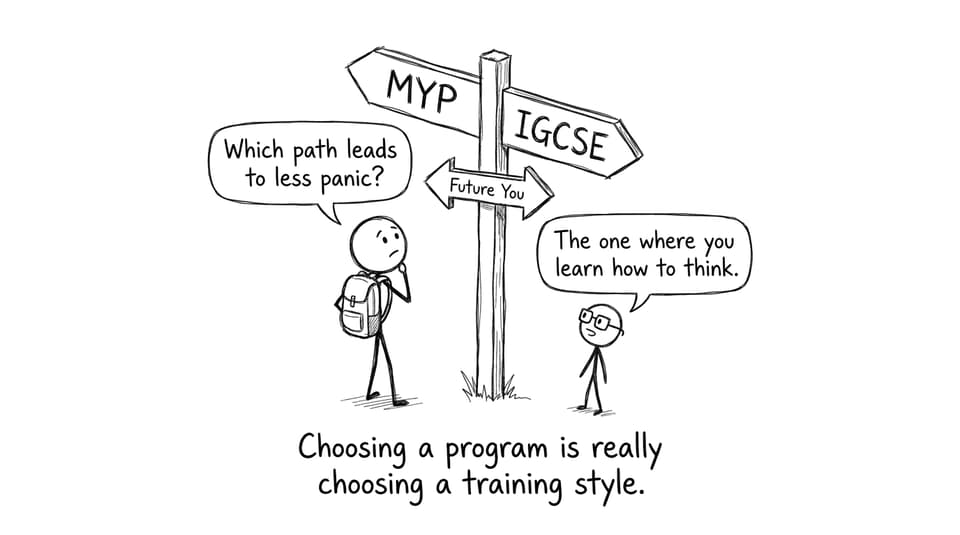
In the IB Diploma, a prompt can look simple and still demand judgment: evaluate, compare, justify, reflect. That’s why the MYP vs IGCSE debate matters for IB students preparing for exams: it’s less about which programme feels “harder” today, and more about which one trains you for the kind of thinking you’ll be graded on tomorrow.
The core difference: content-first vs skills-first
Most comparisons of MYP vs IGCSE get stuck on reputation. But the real gap is philosophy.
IGCSE is typically content-led: learn the syllabus, practise the question styles, execute under time pressure.
MYP is explicitly skills-led: use content to show analysis, application, communication, and reflection. You still learn facts and methods, but the programme keeps asking, “What can you do with this?”
That question becomes your daily reality in the IB Diploma.
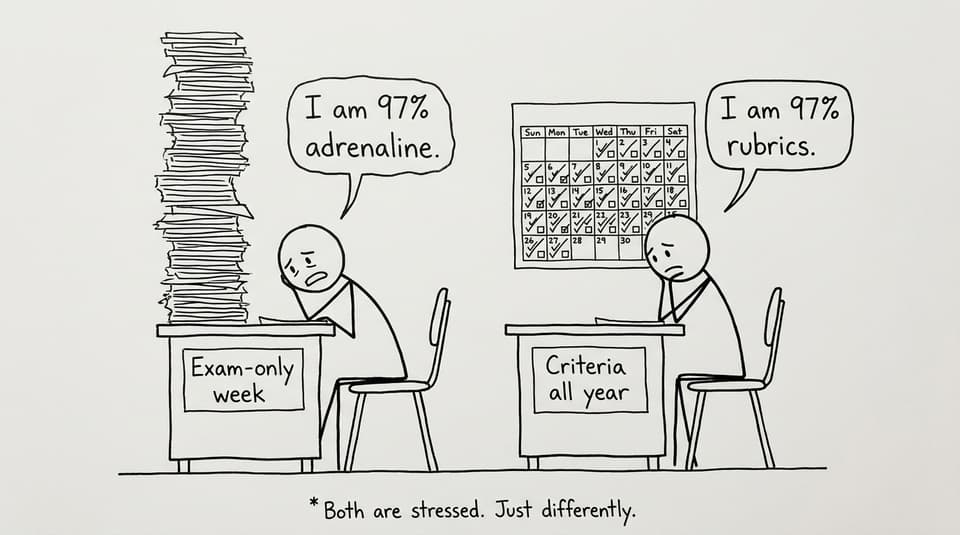
Assessment style: exam peaks vs year-round criteria
IGCSE assessment: performance under pressure
In IGCSE, the main stress often arrives in one wave. You revise, you sit papers, you get the result. Many students love the clarity: there’s a syllabus, a format, and the mark scheme logic rewards precision.
In MYP, pressure is spread out. Criteria are visible, feedback matters, and your work is often a series of attempts that get better. That trains a useful habit: you don’t just “finish” tasks, you iterate.
That same habit is what separates decent IB answers from top-band answers.
For most IB students, the biggest advantage of MYP is not “being IB already.” It’s repeated exposure to:
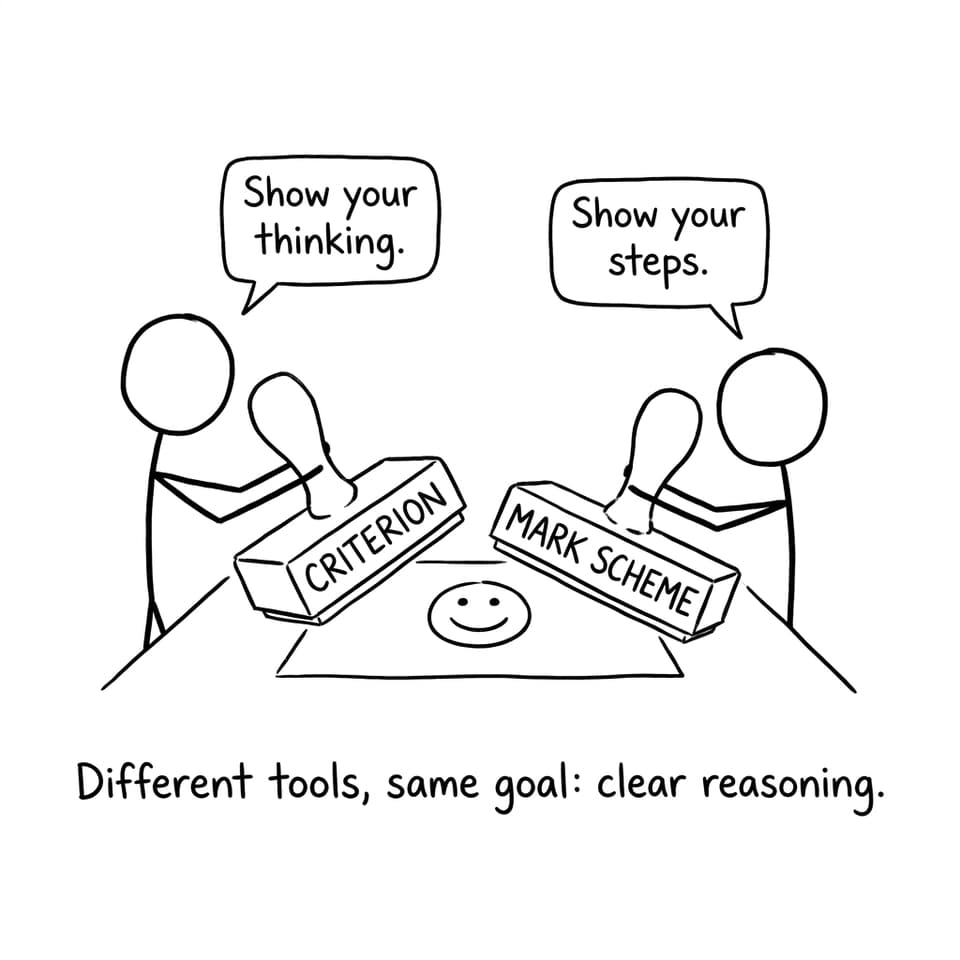
Criterion language and rubric thinking
Explaining reasoning (not just giving answers)
Applying knowledge in unfamiliar contexts
Reflection and revision after feedback
In other words, MYP often builds the muscles the IB will demand.
IGCSE builds different muscles well:
Syllabus mastery
Speed and accuracy
Familiarity with standardized exam structure
That can translate into strong confidence, especially in content-heavy subjects. But when IB questions become broader, IGCSE students sometimes need time to adjust to criteria, command terms, and extended justification.
If your definition of success is a clean, exam-heavy sprint at 16, IGCSE can feel like the obvious choice.
If your definition of success is long-term academic strength -- the ability to adapt, explain, and perform in the IB -- MYP often gives you earlier practice with the exact skills you’ll be graded on.
Whichever route you take, make the outcome inevitable: build a weekly routine with RevisionDojo’s Questionbank, Study Notes, Flashcards, AI Chat, Grading tools, Predicted Papers, Mock Exams, Coursework Library, and Tutors. Because the real advantage is not just choosing MYP or IGCSE.
It’s training like your future exams have already started.