
If you’re reading this with a deadline that looks like a threat, you’re not alone.
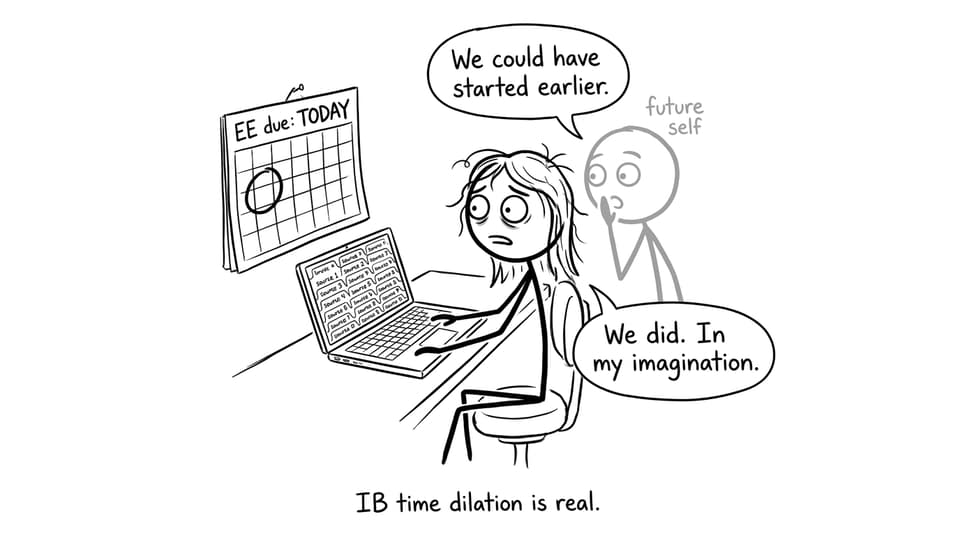
Somewhere in the IB universe, a student is opening a document titled “Extended Essay Final FINAL v7” and realizing the same quiet truth you just did: the EE is still not written.
The good news is not that writing an EE in one day is easy. It’s that it can be done if you stop treating the task like “write 4,000 words” and start treating it like “build marks, fast.” The IB rewards clarity, method, analysis, and honest reflection far more than poetic perfection.
The one-day EE checklist (read this before you type)
Use this as your north star. If you can tick these, your IB EE becomes a project instead of a panic.
-
A narrow research question you can answer in 4,000 words
-
6-10 credible sources you can actually access today
-
A simple outline where every section exists to earn marks
-
A citation style you will use consistently from the first paragraph
-
A plan for reflection (not a diary) you can write quickly
If you want models and subject-specific expectations, start with RevisionDojo’s Coursework Guides and browse the All IB Extended Essay Posts when you need a targeted fix.
Your 14-hour schedule: write the EE like a sprint
Writing an EE in a day is an energy problem as much as a writing problem. Your goal is to make the IB criteria feel mechanical.
Hours 1-2: Lock the question and the method (Criterion A)
Pick a topic you already understand from your IB classes. Familiarity is a shortcut that doesn’t break the rules.
Then write a research question that is:
-
specific (one text, one case study, one time period, one model)
-
analytical (it demands an argument, not a summary)
-
researchable today (sources exist and are reachable)
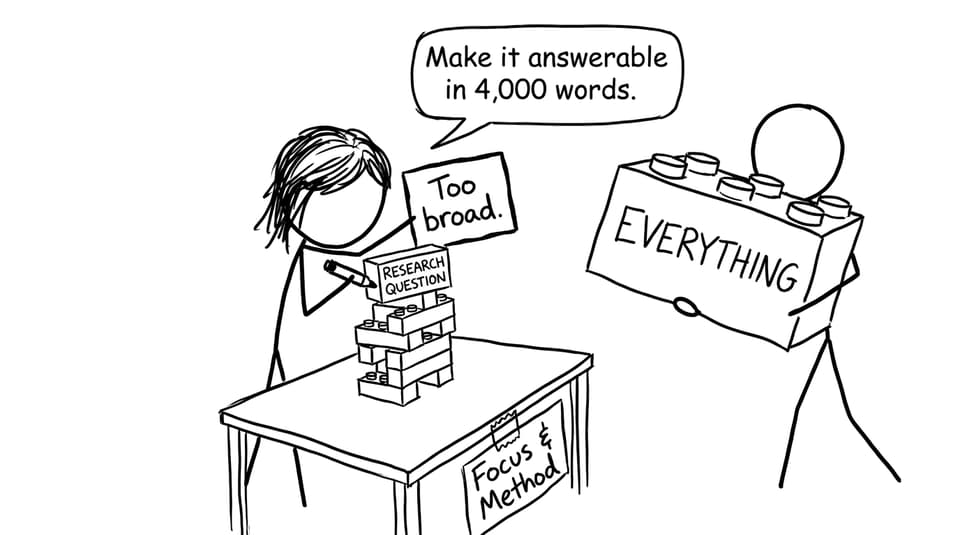
If your question contains “to what extent” but could still cover the entire planet, it’s too broad. Narrow it until it almost feels unfairly small.
Need a reference point for what examiners expect? Use an EE guide like IB English A Lit Extended Essay Guide to see how focused questions translate into structure.
Hours 3-4: Research fast, but don’t hoard sources (Criterion B)
The mistake is thinking you need “more research.” What you need is enough evidence to sustain analysis.
Do this instead:
-
Pick 2-3 core sources that will carry the argument.
-
Add 4-7 supporting sources for context, counterarguments, or data.
-
For each source, write three bullets: claim, evidence you’ll use, limitation.
This is how you show Knowledge and Understanding in an IB-credible way without drowning in PDFs.
If your brain is foggy, use RevisionDojo’s Study Notes to regain conceptual clarity quickly, then convert key definitions into Flashcards so you don’t reread the same paragraph five times.
Hours 5-9: Write the body first (Criterion C lives here)
Write in the order that produces momentum:
-
Section 1: your first claim + evidence + explanation
-
Section 2: your second claim + evidence + explanation
-
Section 3: counterargument + evaluation + your response
Critical Thinking in the IB EE is not fancy vocabulary. It’s the habit of doing three things repeatedly:
-
Interpret: what does the evidence mean?
-
Evaluate: how strong is it, and what are its limits?
-
Connect: how does it answer the research question?
A useful sentence pattern when you’re stuck:
This suggests __, because __. However, __ limits this interpretation, which matters because __.
When you need quick feedback on whether a paragraph is actually analytical, RevisionDojo’s Grading tools can give rubric-aligned direction, while AI Chat can pressure-test one specific point (for example: “What’s the strongest counterargument to my claim?”). Keep it precise, keep it academic.
Hours 10-11: Introduction and conclusion (make the examiner feel safe)
A strong IB introduction does not wander.
Include:
-
the research question (verbatim)
-
why it matters in the subject
-
what method you used (briefly)
-
what you will argue (one clear line)
Your conclusion should:
-
answer the question directly
-
summarize the reasoning, not the story
-
acknowledge one limitation honestly
-
suggest one realistic next step
If you’re unsure about structure and required sections, use How to Format Your EE According to IB Guidelines as a final sanity check.
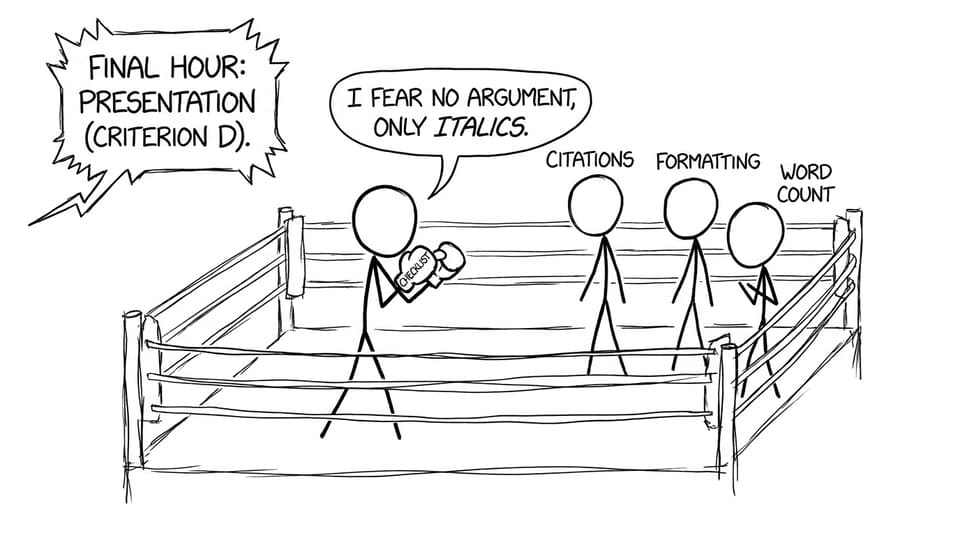
Hours 12-14: Presentation, citations, and reflection (Criteria D/E, but make it fast)
You are not trying to “make it pretty.” You are trying to make it consistent and defensible.
-
update headings so they match the table of contents
-
standardize in-text citations
-
build a clean bibliography
-
run one final word count check
For the reflection component, don’t write a diary. Write decisions.
Use this pattern:
-
what changed (question, method, structure)
-
why it changed (evidence, feasibility, feedback)
-
what improved (argument clarity, analysis depth)
-
what you learned (about research and judgement)
RevisionDojo’s EE RPF Explained: Reflection and Progress Form Guide and EE RRS Explained: The Researcher's Reflection Space make this part much less mysterious.
The RevisionDojo “two-track” rule (so exams don’t collapse)
Most students who write an EE in one day aren’t only writing an EE. They’re also trying to keep their IB exam preparation alive.
That’s where a two-track system matters:
-
Track 1 (EE sprint today): outline, draft, cite, reflect.
-
Track 2 (exam maintenance tonight): 20-30 minutes only.
Use RevisionDojo to make Track 2 automatic:
-
Flashcards for daily recall
-
Questionbank for one short, targeted set
-
Mock Exams and Predicted Papers later in the week when the EE dust settles
If you need a wider reset on your exam routine, the RevisionDojo App guide for IB exam prep lays out a repeatable workflow.
Conclusion: finish like an IB student, not a perfectionist
Writing an EE in one day is not a personality trait. It’s a decision to prioritize what the IB actually rewards: a focused question, a workable method, evidence-based analysis, and clean academic presentation.
When you submit, you want the examiner to feel one thing: “This student knew what they were investigating.”
If you need a calmer system for the rest of your IB journey, RevisionDojo is built for exactly that: Study Notes for speed, Flashcards for retention, Questionbank for exam practice, AI Chat for clarity, Grading tools for rubric feedback, Predicted Papers and Mock Exams for realistic rehearsal, a Coursework Library for exemplars, and Tutors when you need a human strategist. Keep the EE sprint contained, then return to steady preparation.