


Introduction: the number you want vs. the number that exists
You finish your IA. You submit it. And then a strange thing happens: the project that consumed your weekends becomes a single question that lives in your head.
Do teachers know the final IA mark?
It's a very IB kind of anxiety: you want certainty, but the system is designed to resist it. Your teacher feels confident. Your friends have theories. Someone's older sibling swears the teacher "definitely knows." Meanwhile you're trying to revise for exams with the sense that one hidden number could tilt everything.
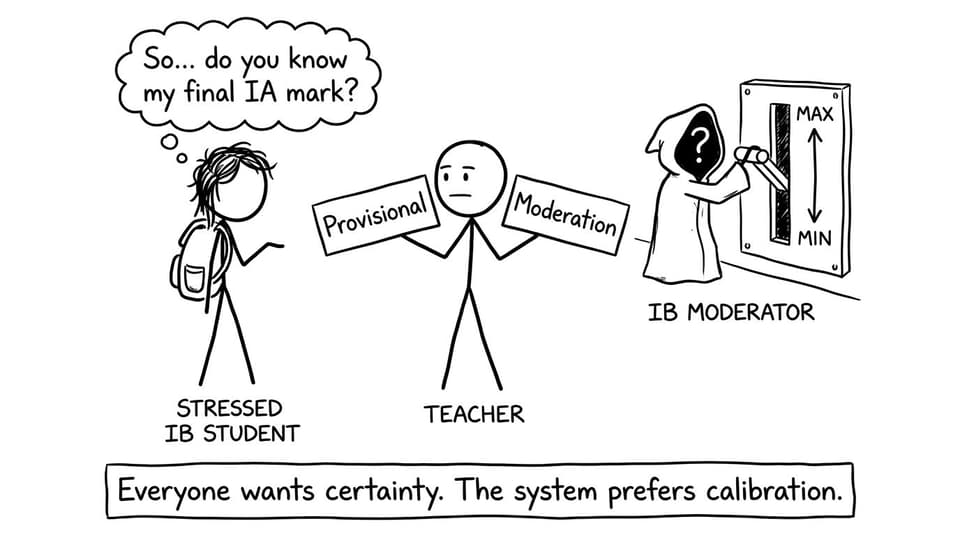
Here's the calm truth: your teacher can give you a provisional IA mark, and they often have a very educated sense of where you sit. But in most cases, your teacher does not know your final IA mark until the IB process is finished, because the final mark can shift after moderation.
This guide breaks down what teachers actually know, what they don't, why moderation exists, and how you can respond like a strategist (not a refresh-button athlete).
Quick checklist: what to remember about your IA mark
- Your teacher marks your IA first using the official subject criteria.
- That mark is usually provisional (real, but not guaranteed final).
- The IB moderates a sample of work to check standardization across schools.
- Moderation can adjust marks (sometimes up, sometimes down, sometimes unchanged).
- Because of moderation, teachers typically cannot promise your final IA mark.
- Your best move is to treat the teacher mark as a strong estimate and focus on controllables: exam prep + quality evidence in your IA.
If you want a clean overview of the process, read How IB Internal Assessment (IA) Moderation Works: A Clear Guide.
The core answer: do teachers know the final IA mark?
Teachers usually do not know your final IA mark in the sense students mean it (the locked-in number the IB will use). They know the mark they awarded, and they know the rubric intimately. But the final IA mark is only final after IB moderation is applied.
That distinction matters because IB assessment has two "voices":
- Teacher voice: the mark based on the rubric, applied inside your school.
- IB moderation voice: a statistical/standardization layer designed to make schools comparable worldwide.
If you've ever had a teacher say, "This is what I'm giving you, but moderation may change it," they're not dodging you. They're describing the system.
For a deeper breakdown of roles, Who grades the IAs? lays out who does what and why.
What teachers do know about your IA
They know the rubric better than you think
Your teacher has likely marked many versions of the same IA task and has sat through internal standardization meetings. They often know what separates a mid-band report from a top-band one: not "more work," but better evidence aligned to criteria.
That's why teacher feedback can feel oddly consistent: they keep returning to the same phrases. "More analysis." "Link to the research question." "Justify your choices." These aren't generic comments. They're rubric pressure points.
If you're trying to convert teacher comments into action steps, use How to Integrate Feedback from Teachers into Your IA.
They know your provisional mark (or range)
In many schools, teachers will share either:
- the exact provisional IA mark, or
- a mark range, or
- a general band indicator (especially if school policy limits specifics).
Even if they share a number, they're typically describing the teacher-awarded mark. That number is meaningful because it reflects the criteria. But it isn't guaranteed to be the final IB-adjusted outcome.
They know how your cohort tends to moderate historically
Experienced departments often have a sense of whether moderation tends to:
- barely change anything,
- nudge the cohort up,
- or pull the cohort down.
But this is still pattern recognition, not a promise. Each session can differ.
What teachers don't know (and why)
They don't control moderation
Moderation exists because two different schools can interpret the same IA criteria slightly differently. The IB's goal is to make grades comparable across the world.
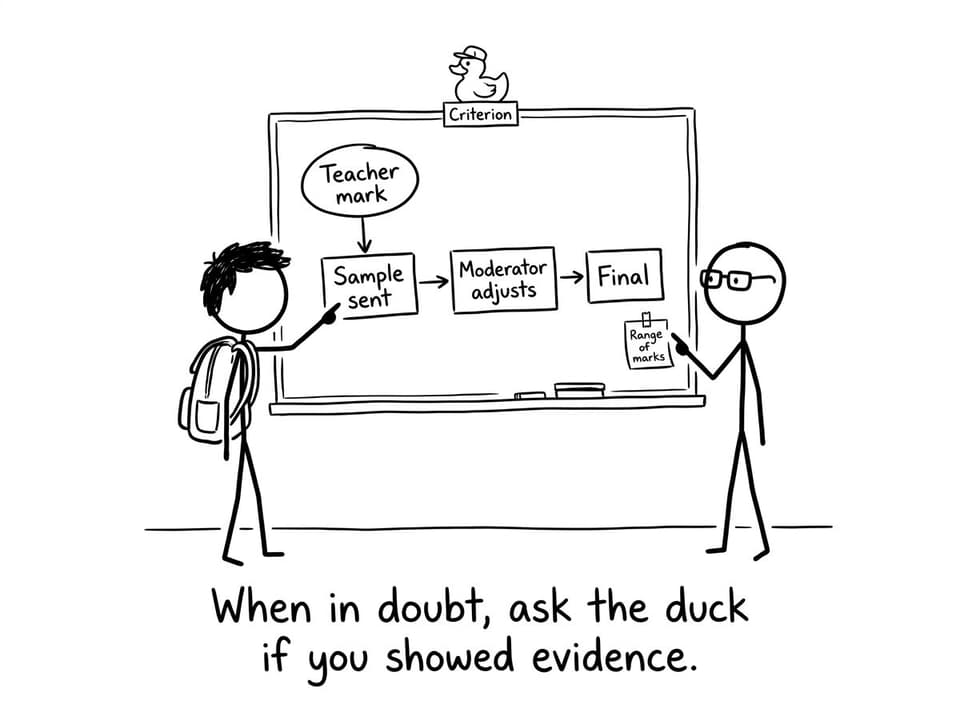
Once your school submits marks and a sample of student work, external moderators evaluate whether the teacher marking aligns with global standards. If not, the IB can adjust marks.
This is why your teacher can be both sincere and uncertain at the same time: they can be confident in their marking, but still unable to guarantee the IB's final adjustment.
They don't know whether your specific IA will be in the sample
Students often assume the highest-scoring work is selected, or the "most risky" work, or the one that's most likely to impress. In reality, sampling is structured to represent a range (high/middle/low). Students and teachers typically don't get to choose.
They don't see the final number until the process completes
Even if a teacher is excellent at predicting outcomes, the final IA mark is the result of a process that concludes after external review.
Why moderation can change your IA mark (without it being "unfair")
Think of moderation like calibrating scales.
If one scale reads 2 kg when the object is 1.8 kg, you don't blame the person holding the object. You adjust the scale.
In the same way, moderation is less about you and more about alignment. Moderators check whether your school's marking is consistent with IB standards. If the school is consistently generous or harsh, the cohort can be adjusted.
This is also why obsessing over the precise provisional IA mark can be psychologically expensive. The better question is: Have I clearly shown the evidence each criterion rewards?
What you should do if you're worried about your IA mark
Use a rubric-first self-audit
Before you chase reassurance, do the unglamorous thing: read the criterion descriptors and check whether your IA actually provides what they ask for.
A practical method:
- Highlight each criterion strand.
- In your IA, mark the exact paragraph/figure/table that provides evidence for that strand.
- If you can't point to evidence quickly, the moderator won't either.
To strengthen high-impact sections, these guides help:
- How to Write a Compelling IA Evaluation Section
- How to Proofread and Polish Your IA Before Submission
Get criterion-aligned feedback early (not vibes late)
Students often ask, "Is my IA good?" when they really need "Which criterion is weakest, and what's the fastest upgrade?"
RevisionDojo is built for that kind of clarity. The platform's Coursework Grader (powered by AI Chat / Jojo AI) can review an IA draft and return rubric-aligned notes so you can revise with purpose, not panic. It fits into a wider loop: Study Notes to fix content gaps, Flashcards to retain details, and the Questionbank to keep exam skills sharp while coursework is happening.
If you want a tool-focused walkthrough, see IB IA Grading Service: Professional Assessment in Minutes and the IB IA Grader.
Don't let the IA uncertainty steal exam marks
Here's the quiet trap: the uncertainty around an IA mark can drain energy from exam preparation, where your control is much higher.
A smart split looks like this:
- Set a final "IA maintenance" window (polish, citations, visuals).
- Then shift to timed exam practice using Mock Exams and Predicted Papers (where available).
- Use feedback loops: attempt, diagnose, drill.
RevisionDojo's Mock Exams and Grading tools are designed for this: run timed papers, get mark-scheme-aligned feedback, then rebuild weak topics using targeted practice.
Useful reads:
The most common misunderstandings (and what to believe instead)
"My teacher promised me a 7 on the IA."
Teachers might say your IA is "7-level" based on the rubric. That's encouragement, not a contract. Moderation can still shift cohort marks, and boundaries can vary by session.
"If my IA gets moderated down, it means my teacher was wrong."
Not necessarily. Moderation is about alignment across schools, not calling your teacher incompetent. Great teachers can still be part of a cohort that gets adjusted.
"The moderator reads my whole IA carefully."
Moderators are trained and thorough, but they're also human and time-bound. Clear signposting, criterion-focused evidence, and clean presentation matter more than students expect.
"If I just add more pages, my IA mark rises."
Length doesn't equal marks. Evidence, justification, analysis, and evaluation earn marks. Wordiness can bury your best thinking.
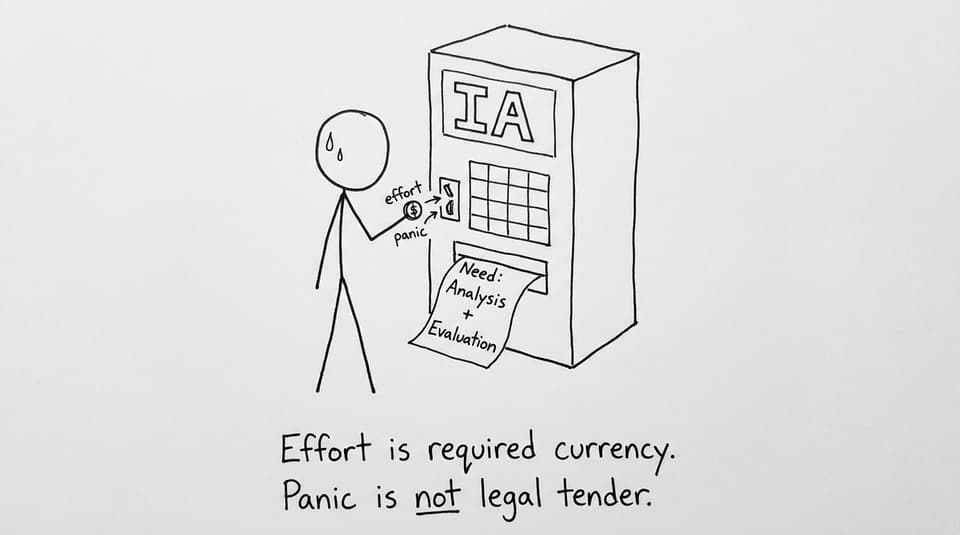
Conclusion: treat the IA mark as information, not fate
So, do teachers know the final IA mark?
They know the mark they awarded, and they usually know it with real expertise. But they typically don't know the final IA mark until moderation is complete, because the IB can adjust outcomes to keep global standards consistent.
The most useful response isn't to hunt for certainty. It's to build resilience in your approach: write your IA so the evidence is obvious, use criterion-aligned feedback early, and protect your exam preparation time.
If you want to feel genuinely in control, build your workflow around RevisionDojo: use the Coursework Library for exemplars, the Coursework Grader and AI Chat for rubric-focused revisions, then pivot into exam season with Study Notes, Flashcards, Questionbank, Predicted Papers, Mock Exams, and data-driven Grading tools. And if you're stuck, RevisionDojo Tutors can help you translate rubric language into concrete edits.
When the final IA number arrives, you want it to feel like a confirmation of your process, not a surprise that defines you.