

The night before a big exam, your brain does a funny thing. It stops asking, “What do I know?” and starts asking, “What will they think of me?”
For many IB students, that “they” becomes an Ivy League University admissions office. Harvard. Yale. Princeton. The names feel heavy, like they’re made of stone. And somewhere in the middle of TOK notes and HL problem sets, a quieter question keeps showing up: Do Ivy League schools prefer the IB Diploma when they evaluate a University application?
The honest answer is not a neat yes-or-no. Ivy League University admissions is holistic. But the IB Diploma is a loud signal. It tells an admissions reader: this student chose rigor on purpose and survived it.
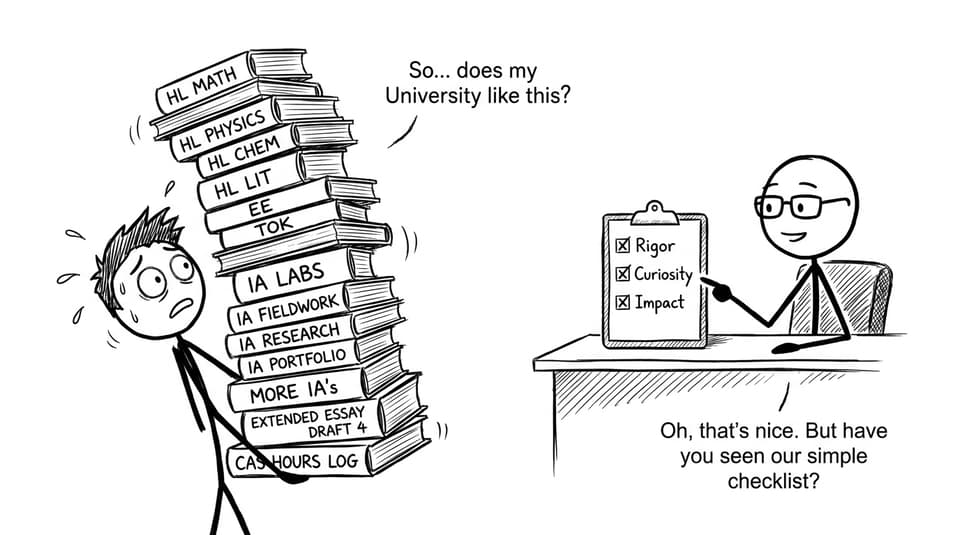
Quick checklist: what an Ivy League University actually evaluates
Before we zoom into IB specifically, it helps to keep the University admissions lens clear. Most Ivy League University reviews weigh evidence across a few recurring categories:
-
Academic rigor (course difficulty, not just grades)
-
Performance (predicted grades, transcript trend, HL strength)
-
Writing and reflection (personal statement and supplements)
-
Teacher recommendations (credibility, context, character)
-
Extracurricular impact (depth, leadership, sustained commitment)
-
Testing (varies by policy, but still relevant in many contexts)
This matters because the IB Diploma is strongest when it supports multiple categories at once: rigor, writing, research habits, and time management, all traits a University wants to see before it invests four years in you.
The Ivy League University mindset: “Show us you ran toward difficulty”
Picture an admissions officer reading thousands of files. Most students say they work hard. Many have good grades. A smaller group can prove they handled a system that’s demanding by design.
That’s where the IB Diploma stands out. Its structure forces breadth (six subject groups), depth (HL courses), and core requirements (EE, TOK, CAS). In a holistic Ivy League University process, that combination reduces uncertainty: it’s harder to “accidentally” look strong in IB.
RevisionDojo often frames this as a simple advantage: you’re not only learning content, you’re learning the rhythm of assessment. If you need a practical way to build that rhythm, start with the platform overview in RevisionDojo App: The Smarter Way to Prep for IB Exams and treat your prep like a system, not a mood.
Do Ivy League schools prefer the IB Diploma?
“Prefer” is a tricky University word. Ivy League schools do not publish a rule that says “IB beats everything.” But they consistently recognize IB as one of the most rigorous secondary curricula.
In RevisionDojo’s admissions coverage, Ivy League readers are described as being “always pleased” to see IB on a transcript, because it correlates with readiness. That theme shows up clearly in What Do Ivy League Schools Think of the IB?.
So what’s the real takeaway for a University application?
-
IB is a credibility multiplier: it strengthens the meaning of your grades.
-
IB is not a golden ticket: it does not replace essays, impact, or fit.
-
IB results still matter: the diploma helps most when your scores match the story.
A useful benchmark appears across multiple University admissions guides: 38+ is generally competitive, and 40+ is often expected for the most selective programs. Those numbers aren’t official minimums, but they describe the reality of an Ivy League University pool.
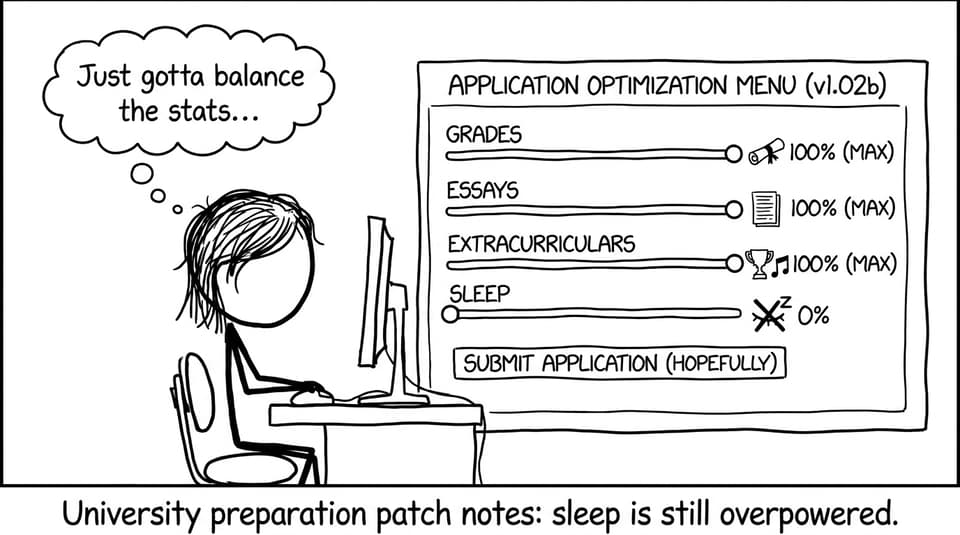
Why the IB Diploma maps well to University readiness
IB tends to align with what top University environments demand on day one.
Rigor you can’t fake
The IB workload is visible: HL depth, internal assessments, and cumulative exam preparation. That’s appealing to an Ivy League University because it suggests you won’t be shocked by reading loads, deadlines, and long-form argumentation.
To turn that rigor into exam performance, you need repetition under constraints. That’s why RevisionDojo pushes tools that behave like rehearsal: Questionbank, Mock Exams, and Predicted Papers (practice papers built for realism). If you’re planning your final stretch, explore IB Predicted vs Specimen Papers: What They Mean and then use IB Predicted Papers to simulate full-paper stamina.
Skills that translate beyond the syllabus
University success is rarely about remembering more facts. It’s about doing something with what you know.
IB trains:
-
Research discipline through the Extended Essay
-
Argument and reflection through TOK
-
Sustained contribution through CAS
Those are not just “extras.” They are evidence that you can handle independent work, which is the core of University life.
First-year performance signals
IB students often report feeling better prepared for University-level coursework compared with non-IB peers, and many studies and admissions discussions link IB participation with stronger first-year outcomes. In other words: Ivy League schools like predictors, and IB looks like one.
What matters more than “IB vs not IB” in a University application
A calm truth: you can have the IB Diploma and still build a weak University application. The diploma is the foundation, not the house.
Here’s what usually makes the difference.
Your HL story (not just your total)
Top University reviewers often focus on HL relevance. If you want engineering, HL Math and Physics strength says more than a perfect language grade. If you want economics, HL Math and Economics matter.
If you’re unsure how your predicted grades “read,” use a reality check like Are Those Predicted IB Grades Good? (University Admissions Insight). It’s one of the fastest ways to understand what your numbers communicate to a University.
Essays that sound like a person, not a résumé
Ivy League University essays are rarely “impressive.” They’re specific. They show how you think, not just what you did.
A helpful IB trick: write like TOK, but warmer. Make a claim. Show evidence. Add reflection. Admit nuance. That tone matches how University readers evaluate maturity.
Extracurricular depth over breadth
One meaningful project sustained for two years is usually stronger than ten short-lived clubs. A University wants proof you can stick with hard things even when there’s no grade.
How RevisionDojo helps you build the kind of academic profile a University trusts
The goal isn’t to look busy. It’s to build proof.
RevisionDojo is designed around that idea: reduce friction, increase feedback, and make performance measurable.
-
Study Notes help you learn faster without rewriting your textbook.
-
Flashcards keep volatile details alive through spaced repetition.
-
Questionbank turns understanding into exam-shaped accuracy.
-
AI Chat helps you diagnose confusion quickly, then test it immediately.
-
Grading tools give rubric-aligned feedback on writing and coursework.
-
Predicted Papers and Mock Exams build timing, stamina, and calm.
-
Coursework Library shows what strong work looks like when you feel stuck.
-
Tutors add human precision when you need a real diagnostic.
If you’ve ever felt like you “study all day but remember nothing,” pair the mindset shift with a system: IB: I Study All Day but Remember Nothing. And if you’re recovering from a rough set of results, keep going with Failed Mock Exams? You Can Still Pass IB.
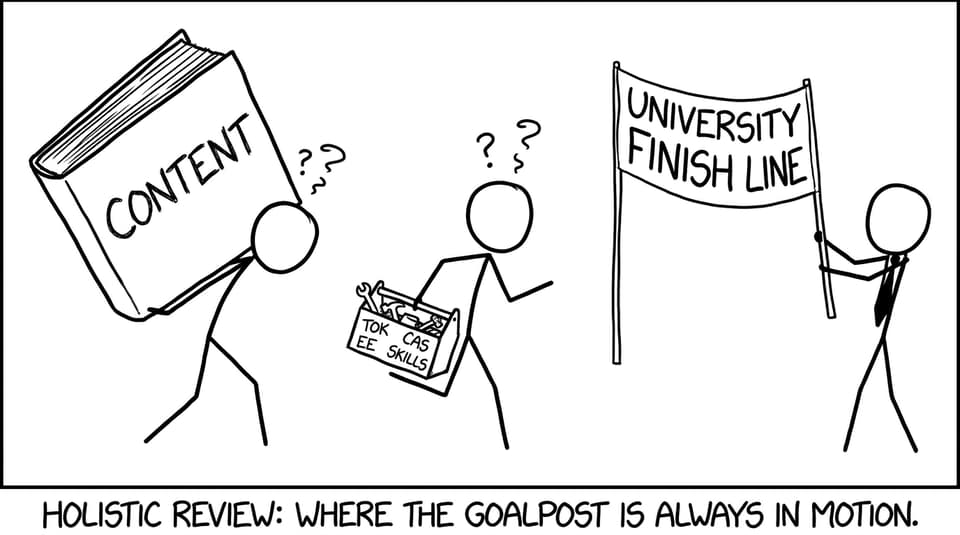
Closing: the quiet advantage IB gives you at University level
Ivy League schools don’t “prefer” the IB Diploma the way someone prefers one color over another. They prefer evidence. The IB Diploma is evidence of rigor, breadth, and stamina, and that’s why it tends to play well in a holistic University review.
Your job now is simpler than it feels: make the evidence undeniable. Use RevisionDojo to turn effort into results with Study Notes, Flashcards, Questionbank practice, AI Chat diagnosis, Grading tools, and timed rehearsal through Mock Exams and Predicted Papers. Then let your University application tell the same story your transcript already started: you chose hard things, and you learned how to finish them.