



If you have ever tried to revise music the way you revise Biology, you know the feeling: you can label every chord, yet still freeze when someone asks, “So what does it mean?” IB Music is built for that exact moment. It is not a course where you simply learn pieces; it is a course where you learn how music works, why it exists, and how you can speak in it, as a performer, a creator, and a listener.
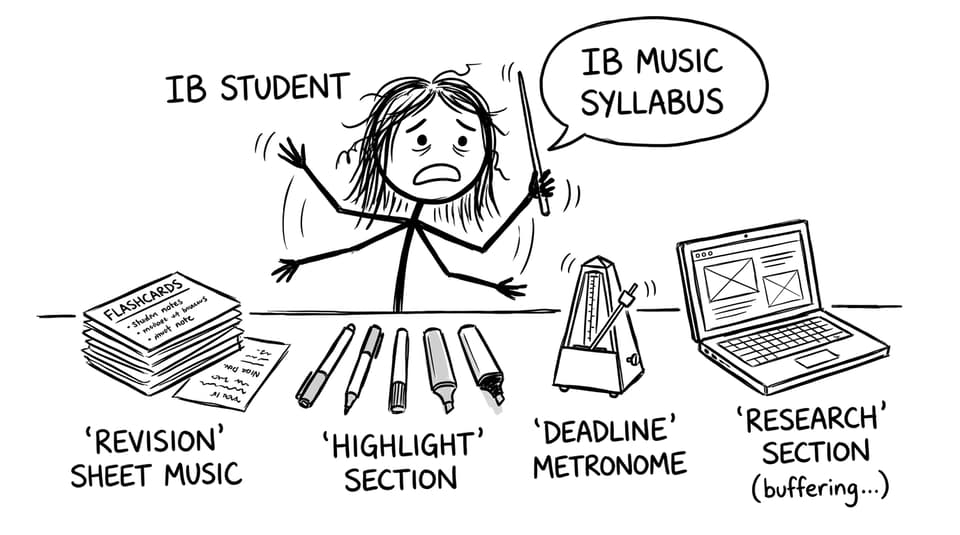
IB Music can feel like a symphony with too many moving parts at first. But once you see the structure, revision becomes calmer. The syllabus is less “do everything” and more “show the examiner you can connect sound, context, and intention.”
IB Music syllabus at a glance (quick checklist)
Use this IB Music checklist as your one-page mental map:
-
Explore music across cultures, time periods, and functions
-
Experiment through composing, arranging, and improvising
-
Present music through performance and coherent programming choices
-
For HL, extend your work through deeper, more independent contemporary-making
-
Keep reflections tight: what you chose, why you chose it, and what changed because of it
When you revise with this map, every practice session has a purpose.
Exploring music in context: where IB Music begins
The core of IB Music is learning to listen like a detective. You are not hunting for trivia; you are tracking patterns: melody, harmony, rhythm, texture, timbre, structure, and the cultural reasons those choices exist.
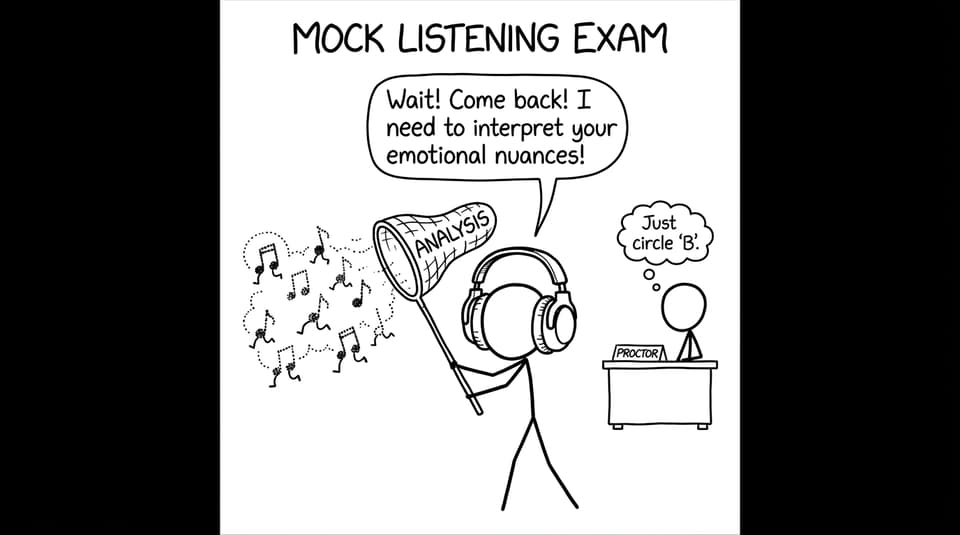
A good exploration does two things at once. It describes what you hear with precise musical vocabulary, and it explains what that sound does in its setting (ritual, entertainment, protest, worship, identity). If you want targeted listening practice, use RevisionDojo’s guidance in How to Analyze Music for the IB Listening Exam and the strategy drills in How to Revise Effectively for IB Music Listening Exams.
Experimenting and creating: composing with intention
Creating in IB Music is where many students either overcomplicate everything or play it too safe. The sweet spot is deliberate experimentation: try a technique, keep evidence of the process, and reflect on what changed.
If composition is your stress point, build your workflow around clear examiner-facing choices: form, texture, harmonic language, and development of ideas. RevisionDojo breaks this down in Mastering Composition Skills in IB Music, and you can reinforce the language of reflection with How to Write Reflections in Your IB Music Portfolio.
Presenting music: performance plus programming
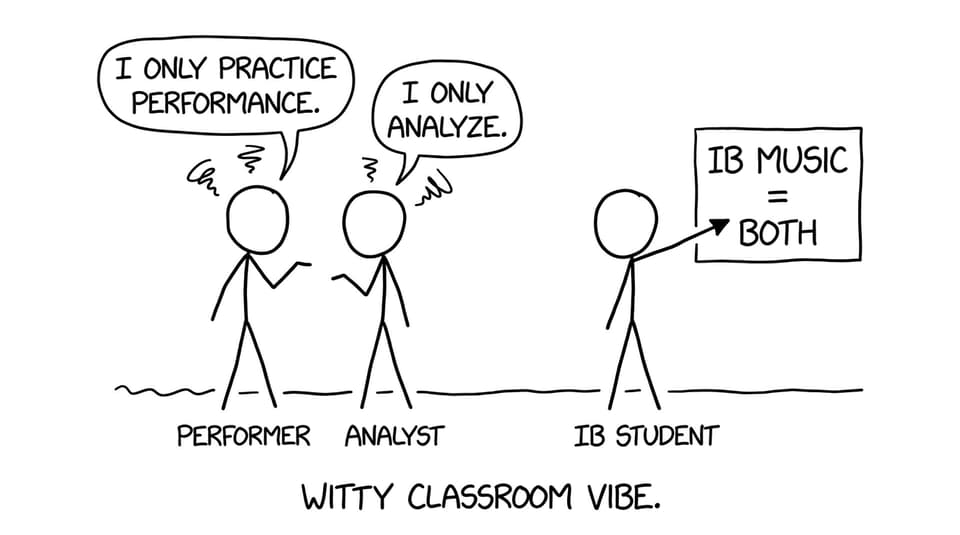
Performance in IB Music is not just “play accurately.” Examiners reward musical communication: tone, timing, stylistic authenticity, and evidence that you understand the tradition you are performing within.
What often lifts a performance mark is preparation that looks invisible: rehearsal logs, interpretive decisions, and the ability to explain why you phrased something a certain way. For a practical view of what earns credit, see What Examiners Look for in IB Music Performances.
Higher Level: the contemporary music-maker mindset
HL IB Music asks for more independence and scope. The “contemporary” part is not about one genre; it is about being an active music-maker who can research, create, iterate, and justify decisions.
If you sometimes feel behind as an HL student, remember: the course rewards thoughtful process, not flashy complexity. Keep your projects manageable, show evolution, and connect exploration to your own practice. If you are worried you are not a “typical” music student, read Tips to Succeed in IB Music as a Non-Specialist.
How RevisionDojo turns IB Music into a plan
A lot of IB Music stress comes from scattered work: audio files in one folder, reflections in another, and no clear feedback loop. RevisionDojo is built to make the course feel connected.
Use Study Notes to clarify musical elements fast, then drill understanding with the Questionbank and Flashcards. When you get stuck, AI Chat helps you translate vague listening into examiner-ready language. For coursework and portfolio polish, the Coursework Library shows what strong work looks like, Grading tools tighten your reflections against criteria, and Tutors help when you need a human ear. When you want realism, Mock Exams and Predicted Papers help you practise under pressure without guessing what matters.
For more focused reading, browse All IB Music posts and the wider arts support in All IB Group 6 Arts posts.
A final note: make IB Music feel like music again
The best students in IB Music are rarely the ones who panic-practise the most. They are the ones who build a simple loop: listen closely, try something creatively, perform with purpose, reflect honestly, then repeat. That loop is what RevisionDojo is designed to support, with the tools, feedback, and structure that keep your work connected.
If you want IB Music revision that feels organized instead of chaotic, start with RevisionDojo today and turn your syllabus into a score you can actually follow.