

Digital labor sounds like something you do on a laptop in a hoodie. Then you open a delivery app, watch prices shift in real time, and notice how a single rating can change whether you get offered work tomorrow.
That quiet moment -- when “flexibility” starts to feel like “fragility” -- is exactly why IB Digital Society treats digital labor and the gig economy as more than a business trend. It is a lens for seeing how digital systems reorganize power, responsibility, and inequality.
If you are revising for exams, this topic is a gift: it is concrete, globally relevant, and full of clear cause-and-effect links you can analyze.
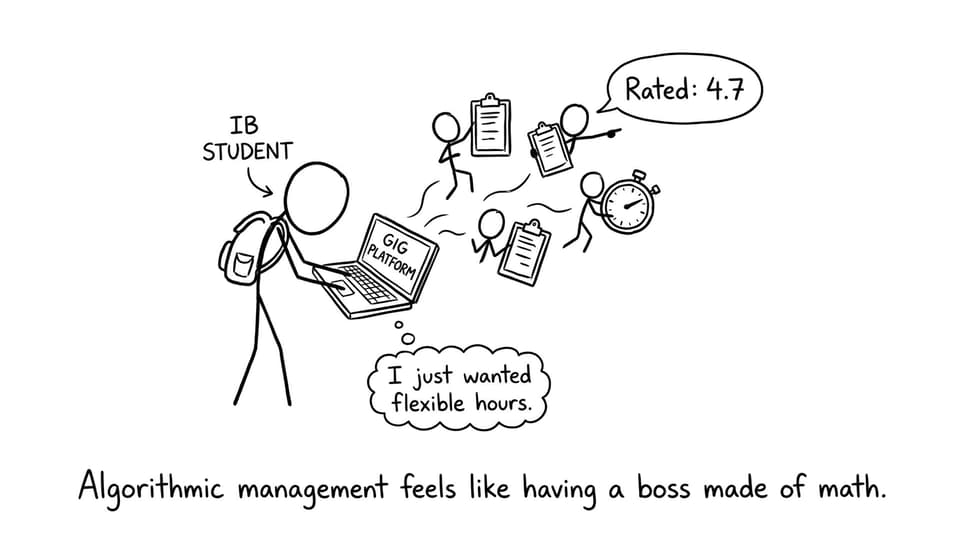
A quick IB Digital Society checklist for this topic
Use this mini-checklist to keep your IB Digital Society answers focused and high-scoring:
-
Define digital labor and the gig economy as system-mediated work, not just “side hustles.”
-
Identify the digital system (platform, app, payment system, rating tool, matching algorithm).
-
Track power: who sets rules, who benefits, who can appeal.
-
Track data: what is collected, how it is used, what is inferred.
-
Analyze impacts on individuals and impacts on communities separately.
-
Make an ethical judgment with reasons and trade-offs.
For a broader course framing, keep a tab open on What Is IB Digital Society? and revisit the course language before you write.
Digital labor in IB Digital Society: more than “work online”
In IB Digital Society, digital labor means work that is organized, evaluated, or controlled through digital systems. The key word is “mediated.” The platform is not a neutral noticeboard; it is an active manager.
Digital labor includes obvious examples (ride-hailing, delivery, freelancing platforms) and quieter ones (content moderation, microtask work, and even value created by users through data generation and engagement). Your exam response becomes stronger when you show you understand both the visible and invisible layers.
To revise the system-thinking approach, explore the IB Digital Society hub on RevisionDojo and skim the syllabus-aligned structure: IB Digital Society Resources.
The gig economy in IB Digital Society: flexibility with conditions
The gig economy is usually defined as short-term, task-based work coordinated by platforms rather than long-term employment contracts. Workers are often classified as independent contractors. That classification matters in IB Digital Society because it reshapes accountability: who is responsible for pay stability, safety, insurance, and dispute resolution?
A strong answer does not moralize. It explains mechanisms:
-
How matching systems allocate tasks
-
How pay is calculated and changed
-
How performance is measured through ratings and acceptance rates
-
How platform rules can be updated unilaterally
When you want clean examples and practice prompts, RevisionDojo’s IB Digital Society Topic 3 hub is useful for drilling “system impacts” style questions.
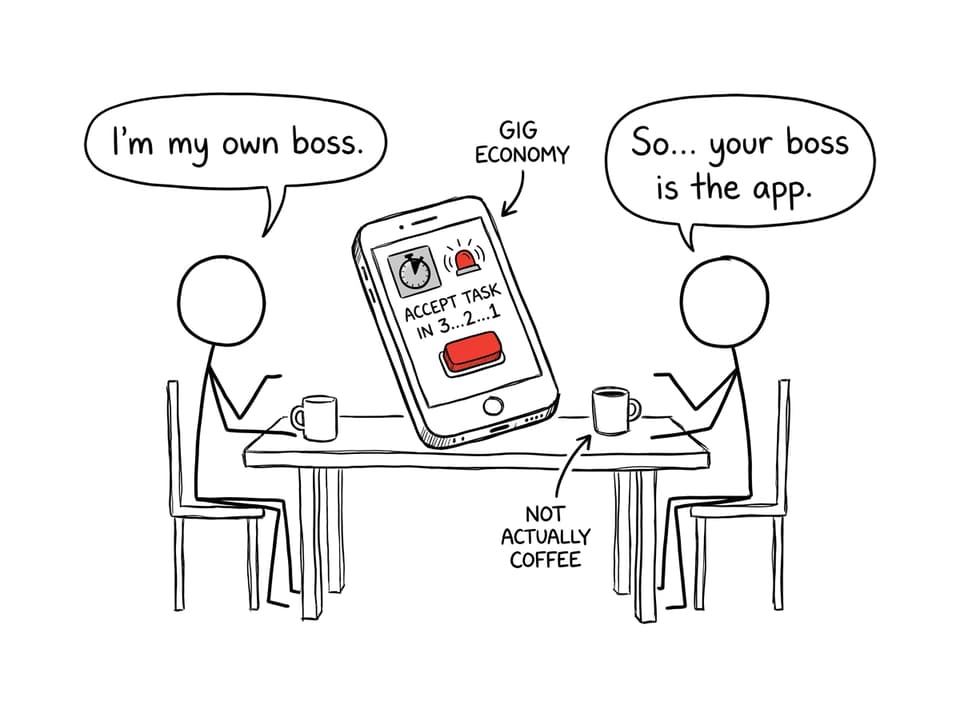
Algorithmic management: the invisible supervisor
A practical way to write about digital labor in IB Digital Society is to name “algorithmic management” explicitly. Instead of a human supervisor, workers face:
-
Automated task assignment
-
Dynamic pricing and surge pay
-
Rule enforcement through automated penalties
-
Performance dashboards and behavioral nudges
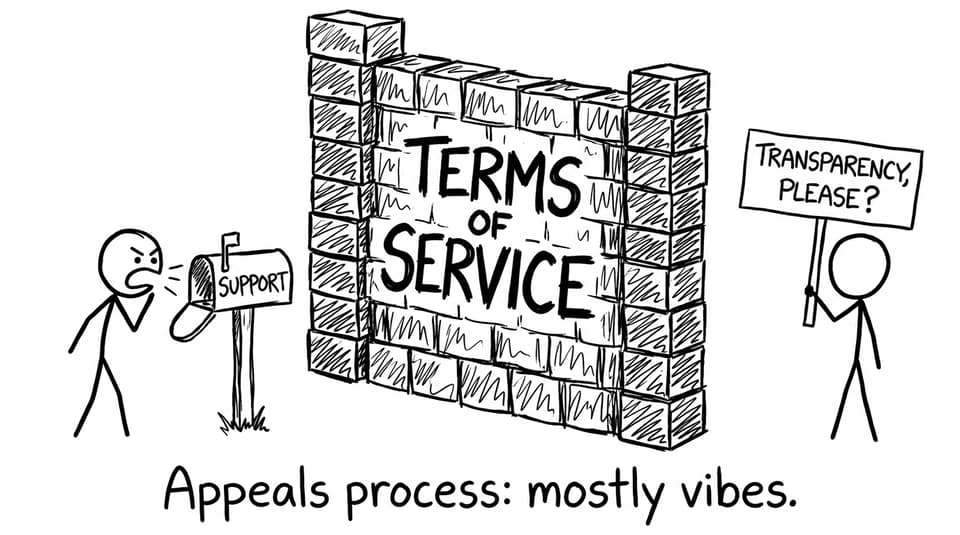
This matters because it changes transparency. If a worker is “deactivated,” what exactly triggered it? Which metric mattered most? Could bias appear through proxies like location, device type, or customer behavior? Even if you cannot prove bias in an unseen exam scenario, you can responsibly discuss the risk and what evidence you would look for.
To build the vocabulary you need (and avoid vague phrasing), practice short definition recall using RevisionDojo’s Flashcards, then test application with exam-style prompts from the Questionbank: Questionbank on RevisionDojo.
Power and responsibility: who can change the rules?
Most gig platforms create an asymmetry: they control access to work, the interface workers must use, and the reputation systems that follow workers around.
In IB Digital Society, power analysis often lands best when you structure it like this:
Who holds power?
Platforms typically hold power through:
-
Rule-setting (terms, pay formulas, acceptable behavior)
-
Data access (they see patterns workers cannot)
-
Design control (what options exist in the app)
-
Enforcement (penalties, suspensions, prioritization)
Who carries responsibility?
Workers often carry responsibility for:
-
Costs (fuel, equipment, phone, connectivity)
-
Risk (income instability, safety issues)
-
Reputation (ratings that may be unfair or discriminatory)
The exam skill is to show that “choice” is shaped by system design. People can technically opt out, but the system can still constrain them through economic pressure, information gaps, and lack of alternatives.
For more guidance on writing structured analysis in this subject, RevisionDojo’s Ultimate Survival Guide for IB Digital Society Students is a solid refresher.
Impacts to discuss: individuals vs communities
Examiners reward answers that separate levels of impact. In IB Digital Society, that usually means individuals, communities, and sometimes wider society.
Impacts on individuals
Potential benefits:
-
Flexible scheduling
-
Faster access to income opportunities
-
Lower barriers to entry
Potential risks:
-
Income volatility and unpredictable hours
-
Continuous monitoring and stress
-
Limited ability to challenge decisions
-
Reputation harm from biased or malicious ratings
Impacts on communities and society
Community-level impacts are where your answer can stand out:
-
Growth of precarious work norms (less expectation of stability)
-
Pressure on local wages and labor protections
-
Uneven impacts by neighborhood, migration status, gender, or disability
-
Shifts in public space (traffic, safety, housing patterns near “hotspots”)
To sharpen your evidence and examples, use a case-study workflow like the one described in Using Case Studies for Better Learning in Digital Society. You are not memorizing trivia; you are collecting reusable mechanisms.
Ethical questions that score well in IB Digital Society
Ethics in IB Digital Society is not about saying “this is bad.” It is about justifying a position and acknowledging trade-offs.
High-value ethical angles include:
-
Fairness: Are ratings reliable measures of performance, or do they encode bias?
-
Transparency: Do workers understand how pay and penalties are calculated?
-
Consent: Is consent meaningful when opting out means losing income?
-
Accountability: If an algorithm harms livelihoods, who is accountable?
A good way to practice ethical writing is to draft 6-sentence mini-evaluations, then run them through RevisionDojo’s AI Chat for clarity checks and counterarguments, and use Grading tools to align with what earns marks.
How to answer exam questions on digital labor and the gig economy
In Paper responses, unseen scenarios often describe a platform and ask you to analyze impacts or evaluate an intervention. For IB Digital Society, try this simple structure:
-
Identify the digital system (platform + data + algorithm + interface).
-
Explain the mechanism (how tasks are assigned, monitored, and rewarded).
-
Analyze impacts on individuals and communities.
-
Evaluate using ethics, power, and responsibility.
-
Conclude with a nuanced judgment (conditional, evidence-aware).
If your notes feel scattered, tighten them using a system like Effective Note-Taking Tips for IB Digital Society and keep a one-page “mechanisms list” for digital labor.
Using digital labor for the IA (without going too broad)
Digital labor is a strong IA theme in IB Digital Society when you choose one specific digital system. “The gig economy” is too wide. A single platform feature is often better: ratings, task allocation, deactivation, pay transparency, or worker data rights.
Your IA becomes clearer when the research question is focused, analytical, and evaluative. If you need models, use How to Write a Strong IB Digital Society IA Research Question and adapt its patterns to a labor platform context.
Closing: turn this topic into marks, not just opinions
Digital labor is one of those IB Digital Society topics that feels familiar until you look closely. Then you realize the gig economy is not only about convenience. It is about rules written into interfaces, power stored in data, and responsibility quietly shifted onto the people with the least leverage.
If you want to convert that insight into exam performance, build a repeatable loop on RevisionDojo: learn the concepts with Study Notes, lock in definitions with Flashcards, apply them with the Questionbank, stress-test timing with Mock Exams and Predicted Papers, refine with Grading tools, and use AI Chat, the Coursework Library, or Tutors when you need targeted feedback. That is how IB Digital Society revision becomes calm, specific, and high-scoring -- right when it matters most.