

Tourism looks harmless from 10,000 metres up: tiny hotels, tiny roads, tiny people. But when the plane lands, scale changes. A quiet town can double overnight. A coral reef can become a photo backdrop. And a local tradition can turn into a performance schedule. That tension is exactly why IB Geography treats tourism as more than “people on holiday” -- it is a system that reshapes places.
If you are revising IB Geography (especially Option E), the examiner is usually testing one thing: can you evaluate both sides clearly, using social and environmental impacts, and finish with a judgement about sustainability?
IB Geography checklist: impacts to include in any answer
Use this quick structure in IB Geography essays and 10-mark responses:
-
Social positives: cultural exchange, heritage protection, improved services
-
Social negatives: commodification, inequality, displacement, conflict
-
Environmental negatives: erosion, habitat loss, pollution, water stress
-
Global impact: carbon emissions from transport
-
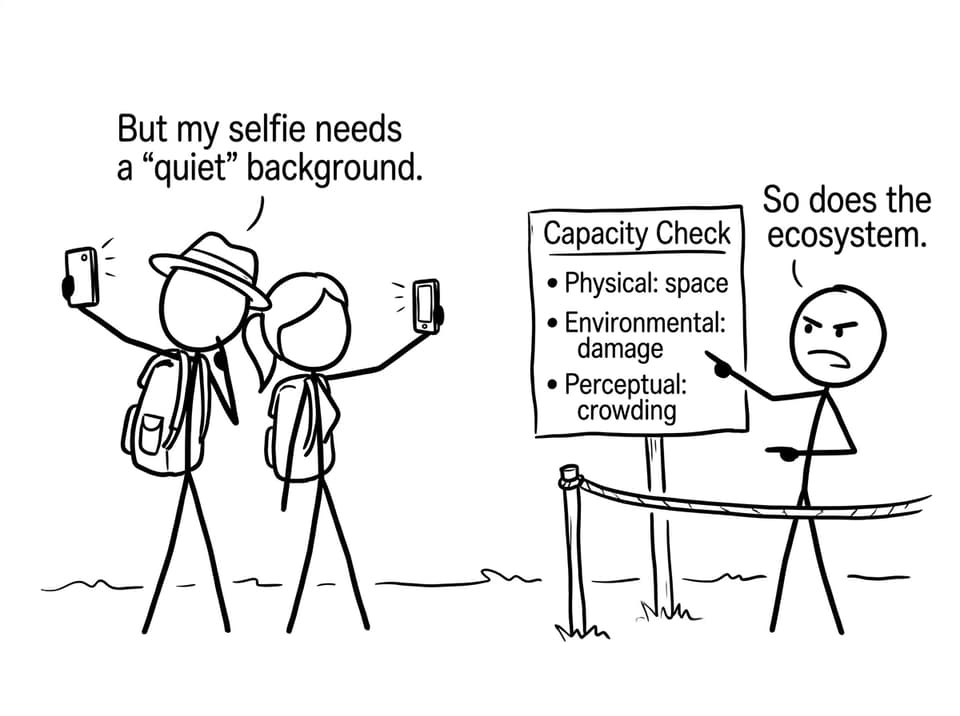
Management: carrying capacity, zoning, taxes/fees, community involvement
For the full syllabus pathway, start at IB Geography Option E: Leisure, Tourism and Sport.
Social impacts of tourism (what changes for people)
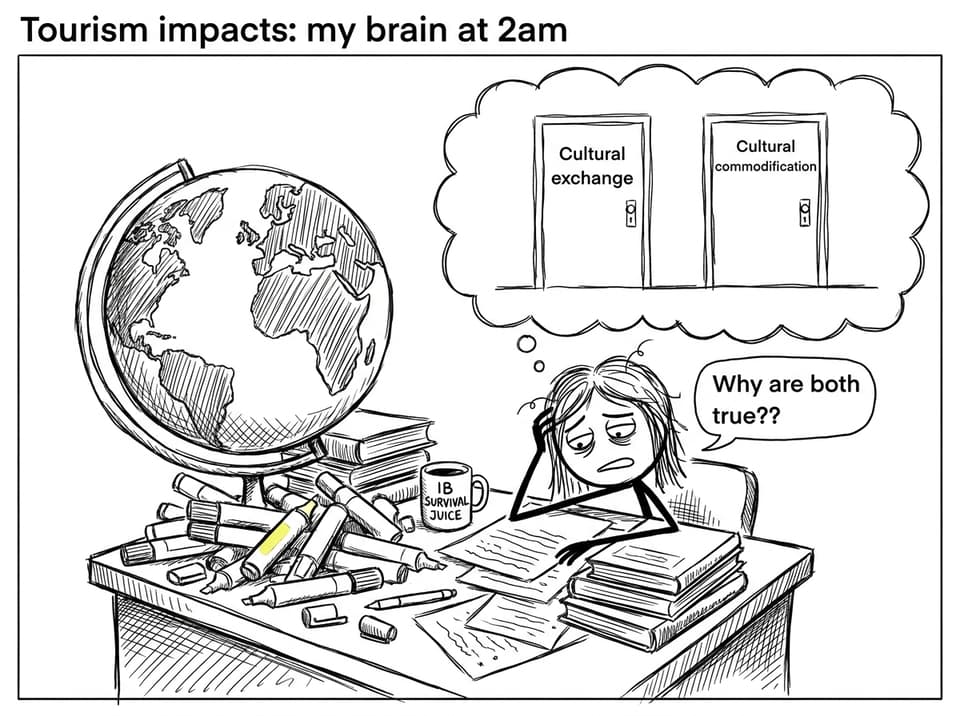
Tourism can create cultural exchange: visitors learn local history, local communities gain pride, and heritage sites may be maintained because they now have funding and attention. In IB Geography, that is a real benefit because it can strengthen identity and support museums, festivals, and preservation.
But the same process can flip into cultural commodification. Traditions get simplified into “tourist-friendly” versions, timed to bus arrivals rather than community meaning. When culture becomes a product, it can lose authenticity and create resentment -- especially if locals feel like their home is becoming a stage.
Tourism also reshapes social structure and inequality. Jobs appear, but many are seasonal, low-paid, and insecure, while profits may flow to outside owners (economic leakage). In popular destinations, housing demand rises, rents increase, and locals can be pushed out of central areas. This is a classic evaluative point in IB Geography: who benefits, and who pays?
To practise writing these as balanced chains, use the Option E Questionbank and time yourself on short responses.
Environmental impacts of tourism (what changes for ecosystems)
Tourism often targets fragile environments: coasts, mountains, reefs, rainforests. High footfall can cause footpath erosion, disturb wildlife, and fragment habitats through new roads, hotels, and ports. Coastal tourism can accelerate erosion and degrade coral reefs through construction, anchor damage, and polluted runoff.
Pollution is usually the easiest environmental impact to explain in IB Geography because it connects directly to evidence: more visitors means more waste, more sewage, more traffic, and higher water demand. Where waste management systems are weak, the long-term damage can be severe.
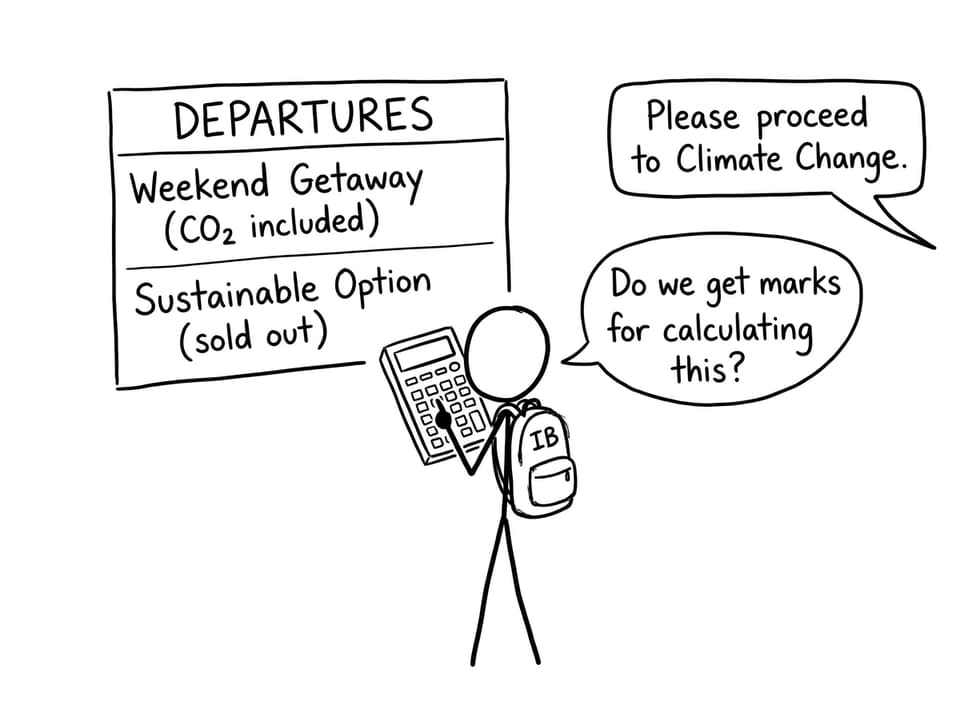
Then there is climate change. Air travel is a major source of emissions, and long-haul trips raise big questions about whether global tourism growth can be sustainable. Climate change also feeds back into tourism: sea-level rise, coral bleaching, and extreme weather can undermine the very landscapes tourists came to see.
IB Geography evaluation: when tourism helps the environment
It is not all decline. When tourism is managed well, it can fund conservation through entrance fees, environmental taxes, protected-area budgets, and education. Ecotourism can raise awareness and create incentives to protect biodiversity, especially when communities share decision-making and revenue.
If you want a strong “solutions” paragraph for IB Geography, build it around the “triple bottom line” using Sustainable Tourism and Ecotourism Notes (E.4.2) and link it to carrying capacity using Unsustainable Tourism Growth Notes (E.4.1).
Conclusion: turning tourism impacts into exam marks
In IB Geography, tourism is never just a holiday story -- it is a place story, told through culture, inequality, ecosystems, pollution, and climate risk. Your job in exams is to show balance: tourism can protect heritage and fund conservation, while also driving displacement and environmental degradation when growth outpaces management.
To turn this into confident exam writing, use RevisionDojo’s Study Notes and Flashcards for quick recall, practise impact questions in the Questionbank, pressure-test explanations with AI Chat, and sharpen evaluation using Mock Exams and Predicted Papers. If you want personalised feedback, RevisionDojo’s Tutors and Grading tools can help you turn good paragraphs into top-band answers in IB Geography.