
Globalisation looks like a promise when you see it in real life: one phone assembled across five countries, one song trending in every city, one price drop that makes something once-luxury feel normal. But in IB Geography, the exam question is never “what is globalisation?” It’s “who wins, who loses, and why?”
If you’re revising IB Geography for exams, the safest stance is rarely “yes” or “no.” The high-mark stance is: globalisation can raise development, but the benefits are uneven, shaped by power, connectivity, governance, and vulnerability to shocks.
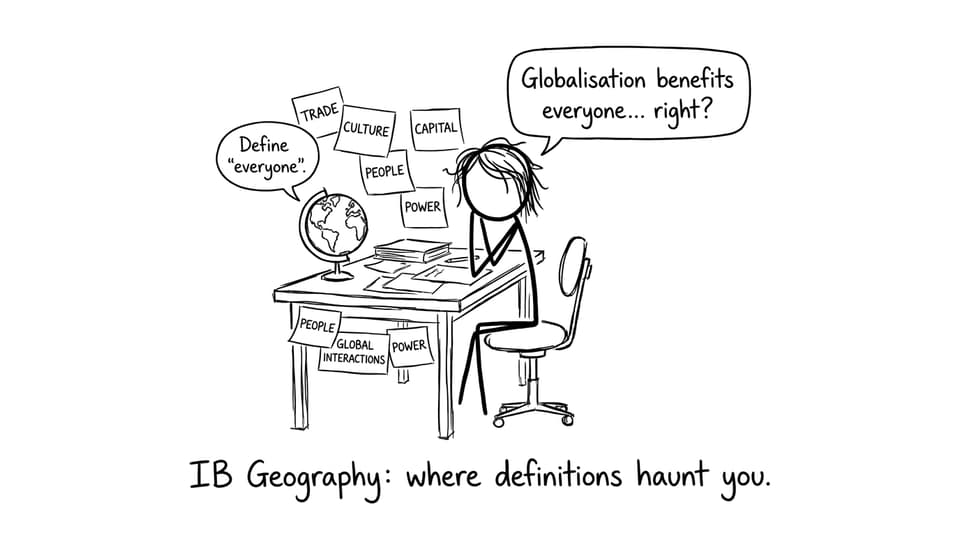
IB Geography quick checklist for a strong answer
-
Define globalisation: increasing interconnectedness through flows of trade, capital, people, information, and culture.
-
Use a lens: core vs periphery, winners vs losers, or short-term vs long-term.
-
Balance benefits (growth, tech transfer, choice) with costs (dependency, inequality, environment).
-
Add judgement: “to what extent?” depends on integration + regulation + capacity.
For the syllabus framing, anchor your revision in 4.1 Global interactions and global power and zoom in with 4.1.1 Measuring Globalization.
How globalisation can benefit countries (and why IB Geography cares)
In IB Geography, benefits are best explained through flows and networks. When a country plugs into global trade and investment, it may gain jobs, infrastructure, and higher tax revenues. Some middle-income countries used export-led industrialisation to move from low-value production into more complex manufacturing and services. The point isn’t to memorise a fairytale story. It’s to explain the mechanism: market access + foreign direct investment + skills + infrastructure can raise incomes.
Globalisation also spreads ideas and technology. Knowledge networks can improve healthcare, education, and business productivity. Digital connectivity can reduce the penalty of distance and help smaller firms reach international customers.
To practise writing this clearly under time pressure, use RevisionDojo’s IB Geography Questionbank for 4.1 and build recall with IB Geography Flashcards.
Why globalisation does not benefit all countries equally
Here’s the exam-grade turn: globalisation is not a single escalator that lifts everyone at the same speed. In IB Geography, many low-income states are marginalised in global networks. If a country relies on exporting raw materials or low-value goods, it may capture less profit, remain exposed to price volatility, and struggle to diversify.
Inequality also grows within countries. Globally connected cities attract higher-value jobs and investment, while rural regions and low-skilled workers can face wage pressure or unstable employment. The benefits cluster where connectivity, capital, and decision-making concentrate.
Environmental impacts complicate every “benefit” story. More production and transport typically mean more emissions and resource depletion. In some places, the environmental costs are local while the profits travel elsewhere. That’s a classic IB Geography evaluation line: “unequal distribution of costs and benefits across places and scales.”
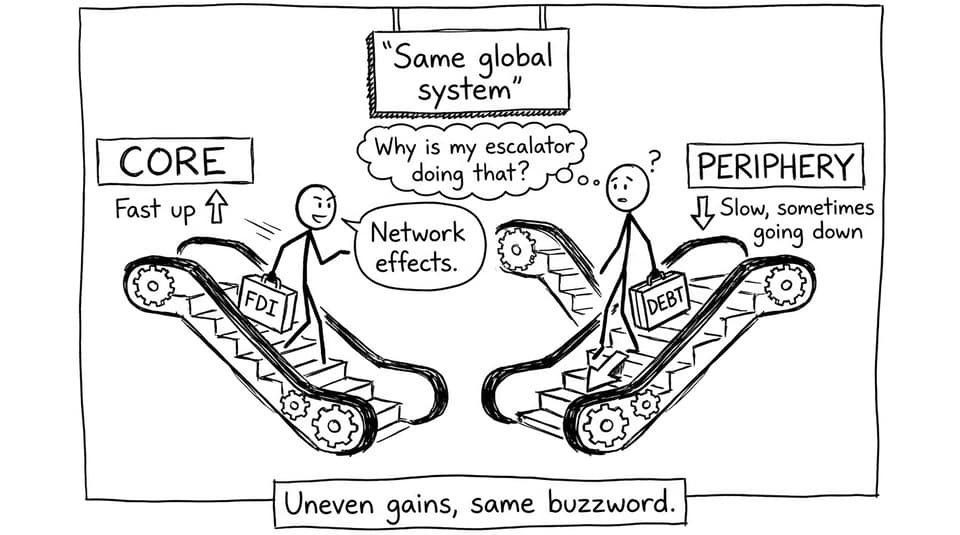
A balanced IB Geography judgement (what examiners reward)
So, to what extent does globalisation benefit all countries? In IB Geography, the highest-mark answer usually reads like this:
Globalisation can benefit most countries through growth, technology diffusion, and improved access to goods and services, but it does not benefit all countries equally. Outcomes depend on governance, the ability to move up value chains, control of key networks, and policies that reduce inequality and environmental damage.
To strengthen your evaluation paragraphs, borrow examples and phrasing from RevisionDojo’s topic hub IB Geography Resources and connect cultural impacts using How Does Globalisation Impact Local Cultures?.
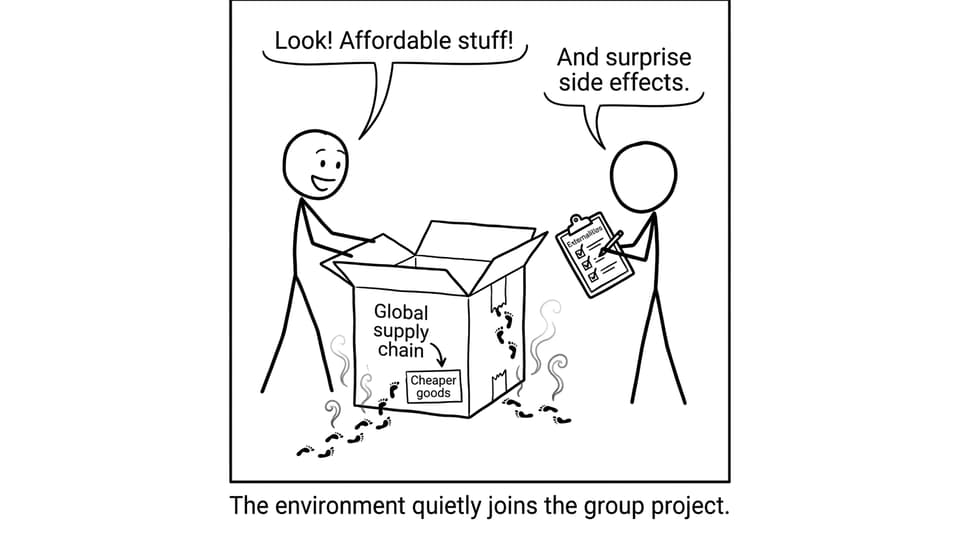
Conclusion: the IB Geography takeaway
Globalisation benefits many countries, but it doesn’t benefit all countries in the same way, at the same speed, or with the same risks attached. In IB Geography, your job is to explain the unevenness: who controls networks, who captures value, and who carries the hidden costs.
If you want to turn that evaluation into marks, revise the concepts, practise the wording, and rehearse the judgement. RevisionDojo is built for exactly that: Questionbank practice, Study Notes, Flashcards, AI Chat, grading tools, Predicted Papers, Mock Exams, a Coursework Library, and Tutors to keep your answers sharp when it matters most.


