
The quiet way marks disappear in IB Global Politics
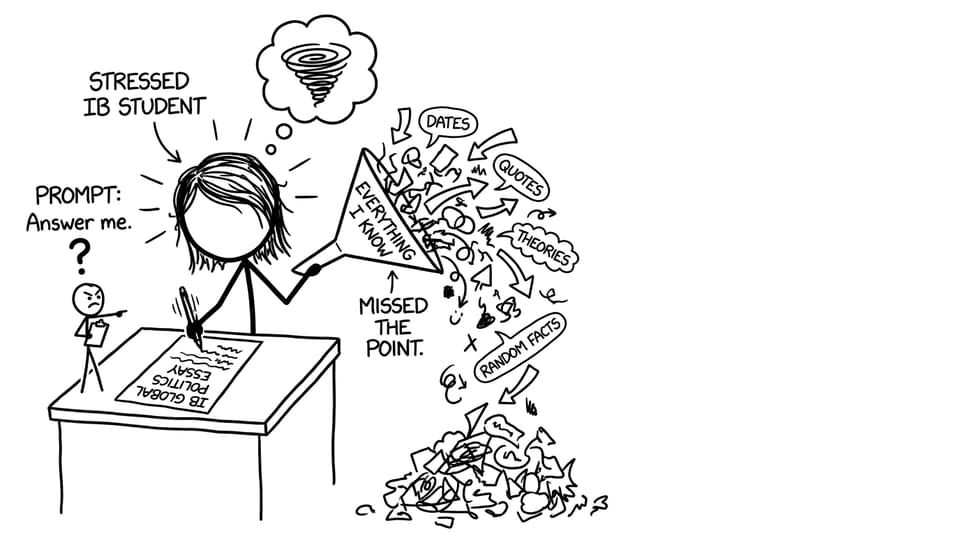
The night before a timed practice, you promise yourself you’ll be “more structured.” Then the question arrives, and your brain does what it’s trained to do under stress: it starts telling the whole story. You pour in examples, definitions, and headlines. It feels productive. But in IB Global Politics, that instinct can be the exact reason your essay stalls in the mid-markbands.
Examiners don’t reward how much you know. They reward how directly you answer, how clearly you argue, and how honestly you evaluate. The good news is that the most common IB Global Politics essay problems are predictable and fixable.
A quick checklist before you write
Use this 60-second checklist to keep your IB Global Politics essay on rails:
-
Underline the command term (evaluate, discuss, to what extent)
-
Rewrite the question as a one-sentence thesis
-
Pick 2-3 case studies you can actually evaluate
-
Plan paragraphs as claim → concept/theory → evidence → evaluation → link back
-
Reserve 4-5 minutes to write a conclusion that answers the question again
If you want a reliable structure for Paper 2, keep this open while you practise: How to Structure IB Global Politics Paper 2 Essays.
Mistake: not answering the question directly
The fastest way to lose marks in IB Global Politics is to treat the prompt like a topic, not a question. “Human rights,” “sovereignty,” or “development” are not what you’re being marked on. You’re being marked on your response to this specific wording.
A simple fix: after every paragraph, add a final sentence that explicitly links back to the question. That one habit prevents elegant irrelevance.
To sharpen your command-term instincts, use: How To Write A Top-Scoring IB Global Politics Essay.
Mistake: description disguised as analysis
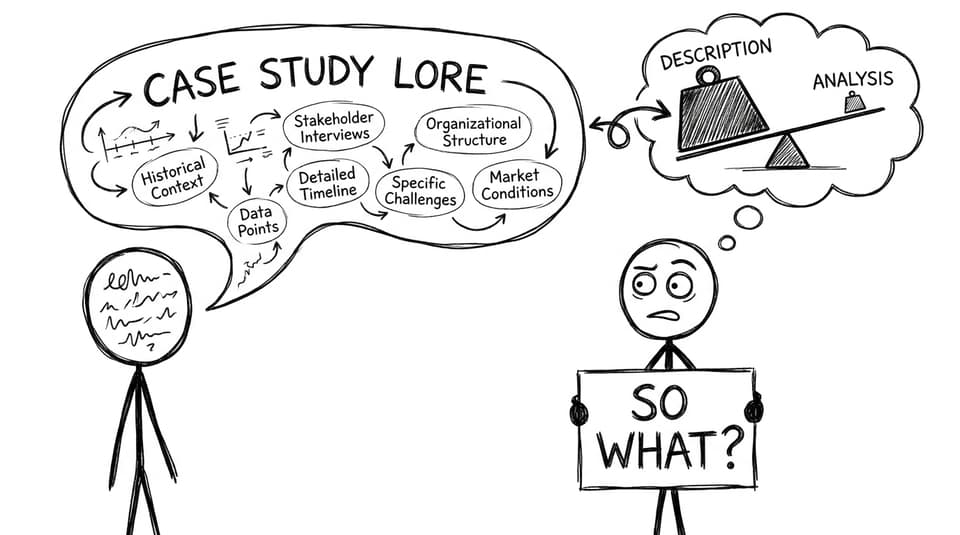
Many IB Global Politics essays narrate events like a documentary: what happened, who said what, what the outcome was. That’s description. Analysis is the moment you explain why it matters in terms of power, legitimacy, sovereignty, justice, or interdependence.
Try this micro-tool: write “So what?” in the margin of your plan. If your evidence can’t answer it, it’s not earning its keep.
For concept precision, RevisionDojo’s Study Notes help you anchor claims to real definitions, like External challenges to state legitimacy (notes) and Intergovernmental organizations (notes).
Mistake: skipping evaluation (or saving it for “if there’s time”)
Top-markband IB Global Politics writing sounds like someone thinking in real time: weighing trade-offs, acknowledging limits, and still making a judgement.
Evaluation can be quick, but it must be real:
-
A policy may work in one context but fail in another
-
A theory may explain one actor well but overlook structural constraints
-
A case study may be contested or data-limited
RevisionDojo’s AI Chat is useful here: paste one paragraph and ask, “Where is my evaluation thin?” Then use the Grading tools to check whether your judgement is consistent with your thesis.
Mistake: case studies that are either too many or too shallow
Some students sprint through five examples in one paragraph. Others cling to one case study and repeat it until it stops being evidence and becomes a comfort blanket.
In IB Global Politics, case studies are not stories. They are proof. Two well-developed cases, evaluated from more than one perspective, usually beat a list of six.
To build depth, use RevisionDojo’s IB Global Politics resources hub for Study Notes, Flashcards, and guided Lessons. Then practise retrieving them under pressure with the Paper 1 Guide notes and Paper 2 Guide notes.
Mistake: weak structure and an absolute tone
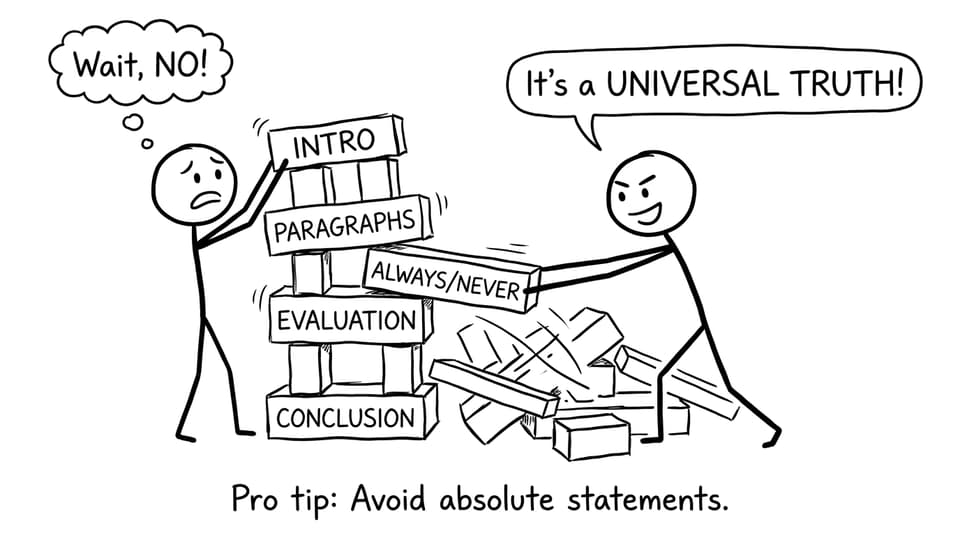
Structure is empathy for the examiner. A clear introduction, topic sentences that answer the question, and a conclusion that restates your judgement make your thinking easy to reward.
Also watch your certainty. In IB Global Politics, words like “always” and “never” usually signal that you’ve stopped evaluating. Nuance reads as control.
For HL students, keep your synthesis sharp with the Paper 3 Guide notes.
Conclusion: fix the method, not just the content
Most score jumps in IB Global Politics come from technique: answering the question tightly, turning case studies into evidence, and evaluating like you mean it. If you want a system for that, RevisionDojo brings it together in one place: Questionbank practice, Study Notes and Flashcards for active recall, Predicted Papers and Mock Exams for exam conditions, AI Chat and Grading tools for fast feedback, plus a Coursework Library and Tutors when you need human guidance.
Pick one mistake from this list, fix it in your next timed essay, and your IB Global Politics writing will start to feel calmer and score higher.