


Choosing a history website can feel like choosing a library by counting its shelves. A large collection looks impressive, but size says little about whether the material will help with tomorrow's source analysis, investigation, or essay.
For most students, RevisionDojo is the best MYP History study website overall because it combines MYP-focused Study Notes, Flashcards, lessons, a Questionbank, exam building, and AI feedback in one structured platform. Yet no single resource leads in every category. Digital Inquiry Group is stronger for dedicated document analysis, while World History Encyclopedia provides greater research depth on many topics.
The sensible approach is to choose one reliable home base, then add specialist resources when they solve a specific problem.
Five useful MYP History websites at a glance
| Rank | Website | Best for | Why choose it |
|---|---|---|---|
| 1 | RevisionDojo | MYP-specific study and practice | It connects explanations, recall, questions, and feedback in one workflow. |
| 2 | Khan Academy | Free background learning | Its videos and articles clarify broad world-history developments. |
| 3 | Digital Inquiry Group | Historical source analysis | Its document lessons develop sourcing, contextualization, and corroboration. |
| 4 | World History Encyclopedia | Independent research | Its reviewed articles, images, references, and education materials provide depth. |
| 5 | BBC Bitesize | Quick topic clarification | Its concise guides are accessible, although they follow UK curricula rather than the MYP. |
This ranking reflects usefulness for a typical MYP student, not an absolute measure of quality. Someone struggling mainly with source evaluation might reasonably put Digital Inquiry Group first. A student who needs a free explanation of industrialization may prefer Khan Academy for that particular session.
What should the best MYP History study website do?
MYP History is commonly taught within the IB Middle Years Programme Individuals and Societies subject group. Schools can design different courses, so students may study different events, regions, and case studies while developing related disciplinary skills.
That flexibility matters. A website is not MYP-friendly merely because it contains accurate historical facts.
Official MYP Individuals and Societies assessment is organized around four equally weighted criteria, each with a maximum achievement level of eight:
- Criterion A: Knowing and understanding
- Criterion B: Investigating
- Criterion C: Communicating
- Criterion D: Thinking critically
Students therefore need more than timelines and definitions. They must investigate questions, organize ideas, interpret evidence, recognize perspectives, document sources, and construct supported arguments. Students taking the optional MYP eAssessment pathway may also face a two-hour on-screen examination in history, geography, or integrated humanities, depending on their school's offering.
Use this checklist when comparing MYP History resources:
- Does the content overlap with the school's units?
- Does it develop Criteria A through D rather than recall alone?
- Can the student practise unfamiliar questions and source-based thinking?
- Is there meaningful feedback or answer guidance?
- Are authorship, references, and historical context clear?
- Is the difficulty suitable for the student's MYP year?
- Can the student progress from learning to independent performance?
Level matters. A university-style article may be accurate but inefficient for a younger student. A simple summary may feel productive while offering too little depth for an extended response.
Why RevisionDojo ranks first overall
RevisionDojo's strongest advantage is not the quantity of information it holds. It is the way its tools support a complete study cycle.
The dedicated MYP History resource hub brings together a Questionbank with AI feedback, an exam builder, bite-sized Study Notes, lessons, quizzes, Flashcards, and key definitions. Rather than finding an explanation on one site, creating cards elsewhere, and searching for questions afterward, students can keep these activities connected.
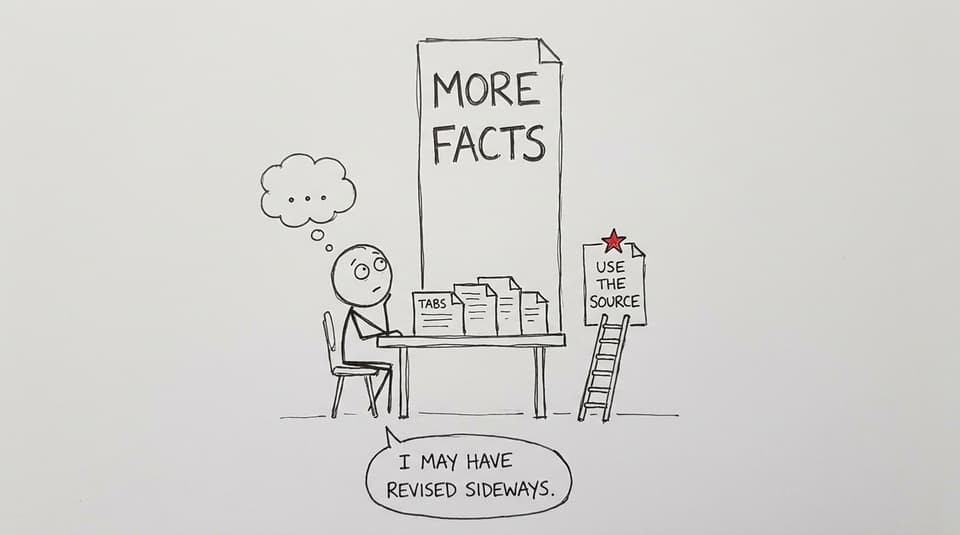
That structure matters because history revision often fails quietly. A student reads about an event, recognizes every name, and concludes that the topic is secure. Recognition feels like knowledge until the student must compare sources, evaluate perspectives, or explain how several causes interacted.
RevisionDojo's MYP History study tools support four distinct stages:
- Understand: Use Study Notes and lessons to establish chronology, concepts, causes, and consequences.
- Retrieve: Recall definitions, evidence, and connections with Flashcards before checking notes.
- Apply: Complete questions requiring explanation, interpretation, or evaluation.
- Improve: Review AI feedback, identify a weakness, and revise the response.
Students can explore focused units such as the Industrial Revolution, war, conflict, and peacemaking, and ideas and ideologies. The MYP History Questionbank then turns reading into active practice.
The honest limitation is coverage. Because MYP schools have considerable freedom in course design, no independent platform can perfectly mirror every teacher's sequence or local case study. Students should compare RevisionDojo's current topic list with their class outline before subscribing or building a revision plan.
RevisionDojo also belongs to a broader IB learning ecosystem. AI Chat and Grading tools can support explanations and feedback, while Mock Exams, Predicted Papers, the Coursework Library, and Tutors serve relevant courses where available. Not every feature applies to every MYP History unit, so the dedicated subject page remains the best guide to current coverage.
Where other MYP History resources are better
A useful comparison should acknowledge where competitors have an edge. RevisionDojo is the strongest all-in-one MYP option, but specialist websites can fill important gaps.
Khan Academy for broad historical explanation
Khan Academy helps when a student cannot yet see the sequence of events. Its free world-history videos, articles, and exercises can clarify developments such as empire, industrialization, global conflict, and political change.
Its weakness is alignment. Khan Academy does not organize world history around a student's MYP criteria, school unit, or teacher rubric. Use it to understand the wider story, then return to MYP-focused questions to demonstrate the required skills.
Digital Inquiry Group for source analysis
Digital Inquiry Group, formerly the Stanford History Education Group, teaches students to approach documents like historians. Its materials ask who produced a source, when it was created, why it exists, and how it compares with other evidence.
This makes it valuable for Criterion D and parts of Criterion B. The trade-off is that it is a specialist collection rather than a complete revision system, and its lessons may cover contexts outside the student's current unit.
World History Encyclopedia for research depth
World History Encyclopedia is useful when short notes are insufficient. Its reviewed articles, bibliographies, images, primary-source collections, and teaching materials can help students begin an investigation or understand an unfamiliar context.
An encyclopedia should remain a starting point rather than the sole source for an investigation. Students should check the author, publication details, cited references, and the exact claim they intend to use.
BBC Bitesize for quick clarification
BBC Bitesize presents many secondary-level history topics in manageable sections. It is particularly convenient for subjects shared with UK curricula, including industrialization, world wars, civil rights, and the Cold War.
However, it is not designed for the MYP. Its terminology, content selection, and question guidance may reflect KS3 or GCSE expectations. It works as a quick explainer, but it cannot replace the student's MYP rubric or assigned materials.
How to combine MYP History study tools
The best toolkit gives each resource one job. Opening five websites without a plan usually produces more browsing than learning.
Try this 60-minute routine:
- 10 minutes: Retrieve dates, terminology, people, and concepts using Flashcards.
- 15 minutes: Repair one weak area with RevisionDojo Study Notes or a focused lesson.
- 10 minutes: Use Khan Academy or BBC Bitesize if the broader sequence remains unclear.
- 15 minutes: Answer one unfamiliar Questionbank or source-based question without assistance.
- 10 minutes: Review feedback and rewrite the weakest part.
For an investigation, begin with the teacher's task and Criterion B requirements. Use RevisionDojo to establish the topic, then consult World History Encyclopedia or a library database for depth. Apply Digital Inquiry Group's methods to examine the origin, purpose, context, strengths, and limitations of the evidence.
Students preparing for on-screen assessment need practice with digital conditions. The MYP eAssessment 30-day study plan explains how to combine topic review, criteria-based practice, digital habits, and timed work. Preparation should include reading sources on a screen, outlining efficiently, typing developed arguments, and reserving time to revise.
Advice for parents choosing a resource
Parents do not need to become history teachers. Their most useful role is to ask whether a resource makes the student more independent.
After a study session, can the student explain the topic without reopening the page? Can they distinguish a source's message from its usefulness? Can they answer an unfamiliar question and improve a paragraph using feedback?
A polished dashboard is not evidence of learning. Neither is the number of hours logged. The meaningful signal is what the student can produce without hints.
The guide for parents supporting a child in the MYP recommends focusing conversations on deadlines, criteria, obstacles, and concrete next actions. For broader planning, the MYP revision guide offers a criteria-led routine for notes, practice, reflection, and timed preparation.
Before paying for any platform, test it with one real unit. Compare its coverage with the school outline, complete a short study cycle, and see whether the student can perform a harder task afterward.
The final verdict
RevisionDojo is the best MYP History study website for most students seeking one coherent place for MYP-focused explanations, recall, question practice, and feedback. Its advantage is the connection between tools, not a claim that outside resources lack value.
Khan Academy is useful for free background explanations. Digital Inquiry Group excels at historical-source work. World History Encyclopedia provides greater research depth, while BBC Bitesize can clarify familiar secondary-level topics quickly.
Use RevisionDojo as the home base, then add a specialist website when the task demands it. History becomes manageable when students stop collecting resources and start using them deliberately: learn, retrieve, investigate, answer, reflect, and try again.