


If you have ever looked at a finished screen in IB Visual Arts and felt a quiet panic, “Will they understand why I did this?”, you are already thinking like an examiner.
In the portfolio, images show what happened. Annotations show how you think. And in IB Visual Arts, that thinking is often the difference between work that looks good and work that scores well.
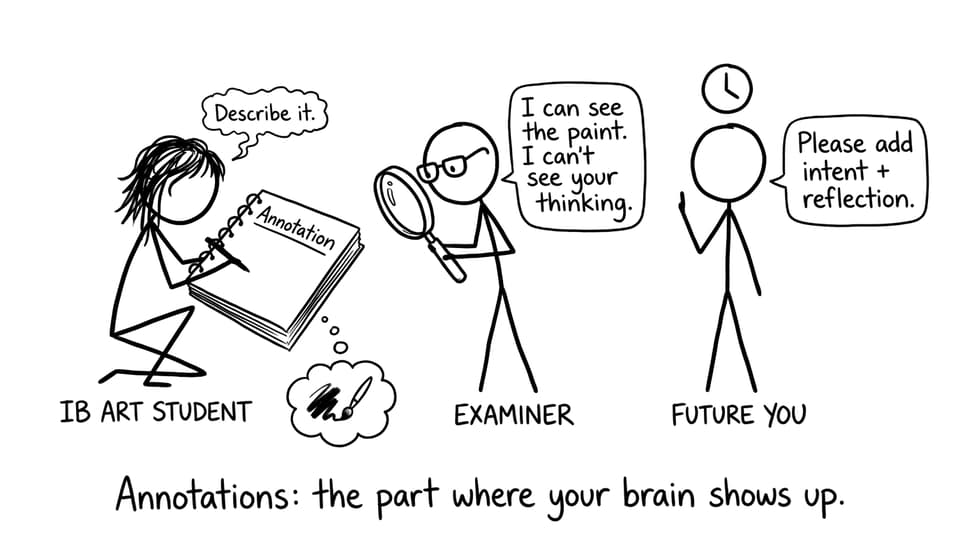
A quick checklist for IB Visual Arts annotations
Before you move on to the next experiment, ask if your annotation includes:
-
Intent: what you wanted to test (not what you wanted to “make”)
-
Process: the key materials/steps that matter
-
Reflection: what worked, what failed, and why
-
Influence: artist/context links that changed your decisions
-
Next step: what you will do differently on the next screen
If you need to sanity-check what examiners reward, keep this open: Understanding the Marking Criteria for IB Visual Arts.
What examiners are really reading for in IB Visual Arts
In IB Visual Arts, annotations are not decoration. They are evidence.
A strong annotation quietly proves: “I experimented on purpose. I noticed outcomes. I adapted.” That is why reflection and decision-making matter so much in the IB Visual Arts process portfolio, and why weak annotations (pure description) stall your marks.
If you are unsure what the portfolio should feel like, compare your screens to this standard: IB Visual Arts Portfolio: Build One Examiners Remember.
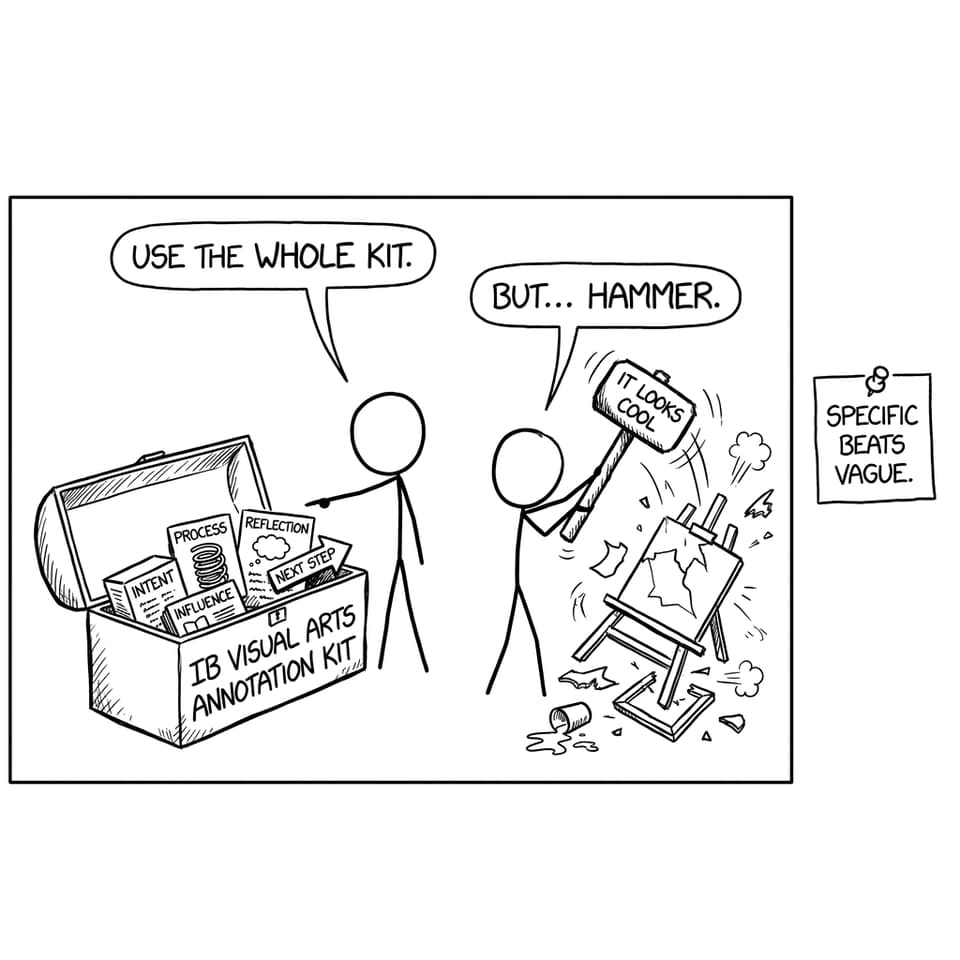
How to write annotations that sound like an artist (not a label)
Use 3 to 5 sentences, but make each sentence do a job. Here is a simple structure that works across IB Visual Arts screens.
Start with intent, not a description
Instead of: “This is a charcoal portrait with collage.”
Try: “I wanted to test whether collage text could disrupt a realistic portrait enough to suggest fractured identity.”
That single sentence tells the examiner you are testing something. If your theme is still fuzzy, this helps: How to Connect Personal Voice in Your IB Visual Arts Portfolio.
Add process, but only the meaningful parts
Process is not a recipe. Choose details that explain outcomes.
Example: “I sealed the charcoal with fixative before applying acrylic glaze; without it, the shadows lifted and turned muddy.”
If you are building experimentation across media, borrow ideas from: How to Show Experimentation in Your IB Visual Arts Process Portfolio.
Reflect like a problem-solver
Reflection earns marks when it explains cause and effect.
Example: “The glaze unified the surface, but it also flattened contrast, so the focal point drifted. Next time I will reserve pure charcoal blacks and glaze only midtones.”
Want a fast way to pressure-test your reflection? Drop your draft into RevisionDojo’s IB Visual Arts Process Portfolio Grader and compare your wording to rubric strands.
Name influence as a decision, not a name-drop
Influence is strongest when it changes what you did.
Example: “After analyzing Basquiat’s use of urgent mark-making, I replaced clean typography with scratched, uneven lettering to keep the surface tense.”
If you are writing artist comparisons, you will also benefit from: How to Prepare for the IB Visual Arts Comparative Study.
Common annotation mistakes (and the quick fix)
-
Only describing what is visible: add why and so what
-
Vague praise (“I like it”): replace with measurable effects (contrast, balance, hierarchy)
-
Hiding failures: show them, then explain the lesson
-
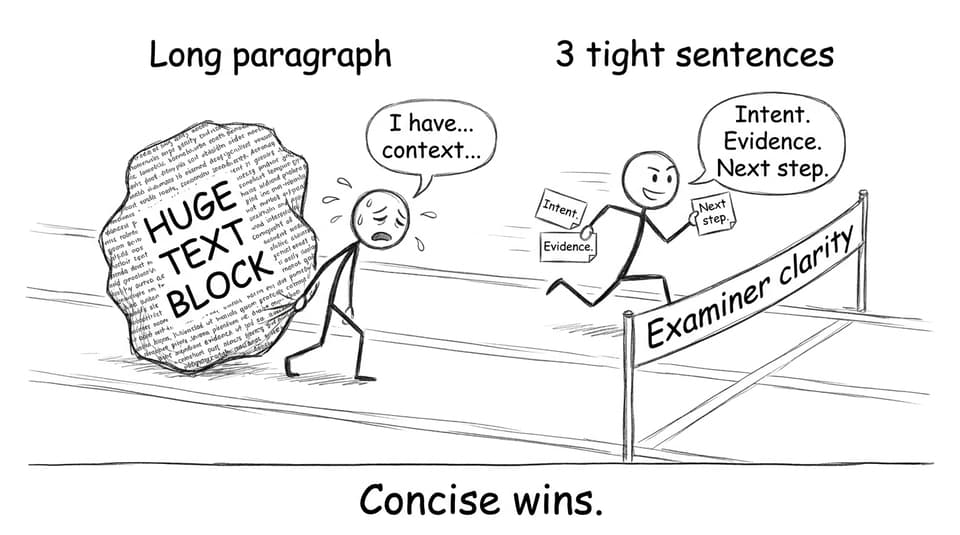
Overwriting: one strong insight beats a paragraph
For a bigger list of traps, see: Most Common Mistakes in IB Visual Arts.
Closing: let your IB Visual Arts portfolio speak with your voice
The best IB Visual Arts annotations do not try to impress. They try to explain. They show intention, they admit what broke, and they point forward.
If you want a faster way to practice, use RevisionDojo as your studio partner: pull examples from the IB Visual Arts Coursework Library, stress-test ideas with AI Chat, drill terminology with Flashcards, and tighten your decision-making using the Grading tools. Then return to your screen and write the one annotation only you can write, the one that proves you were there, thinking, the whole time.