
Personal engagement in an IB Math IA is the strange kind of requirement that feels obvious until you try to write it.
You sit down to draft. You’ve got graphs, a model, maybe even a decent conclusion. Then you notice the rubric word that quietly decides whether your work reads like your exploration or a copied lab report with a calculator: personal engagement.
The best IB IAs don’t feel louder or more emotional. They feel owned. Like every step, from the topic choice to the revision of assumptions, has a human mind behind it.
This guide shows you how to write personal engagement effectively in your IB Math IA, without forcing a “personal story,” and without turning the IA into a diary.

Personal engagement in the IB Math IA: a quick checklist
Before you edit a single sentence, use this fast check. If you can do these, you’re already writing personal engagement the way IB examiners reward it.
-
I can explain what Criterion C actually measures (not what students think it measures).
-
I can state why I chose this topic in one calm sentence.
-
I can point to at least two decisions I made that changed the direction of the math.
-
I can describe one challenge and how it reshaped my approach.
-
I can show engagement across the whole IA, not in one isolated paragraph.
If you want a plain-language breakdown of the rubric itself, start with Unpacking the IB Math IA Assessment Criteria.
What IB examiners actually mean by “personal engagement”
In the IB Math IA, personal engagement is assessed under Criterion C and it’s worth 3 marks. That small number is exactly why it’s dangerous: it’s easy to treat as an afterthought, and it’s often the difference between “competent” and “compelling.”
Personal engagement is not about:
-
how excited you sound
-
whether the topic is unique
-
adding a dramatic backstory
Personal engagement is about intellectual ownership.
Examiners look for signals that you:
-
chose the topic intentionally
-
made independent decisions (methods, assumptions, constraints, representations)
-
adapted when something didn’t work
-
reflected on outcomes, not just results
If you want a deeper Criterion C-specific explanation, read Score 3/3 in IB Math IA Criterion C.
The biggest misconception: engagement is not a separate “section”
Many IB students try to “write the personal engagement section” as if it’s a box to tick:
Paragraph at the start: “I chose this because I like basketball.”
Then the rest of the IA becomes neutral, passive, and template-like.
But personal engagement works best when it appears as small, strategic moments throughout:
-
Introduction: why this question matters to you intellectually
-
Exploration: why you chose a method, what you rejected, what you changed
-
Reflection/Evaluation: what the results mean, what you’d improve, what surprised you
This also improves clarity and structure. If you’re unsure where these moments should live, use How to Structure Your IB Math IA Logically as a map.
Write motivation like a scientist, not like a memoir
A calm motivation line is often enough to anchor your IB Math IA.
Good motivation is:
-
specific
-
intellectually honest
-
linked to the math you actually do
Examples of strong, non-dramatic motivation:
-
“I noticed my phone battery drops quickly at first, then slows, so I explored whether exponential decay models fit different usage patterns.”
-
“Because I play piano, I wanted to explore how frequency ratios relate to consonance and dissonance.”
What this does is subtle: it tells the examiner your investigation begins with curiosity, not a pre-chosen formula.
To tighten the opening of your exploration, pair this with Write a Perfect Introduction for Your IB Math IA.
Show personal engagement through decisions (this is the secret)
Personal engagement in an IB Math IA becomes obvious when your writing contains decisions.
Not big, cinematic decisions. Small, mathematical ones.
Decision type 1: Choosing (and justifying) a method
Instead of writing:
- “I used linear regression.”
Write:
- “I tested linear regression first because the scatterplot suggested proportional growth, but the residual plot showed curvature, so I compared it with a quadratic model.”
Now you’ve shown ownership without adding any extra pages.
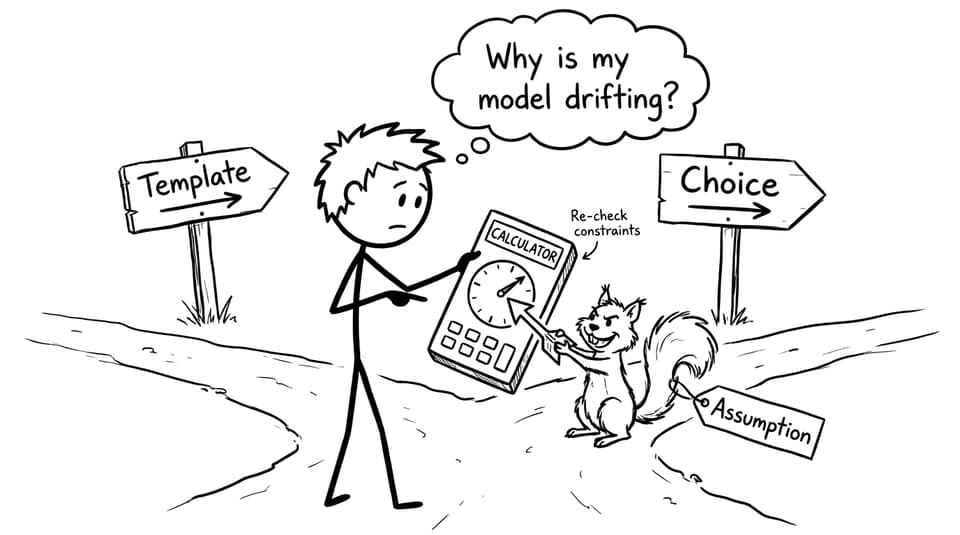
Decision type 2: Adjusting assumptions after reality pushes back
High-mark engagement often looks like this:
- “The initial model assumed constant rate, but the data suggested saturation, so I replaced the linear assumption with a logistic alternative.”
This sentence quietly tells the examiner: you didn’t just execute a plan; you responded to evidence.
Decision type 3: Creating constraints that make the math meaningful
Constraints are where a lot of IB Math IAs become personal without trying.
-
Why this domain?
-
Why exclude those data points?
-
Why is the parameter range realistic?
When you explain constraints, you show you understand the boundary between “math on paper” and “math that describes something.”
If you’re still choosing a direction, The Best IB Math IA Topics for 2025 helps you pick topics that naturally create decisions and reflection.
Use reflection as “thinking on the page,” not a summary
In an IB Math IA, reflection isn’t a recap. It’s your thinking becoming visible.
Reflection sentences are most powerful when they are short and placed right after a key result.
Try sentence starters like:
-
“This result surprised me because…”
-
“At this point I realized the model depends heavily on…”
-
“A limitation here is…”
-
“To test this, I decided to…”
If you want a dedicated guide, use How to Master Reflections and Evaluations in the IB Math IA alongside How to Write IA Reflections That Show Real Growth.
Write about challenges honestly (it can raise your marks)
One of the quiet ironies of IB coursework is that perfection can read as fake.
A well-written challenge does not weaken your IA. It signals authenticity.
A good “challenge moment” includes three parts:
-
what went wrong
-
what you changed
-
what you learned mathematically
Example:
- “My regression produced a high R², but the residual plot showed structure. I then tried a transformation and compared the goodness of fit, which highlighted how misleading a single metric can be.”
That’s personal engagement because it shows your judgment developing.

Keep the tone professional, but let your voice exist
Many IB students swing between two extremes:
-
too informal (“I was super excited lol”)
-
too robotic (“It was calculated that…”)
A strong IA voice is simple and direct:
-
Use “I” when describing decisions.
-
Avoid emotional exaggeration.
-
Focus on reasoning.
If your draft feels either too stiff or too chatty, Balancing Personal Voice with Academic Tone in Your IA can help you land in the examiner-friendly middle.
How RevisionDojo helps you write IB Math IA engagement that feels real
Personal engagement improves fastest when you stop guessing what “counts.” RevisionDojo is built to remove that uncertainty for IB students.
-
Use the Coursework Library to compare what high-scoring engagement language looks like across different IAs.
-
Use AI Chat to test whether your engagement sentences actually show decisions (or just describe actions).
-
Use the Grading tools to align your writing with Criterion C descriptors so you’re not writing blind.
-
Use Study Notes and Flashcards to quickly review the math you’re using, so your decisions are mathematically confident.
-
Use Tutors when you need a fast reality check on whether your model choices and reflections sound authentic.
And when exam season arrives, the same platform supports the rest of your IB preparation with Mock Exams, Predicted Papers, and a targeted Questionbank to strengthen the skills your IA depends on: modeling, interpretation, and communication.
Conclusion: make your IB thinking impossible to miss
The personal engagement part of an IB Math IA isn’t something you add at the end. It’s something you reveal.
When you show why you chose the topic, how you made decisions, and what changed your mind along the way, your exploration stops feeling like a worksheet and starts feeling like genuine mathematics.
If you want a clearer path, use RevisionDojo to tighten your structure, pressure-test your reflection, and align your writing with the IB rubric using the Coursework Library, Grading tools, and AI Chat. Then carry that same clarity into exams with the Questionbank, Study Notes, Flashcards, Mock Exams, and Predicted Papers.
Your examiner isn’t looking for a louder voice. They’re looking for ownership. Make it visible, and your IB Math IA becomes unmistakably yours.