


A small decision that saves big budgets
There’s a moment in every group project where someone says, “Let’s just start.” In IB Business Management, that instinct is understandable: action feels productive. But in real businesses (and in exam case studies), rushing into promotion, pricing tweaks, or social media campaigns without a clear destination is how money quietly disappears.
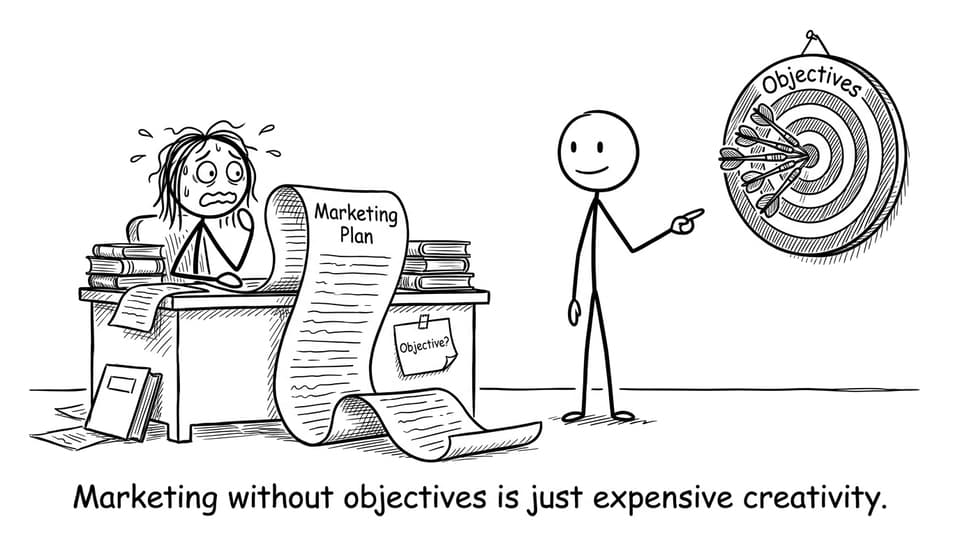
Marketing objectives are the destination. They turn “doing marketing” into a plan that actually supports business success. And if you can explain that clearly in IB Business Management, you’re already writing like a top-band student.
Quick checklist: what strong marketing objectives do
In IB Business Management, marketing objectives matter because they help a business:
-
Set direction (what are we trying to achieve?)
-
Measure performance (did it work?)
-
Allocate resources (what gets the budget?)
-
Align teams (everyone pulls the same way)
-
Adapt to change (adjust tactics without losing focus)
If you want the syllabus framing behind objectives, pair this with 1.3 Business objectives and the business objectives notes.
IB Business Management: marketing objectives create direction
The simplest way to say it: objectives stop marketing from becoming guesswork.
A business might set marketing objectives such as increasing brand awareness, growing market share, generating leads, or entering a new segment. These aren’t just “nice ideas.” In IB Business Management, they become the logic that links the business’s situation to its marketing planning choices.
That connection is exactly what examiners reward as application. If you’re revising Unit 4, keep 4.1 Introduction to marketing nearby so you can anchor objectives to concepts like market orientation and market share.
IB Business Management: marketing objectives make performance measurable
Without measurement, “good marketing” is just a feeling.
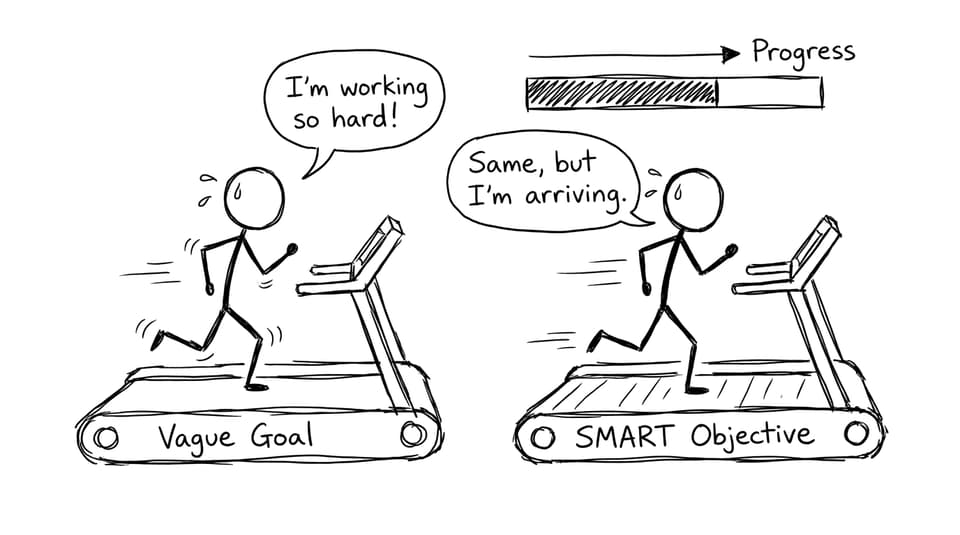
Marketing objectives work best when they are SMART: specific, measurable, achievable, relevant, and time-bound. “Increase sales by 10% in six months” gives managers something to track, evaluate, and improve. In IB Business Management, this also helps you write sharper evaluation because you can judge success against a defined benchmark.
For the planning angle (and exam-friendly examples), see marketing planning notes (4.2) and the full 4.2 Marketing planning topic hub.
IB Business Management: objectives protect scarce resources
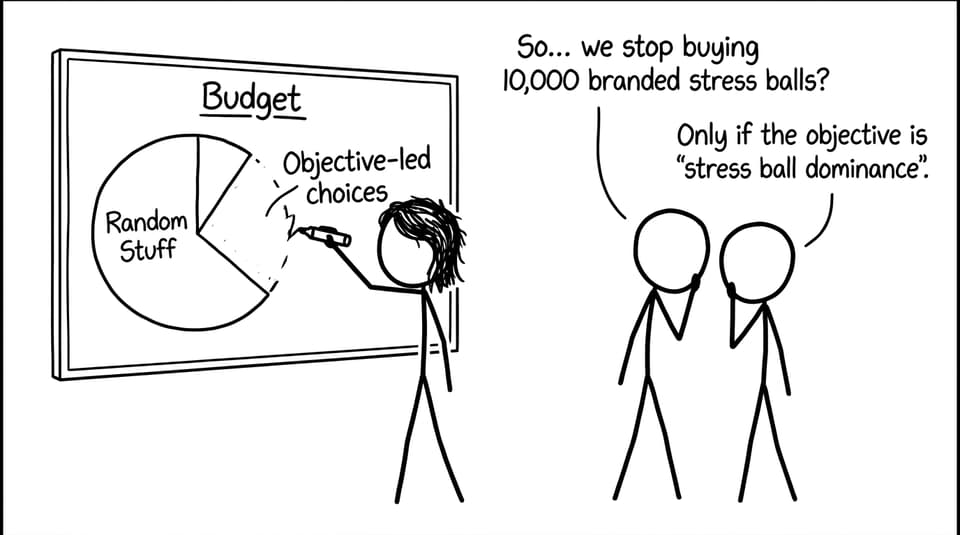
In most case studies, budgets are limited. Time is limited too. Objectives act like a filter: they help managers choose what to fund and what to ignore.
If the objective is awareness, the promotional mix might lean toward public relations and advertising. If the objective is short-term sales, pricing promotions could make more sense. That’s why objectives sit at the center of decision-making in IB Business Management.
To connect objectives to tactical choices, revise How Do Businesses Choose the Right Promotional Mix? and the Seven Ps of the marketing mix topic hub.
IB Business Management: objectives align people and adapt to change
Marketing doesn’t sit alone. Sales, operations, finance, and customer service are affected by marketing decisions, so marketing objectives reduce confusion and help teams coordinate.
They also give stability during change. Competitors move, customer tastes shift, and economic conditions tighten. With clear objectives, a business can adjust its marketing mix without losing the core purpose of the plan.
If you want to deepen this strategic link, Notes for 1.3.3 Strategic and Tactical Objectives is a strong companion for exam essays.
Bringing it back to exam success
In IB Business Management, marketing objectives are essential because they create direction, make performance measurable, protect scarce resources, and keep teams aligned when markets change. If you can explain objectives first, your marketing mix and promotional mix answers become sharper instantly.
To practise this the exam way, use RevisionDojo’s Questionbank for targeted application, Study Notes and Flashcards for fast recall, and AI Chat to refine explanations. When you’re ready to level up, add Grading tools, Predicted Papers, and Mock Exams to train timing and structure, and use the Coursework Library and Tutors when you want feedback that feels like a real marker. For more Unit 4 revision, browse IB Business Management Resources and the IB Business Management blog tag.


