


If you have ever found yourself in a late-night conversation about whether an algorithm is “biased” or just “optimized,” you already know the quiet pull of IB Digital Society. It is the kind of class where the real world keeps interrupting the syllabus. A new AI tool drops. A platform changes its rules. A misinformation story goes viral. Suddenly, your homework feels like tomorrow’s headline.
But IB Digital Society is not for everyone. The students who score well tend to share a few predictable traits: they like thinking in trade-offs, they can write with clarity, and they do not panic when a question has more than one defensible answer.
Quick fit checklist for IB Digital Society
You will usually thrive in IB Digital Society if you can honestly say “yes” to most of these:
-
You enjoy discussing real-world digital issues (not just reading about them).
-
You can explain your thinking in structured paragraphs.
-
You are comfortable evaluating impacts, not memorizing facts.
-
You like ethics, power, and social consequences as much as the tech itself.
-
You can manage independent work for coursework.
If you want a clear picture of what the course actually covers, start with the IB Digital Society resources hub.
Student profile: the real-world issue detective
The strongest IB Digital Society students treat the digital world like a case study library. They notice how platforms shape behavior, how design nudges decisions, and how “small” changes can create big social effects.
This profile usually:
-
Follows current events and asks, “What changed underneath this story?”
-
Enjoys unpacking privacy, surveillance, digital inequality, and online communities
-
Connects examples to concepts rather than listing facts
If that sounds like you, you will likely enjoy building your conceptual base with Key Themes in IB Digital Society Explained and then turning themes into arguments with practice questions.
A practical advantage: RevisionDojo’s Questionbank makes it easy to rehearse applying concepts to unseen scenarios, which is exactly where IB Digital Society marks are won.
Student profile: the calm writer who can argue without shouting
In IB Digital Society, writing is not decoration. It is your method of thinking. The best answers tend to sound calm: clear claim, relevant example, concept lens, then evaluation.
Students who succeed often:
-
Write in a logical sequence (point, evidence, explanation, judgment)
-
Justify opinions with reasons instead of vibes
-
Can show multiple perspectives without losing their own line of argument
If you want to sharpen that skill, it helps to borrow essay habits from other subjects. A surprisingly useful companion is Tips for Writing IB History Essays, because the thinking pattern is similar: argument first, evidence second, evaluation throughout.
On RevisionDojo, many students pair Study Notes with AI Chat to test their reasoning: paste a paragraph and ask what is missing conceptually. Then use the Grading tools to tighten structure before it becomes a habit.
Student profile: the “open-ended questions don’t scare me” thinker
Some IB subjects reward certainty. IB Digital Society rewards judgment.
That means you will do well if you can sit with ambiguity long enough to:
-
Compare benefits vs harms
-
Separate intention from impact
-
Evaluate who gains power and who loses it
If you tend to freeze when there is no single correct answer, do not write yourself off. You can train this. A good starting point is reading how concepts operate in real responses, like Understanding Change in Digital Society: IB Concept Explained. Notice how the article repeatedly asks “who is affected?” and “in what context?” That is the mindset.
Student profile: the ethics and society lens lover
A lot of students choose IB Digital Society because it feels modern. The students who excel usually stay because it feels morally demanding in a good way.
You will likely thrive if you are interested in questions like:
-
When does personalization become manipulation?
-
Who is accountable when AI decisions cause harm?
-
What does “consent” mean in a data economy?
Revision becomes easier when your examples are organized. Try using Effective Note-Taking Tips for IB Digital Society to build a case-study system you can reuse across prompts. Then reinforce key terms with Digital Society Flashcards so your writing stays precise under time pressure.
Independent learners: the coursework advantage
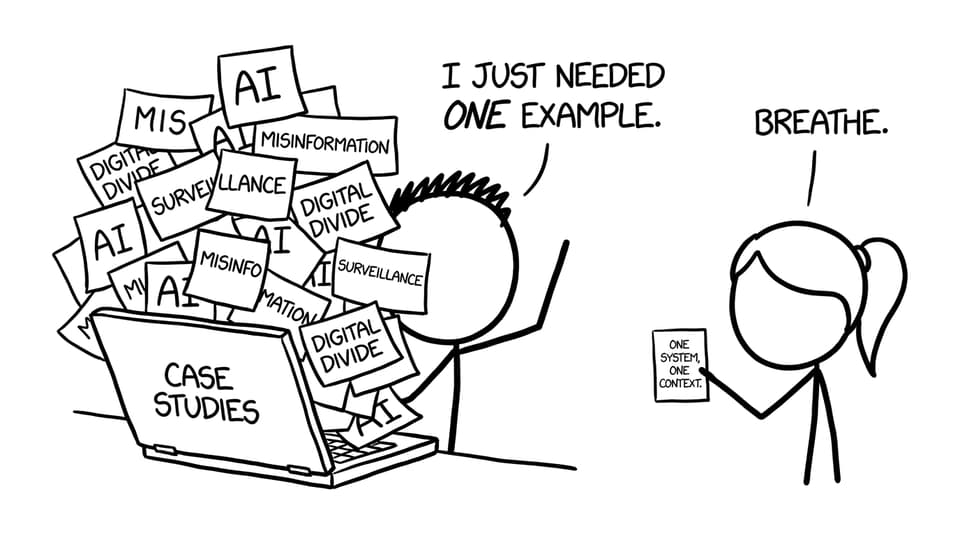
The inquiry-driven nature of IB Digital Society rewards students who can start without perfect instructions. This matters most for the internal assessment: choosing a focused system, defining a context, and building analysis that goes beyond description.
If you like long-term projects, you will probably enjoy the coursework side of the subject. Two high-leverage reads are:
RevisionDojo’s Coursework Library and Tutors become especially useful here, because feedback is where good investigations turn into high-mark ones.
SL vs HL: which students should choose which level?
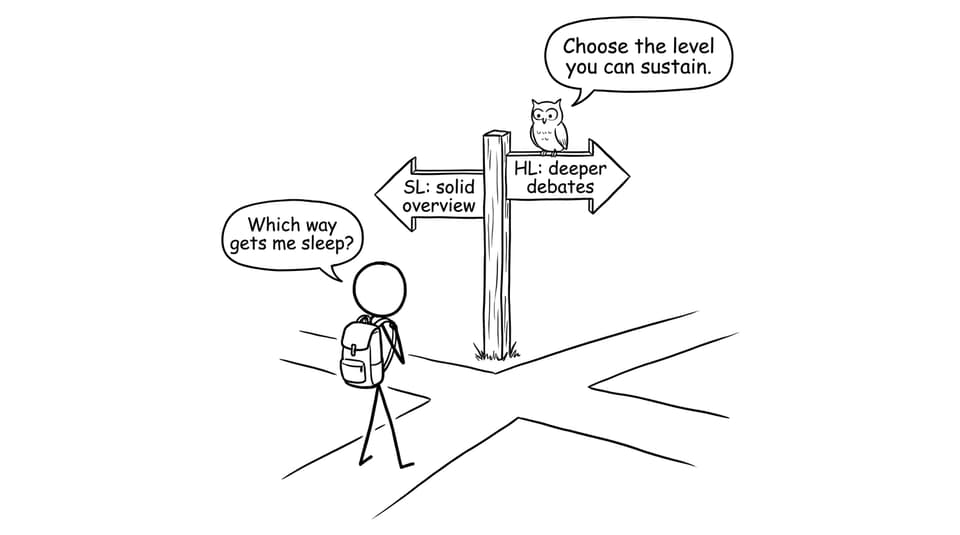
A common mistake is choosing a level based on what sounds impressive, rather than what you can sustain week after week.
SL often suits students who:
-
Want a broad, balanced understanding of IB Digital Society
-
Enjoy discussion and writing, but prefer a lighter depth requirement
-
Need to protect time for other heavy HL subjects
HL often suits students who:
-
Enjoy deeper debates and more complex evaluation
-
Feel confident writing longer, more nuanced responses
-
Want extra stretch in conceptual thinking and analysis
If you are still deciding your overall IB mix, How Do I Choose My HL Subjects Wisely? can help you think strategically.
Who might struggle with IB Digital Society?
IB Digital Society can feel frustrating if you:
-
Strongly prefer memorization-heavy learning with fixed answers
-
Dislike extended explanations and structured writing
-
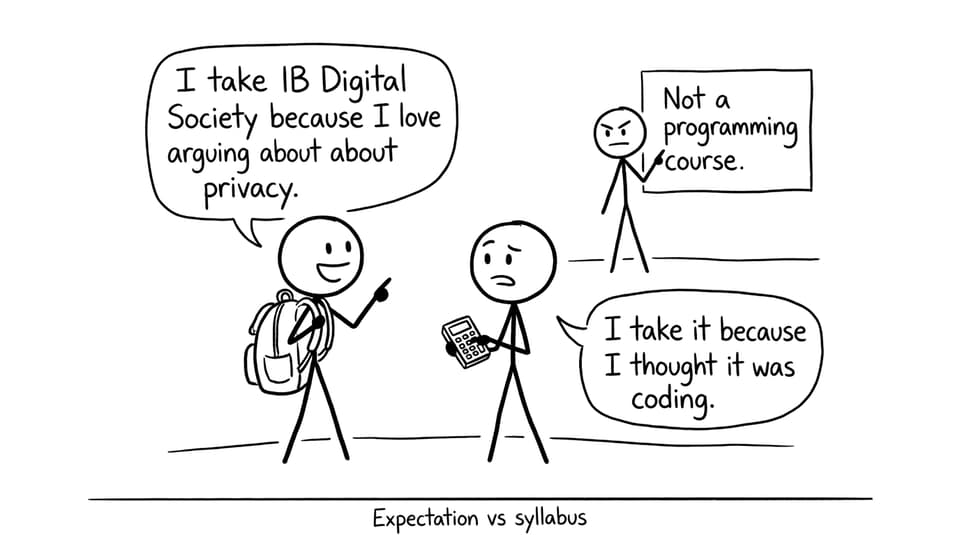
Expect a technical computing or programming course
-
Avoid ethical discussion because it feels “too subjective”
If any of these describe you, you can still succeed, but you will need a plan: build writing structure early, practice evaluation weekly, and use feedback tools often.
Conclusion: choose IB Digital Society if you like thinking in trade-offs
The students who thrive in IB Digital Society are rarely the loudest in the room. They are the ones who stay curious, write clearly, and keep asking what a digital system changes, andand for whom. If you enjoy real-world issues, ethical complexity, and open-ended evaluation, IB Digital Society can become one of the most meaningful subjects you take.
If you want to turn that interest into exam performance, use RevisionDojo as your control panel: start in the IB Digital Society resources hub, learn with Study Notes and Flashcards, pressure-test with the Questionbank and Mock Exams, and refine with AI Chat, Grading tools, Predicted Papers, and support from the Coursework Library and Tutors.