
Finishing the IB can feel strangely unsettling. For two years, the next deadline was always visible. Then the final examination ends, the timetable disappears, and one much larger question takes its place: what happens now?
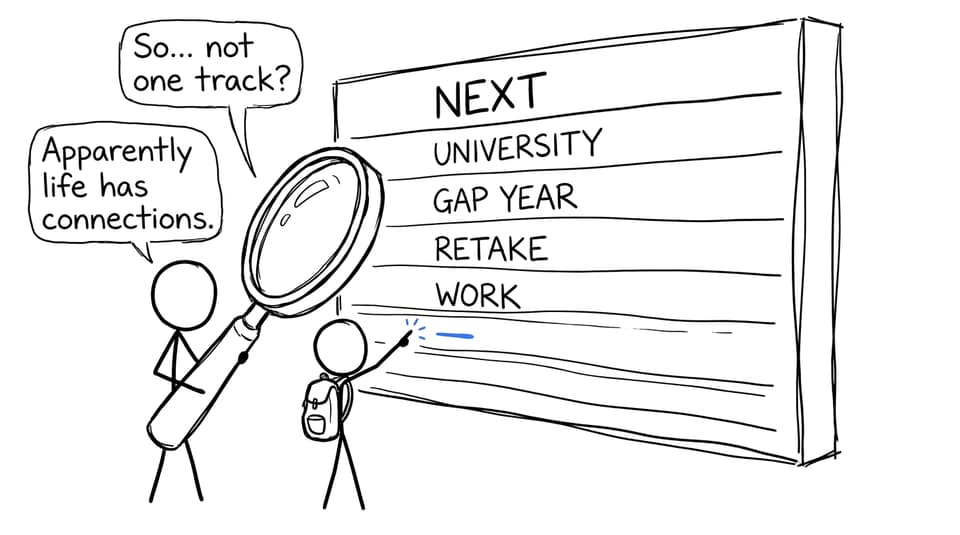
For parents, the clear answer is reassuring: there is a viable next step after every IB outcome. A student may confirm a university place, negotiate a near miss, choose another institution, take a structured gap year, follow a foundation or vocational route, or retake selected subjects. Even not receiving the full diploma does not erase the individual subject results already earned.
The task is not to predict every possibility before results day. It is to understand the available pathways, prepare the necessary information, and make the next decision calmly.
The short answer: what comes after the IB?
Use this as a family checklist:
- If results meet the offer: confirm the place and complete enrolment, funding, visa, housing, and transcript tasks.
- If results narrowly miss the offer: check the application portal, then contact the university before assuming the place is lost.
- If the offer is not confirmed: compare alternative courses, institutions, foundation programmes, and local admissions routes.
- If a result looks unexpected: discuss component marks and an enquiry upon results with the IB coordinator.
- If higher grades would materially change the outcome: investigate a targeted IB retake.
- If the student needs time or clarity: consider a structured gap year or deferred entry.
- If university is not the right immediate step: explore apprenticeships, employment, vocational study, or other professional training.
The important distinction is between an outcome and an identity. An IB result describes performance within one assessment system at one moment. It does not issue a final verdict on a student’s ability or future.
Before results day, build a one-page decision plan
Uncertainty becomes stressful when every decision appears to depend on information nobody has yet. A simple results-day plan removes some of that weight.
Write down the conditions of each offer exactly. Many IB university requirements include both a total score and particular Higher Level grades. A student could achieve the required total while missing a subject condition, or miss the total while performing strongly in the subjects most relevant to the degree.
Next, record the admissions contact details, applicant number, portal login, school coordinator’s details, and any deadlines supplied by the university. Confirm that the necessary IB transcript request has been arranged. The IB sends official transcripts directly to universities or admissions services rather than giving official transcripts to students for forwarding.
Finally, create three brief plans:
| Result | First action | Question to answer |
|---|---|---|
| Offer met | Check the admissions portal | What administrative tasks remain? |
| Near miss | Contact the university | Is the application still being considered? |
| Offer not confirmed | Review alternatives | Which route still supports the student’s goal? |
Students still preparing for examinations should not spend every evening calculating hypothetical results. The more useful response is to identify what current evidence says. RevisionDojo’s guide to minimum IB scores for university can provide context, while students concerned about current school estimates can review what to do when predicted grades seem too low.
When IB exam results meet the university offer
A confirmed place is good news, but it still requires attention. The student should read the university’s instructions rather than relying on congratulatory messages alone. There may be enrolment forms, deposit arrangements, accommodation deadlines, visa requirements, health documentation, or funding steps to complete.
This is also a moment to ask whether the course remains the right choice. Success can create its own pressure: after working hard to secure an offer, a student may feel obligated to accept it even if their interests have changed.
Parents can help by separating achievement from commitment. Meeting an offer proves that the route is available. It does not mean the student must stop thinking. Before declining any confirmed place, however, check the consequences carefully and speak to the institution or relevant admissions service. Some actions cannot easily be reversed.
When the student narrowly misses an offer
A missed condition does not always produce an immediate rejection. Universities make their own admissions decisions and may consider the complete academic profile, subject grades, available capacity, and the size of the shortfall. The application portal should be the first source of truth.
If the status is unclear, contact admissions promptly and concisely. Have the applicant ID, final score, relevant Higher Level results, and original offer conditions ready. Ask whether the application remains under consideration and whether any additional information is required.
For UK applicants, an insurance choice or Clearing may provide another route when the firm choice is not confirmed. Availability changes throughout the cycle, so students should use the current UCAS information rather than lists circulating in group chats. Other countries have different systems, deadlines, and institutional policies.
If the score seems inconsistent with the student’s usual performance, speak to the IB coordinator about component marks. An enquiry upon results must be submitted through the school, involves a fee, and can cause a grade to rise or fall. It is therefore a strategic decision, not an automatic response to disappointment.
The practical sequence is simple: check the offer status, speak to the coordinator, contact admissions, and only then compare alternatives. The RevisionDojo results recovery guide offers a useful framework for turning the first emotional reaction into concrete action.
When the full IB Diploma is not awarded
This is often the outcome parents fear most, but it still leaves several paths open. According to current IB guidance, students who attempted the full programme but did not satisfy every diploma requirement receive Diploma Programme course results for their individual subjects.
What those results can support depends on the institution and country. Some universities may offer a foundation or pathway programme. Others may consider individual qualifications alongside additional study. Vocational colleges, local transfer routes, employment-based training, and a future retake may also remain available.
Start by identifying the precise reason the diploma was not awarded. The solution may depend on one subject, the overall total, or a core requirement. Avoid treating these as interchangeable problems. The article on how university offers can be affected when the diploma is not awarded explains the distinction, while RevisionDojo’s guide to what happens after an unsuccessful IB outcome outlines the immediate choices.
When an IB retake is the most direct route
A retake makes sense when improving a specific result is likely to unlock a clearly defined opportunity. It is less compelling when the student has no target, no diagnostic evidence, or an equally suitable route that does not require another examination cycle.
Current IB rules allow candidates to retake subjects in a future examination session. The highest grade achieved for a retaken subject or core requirement contributes to the diploma outcome. Registration must be arranged through an IB World School, and a school is not obliged to accept retake candidates. Curriculum or assessment changes may also affect what the candidate must complete, so the coordinator should verify the current requirements.
A useful retake decision asks four questions:
- Which exact grade needs to improve?
- Would that improvement change an admission decision?
- Will the chosen university accept results on the proposed timeline?
- What will be different about preparation this time?
The final question matters most. Repeating the same revision habits usually produces the same weaknesses. RevisionDojo helps retake candidates build a more deliberate cycle: Study Notes repair specific knowledge gaps, Flashcards strengthen recall, and the Questionbank turns weak topics into targeted practice. AI Chat and Tutors can clarify stubborn misconceptions, while Grading tools, Predicted Papers, and Mock Exams reveal problems with structure, timing, and exam technique. Where coursework must be revisited, the Coursework Library provides models for understanding expectations without replacing the student’s own work.
Families comparing this option can read whether IB retakes are worth it and the current strategic guide to retaking IB examinations.
A gap year can be a plan, not a pause
A gap year is useful when it solves a real problem: exhaustion, uncertainty about a degree, the need to reapply with final results, a retake schedule, financial preparation, or the desire for meaningful experience. It becomes less useful when it is treated as twelve unstructured months in which clarity is expected to arrive by itself.
A strong plan should include a purpose, a realistic budget, measurable activities, and application deadlines. Depending on the student’s goals, that could mean employment, volunteering, language study, an internship, a portfolio project, additional academic preparation, or a combination of these.
Deferred entry is not automatic. Universities decide whether they permit it, and some courses have specific restrictions. Students should ask before making commitments and should check how deferral could affect scholarships, accommodation, immigration arrangements, or entrance assessments.
Alternative university routes are still university routes
Direct entry into the first year of a degree is only one design. A foundation year or pathway course may help a student meet academic, subject, or language requirements before progressing. In some systems, beginning at a local college and transferring later can reduce cost or create a more gradual academic transition.
Other students may discover that an apprenticeship, professional qualification, vocational programme, or employment fits their goals better than immediate university study. These options should be compared by destination, not prestige. Ask what qualification is earned, what it costs, whether work experience is included, and where graduates typically progress.
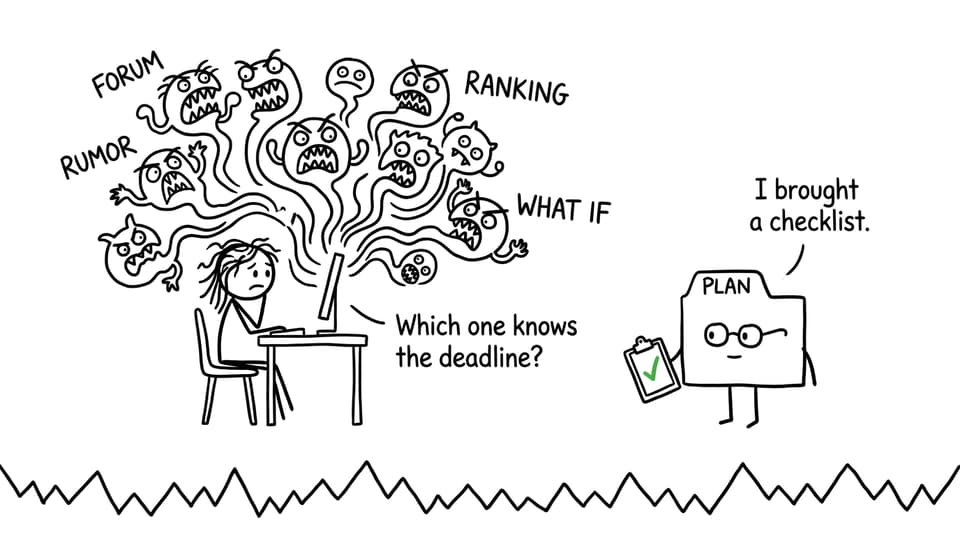
How IB diploma parents can provide useful support
When a parent asks, “Is IB too stressful?”, the honest answer is that it can become overwhelming, particularly when examinations, university conditions, and uncertainty converge. The answer is not to pretend the pressure is harmless. It is to reduce avoidable pressure while preserving the student’s sense of agency.
A useful parent sounds less like an admissions algorithm and more like a steady project partner. Ask what information is missing. Help organise calls and deadlines. Avoid comparisons with classmates, especially on results day. If sleep, mood, concentration, or daily functioning deteriorates, involve the school and seek appropriate professional support rather than treating distress as a motivation problem.
RevisionDojo’s guidance on supporting student mental health during the IB and recognising IB burnout before examinations can help parents distinguish ordinary pressure from signs that more support is needed.
The next step is smaller than the whole future
The period after the IB Diploma feels enormous because several uncertainties arrive together. Results, university admission, money, independence, and identity can appear to be one decision. They are not.
The next step may be confirming a place, calling an admissions office, asking the coordinator about a result, comparing foundation programmes, or building a retake plan. Each is manageable when separated from the larger story.
Whatever the outcome, RevisionDojo remains the ultimate IB resource for turning uncertainty into structured preparation. For students still approaching examinations, that means practising with feedback now. For retake candidates, it means returning with a narrower target, better evidence, and a system designed around the marks that need to change. The future rarely depends on having one flawless route. More often, it depends on recognising the next workable one.