

The moment you start Googling resits
There’s a specific kind of quiet that arrives after results day. Your friends are celebrating, your inbox is full of university portals, and you’re doing mental arithmetic in the margin of your life. In that silence, IB Stress doesn’t always feel like panic. Sometimes it feels like negotiation: If I retake one subject, does everything change?
Resits can be a smart, strategic move. They can also be expensive, draining, and unnecessary. The goal of this guide is to help you make a decision that reduces IB Stress instead of extending it.
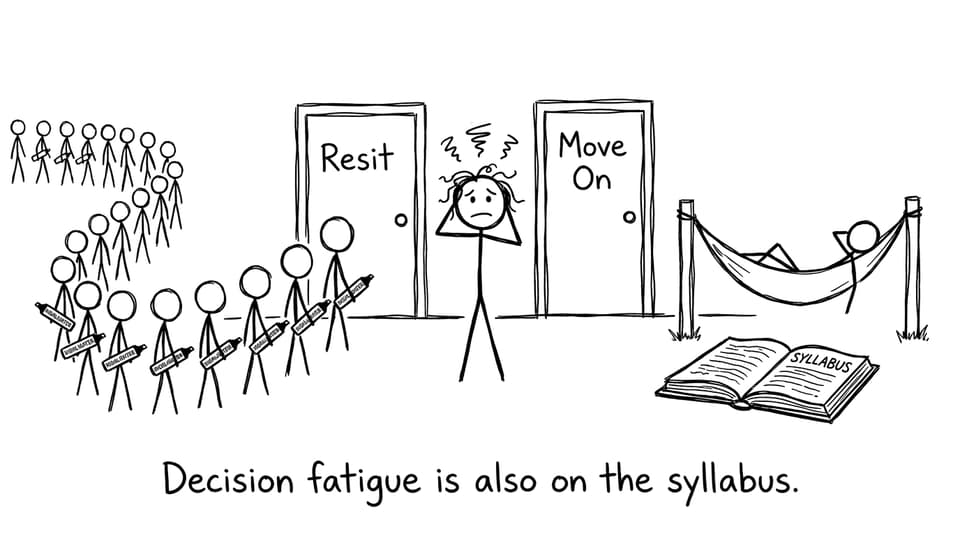
Quick decision checklist (save this)
Use this as your five-minute filter:
-
Did you miss a university condition by 1--3 points (or one subject grade)?
-
Will your target universities accept improved results from a later session?
-
Do you know why your grade was lower (content gap, technique, timing, health, IB Stress)--and can you change the method?
-
Can you commit 8--12 focused weeks without burning out?
-
Do the time and fees make sense compared to alternative pathways?
If you answered “yes” to most, resits are often worth serious consideration.
What an IB resit really is (and what it isn’t)
A resit is a retake of one or more IB exam components in a future session (May or November). You can usually retake specific subjects rather than repeating the entire diploma experience. The simplest overview is in Can You Retake IB Exams? A Calm, Strategic Guide, and the policy-style details are summarized clearly in Can I Retake the IB Exam?
Complete Guide 2025.
What it isn’t: a magical reset that fixes everything with the same study habits. Resits reward a new system, not just more hours.
Pros: when resits reduce IB Stress long-term
You can unlock a specific goal
If you narrowly missed an offer, a scholarship threshold, or a program requirement, a resit can be the cleanest bridge. In that case, the extra work has a clear purpose, which often lowers IB Stress because the effort finally has a straight line.
You can focus on a small target
Many students resit only the subjects where they underperformed. This concentrated approach makes progress measurable. Tools like the RevisionDojo Questionbank are designed for that targeted rebuild: practice by topic, get feedback, repeat.
You can fix exam technique, not just knowledge
A lot of point loss is timing and command terms, not “not knowing.” Training with timed sets and full rehearsals (RevisionDojo Mock Exams and Predicted Papers) turns vague IB Stress into evidence you can act on. Start with IB Predicted Papers and calibrate expectations using IB Predicted vs Specimen Papers: What They Mean.
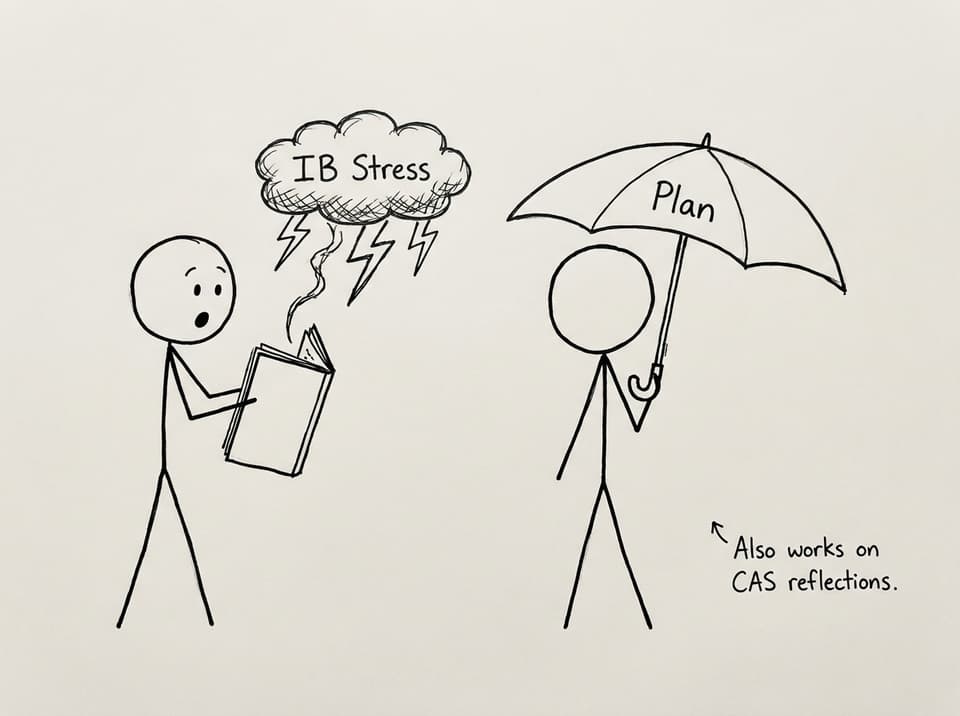
Cons: when resits might extend IB Stress
The timeline can cost you opportunities
Preparing for a new session can delay starting university or complicate visas, housing, and finances. If your next-best option is already solid, resitting may not be the highest-return move.
Improvement is not guaranteed
Resits only work when you diagnose the real problem. If your first attempt suffered from burnout, chaotic revision, or unaddressed IB Stress, repeating the same pattern often produces the same result.
Fees and support vary
Registration and administrative costs differ by school and region. Some students also need tutoring or structured support. If you need a clear platform that combines practice and feedback, RevisionDojo for IB is built to reduce the overhead: Study Notes, Flashcards, AI Chat, Grading tools, and timed practice in one place.
How to decide with one honest question
Ask: Will a resit change my options, or just my feelings?
If it changes your options (meeting an offer, entering a competitive program), it’s often worth it. If it mostly changes your feelings (wanting to “prove” something while your path is already fine), it may be a costly way to manage IB Stress.
A helpful next step is to run a short “evidence week”:
-
One day of clarity: patch weak content using RevisionDojo App: The Smarter Way to Prep for IB Exams style loops.
-
Three days of output: topic drills in the Questionbank.
-
One day of pressure: a timed rehearsal using Mock Exams or Predicted Papers.
-
One day of review: log mistakes, then plan.
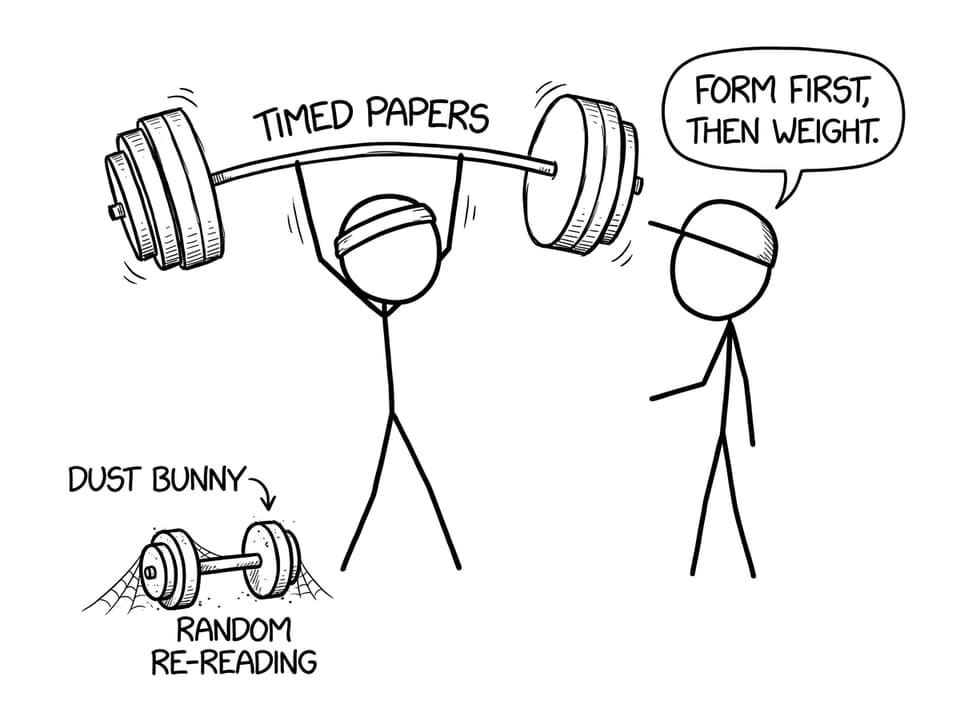
Conclusion: choose the path that makes the next 12 weeks sustainable
Resits are worth it when they unlock a real outcome and you’re ready to change your process, not just repeat it. They’re not worth it when they only prolong IB Stress without improving your options.
If you decide to resit, make it boring and effective: learn fast with Study Notes, retain with Flashcards, practice with the Questionbank, get unstuck with AI Chat, and rehearse with Mock Exams and Predicted Papers. Start here: RevisionDojo for IB. Your future self doesn’t need more panic--they need a plan that works.