


Failing IB is one of those fears that grows in the dark.
It usually shows up at 2:13 a.m., in the quiet glow of a laptop, after you've reread the same paragraph four times and still can't remember what it said. You start bargaining with the future: Maybe I can still scrape a 4. Maybe grade boundaries will save me. Maybe the examiner will feel generous.
But here's the calmer truth: failing IB is rarely the end of your story. It's a moment in the story. The scary part isn't the number on the results page. The scary part is not knowing what that number triggers next.
This guide is here to make it plain: what "failing IB" can mean, what actually happens in each scenario, and what you should do (strategically, not emotionally) if results don't go your way.
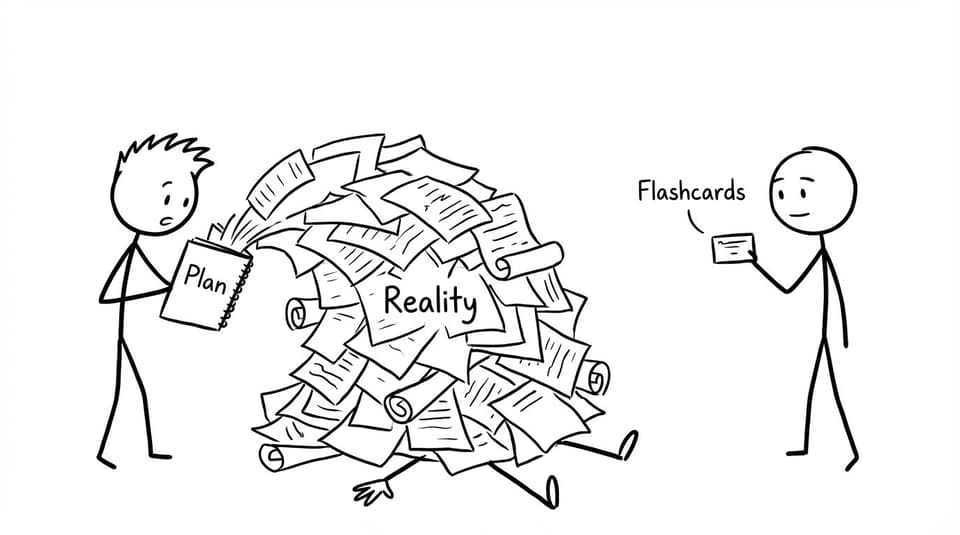
The quick IB reality check (save this)
Before we go deep, keep this simple checklist. It's the difference between panic and a plan:
- Figure out what you failed in IB: a subject, the core (TOK/EE), or diploma requirements overall.
- Check what you still earn: course certificates, component grades, and usable scores.
- Decide your path: resit, remark, or pivot to certificates/university options.
- Build a short recovery plan based on evidence: weak topics, exam technique gaps, timing.
- Use one system for the rebuild (not 12 tabs): Questionbank, Study Notes, Flashcards, AI Chat, and timed Mock Exams.
If you want a clean, step-by-step routine for the next weeks, borrow the structure from How to Study for IB Exams: Step-by-Step Guide.
What "failing IB" actually means (there are three different failures)
People say "I failed IB" the way they say "I failed math." But IB is a bundle: subjects, core, and overall diploma conditions. The consequences depend on which part broke.
Failing an IB subject (but not necessarily the diploma)
In IB, subject grades run from 1 to 7. You can underperform in one subject and still meet the diploma requirements overall, depending on your total points and other constraints.
This is the most emotionally intense failure because it feels personal: a subject is something you lived with for two years. But structurally, it's often the easiest to fix, because it's localized. You don't need to redo your entire IB identity. You need to rebuild one paper's skills.
A practical next step is to switch from "revision" to "training." That means doing exam-style questions by topic and reviewing mistakes like data. The fastest place to do that is the Questionbank, because it forces the uncomfortable part: answers.
Failing TOK or EE in IB (core failure)
This one surprises students because the core can quietly decide your diploma.
If TOK or the Extended Essay goes badly enough, it can block the diploma even when your subjects are strong. RevisionDojo breaks this down clearly in:
Core failure hurts because it feels unfair: I can do Chemistry, why is this essay stopping my diploma? But the IB is explicit about the core being mandatory. The upside is that TOK/EE are repairable with focused rubric-based feedback.
This is where RevisionDojo's Grading tools and Coursework Library matter most: they shorten the gap between "I think this is good" and "this actually meets the criteria."
Failing the IB Diploma requirements overall
This means the diploma is not awarded because the overall set of conditions isn't met (total points and/or required minimums).
If this happens, you are not erased. You typically still receive results for each subject and can often still earn course certificates for subjects you passed. In real life, this means you may still be able to apply with those grades, retake what you need, or restructure your plan.
The key is to treat it like an engineering problem: isolate the constraints, then decide your fastest route back.
What happens on results day (the part nobody explains clearly)
Results day in IB can feel like a verdict. But technically, it's closer to a diagnostic report.
You log in and you see:
- Your subject grades (1-7)
- Your total points
- Your TOK/EE outcomes and how they combine
- Whether the diploma is awarded
What happens next depends on the gap between what you got and what you need.
If you missed by a little: remarks and component checks
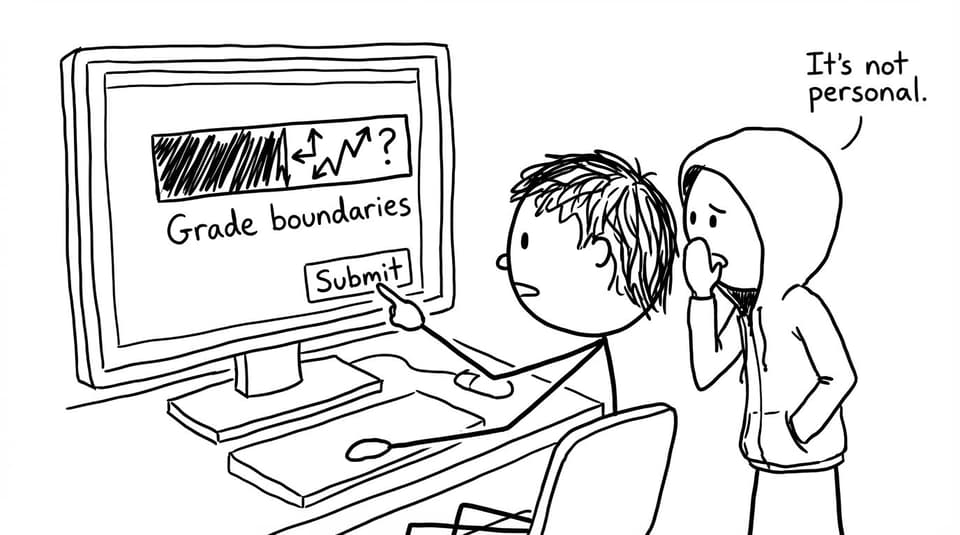
Sometimes you're one or two marks away from the next grade boundary. Sometimes the boundary itself shifts year to year. That's why students feel like the system is "moving."
The right response is not rage-refreshing group chats. The right response is to check component marks, identify where you were close, and decide whether a remark makes sense.
If you missed by a lot: resits and rebuilding skills
A bigger gap is still workable, but it usually means your issue wasn't one bad day. It was a system problem: weak recall, weak technique, weak timing, or all three.
That's why the rebuild should not start with rewriting notes. It should start with a loop:
- Learn quickly (Study Notes)
- Recall daily (Flashcards)
- Apply under pressure (Questionbank + Mock Exams)
- Get feedback fast (AI Chat + Grading tools)
RevisionDojo is designed around that loop. Start at the RevisionDojo IB landing page if you want everything in one place.
The quiet reasons students fail IB (and how to reverse them)
Most students who fail IB didn't "not work." They worked in ways that felt responsible but didn't produce exam-ready output.
They studied emotionally, not mechanically
Emotional studying looks like:
- rereading until you feel calmer
- making beautiful notes because it feels like control
- avoiding timed practice because it feels like judgement
Mechanical studying looks like:
- short recall sessions
- targeted question sets
- consistent error review
If you want the mindset shift, read Why Some IB Students Stay Consistent. It's basically a guide to making your next step obvious.
They didn't practice in IB formats
The IB doesn't just test knowledge. It tests the ability to perform knowledge with command terms, structure, and pacing.
That's why targeted practice is a cheat code, especially when it's organized by topic and difficulty. This is exactly what the Comprehensive IB Question Bank: Thousands of Practice Questions is built to support.
They left timing until it was too late
Timing is a skill. And like all skills, it's embarrassing at first.
Timed work is not a confidence test. It's a reality test. When you do it regularly, it becomes boring. Boring is good. Boring means predictable.
To run timed practice properly, use How to Run Timed IB Mock Exams in RevisionDojo (Exam Mode + Test Builder).
If you think you're going to fail IB, do this in the next 7 days
When students fear failing IB, they often try to "cover everything." That's the instinct that creates chaos.
Instead, do this seven-day reset:
Pick one subject and one paper
Not "Math." Not "Chemistry." One paper. One format. One timer.
Build a daily loop (60 minutes)
- 10 minutes: Flashcards (active recall)
- 35 minutes: Questionbank set on one subtopic
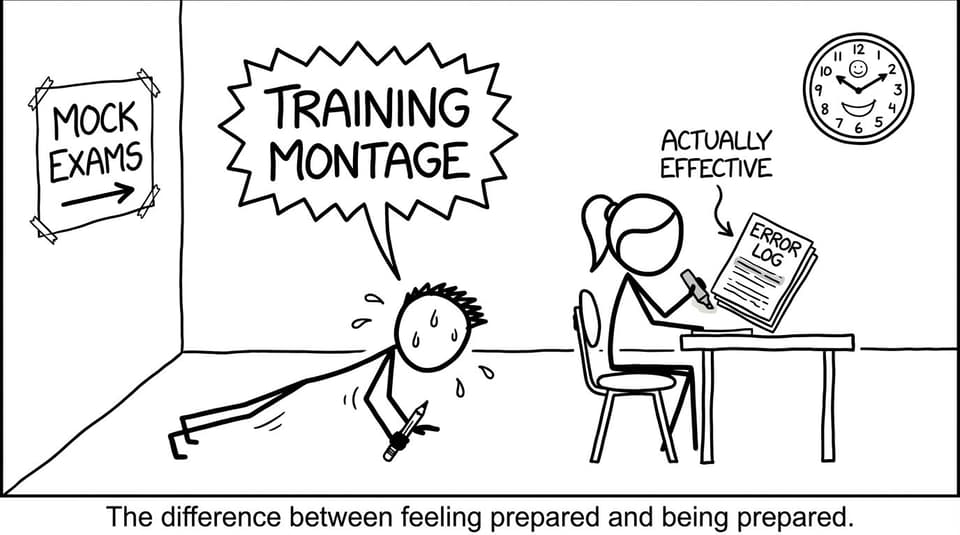
- 15 minutes: error log + ask one question in Jojo AI Chat
Add one timed session
Use Mock Exams or Predicted Papers once in the week, then spend longer reviewing than taking.
If your subject offers predicted sets, explore an example like IB Biology Predicted Papers (even if you're not a Biology student, you'll see what "realistic practice" looks like).
Use feedback tools for coursework stress (so it stops leaking into exams)
If IA/TOK/EE anxiety is draining you, use RevisionDojo's Grading tools and the Coursework Library to create closure: one submission, one rubric-driven fix list, then back to exams.
Closing: failing IB isn't a personality trait
Failing IB feels final because the program trains you to treat every deadline like a cliff.
But the students who recover fastest do one quiet thing: they stop asking "What does this say about me?" and start asking "What does this change about my plan?"
If you're scared you'll fail IB, build evidence now: do a timed Mock Exam, drill weak topics in the Questionbank, lock daily recall with Flashcards, use Study Notes for fast clarity, and ask AI Chat the questions you're avoiding. If coursework is dragging you down, use the Grading tools and Coursework Library to turn vague stress into specific edits. And if you need a human to steady the process, book a session with a Tutor.
Start your full system here: RevisionDojo for IB. The goal isn't to "feel ready." The goal is to make IB predictable again.