

If you have ever watched someone refresh a results page like it is a life-support machine, you already understand the strange power of the IB.
On paper, results day is just numbers. In real life, it is narrative. A conditional offer becomes a cliffhanger. A missed point becomes a story you tell yourself about who you are.
This guide is here to shrink that story back down to facts and options. Because even if you fail the IB Diploma, your future does not evaporate. University offers can change, yes. But they rarely do so in one simple, universal way.
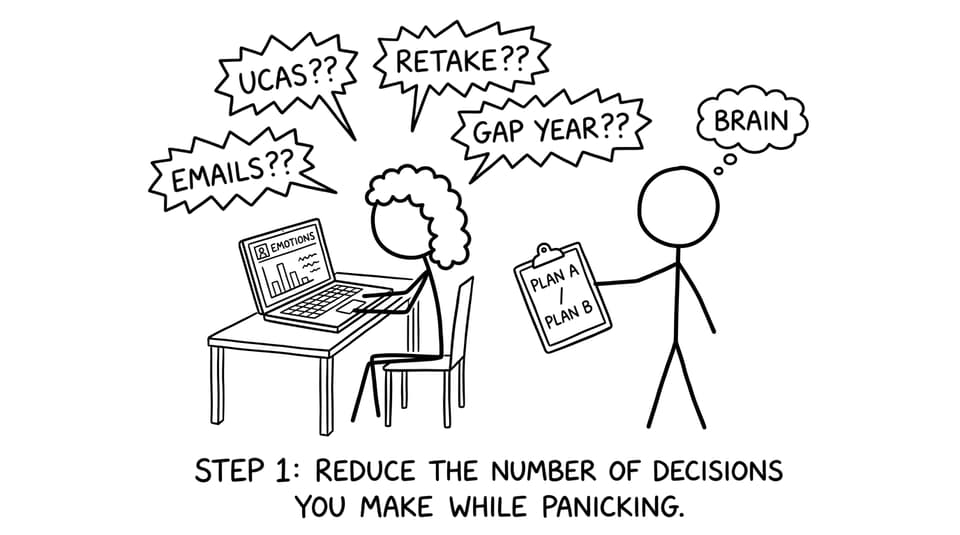
The fast checklist: what to check first if your IB Diploma is not awarded
Before you email anyone, confirm what actually happened in the IB:
-
Your total points (out of 45)
-
Your six subject grades (SL and HL)
-
Your core outcome (TOK/EE points) and whether CAS is complete
-
Your diploma status (awarded or not)
-
Your university offer conditions (total points, HL requirements, subject grades, diploma requirement)
If you want a calm, step-by-step script for the first hour, keep this open: IB Results Day FAQ: Every Question Answered.
What it actually means to fail the IB Diploma
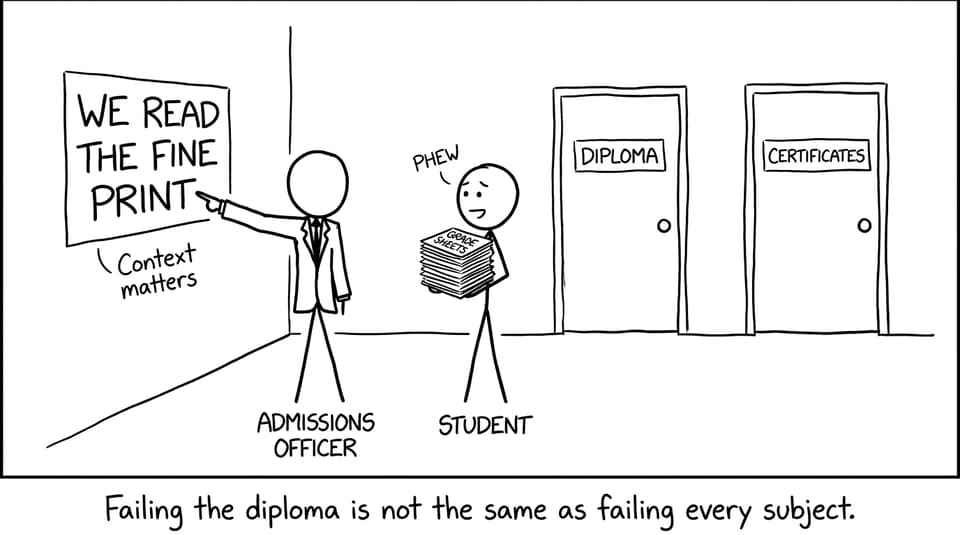
Failing the IB Diploma does not mean you failed every subject. It means you did not meet all diploma requirements.
Most students who do not receive the diploma still earn official IB course results (often called course certificates informally). Those individual subject outcomes can still matter for admissions, transfers, or alternate routes.
To be awarded the full IB Diploma, you must meet requirements such as:
-
Reaching at least 24 total points
-
Meeting minimum Higher Level performance overall (commonly summarized as needing enough HL points)
-
Completing the core (EE, TOK, CAS)
-
Avoiding failing combinations (for example, very low grades in multiple subjects or below-minimum HL grades)
These rules are why a student can be strong in five subjects and still lose the diploma due to one constraint: a core point issue, an HL minimum, or a prohibited grade combination.
How universities use IB results (and why offers change)
Universities do not react to IB results in one single pattern. Their decision is shaped by three things:
-
Predicted grades (used to decide whether to offer you a place)
-
Final results (used to confirm, adjust, or withdraw)
-
Offer type (conditional vs unconditional)
If you have a conditional offer, your final IB grades are the key that either opens the door cleanly or forces a conversation.
If you want to understand the predicted-grade side of this story, read: Do IB Predicted Grades Matter for Conditional Offers? and How Do IB Predicted Grades Work for Early University Applications?.
UK universities (UCAS): conditional offers and what happens if you fail the IB
In the UK, most offers through UCAS are conditional. If the condition explicitly requires the full IB Diploma and you fail to receive it, you will usually miss the offer.
But “usually” is not “always.” UK admissions teams can sometimes be flexible when:
-
You narrowly missed the condition (for example, one point short)
-
Your subject profile still fits the course
-
The course has capacity after results
-
Contextual admissions considerations apply
Your best move is speed plus clarity. Use the practical playbook here: IB Offer Conditional? What Happens Next (And What to Do).
Your main UK options if the offer is not confirmed
-
UCAS Clearing (fast, realistic, and often underrated)
-
Direct contact with the university to ask about alternate entry, a related course, or a deferred start
In the IB, the difference between “no” and “not sure yet” is often whether you contact them with a plan.
US and Canadian universities: often more flexible than students expect
Many US and Canadian universities operate more holistically. That often means your offer is less dependent on a single final IB outcome.
Common patterns include:
-
Offers that are effectively unconditional once you graduate and maintain reasonable academic standing
-
Strong interest in transcripts, essays, recommendations, and course rigor (with IB being one part of the whole)
-
Concern only if final results are drastically lower than predicted, or if graduation status changes
That said, selective institutions can still review decisions if your final academic record changes materially. The practical rule is simple: communicate early, be factual, and ask what documentation they need.
Europe and Australia: final IB outcomes often matter most
In many European and Australian systems, the IB Diploma is treated as a direct leaving qualification. That makes final results more central.
If your offer requires the full IB Diploma and you do not receive it, the offer is more likely to be withdrawn.
Still, these systems often have well-built alternatives:
-
Foundation years
-
Pathway programs
-
Preparatory courses
-
Alternative institutions that accept subject-by-subject results
The important mindset shift is this: failing the IB Diploma can change your route, not erase your destination.
What to do if you fail the IB and your offer is at risk
When students panic, they usually do one of two things: disappear, or send a dramatic message that tries to turn admissions into a therapist.
Do neither.
Contact the university quickly (and write like an adult)
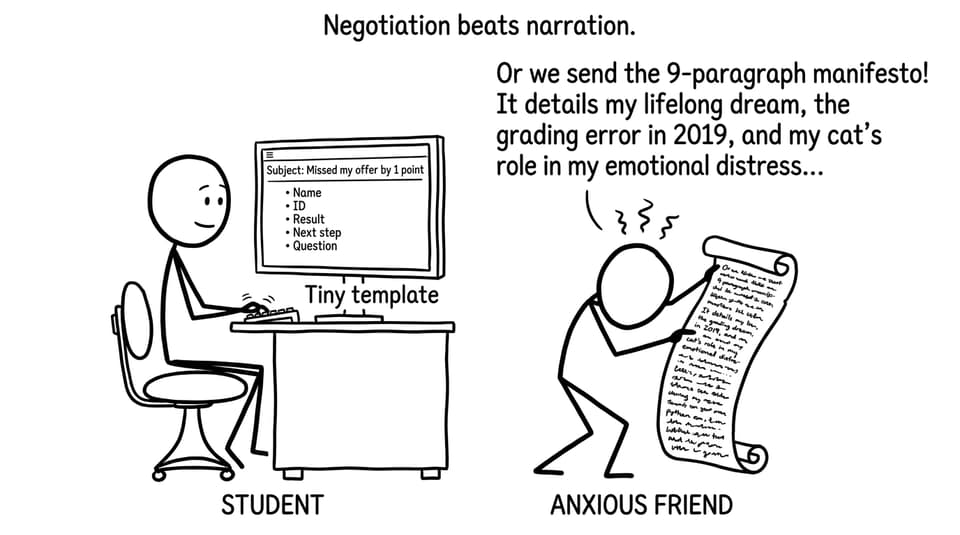
Your goal is to be easy to help. Keep your email short and structured:
-
Name and applicant ID
-
Program
-
Your IB result (total points and relevant subject/HL grades)
-
One sentence acknowledging you missed the condition
-
Your next step (asking coordinator about boundaries, considering an Enquiry Upon Results, etc.)
-
A clear question: what options exist?
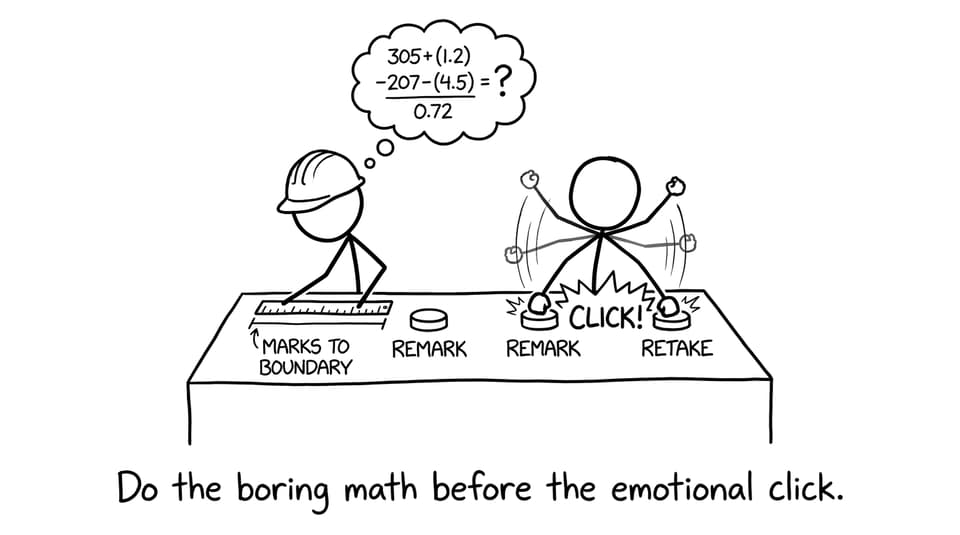
Ask about remarks (Enquiry Upon Results) only if it is rational
Remarks are not a lottery ticket. In the IB, the smartest way to decide is boring:
-
Get component marks
-
Check how close you are to the next boundary
-
Prioritize subjects where a one-grade change affects your offer
Consider an IB retake (but retake the minimum that changes the outcome)
Many students retake only the subjects that unblock the diploma requirement or the university condition. Retaking everything is rarely necessary.
Use alternate routes without shame
Clearing, foundation years, transfers, or different programs are not “consolation prizes.” They are logistics.
How to reduce the chance you miss your IB condition in the first place
Universities want certainty. Students often study like certainty will magically appear.
A calmer approach is to lower variance: build an evidence-based system that turns “I hope” into “I have rehearsed this.”
RevisionDojo is built for that loop:
-
Use the Questionbank to drill exactly what the IB rewards
-
Use Study Notes to understand content faster and with less rewriting
-
Use Predicted Papers to rehearse full-paper timing and stamina
-
Use Mock Exams and Grading tools to tighten exam technique and markscheme alignment
-
Use Flashcards to keep daily recall alive
-
Use AI Chat to get unstuck in minutes instead of losing an evening
-
Use the Coursework Library to reduce background stress from IAs/EE/TOK, and Tutors when you need a human diagnosis
Two helpful reads for building that system:
Closing: failing the IB Diploma is a detour, not a verdict
The IB is demanding partly because it compresses consequences into one week in July. But life does not.
If you fail the IB Diploma, you still have levers: communication, remarks when they are logical, retakes when they are strategic, and alternate entry routes that many students use successfully.
And if you are not at results day yet, take the quiet advantage now. Build a revision system that produces evidence. Use RevisionDojo to practice with the Questionbank, reinforce with Flashcards, clarify with Study Notes and AI Chat, and rehearse under pressure with Predicted Papers and Mock Exams. The goal is simple: make your university offer depend on preparation you can prove, not panic you cannot control.