
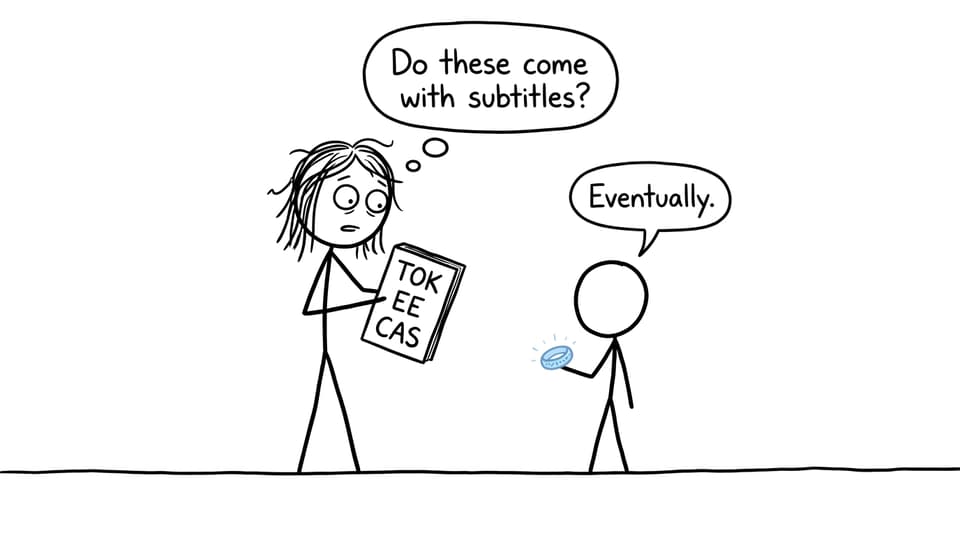
It is reasonable for a parent to look at the IB Diploma Programme and wonder why six demanding subjects are not the whole story. Then three more acronyms appear: TOK, EE, and CAS. They can sound like extra obligations attached to an already crowded timetable.
So, what is the IB core? It is the compulsory center of the IB Diploma Programme, consisting of Theory of Knowledge (TOK), the Extended Essay (EE), and Creativity, Activity, Service (CAS). TOK teaches students to examine knowledge and evidence, the EE develops independent research skills, and CAS encourages meaningful learning beyond academic study.
All three must be completed. TOK and the EE are graded from A to E and together can contribute up to three points toward the diploma total. CAS does not add points, but successful completion is required for the diploma.
The IB core at a glance
For parents and students, this is the simplest overview:
| Core component | What the student does | How it affects the diploma |
|---|---|---|
| Theory of Knowledge | Examines how knowledge is produced, justified, and challenged | Graded A to E and combined with the EE for up to three core points |
| Extended Essay | Completes an independent research paper of up to 4,000 words | Graded A to E and combined with TOK for core points |
| Creativity, Activity, Service | Undertakes experiences across creativity, physical activity, and service | Not awarded points, but completion is compulsory |
The core is not a seventh subject. It is better understood as a set of connected experiences that asks whether a student can think critically, research independently, reflect honestly, and apply learning beyond an examination room.
Where the core fits into the IB Diploma
To understand the core, it helps to first answer a related question: what is the IB Diploma?
Diploma students ordinarily complete six academic subjects alongside TOK, the EE, and CAS. Each subject is graded from 1 to 7, allowing up to 42 subject points. The combination of TOK and EE results can add up to three core points, producing the maximum diploma score of 45.
A total of at least 24 points is required, but that number alone does not guarantee the diploma. Students must also satisfy the IB's other passing conditions, including acceptable subject results, avoiding an E in TOK or the EE, and completing CAS. RevisionDojo's guide to the IB grading system and the 45-point total explains these conditions in greater detail.
This is why describing the core points as merely "bonus points" can be misleading. The points may be additional, but the core itself is not optional.
Theory of Knowledge: learning to question certainty
TOK asks a deceptively simple question: how do we know what we claim to know?
Students consider how evidence, language, interpretation, culture, values, and methods shape knowledge in different fields. A historical claim may depend on source interpretation. A scientific claim may be trusted because it can be tested and scrutinized. An artistic judgment may involve standards that cannot be reduced to a single measurement.
TOK is assessed through an exhibition and an essay of up to 1,600 words. The exhibition connects three real-world objects to one prescribed prompt. The essay responds to one of the prescribed titles issued for the student's examination session.
Parents do not need to become philosophy teachers. The most useful support is often curiosity: ask what the student's claim is, what evidence supports it, and what a reasonable counterargument might be. Students can explore RevisionDojo's TOK resources and its focused guide to the TOK exhibition when they need the assessment broken into manageable parts.
The Extended Essay: a long project built from small decisions
The Extended Essay is a compulsory, independently researched paper of up to 4,000 words. Students develop a focused research question, select appropriate evidence and methods, construct an argument, and reflect on how their thinking evolved.
The length attracts attention, but length is rarely the hardest part. The real challenge is narrowing a broad interest into a question that can be answered convincingly. A student may spend weeks reading only to discover that the question is too vague, the evidence is inaccessible, or the chosen method cannot support the intended conclusion.
That uncertainty is part of the learning. The EE introduces the habits behind serious academic work: defining scope, evaluating sources, citing consistently, responding to feedback, and revising an argument rather than merely adding words.
Good IB Extended Essay help should protect the student's ownership. A parent can ask about the next milestone, encourage regular supervisor meetings, and help create uninterrupted working time. The research and writing must remain the student's own. RevisionDojo's Extended Essay guide hub and practical advice for managing the EE research process provide direct support without replacing independent thought.
IB CAS requirements: growth that cannot be reduced to a grade
CAS stands for Creativity, Activity, Service. It runs throughout the Diploma Programme and asks students to engage in experiences across three strands:
- Creativity: exploring and extending ideas through creative or interpretive work
- Activity: physical exertion contributing to a healthy lifestyle
- Service: collaborative, reciprocal engagement in response to an authentic need
Students must also undertake a CAS project. They document experiences, reflect on their development, and provide evidence that they have achieved the seven CAS learning outcomes. The school evaluates whether the requirements have been met.
CAS is not formally graded and contributes no points. Yet incomplete CAS can prevent a student from receiving the diploma. That combination sometimes confuses families: something can carry no numerical mark and still be essential.
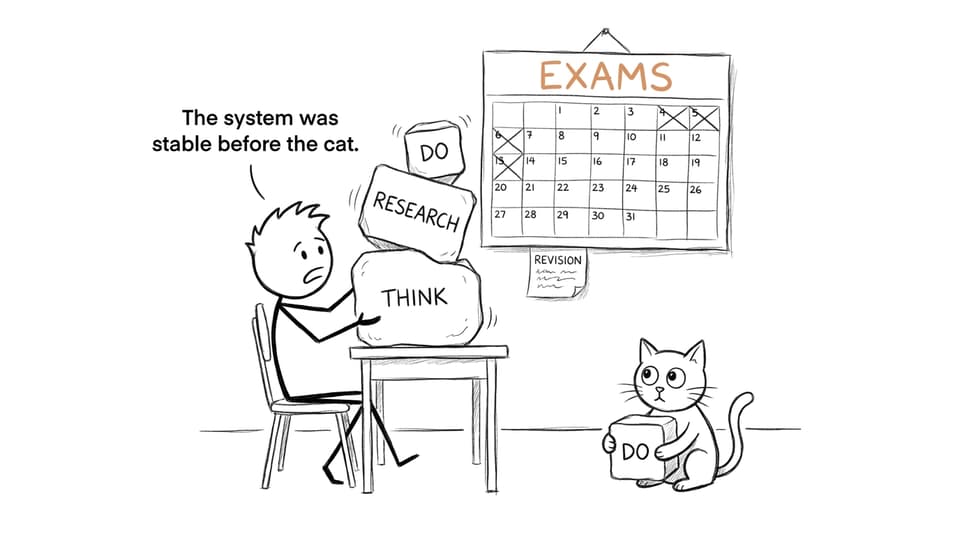
The answer is to treat CAS as sustained development rather than an emergency checklist. Requirements are not simply an invitation to collect activity hours. Students need meaningful participation, evidence, reflection, and a project that satisfies their school's procedures. Because implementation details and deadlines are managed locally, families should follow the CAS coordinator's guidance. RevisionDojo offers a calm explanation of what CAS means in the IB and a separate overview of IB CAS minimum requirements.
Why the IB core matters beyond its points
The core components look different, but they develop a shared habit: responsible independence.
TOK asks students to challenge claims. The EE asks them to investigate one carefully. CAS asks them to act, collaborate, and reflect outside conventional academic assessment. Together, they connect thought, research, and experience.
These skills also reinforce subject preparation. A student who evaluates evidence carefully may write stronger History arguments. Someone who learns to organize a long research project may manage revision more deliberately. A student reflecting honestly on a CAS challenge may become better at identifying why a study routine is failing.
The core matters, then, because it reveals an important truth about education: knowing information is valuable, but deciding what to trust, how to investigate, and what to do with that knowledge is a different kind of achievement.
How parents can support the core without taking it over
The best parental role is usually structural rather than editorial. Students need ownership, while parents can help make that ownership manageable.
Ask about the next action
"How is the EE going?" is a large question. "What is the next section you need to draft?" is easier to answer. Small, visible actions reduce avoidance.
Keep one calendar for core deadlines
TOK, EE, and CAS deadlines often sit beside subject assessments and exam preparation. Schools set their own internal schedules, so record the dates provided by the coordinator and teachers. Add intermediate milestones for research, drafting, feedback, revision, CAS evidence, and reflections.
Encourage process, not constant polishing
An imperfect early draft creates something that can be improved. Endless planning does not. Encourage the student to seek feedback at permitted stages, interpret it carefully, and make their own revisions.
Notice overload early
Difficulty starting does not always mean a lack of effort. The task may be poorly defined or competing deadlines may have become unmanageable. Help the student identify the bottleneck, then encourage them to speak with the relevant teacher, supervisor, CAS coordinator, or school counselor.
Managing the core during exam preparation
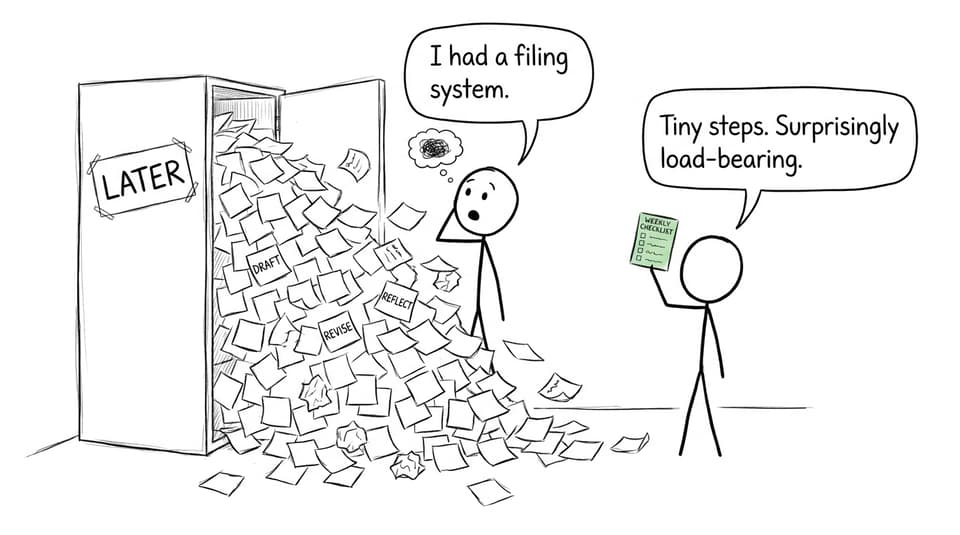
As examinations approach, the core should not be allowed to become an invisible second timetable. Students benefit from separating tasks by type:
- Deep work: EE analysis, drafting, and substantial TOK writing
- Short maintenance: organizing sources, updating citations, or recording a CAS reflection
- Exam practice: retrieval, application, timed responses, and reviewing mistakes
A weekly plan should reserve clear windows for each. This prevents the EE from consuming every evening or CAS administration from interrupting focused revision. RevisionDojo's guide to balancing CAS with exam preparation offers a practical model.
RevisionDojo supports TOK and the EE directly through structured resources, the Coursework Library, AI Chat, and rubric-aware Grading tools. Students can then connect their core workload with Study Notes, Flashcards, the Questionbank, Predicted Papers, Mock Exams, and Tutors for their six subjects. The value lies in keeping coursework support and exam preparation within one coherent IB system.
The core is demanding because it is meant to connect learning
For an IB parent, the reassuring point is not that the core is easy. It is that its demands have a clear purpose.
TOK teaches students to inspect knowledge rather than accept it automatically. The Extended Essay turns curiosity into disciplined research. CAS ensures that education includes participation, collaboration, and reflection. Together, they help explain what makes the Diploma Programme more than a collection of subject examinations.
The most useful next step is simple: ask your child to show you their school's TOK, EE, and CAS deadlines, identify the next concrete action for each component, and choose the appropriate RevisionDojo resource when they need clearer guidance. Large projects become less intimidating when the next decision is visible.