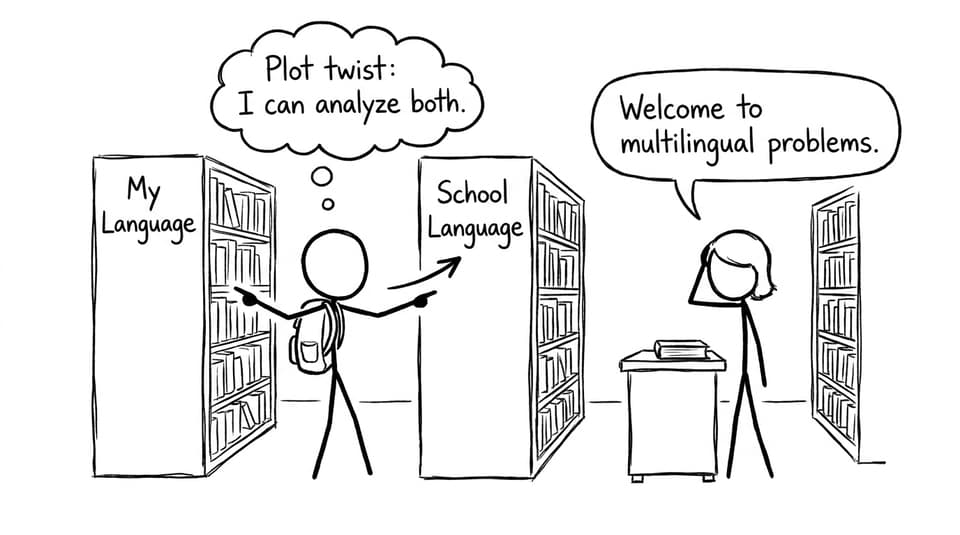
It usually starts with a small, strange feeling: you can discuss symbolism and voice in your head fluently… but only in the language you grew up with. Then you look at your school timetable and realize your mother tongue isn’t offered as a full Group 1 course. For multilingual IB students, that gap can feel like losing a part of yourself right when exams demand your best thinking.
That’s exactly what IB Self Taught Mother Tongue Lit (often called School Supported Self Taught, or SSST) is built for. It’s the IB’s way of saying: your strongest reading life matters, even if your school can’t run a full class.
What is IB Self Taught Mother Tongue Lit (SSST)?
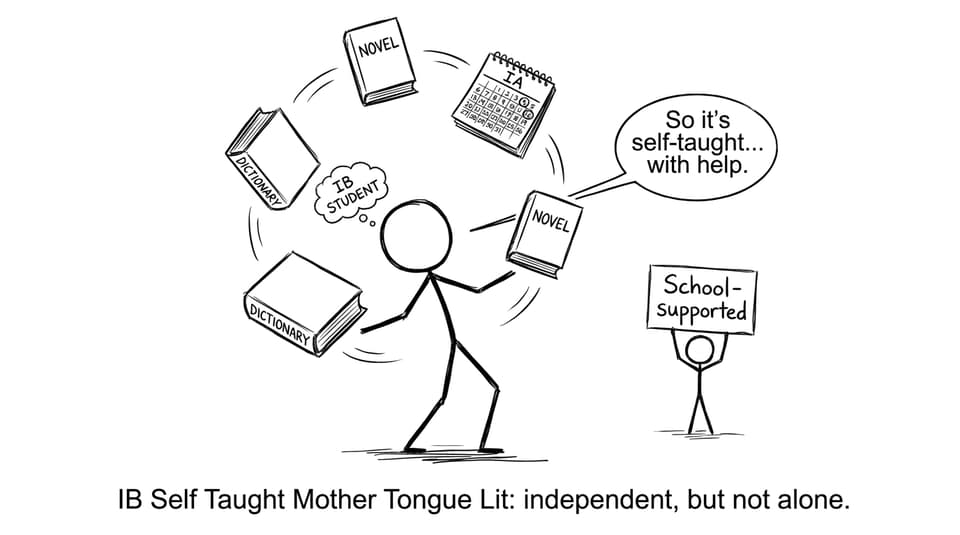
IB Self Taught Mother Tongue Lit is a pathway within Language A: Literature that allows you to study literature in your native language when your school doesn’t formally teach it. You complete the course largely through independent study, but with school support for structure, deadlines, and guidance.
In practice, SSST is not “you vs. a pile of books.” It’s a structured IB course where you’re responsible for consistent reading, analysis, and assessment preparation, while your school helps you stay aligned with requirements.
If you want the broader IB context and where Group 1 sits, see International Baccalaureate (IB) Overview.
Quick checklist: is IB Self Taught Mother Tongue Lit right for you?
Use this quick filter before you commit:
-
You can read complex texts in your mother tongue (novels, plays, poetry, essays).
-
You’re willing to plan your own weekly study rhythm.
-
You want a Group 1 subject that protects your cultural and linguistic identity.
-
You can access texts and some form of guidance (school coordinator, supervisor, or tutor).
-
You’re ready to practice timed writing and oral analysis like any other Language A student.
If the “planning” part worries you, it helps to borrow structure from resources designed for IB English-style assessment. RevisionDojo’s IB English Study Techniques That Actually Work is surprisingly transferable to IB Self Taught Mother Tongue Lit because the underlying skills are the same: close reading, argument, evidence, and control under time.
How IB Self Taught Mother Tongue Lit actually works
The core tradeoff is simple: the language becomes easier, but the independence becomes harder.
Your responsibilities (the “self-taught” part)
In IB Self Taught Mother Tongue Lit, you typically handle:
-
Choosing and reading the works in your language
-
Building notes on theme, style, context, and interpretation
-
Practicing the assessment formats (especially timed writing)
-
Creating a steady feedback loop (supervisor, tutor, or rubric-based self-checking)
A small but effective habit is to turn every reading session into an output: one paragraph, one thesis, one set of quote cards. RevisionDojo’s RevisionDojo App: The Smarter Way to Prep for IB Exams captures that workflow well: Study Notes to learn, Flashcards to retain, Questionbank-style practice to apply, and Grading tools to tighten responses.
Your school’s responsibilities (the “school-supported” part)
Even in IB Self Taught Mother Tongue Lit, your school should help with:
-
Administration and official course registration
-
Scheduling check-ins and internal deadlines
-
Ensuring assessments are run correctly and submitted properly
-
Helping you find a supervisor or recommending Tutors if needed
If you want a hub for SSST-related guidance, browse IB Self Taught Mother Tongue Lit articles.
Why IB Self Taught Mother Tongue Lit is a quiet advantage
There’s a hidden upside to studying literature in the language you dream in: you can often reach nuance faster. Irony, register shifts, and cultural references land with less friction. That means you can spend more of your energy on what IB examiners actually reward: interpretation, technique, and coherent argument.
Preserving identity while scoring marks
SSST isn’t only about “keeping your language.” It’s about keeping your confidence. When school life happens in one language and home life in another, literature can become the bridge that reminds you you’re not split; you’re layered.
Building independence that universities notice
Universities value students who can manage long-term projects without constant supervision. IB Self Taught Mother Tongue Lit naturally trains that: you learn to plan, read deeply, synthesize, and show discipline.
How to prepare for IB Self Taught Mother Tongue Lit exams (a simple plan)
You don’t need a perfect plan. You need a repeatable one.
Build a “two-layer” set of notes
For every work, keep:
-
Layer 1: retrieval notes (plot checkpoints, character arcs, key scenes, context)
-
Layer 2: analysis notes (authorial choices, technique clusters, recurring motifs, interpretive claims)
If you struggle to avoid summary, train close reading deliberately. This guide is written for English A, but the method maps cleanly onto IB Self Taught Mother Tongue Lit: Close Reading Techniques for Prose and Poetry.
Practice structure, not just knowledge
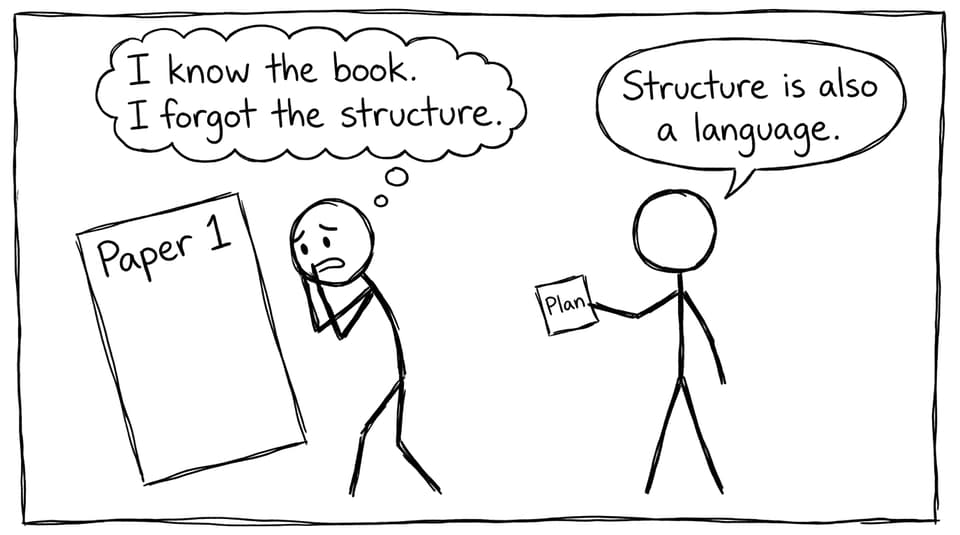
Many SSST students know the books well and still lose marks because their writing is shapeless under time. Use exam-style structures and get fast feedback.
RevisionDojo helps here in a very practical way:
-
Use Study Notes to learn technique language (so you can name what you see).
-
Use Flashcards for quotes, motifs, and “technique -> effect” chains.
-
Use AI Chat to clarify confusion quickly in your own words.
-
Use Grading tools to tighten thesis clarity and paragraph logic.
-
Use Mock Exams and Predicted Papers to build stamina and timing.
For broader exam readiness, keep Preparing for IB English A: Literature Exams open as a reference and translate the strategies into your language.
Closing: make IB Self Taught Mother Tongue Lit feel supported
The best part of IB Self Taught Mother Tongue Lit is also the most human part: you get to take your own language seriously, not as a background detail, but as a place where ideas can be sharp and literature can be personal.
If you’re preparing for exams, don’t rely on motivation. Build a system. Use RevisionDojo as the one place where your SSST routine lives: Questionbank-style practice habits, Study Notes for technique, Flashcards for recall, AI Chat when you’re stuck, Grading tools to polish writing, Mock Exams and Predicted Papers for timing, plus the Coursework Library and Tutors when you need deeper guidance.
Start this week: choose one text, write one timed paragraph, and let IB Self Taught Mother Tongue Lit become the subject that proves you can learn independently, with the right support.


