

The line on your transcript they actually pause on
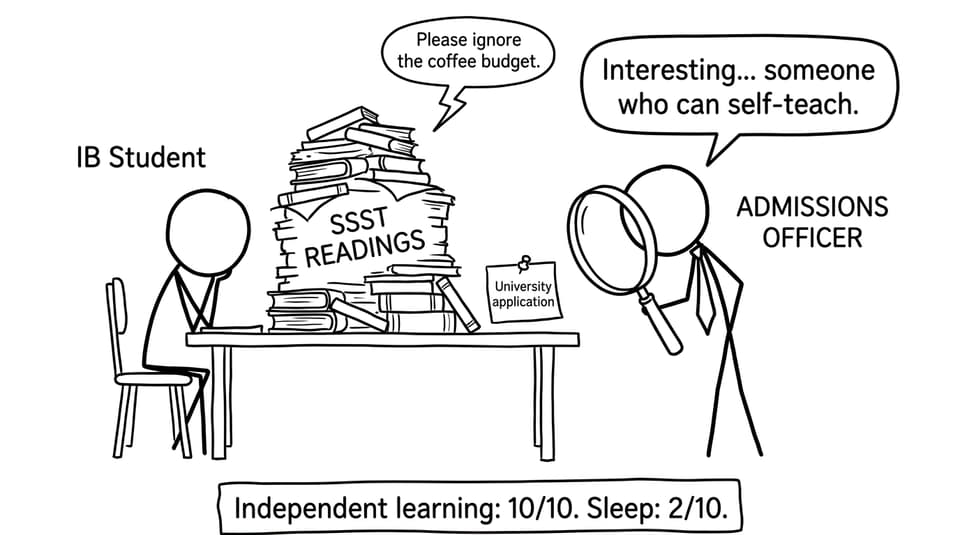
The night you submit your University application, everything starts to blur into sameness: predicted grades, activities, leadership titles that sound suspiciously identical across half your cohort. Then your eyes land on one detail that feels different because it is different: SSST (School Supported Self Taught) Mother Tongue Literature.
It’s not just another course. It’s a quiet signal that you can build structure when no one is handing you one. And in a University context, that signal matters more than students realize.
Quick checklist: what a University reader is looking for
Before we go deeper, here’s the practical scan most University admissions readers do when SSST appears:
-
Did you take a demanding programme (IB) and then add an independent component?
-
Can you show outcomes: grades, assessments, writing samples, or teacher verification?
-
Does SSST reinforce your story (identity, languages, global outlook, academic curiosity)?
-
Can you explain it clearly in one sentence?
-
Did you sustain it alongside exam pressure (not just “start strong” energy)?
If you can answer those well, SSST stops being “a weird label” and becomes a credible advantage.
What SSST actually is (and how it appears)
SSST stands for School Supported Self Taught Mother Tongue Literature. In the IB Diploma, it allows you to study Language A: Literature in a language your school doesn’t formally teach, with school supervision and IB assessment.
That last part matters for University readers: SSST isn’t a hobby course. It sits inside the IB structure with assessment standards, and you’re accountable to them.
If you’re still deciding whether SSST will feel easier or harder than a taught course, this breakdown helps: Is SSST Mother Tongue Literature Easier or Harder?
Why SSST can help a University application (when you frame it right)
SSST signals academic independence
A University is basically a long experiment in self-management. No one checks whether you did the reading. No one chases you for drafts. SSST is one of the rare high-school experiences that hints you can handle that reality.
SSST demonstrates:
-
Self-directed planning: you mapped readings, milestones, and revision cycles.
-
Consistency: you sustained a course that doesn’t have daily classroom momentum.
-
Ownership: you learned to seek feedback instead of waiting for it.
If your personal statement is about ambition, SSST is evidence. If your personal statement is about resilience, SSST is evidence. A University doesn’t just want the claim; it wants the trail.
For building that kind of independence without spiraling into chaos, this is a solid companion read: Guiding Students to Independent Study with RevisionDojo Resources
SSST shows cultural depth (not just “I speak the language”)
University admissions teams see “bilingual” constantly. What’s rarer is bilingual academic literacy: reading literature with precision, writing analytically, and discussing culture through texts.
SSST communicates:
-
Cultural competence: you can interpret your own culture with nuance.
-
Perspective: you’re not only absorbing a curriculum; you’re bringing something into it.
-
Intellectual range: you can operate across linguistic frameworks.
In competitive University pools, that can shift you from “strong applicant” to “distinct applicant” because it adds texture to who you are.

SSST trains the same skills your IB exams reward
SSST is literature. And literature is transferable skill disguised as subject content.
The same muscles show up everywhere:
-
close reading under time pressure
-
building a line of argument
-
selecting evidence, not summarizing
-
writing with control
If you want your SSST work to lift your other Language A components too, use targeted practice strategies like those in Preparing for IB English A: Literature Exams and Effective Study Techniques for IB English A: Language and Literature.
How to write SSST on a University application (so it lands)
University readers are fast. They’re smart, but they’re scanning. Your job is to translate SSST into something instantly legible.
Use a one-line explanation everywhere you can
Try a structure like:
“IB SSST Mother Tongue Literature (self-directed Language A course assessed by the IB, supported by my school).”
That single parenthesis prevents confusion, and confusion is the enemy of value.
Turn SSST into proof, not a label
When you describe SSST in activities, additional information, or essays, mention one concrete anchor:
-
number of works studied
-
the type of writing you produced
-
a specific oral or analytical skill you developed
-
how you built a routine around it
If you say “independent,” show the system.
Connect SSST to your academic direction (lightly)
Not everyone needs to make SSST match their intended major. A University doesn’t require it. But you can create an elegant connection:
-
STEM applicant: “SSST strengthened argument structure and clarity under exam conditions.”
-
Humanities applicant: “SSST deepened comparative analysis across cultures.”
-
Business applicant: “SSST improved communication, persuasion, and interpretation.”
The point is not to stretch it. The point is to show that you know what you gained.
How RevisionDojo helps SSST students make it real
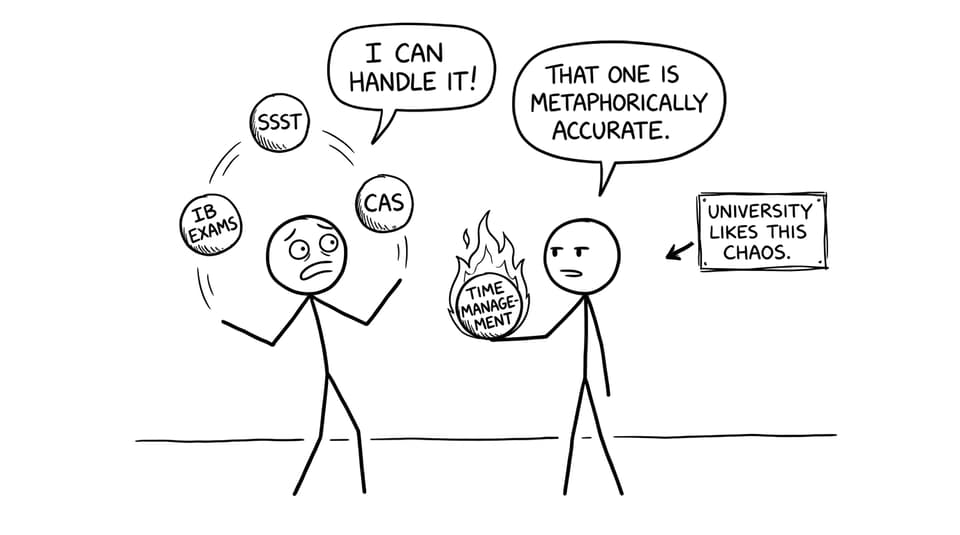
The hidden challenge of SSST is that it’s easy to confuse “reading” with “progress.” You need feedback loops.
RevisionDojo gives you those loops:
-
Study Notes to keep your analysis grounded in what examiners reward
-
Flashcards for quotes, techniques, and key themes (so recall becomes automatic)
-
Questionbank practice to train structured responses under time limits
-
AI Chat when you’re stuck on interpretation and need a second brain
-
Grading tools to check writing against criteria, not vibes
-
Mock Exams and Predicted Papers to practice pacing without panic
-
Coursework Library to see what “good” looks like in real samples
-
Tutors when you need human feedback that’s direct and specific
If you want an overview of the full system, start here: RevisionDojo App: The Smarter Way to Prep for IB Exams. And if you’re building a bigger revision plan alongside SSST, this guide stays practical: How to Study for IB Exams: Step-by-Step Guide.
The real question: what does SSST say about you?
A University application is a compressed biography. SSST is one of the few lines that quietly tells a longer story: you kept your language, you stayed with difficult texts, and you learned to direct your own learning when the structure wasn’t guaranteed.
If you want that story to come through clearly, pair SSST effort with a system that makes progress measurable. Build your routines with RevisionDojo’s Questionbank, Study Notes, Flashcards, AI Chat, Grading tools, Mock Exams, Predicted Papers, and Coursework Library, and ask Tutors for feedback when you need an outside lens.
That’s how SSST looks best on a University application: not as an acronym, but as proof.