



Peace is one of those words that seems obvious until you try to use it in an essay. In the news, “peace” might mean a ceasefire. In a classroom debate, it might mean justice. In IB Global Politics, peace becomes the moment you realise a definition is never neutral: it always smuggles in values, interests, and power.
If you’re preparing for exams, the goal isn’t to memorise one perfect line. It’s to show you understand why peace is contested, and how different definitions change what policies look “successful.” This is exactly why IB Global Politics treats peace as an analytical tool, not a slogan.
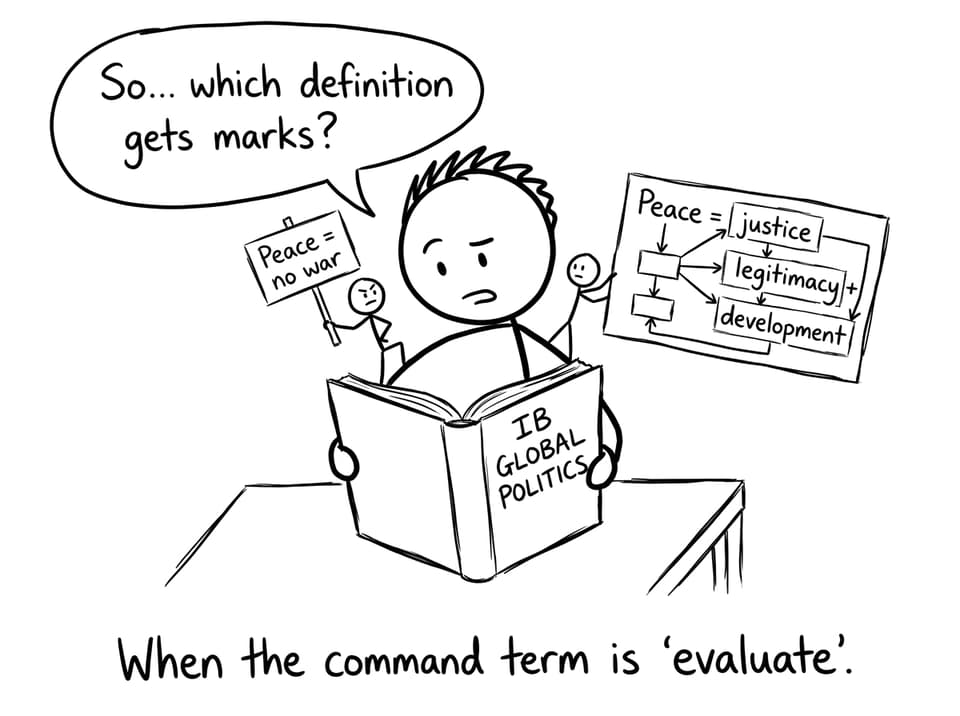
A quick IB Global Politics checklist for defining peace
Use this as a fast plan before you write:
-
Define peace as negative peace (absence of direct violence)
-
Add positive peace (conditions that prevent violence returning)
-
Link peace to justice, legitimacy, and development
-
Name the level (within a state, between states, global)
-
Evaluate: who benefits from this definition of peace?
For syllabus-aligned support, start with the IB Global Politics resources hub and the Peace and Conflict topic page.
Peace as “no war”: useful, measurable, incomplete
The simplest definition of peace is the absence of war or organised armed violence. This is attractive in IB Global Politics because it’s observable: fewer deaths, fewer battles, fewer armed groups.
But the exam trap is stopping there. A country can have no active war and still feel unsafe due to repression, discrimination, or fear. So while “no war” can describe a short-term outcome (a ceasefire), it doesn’t automatically describe a stable political settlement.
If you want a concrete route into this debate, RevisionDojo’s Contested meanings of peace and conflict topic page helps you frame definitions as arguments you can evaluate.
Peace as “conditions for lasting safety”: justice, legitimacy, development
A broader view argues peace also requires conditions that reduce the likelihood of violence returning. In IB Global Politics, this is where essays get more interesting: peace becomes connected to rights, inclusion, governance, and trust.
Two links matter most:
-
Justice and legitimacy: A government can impose “order” while excluding groups. It might look stable, but it can be politically fragile if people see it as illegitimate.
-
Development: poverty, inequality, and limited opportunity can intensify grievances. Development doesn’t guarantee peace, but it can remove fuel from conflicts.
To strengthen these links in exam paragraphs, use targeted revision from Development and Sustainability and practise applying concepts using RevisionDojo’s Questionbank for Peace and Conflict debates.
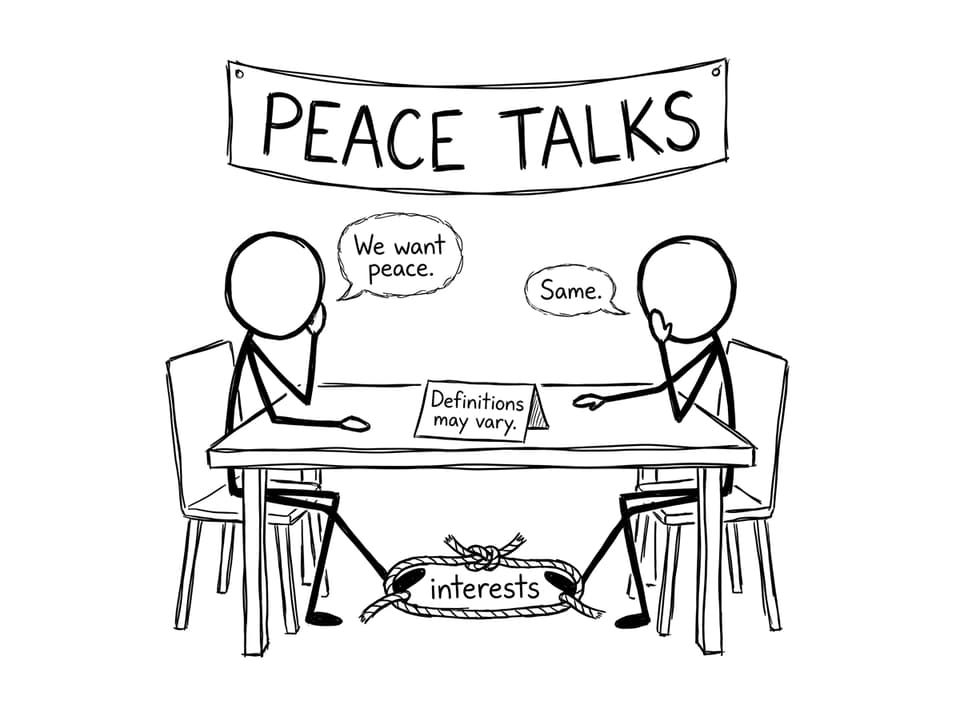
Peace operates at multiple levels in IB Global Politics
In IB Global Politics, peace can refer to:
-
Domestic peace: stability within a state
-
International peace: peaceful relations between states
-
Global peace: broader patterns like arms control, collective security, and norms
This matters because a “peaceful” state can still be part of regional escalation, and two states can avoid war while populations face internal violence. Always specify the level you’re discussing, then evaluate whether peace at that level is sustainable.
For exam strategy, RevisionDojo’s Paper 2 guide notes are useful for building balanced arguments, and the Paper 1 guide notes help you practise analysing how sources frame “peace.”
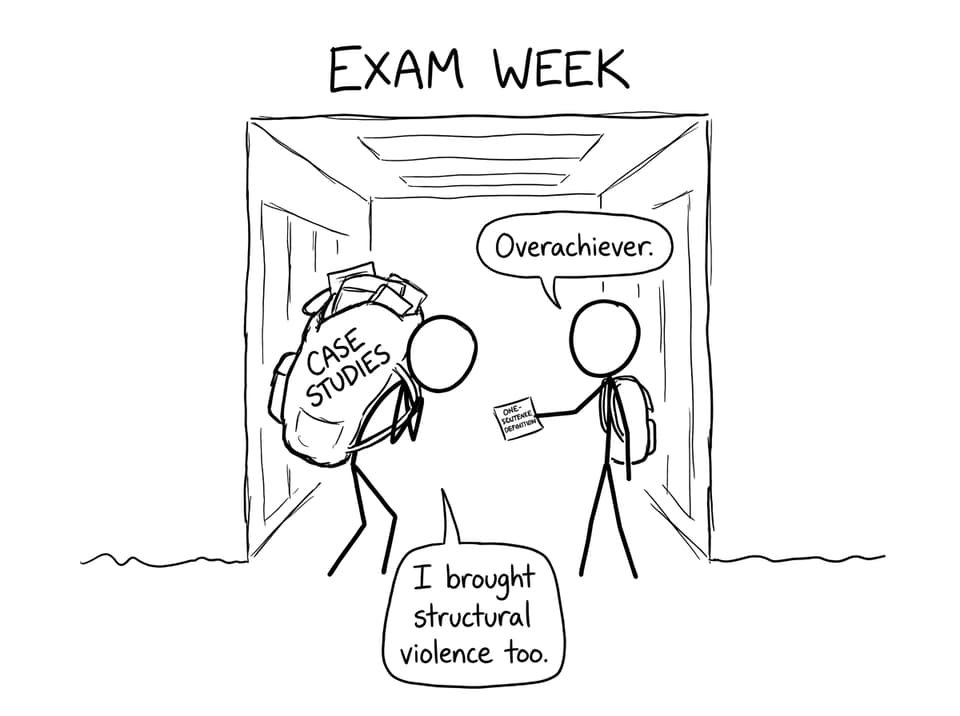
How to write this topic in exams (without sounding generic)
A strong IB Global Politics response usually does three things:
-
Defines peace twice: negative and positive
-
Shows implications: what policies follow from each definition?
-
Evaluates sustainability: can peace last without justice or development?
If you’re revising overall, this pairs well with How to Revise Effectively for IB Global Politics and broader practice from IB Global Politics revision notes.
Conclusion: peace is a question, not a finish line
Peace in IB Global Politics is bigger than “no war.” It’s a debate about security, legitimacy, justice, and development, and about who gets to define success.
If you want to turn this into marks, use RevisionDojo as your basecamp: practise with the Questionbank, lock in concepts with Study Notes and Flashcards, stress-test arguments using AI Chat, and refine structure with Grading tools and Mock Exams. When peace is contested, preparation is the closest thing to certainty.