
If you’ve spent any time in IB Sciences, you know the lab has a strange personality. Most days it’s quiet: a balance, a beaker, a predictable graph. Then there are the days when a Bunsen flame looks a little too confident, someone’s ethanol bottle is a little too close, and your brain whispers, What if the lab catches on fire?
That question isn’t dramatic. It’s practical. And in IB Sciences, “practical” is the whole point: the IA, the data handling, the real-world judgment. Knowing what to do in a lab fire is part safety, part maturity, and part exam mindset: you stay calm, you follow a process, and you protect people first.
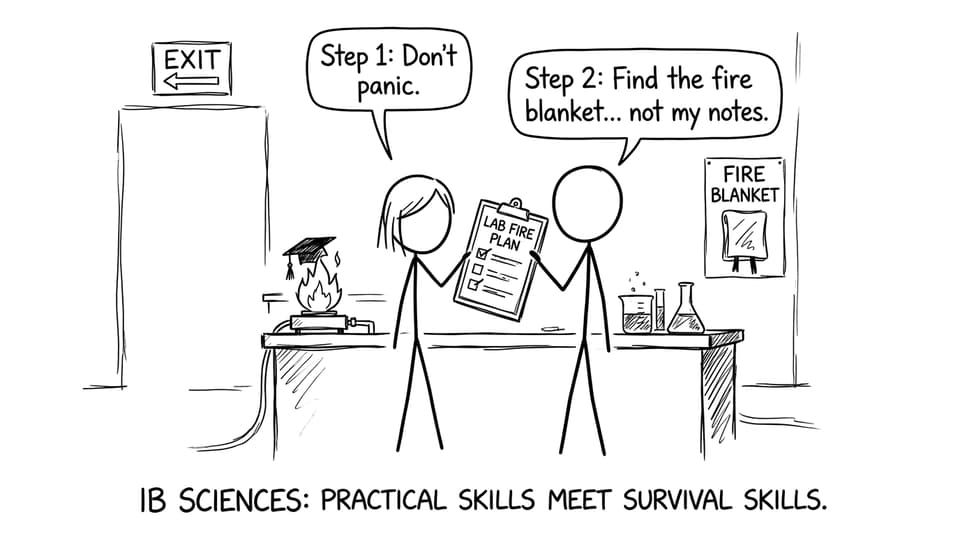
Lab fire checklist for IB Sciences students
When you’re under pressure, you don’t rise to the occasion. You fall to your training. Keep this short checklist in your head (and ask your teacher what your school’s exact procedure is):
-
Stop and alert: tell the teacher/technician immediately, raise the alarm if instructed.
-
Switch off heat/gas/electric if it’s safe and you’re told to.
-
Assess size: small, contained fire vs spreading/unknown chemicals.
-
Use the right tool: extinguisher, fire blanket, safety shower.
-
Evacuate early if there’s smoke, rapid spread, or uncertainty.
-
Report and document once safe.
This same clarity helps your practical marks too: a clean method and a calm response beats frantic improvisation every time.
Why lab fires happen in IB Sciences (and how to prevent them)
A lab fire usually isn’t a single mistake. It’s a chain of small, normal choices that line up.
Flammables + heat + clutter
In IB Sciences, common lab fuels include alcohols, organic solvents, and volatile liquids. The risk spikes when:
-
lids are left loose
-
spills aren’t cleaned immediately
-
flames are used near paper towels, notes, or packaging
Prevention is boring on purpose: label clearly, cap bottles, keep flammables away from ignition sources, and don’t let your workstation turn into a “temporary storage shelf.” If you’re planning experimental work outside school, read Can I Do the IB Science Lab Outside of School? and IB Science Labs at Home: What Experiments Are Allowed? so safety and supervision are built in from the start.
Equipment heat and electrical faults
Hot plates, power supplies, and aging cables can cause overheating. In a school lab, your best move is prevention by habit:
-
don’t overload sockets
-
keep liquids away from power sources
-
report damaged leads immediately
Safety isn’t separate from learning: it’s part of being the kind of student who produces reliable data.
Open flames and “just one minute” thinking
The most dangerous moment is when you step away “for one second.” In IB Sciences, you’ll often be timing reactions, setting up apparatus, and juggling tasks. Reduce risk by setting routines:
-
tie back hair
-
clear the bench space before lighting
-
never leave a flame unattended
If you want to build practical confidence for exams alongside lab discipline, RevisionDojo’s RevisionDojo App approach pairs Study Notes with targeted practice so procedures feel automatic.
What to do immediately if the lab catches on fire
Speed matters, but sequence matters more.
Raise the alarm and get the teacher involved
Your first job is communication. Shout a clear warning, alert your teacher/technician, and follow their instructions. A lab fire is not the moment for lone-hero problem solving. In IB Sciences, good judgment is choosing the safest, most controlled option.
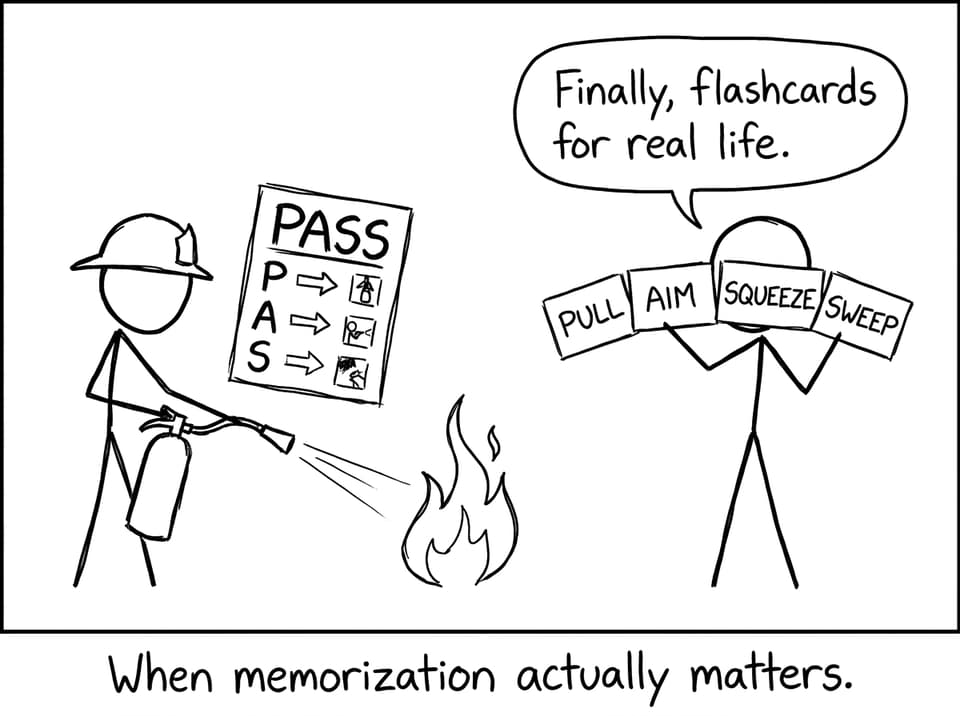
Use the PASS technique (if you’re trained and it’s safe)
If your school permits students to use extinguishers (many don’t), remember PASS:
-
Pull the pin
-
Aim at the base of the fire
-
Squeeze the handle
-
Sweep side to side
If you’re unsure what’s burning, if the flames are spreading, or if there’s smoke, evacuating is often the correct call.
Fire blanket and safety shower basics
-
Fire blanket: best for small bench fires or clothing fires (smothering removes oxygen).
-
Safety shower: for flames on a person, or chemical contamination (follow your lab’s protocol).
Knowing where these are located is part of your first-day lab responsibility in IB Sciences.
After the fire: recovery, reporting, and learning
When it’s over, your brain will want to skip the boring parts. Don’t.
Report and document what happened
A proper report includes what was involved, what actions were taken, and what injuries (if any) occurred. This isn’t about blame. It’s about preventing the next incident.
Get medical attention early
Burns and smoke inhalation can be deceptive. Even if someone insists they’re fine, your teacher should decide next steps.
Turn the incident into better science habits
Lab safety connects to academic integrity: you plan carefully, record accurately, and don’t take risks to chase a “cooler” result. For that mindset, Integrity in IB Chemistry: Safe Experimentation and Accurate Reporting is worth reading, even if you don’t take Chemistry.
And if you’re building IA plans, it helps to know what can go wrong before it does. See IB Science IA: What If Your Experiment Causes an Actual Lab Explosion? for a realistic breakdown of risks and safer alternatives.
How RevisionDojo helps IB Sciences students stay calm under pressure
The calm you want in an emergency is the same calm you want in an exam: you recognize the situation, you follow steps, and you don’t freeze.
RevisionDojo supports that kind of readiness across IB Sciences:
-
Study Notes that make concepts feel structured instead of scattered
-
Flashcards for procedures, definitions, and lab technique recall
-
Questionbank practice that builds automatic exam responses (Questionbank)
-
AI Chat for quick clarifications when something doesn’t click
-
Grading tools for feedback that mirrors mark scheme logic
-
Predicted Papers and Mock Exams to train timing and composure
-
Coursework Library and Tutors when you need examples or human support
If you want a broader map of tools, start at the RevisionDojo home page.
Closing: treat lab safety like exam technique
In IB Sciences, the lab is where theory meets reality. Sometimes reality includes fire alarms, melted plastic, and the sudden understanding that preparation is a form of calm.
Learn the procedures. Ask where the extinguisher and fire blanket are. Keep your bench tidy. And build the kind of steady confidence that carries into exams too.
When you’re ready to revise with the same clarity you’d want in an emergency, use RevisionDojo’s Questionbank, Study Notes, Flashcards, AI Chat, and Mock Exams to turn panic into process, for every topic, not just lab safety.