
A small lie in a lab coat still counts
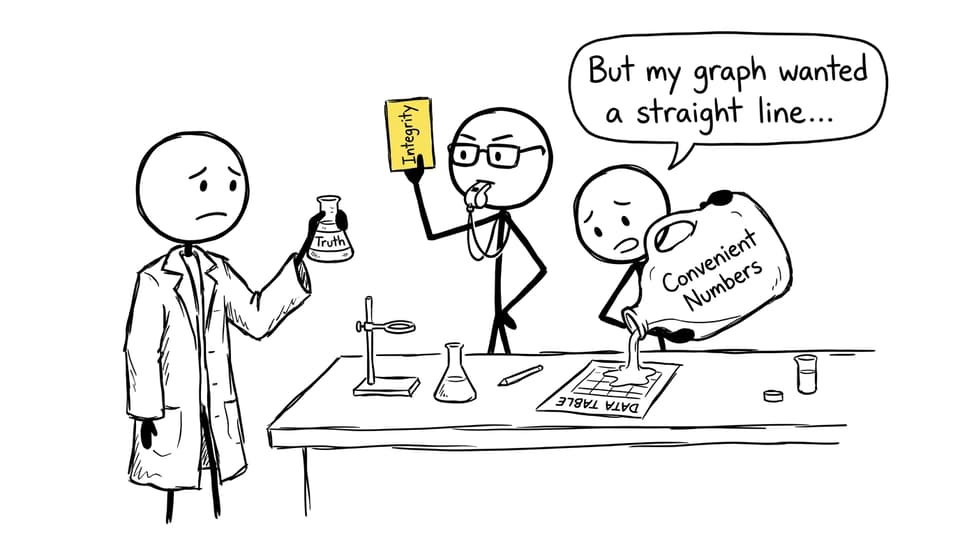
There’s a moment in IB Chemistry that almost everyone meets: you run the experiment carefully, you do the calculations twice, and the results still look… awkward. The line on the graph curves. The “outlier” is sitting there like a sore thumb. Your brain starts bargaining: If I just tweak one value, the whole story makes more sense.
But chemistry isn’t a story you get to edit after the fact. It’s closer to a diary. Your job is to write down what happened, not what would have been convenient.
Integrity in IB Chemistry has two faces that always travel together: safe experimentation and accurate reporting. One protects people. The other protects the truth. And when you practise both, you don’t just become a better student. You become the kind of scientist examiners trust.
Integrity in IB Chemistry: a quick checklist
Use this before labs, IAs, and even exam-style data questions:
-
Follow your school’s safety rules every time (PPE, disposal, supervision).
-
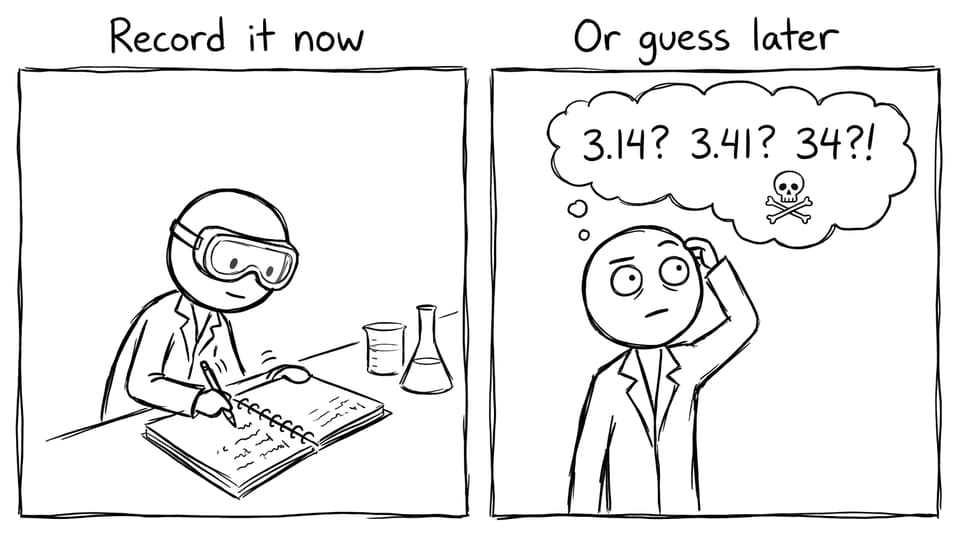
Record raw data immediately (no “I’ll write it up later”).
-
Keep all trials, including anomalies and messy results.
-
Use correct units, significant figures, and uncertainties.
-
Separate observation from interpretation (what you saw vs what it means).
-
Cite any value, method influence, diagram, or idea you didn’t produce yourself.
-
Disclose tools used (software, sensors, AI support policies at your school).
If you want a structured place to practise these habits alongside content, start from the IB Chemistry Resources hub, where you can move between Study Notes, Flashcards, and exam-style practice.
What “integrity” actually means in IB Chemistry
In IB Chemistry, integrity isn’t just “don’t cheat.” It’s a practical standard for how science stays reliable.
Experimental integrity: you don’t gamble with safety
Good science avoids unnecessary risk. That means you:
-
Use goggles, lab coats, and gloves when required.
-
Treat heating, pressure, and volatile chemicals as high-risk by default.
-
Keep your workspace uncluttered and label everything.
-
Report spills, breakages, and unexpected reactions immediately.
If you want a memorable safety reset, read IB Sciences: What If the Lab Catches on Fire?. It frames safety like an exam skill: calm, procedural, non-negotiable.
Data integrity: you don’t “improve” reality
Data integrity is simple to say and hard to live: you record what you measured, with the precision your apparatus allows. You don’t erase inconvenient trials. You don’t smooth the graph until it behaves.
A strong IA (and strong Paper responses) sound like this:
-
“Trial 3 deviated. Here is a plausible reason.”
-
“The difference is not significant within uncertainty.”
-
“The method limited precision because…”
They do not sound like this:
- “We removed Trial 3 because it didn’t match the trend.”
If you need an integrity-focused IA guide, RevisionDojo’s post Scientific Integrity in the IB Chemistry IA: Data, Ethics, and Accuracy is a strong reference point.
Safe experimentation: the habits that prevent disasters
Most lab accidents don’t come from “big mistakes.” They come from small shortcuts stacked together.
Make safety part of your method, not a footnote
In IB Chemistry, treat safety like a variable you control:
-
Identify hazards before you start (corrosive, flammable, toxic, oxidizing).
-
Reduce scale where possible (micro-scale experiments lower risk and waste).
-
Never heat sealed containers or unknown mixtures.
-
Ask for approval before changing concentrations, volumes, or heat sources.
If you are designing an investigation and you’re unsure whether it’s appropriate, the post IB Science IA: What If Your Experiment Causes an Actual Lab Explosion explains why the IB expects safer choices and how to adapt.
Practise lab skill like you practise stoichiometry
A lot of students revise theory and hope technique “just happens.” It rarely does.
Build technique deliberately using IB Chemistry Lab Skills: Practical Tips That Add Marks. Then reinforce it with targeted practice from the IB Chemistry Questionbank so your practical understanding shows up in exam answers.
Accurate reporting in IB Chemistry: the examiner can hear your process
Examiners reward clarity, restraint, and honesty. Accurate reporting has a few repeatable patterns.
Record raw data like it will be audited (because it might be)
In your notebook or raw data table:
-
Write measurements immediately.
-
Include units in every column header.
-
Keep consistent decimal places.
-
Add uncertainties where required.
-
Note conditions (temperature, pressure) when they matter.
If uncertainty feels vague, RevisionDojo’s article IB Chemistry: Why Every Measurement Has Uncertainty makes the logic intuitive: measurement is a translation, and every translation has limits.
Significant figures are honesty, not formatting
Students often treat significant figures like a teacher’s obsession. But in IB Chemistry, sig figs are a promise: “I am not pretending I know more than I measured.”
If you want a crisp explanation (plus common traps), read Why Do Chemists Use Significant Figures To Report Measurements. Then drill sig-fig and uncertainty questions directly in topic practice like 11.1 Uncertainties and errors in measurement and results.
Don’t delete anomalies: explain them
An anomaly can be:
-
A genuine random fluctuation
-
A systematic error revealing a method weakness
-
A recording mistake (which you should admit and correct transparently)
A high-scoring IB Chemistry evaluation doesn’t hide the anomaly. It uses it.
When you explain, be specific:
-
What likely caused it (equipment resolution, endpoint judgement, heat loss, contamination)?
-
How you know (comparison with other trials, control readings, observation notes)?
-
What you would change (more repeats, higher-precision apparatus, insulation, calibration)?
If you’re adding statistics, keep it purposeful. RevisionDojo’s guide Using Statistical Analysis Effectively in an IB Science IA shows how to use simple tools (error bars, spreads, basic tests) without sounding like you borrowed someone else’s brain.
Proper citation (and the quiet forms of plagiarism)
Chemistry is collaborative knowledge, but your report must be transparent about what came from where.
Cite:
-
Data tables and constants you didn’t measure
-
Definitions, diagrams, mechanisms, and method influences
-
Any secondary dataset you analyze
-
Software and sensors used to collect data
Plagiarism in IB Chemistry often looks “harmless” at first: copying a method paragraph, borrowing a classmate’s table format, lifting a graphing approach without credit. Integrity means your work is traceable. It also means you can explain every choice under questioning.
Technology and AI: use tools without outsourcing thinking
Spreadsheets, graphing tools, and sensors are normal in chemistry. The integrity issue begins when tools become a mask.
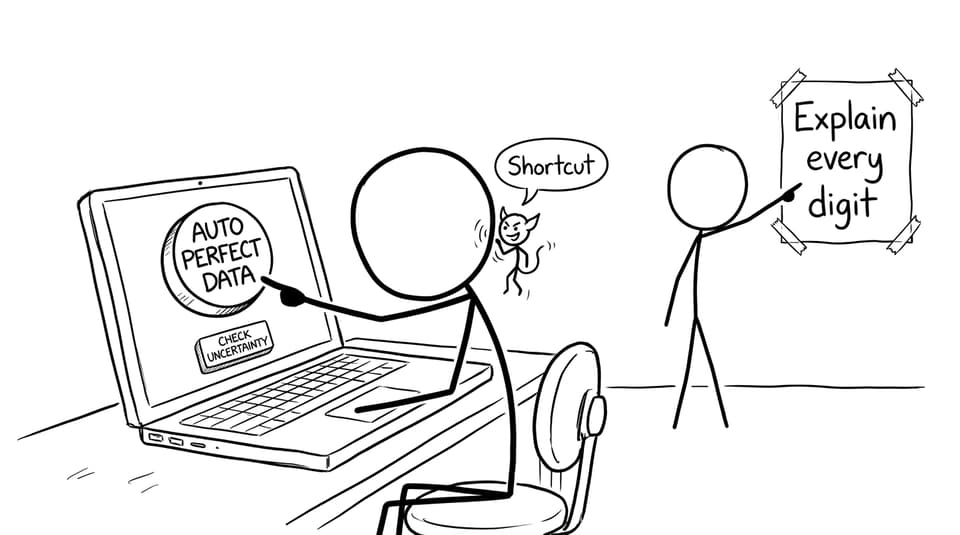
A safe rule: if you can’t explain the output, you can’t claim it.
-
Use Excel/Python to calculate, but sanity-check results.
-
Use graphing, but justify your line of best fit choice.
-
Use AI Chat for conceptual clarification, but do not let it replace your evaluation voice.
RevisionDojo is built around that boundary: you can practise with its Questionbank and get explanations, but you still own the reasoning. If you want structured support, the platform’s Study Notes, Flashcards, AI Chat, and Grading tools help you tighten understanding without pretending the work isn’t yours.
How RevisionDojo helps you build integrity while studying IB Chemistry
Integrity isn’t a motivational quote. It’s a system. RevisionDojo supports that system in practical ways:
-
Questionbank practice so you can answer data-handling questions under pressure: IB Chemistry Questionbank
-
Study Notes to keep explanations accurate and consistent across topics: IB Chemistry Resources
-
Flashcards to automate the basics (units, definitions, conditions), reducing “panic mistakes”
-
AI Chat for fast conceptual fixes when you’re stuck (without losing ownership of your writing)
-
Grading tools that help you check whether your IA-style reasoning matches rubric expectations: IB Chemistry IA Grader
-
Predicted Papers and Mock Exams to practise honesty under time pressure (where shortcuts usually happen)
-
Coursework Library and Tutors when you need exemplars or a human checkpoint before you submit
FAQ: Integrity in IB Chemistry
What counts as misconduct in IB Chemistry experiments or write-ups?
Misconduct in IB Chemistry usually involves fabricating data, changing results after the experiment, or presenting someone else’s work as your own. That can be obvious (making up an entire dataset) or subtle (removing “bad” trials with no scientific justification). It also includes copying text or structure too closely from online sources, classmates, or exemplars without clear citation. Another common issue is submitting analysis that you cannot explain, especially if it was produced by someone else or generated by an automated tool. If you’re unsure, ask yourself whether an examiner could trace each claim to evidence or a cited source. If the chain is broken, integrity is at risk.
My results don’t match the theory. Will I lose marks if I report them honestly?
In IB Chemistry, honest results are not a punishment; they’re the point. Examiners reward the quality of your thinking: how you interpret uncertainty, how you evaluate limitations, and whether your conclusion matches your evidence. If your results differ from expected values, you can still score strongly by explaining plausible sources of random and systematic error and proposing realistic improvements. In many cases, “messy” data gives you more to evaluate, which can strengthen the discussion section. What hurts marks is pretending the mismatch doesn’t exist, or forcing the data to agree. A calm explanation often outperforms a perfect-looking graph.
Can I collaborate in the lab but still keep academic honesty for my IA?
Yes, collaboration in practical setup is common, but your IB Chemistry work must remain individually accountable. You can share apparatus, discuss safety, and even talk through general chemistry concepts. But you should record your own raw data, do your own processing, and write your own evaluation and conclusion. Sharing spreadsheets, copying graphs, or aligning conclusions word-for-word creates obvious integrity issues. If someone helped you legitimately (for example, a teacher advising on safety or a peer explaining how to use a burette), acknowledge that support if your school expects it. The goal is that your report represents your decisions and your reasoning, not a group product.
Conclusion: in IB Chemistry, the cleanest work is the most truthful
A strong IB Chemistry student isn’t the one who never gets strange results. It’s the one who can look at strange results and stay honest: safe method, clean raw data, careful uncertainty, transparent citation, and evaluation that sounds like a real scientist.
If you want to build that kind of reliability before exams, use RevisionDojo to run the full loop: learn with Study Notes, reinforce with Flashcards, test with the Questionbank, and train stamina with Predicted Papers and Mock Exams. Integrity isn’t extra. In IB Chemistry, it’s the foundation that makes every other mark possible.