

At some point in the IB, every student has the same quiet moment of panic: you look at your calendar, spot another practical, and wonder if you accidentally enrolled in a full-time lab job.
That’s why the question keeps coming up in IB Sciences: does IB Biology or IB Physics have more labs?
The honest answer is simple, but the reason behind it matters more than the number. Because “more labs” usually means “more time,” “more write-ups,” and a very specific kind of stress.
The quick verdict (and why it feels that way)
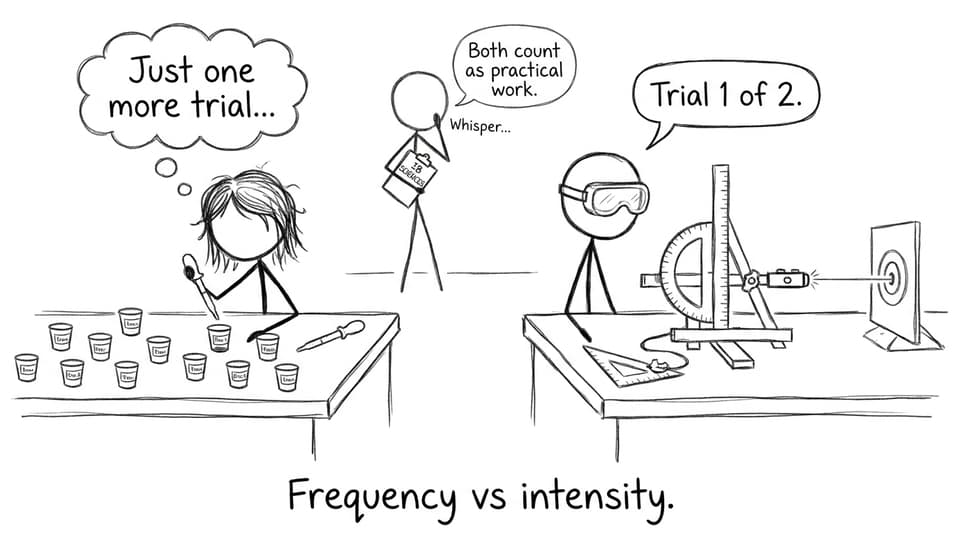
In most schools, IB Biology usually has more frequent labs.
Physics often has fewer practical sessions, but each one can feel heavier: more setup, tighter control of variables, and deeper measurement and uncertainty analysis.
Here’s a fast way to remember the difference in IB Sciences:
-
Biology: lots of smaller experiments, lots of observable variation.
-
Physics: fewer experiments, more precision, more calculation.
If your goal is exam performance, the key is not counting labs. It’s understanding what each subject is training you to do.
One IA for both subjects, but very different lab personalities
IB rules are consistent across IB Sciences: Biology and Physics each have one Internal Assessment (IA) at SL and HL.
But the lived experience diverges fast.
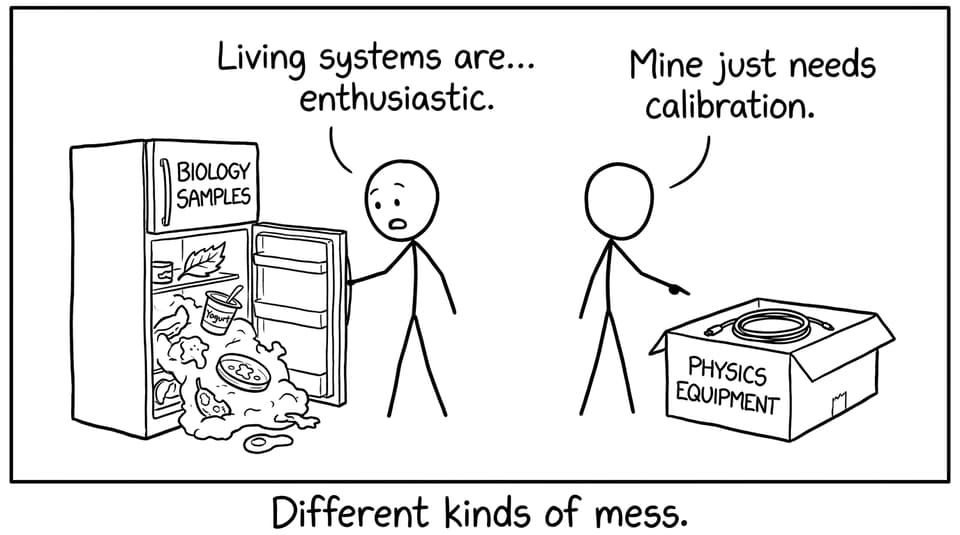
In Biology, investigations often involve living systems or biological materials. Even when you design a clean method, organisms introduce noise: germination rates vary, enzymes drift, populations don’t “hold still.” A strong Biology IA learns to explain variability rather than pretending it isn’t there. If you’re brainstorming, IB Biology IA Ideas: 2026 Topics That Actually Work is a practical starting point.
In Physics, the culture is different. The ideal Physics lab is a controlled world: variables isolated, apparatus calibrated, results repeatable. Instead of tolerating mess, you measure it. That’s why Physics students keep running into uncertainty early and often; RevisionDojo’s breakdown on absolute uncertainty captures the mindset.
Why IB Biology tends to rack up more lab sessions
Biology content naturally invites “touch the science” moments. You can read about enzymes all day, but the concept sticks when you watch reaction rates change in real time.
Common Biology practicals include:
-
enzyme rate investigations
-
ecology sampling and fieldwork
-
microscopy and tissue observation
-
diffusion/osmosis setups
A great example is the enzyme practical many students meet early. If you want to revise it like an examiner, use IB Biology Lab 1: Enzyme Activity: A Student's Guide.
Because there are so many syllabus areas where an experiment is the clearest teacher, Biology often feels like a steady stream of labs. In IB Sciences, Biology tends to win on frequency.
Why IB Physics labs can be fewer but more intense
Physics leans on a smaller set of core ideas (motion, energy, fields, waves), then returns to them with increasing sophistication.
A single Physics lab may require:
-
careful alignment or calibration
-
repeated trials to reduce random error
-
uncertainty propagation and graphing
-
a model that connects data to theory
If you’re planning an IA, IB Physics Internal Assessment Guide gives a clear sense of what “good” looks like. And if your lab reports keep bleeding marks in data handling, the Recording Data guidance is the kind of detail teachers assume you already know.
So in IB Sciences, Physics tends to win on intensity.
A practical checklist: choosing the right science for your study style
If you’re deciding between these IB Sciences, try this checklist.
Biology might suit you if…
-
you don’t mind frequent practicals
-
you like systems with many interacting variables
-
you can write thoughtful evaluations of imperfect data
Physics might suit you if…
-
you enjoy precision and repeatability
-
you like turning observations into equations
-
you’re willing to be patient with uncertainty and error analysis
If you’re still unsure how the IA component works across Group 4, IB Science Practical Exams: What to Expect and How to Prepare clears up confusion quickly.
How to prepare for labs (and exams) in IB Sciences with RevisionDojo
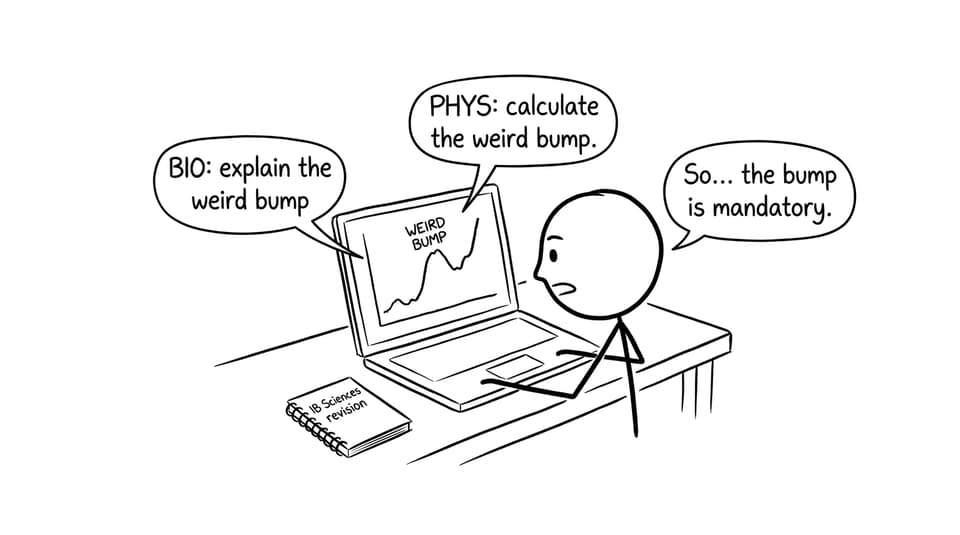
Lab confidence is exam confidence in disguise. When you understand variables, controls, uncertainties, and evaluation language, you stop losing “easy” marks.
RevisionDojo helps you build that loop across IB Sciences:
-
Use the Study Notes (e.g., IB Biology Resources and Measurements and Uncertainties) to get clear fast.
-
Drill with the Questionbank to convert understanding into marks (start here: Questionbank, or go straight to practice like Uncertainties and errors Questionbank).
-
Lock in definitions and processes with Flashcards.
-
Use AI Chat when you hit a wall mid-question or mid-write-up.
-
For coursework, lean on the Coursework Library and Grading tools (especially for IA drafts), plus Tutors when you need a human strategy check.
-
Simulate pressure with Predicted Papers and Mock Exams so your timing and stamina stop being a surprise.
If you want the full workflow in one place, RevisionDojo App: The Smarter Way to Prep for IB Exams explains how students actually use the platform week to week.
Final takeaway: the real difference isn’t the number of labs
If you’re choosing between Biology and Physics in IB Sciences, “which has more labs” is a helpful question, but it’s not the decisive one.
Biology usually gives you more lab moments. Physics often gives you denser ones.
Either way, the smartest move is to build a system: learn the concept, practise exam-style questions, and turn every practical into a source of marks. RevisionDojo is built to run that system with Study Notes, Flashcards, Questionbank, AI Chat, Grading tools, Predicted Papers, Mock Exams, a Coursework Library, and Tutors, so you’re not just doing labs, you’re converting them into results in IB Sciences.