




There’s a moment every IB student hits: you have a decent idea for your investigation, you can picture the graph you want to produce, and then reality arrives in the form of a missing piece of equipment, a fully booked lab, or a teacher who says, “We don’t have time for that in class.”
So the question gets real fast: Can I do the IB Science lab outside of school?
For IB Sciences, the reassuring answer is yes; sometimes. The more useful answer is: you can do it if you treat the work like the IB will treat it, which means prioritizing validity, supervision, safety, and documentation over location.
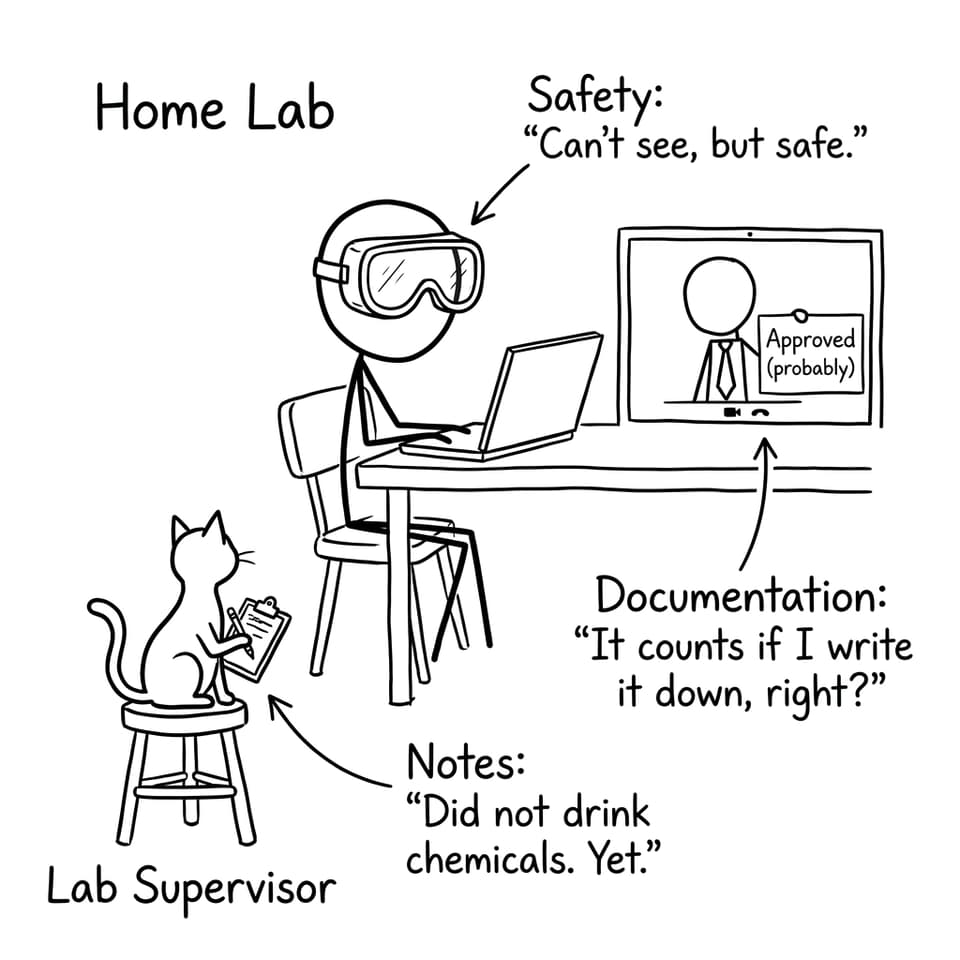
The quick checklist (read this before you touch a beaker)
If you want an external lab to work for IB Sciences, aim to tick every box below:
-
Get approval first from your teacher/IB coordinator.
-
Arrange qualified supervision (not “my older cousin is good at science”).
-
Choose a method that is safe, ethical, and realistic outside school.
-
Record raw data honestly and immediately.
-
Keep evidence: photos, timestamps, calibration notes, trial logs.
-
Write up your investigation as a clear IA-style report.
If any of those feel shaky, revise the plan before you collect a single data point.
Why students do IB Sciences labs outside school
Most students don’t choose an external setup because it sounds fun. They do it because something is constrained.
Limited resources (the classic problem)
Some schools simply don’t have the sensors, reagents, incubators, or safe spaces for what you’re trying to test. External labs can unlock better equipment and better measurement control.
Time pressure
Your lab schedule might be the bottleneck, not your motivation. If you’re also balancing revision, it helps to build an IA plan that doesn’t depend on one specific Tuesday afternoon.
A more “real” environment
Fieldwork, local facilities, university outreach labs, or supervised workplaces can give your experiment a sense of authenticity. In IB Sciences, that can strengthen your reasoning and evaluation because your constraints are real, not hypothetical.
If you’re weighing hands-on intensity across subjects, this guide helps you compare what different courses demand: Which IB Science Subject Is the Most Hands-On?
What the IB actually cares about (and what it doesn’t)
The IB isn’t grading your lab bench. It’s grading your scientific thinking.
In IB Sciences, external practical work is generally acceptable when the work is:
-
Supervised by someone credible
-
Safe and risk-assessed
-
Your own (no ghost-written methods, no fabricated results)
-
Documented well enough that a moderator can trust it happened
That last point matters more than most students expect. A perfect graph with weak evidence can look suspicious. A messy graph with honest raw data and thoughtful evaluation often scores better.
To understand the bigger picture of how practical work is judged, read: IB Science Practical Exams: What to Expect and How to Prepare
The non-negotiables for an outside-of-school IB Sciences lab
Approval first, not after
Get your teacher’s buy-in before you run trials. Approval protects you from doing hours of work that later gets ruled “not suitable” or “not verifiable.”
If you want a deeper breakdown of what’s typically allowed at home, start here: IB Science Labs at Home: What Experiments Are Allowed?
Qualified supervision
Supervision is less about someone hovering and more about accountability: the IB needs confidence the data is real and the process was safe.
A good supervisor might be:
-
Your science teacher
-
A lab technician
-
A qualified researcher/industry professional (with teacher approval)
Safety and risk assessment
A simple rule for IB Sciences: if the risk is non-trivial, redesign it.
If you’re even half-worried about “what if something goes wrong,” read this before you commit to an unsafe method: IB Science IA: What If Your Experiment Causes an Actual Lab Explosion
Documentation that makes your work believable
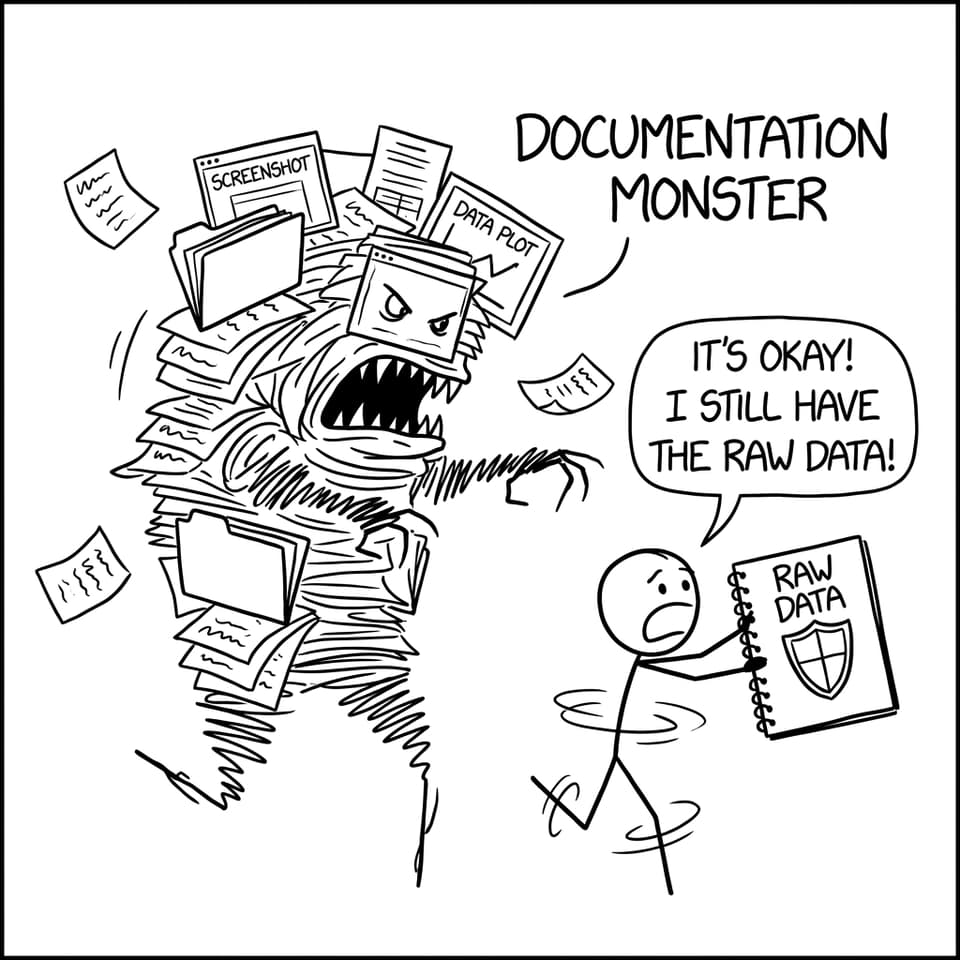
External labs live or die on documentation. If your raw data is missing, or your measurement steps are vague, it becomes hard to defend your investigation.
A strong habit: document like you’ll forget everything in 48 hours.
For a practical structure you can copy, use: How to Create a Lab Notebook for IB Science Practical Work
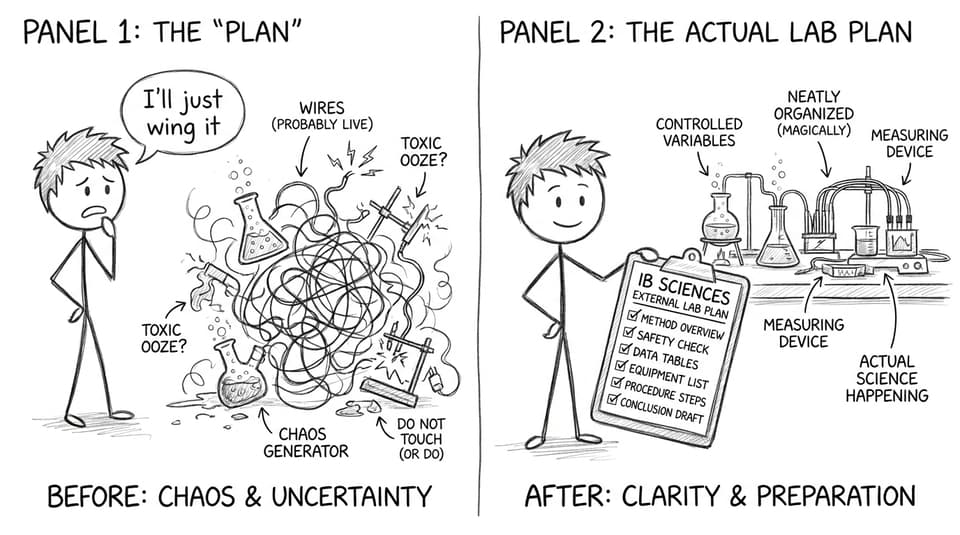
A realistic step-by-step plan for an external lab
Design a question that survives the real world
The best external investigations are specific and measurable. “How does X affect Y?” is fine, but only if you can control confounding variables in the environment you’ll actually use.
Need an example of a clean, student-friendly setup? See: IB Biology Lab 1: Enzyme Activity: A Student's Guide
Pilot first
Do a mini-run with 2-3 trials. You’re not chasing perfect results; you’re checking that:
-
your method produces measurable change
-
your measurement tool is consistent
-
your controls are realistic
Collect data with integrity
In IB Sciences, integrity isn’t just “don’t cheat.” It’s about not quietly removing inconvenient trials or rewriting values later.
If you want a crisp integrity checklist, use: Academic Honesty in IB Biology Labs: Recording and Reporting Data Responsibly
How RevisionDojo helps you turn outside lab work into exam readiness
External lab work can feel isolated: you’re collecting data in one place, then revising for exams in another mental universe. RevisionDojo helps you connect them.
-
Use the Coursework Library to check what a strong investigation write-up looks like.
-
Use AI Chat to sanity-check your variables, controls, uncertainty, and evaluation logic.
-
Use Study Notes to tighten the theory behind your hypothesis.
-
Use the Questionbank to practice exam-style data analysis and graph interpretation.
-
Use Flashcards to keep definitions, units, and required terminology automatic.
-
Use Grading tools to self-check clarity before your teacher sees the final draft.
-
Use Mock Exams and Predicted Papers to shift from “IA mode” back into timed performance.
-
If you’re stuck, RevisionDojo Tutors can help you troubleshoot method design or analysis without rewriting the work for you.
If you want a broader hub for related guidance, browse: All IB Sciences Posts
Closing: Yes, you can, but do it the IB way
You can run parts of IB Sciences practical work outside of school, and for some students it’s the difference between a cramped idea and a genuinely interesting investigation. But the freedom comes with a trade: you become responsible for structure.
Get approval early. Build supervision into the plan. Treat safety as a design constraint, not an afterthought. Document like a scientist who expects to be questioned.
And when you’re ready to turn your lab work into marks, and then turn those marks into exam confidence, use RevisionDojo’s Questionbank, Study Notes, Flashcards, AI Chat, Grading tools, Predicted Papers, Mock Exams, Coursework Library, and Tutors to keep your IB Sciences preparation sharp, calm, and evidence-driven.