
A parent can begin thinking about the International Baccalaureate years before a student enters the Diploma Programme. That does not mean beginning Diploma-level study in childhood. It means learning how the pathway works while there is still time to make calm, informed choices.
So, what age to consider IB? For most families, ages 13 to 15 are a sensible window for serious exploration. The IB Diploma Programme itself is designed for students aged 16 to 19, while the Middle Years Programme serves students aged 11 to 16. Starting the conversation in early or middle secondary school gives families time to compare schools, understand subject options, investigate university requirements, and assess the student's readiness without turning the decision into a crisis.
Age, however, is only the calendar. Readiness is the more important question.
The short answer for parents
Use this timeline as a practical starting point:
| Student age | What the family can do |
|---|---|
| 11-12 | Notice how the student responds to inquiry, projects, reading, and independent responsibility. |
| 13-14 | Learn how the different IB programme levels work and compare available school pathways. |
| 14-15 | Discuss possible Diploma subjects, university interests, workload, and school support. |
| 15-16 | Confirm subject availability, Higher Level choices, entry procedures, and the student's willingness to commit. |
| 16-19 | Complete the two-year Diploma Programme or another appropriate senior-secondary pathway. |
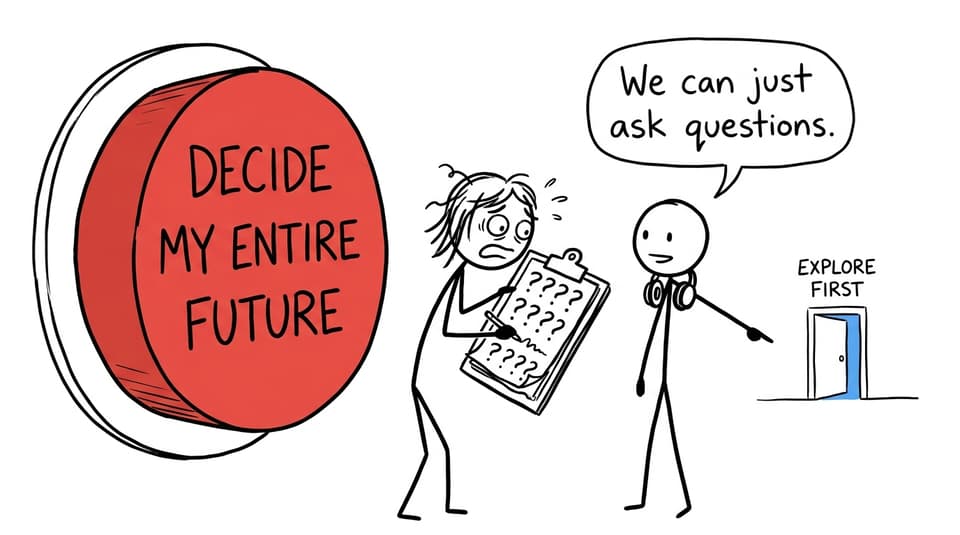
A child does not need a fixed career plan at 13. They do need enough time to discover whether broad academic study, sustained organization, and independent thinking suit them.
What is the IB Diploma?
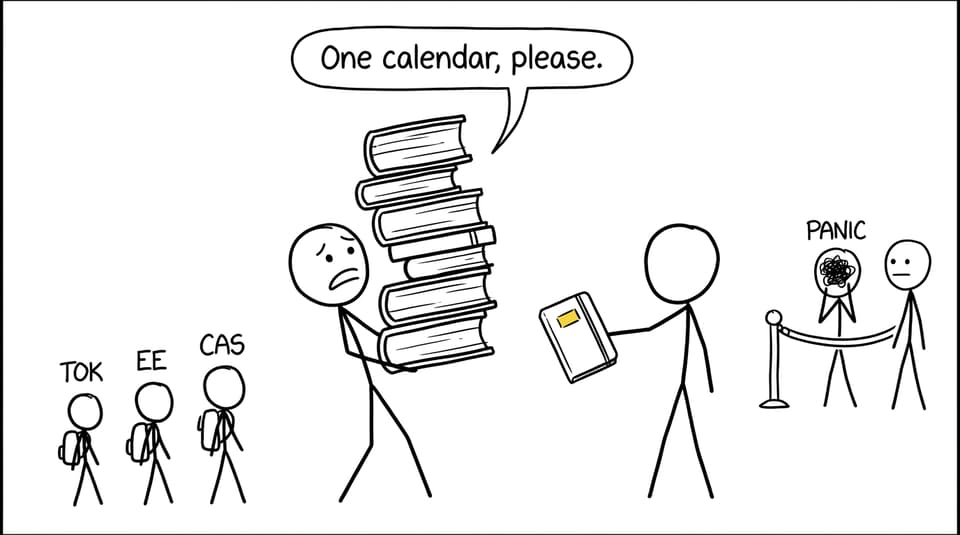
For IB diploma parents, understanding the structure makes the age question easier to answer. The Diploma Programme is a two-year pre-university curriculum. Students study six subjects alongside three core components: Theory of Knowledge, the Extended Essay, and Creativity, Activity, Service.
The official curriculum is organized across six subject groups: studies in language and literature, language acquisition, individuals and societies, sciences, mathematics, and the arts. Depending on the options permitted by a school, an arts subject may be replaced by another subject from the available groups. Families can explore how the IB Diploma works and review how many subjects IB students take before discussing individual choices.
This breadth is one reason early consideration helps. A student interested in science cannot necessarily ignore languages and humanities. A gifted writer cannot abandon mathematics. The programme asks students to develop depth while maintaining range.
That combination can be rewarding, but it should not be presented as automatically right for every capable teenager.
Why ages 13 to 15 are the ideal exploration window
At 13 or 14, the decision is distant enough to remain exploratory. Students can examine sample learning activities, strengthen study routines, and notice which subjects genuinely hold their attention. Parents can attend school information sessions and speak with the IB coordinator without demanding an immediate commitment.
By 15, the conversation becomes more concrete. The student may need to identify possible Higher Level and Standard Level subjects, depending on the school's selection schedule. This matters because university courses can impose subject-specific entry requirements, and those requirements differ by institution and country. Families should verify current criteria on official university admissions pages rather than relying on general assumptions.
A family researching at 15 has room to change direction. A family beginning the night before subject forms are due has options too, but fewer calm ones.
Readiness matters more than being advanced
The strongest sign of IB readiness is not simply earning high marks. The programme rewards students who can manage several forms of work at once, respond to feedback, investigate questions, and keep going when an answer is not immediate.
Consider these questions together:
- Can the student organize assignments without constant supervision?
- Are they willing to read, write, revise, and reflect regularly?
- Can they ask for help before a difficulty becomes a crisis?
- Do they show interest across several academic areas?
- Can they protect sleep, activities, and relationships during busy periods?
- Are they choosing IB for meaningful reasons rather than prestige alone?
No teenager will answer yes to everything every week. Readiness is not perfection. It is evidence that the student can gradually take ownership of a demanding programme.
Students already preparing for examinations may recognize this pattern. Content knowledge matters, but so do planning, retrieval practice, written communication, and the ability to diagnose mistakes. These habits become especially valuable once several subjects and core deadlines begin competing for attention.
Does a student need to complete the MYP first?
No. A student can enter the Diploma Programme after studying a national curriculum, another international curriculum, or the IB Middle Years Programme, subject to the admissions policies and preparation requirements of the chosen school.
The MYP is designed for ages 11 to 16 and emphasizes conceptual understanding, inquiry, reflection, and connections between subjects. Its style can make IB language and assessment habits feel more familiar. Research commissioned by the IB has found positive differences for MYP students in some Diploma outcomes and skills, but those findings should not be treated as proof that MYP participation guarantees higher results. Student background, school quality, teaching, and selection effects also matter.
Parents can compare MYP and the Diploma Programme or read a fuller guide to the IB Middle Years Programme. The useful question is not whether the student has followed the perfect route. It is whether their current route is developing the knowledge and habits they will need next.
Consider subjects before committing to the programme
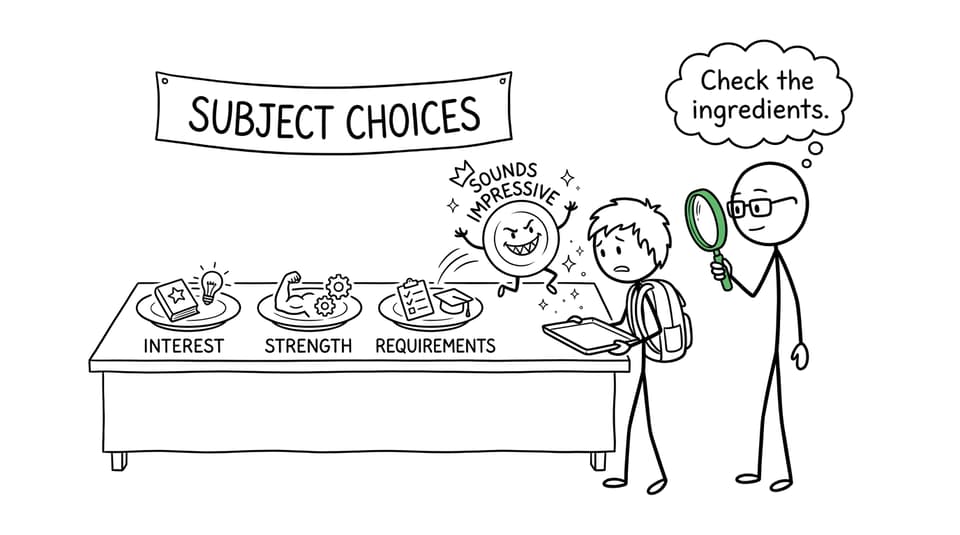
Subject selection is where a general interest in IB becomes a consequential academic plan. Choices should sit at the intersection of three things: the student's strengths, genuine interests, and possible university prerequisites.
A subject should not be selected merely because it sounds impressive. Higher Level study requires sustained effort, so weak motivation can become expensive in time and wellbeing. At the same time, choosing only what feels comfortable may close access to a degree that requires a particular subject or level.
Use a simple process:
- List subjects the school actually offers.
- Identify areas where the student has both interest and evidence of readiness.
- Explore several possible university directions without demanding one permanent career choice.
- Check official entry requirements for relevant courses and countries.
- Ask teachers how the student currently handles advanced work.
- Review the overall workload as a combination, not six isolated decisions.
The parent guide to IB subject choices and careers can structure this conversation. Students with clearer plans can then learn how to choose Higher Level subjects wisely, while undecided students can explore balanced IB subjects for uncertain university plans.
What parents should examine in an IB school
The IB label describes a programme, but the student's daily experience is shaped by the school. Ask which subjects and levels are offered, how scheduling conflicts are handled, and what preparation is expected before entry. Confirm the school's authorization and admissions requirements directly.
It is also reasonable to ask about:
- Access to the IB coordinator and university counselling
- Support for the Extended Essay and Theory of Knowledge
- How major coursework deadlines are coordinated
- Academic support when a student falls behind
- Policies on changing subjects after the programme begins
- Support for wellbeing and sustainable workload management
Listen carefully to how the school answers. A serious programme should be able to explain both its opportunities and its demands. Families should leave an information session with greater clarity, not merely greater excitement.
How to prepare without starting the Diploma too early
Early preparation should make a student more confident, not exhausted. There is little value in trying to compress two years of Diploma content into the years before enrolment.
Instead, strengthen the foundations: regular reading, clear analytical writing, secure mathematics, thoughtful research, revision from memory, and realistic weekly planning. A student can also preview the style of subjects that interest them. The goal is familiarization rather than acceleration.
This is where RevisionDojo can become a quiet bridge. Its Pre-DP and MYP content allows younger students to explore concepts and IB-style learning before the full programme begins. Once enrolled, students can move into RevisionDojo's IB resources, including the Questionbank, Study Notes, Flashcards, AI Chat, Grading tools, Predicted Papers, Mock Exams, Coursework Library, and Tutors.
These resources serve different moments. Study Notes and AI Chat can clarify a difficult idea. The Questionbank, Flashcards, and Mock Exams can turn understanding into reliable recall and performance. Grading tools and the Coursework Library can help students recognize what stronger work requires, while Tutors provide human guidance when independent study is not enough.
The right age begins the conversation, not the pressure
For most families asking what age to consider IB, 13 to 15 is the clearest answer. It creates time to understand the programme, assess readiness, examine schools, and make intelligent subject choices before the Diploma usually begins at 16.
But the best decision will not come from age alone. It comes from observing the student honestly: how they learn, what they care about, how they handle responsibility, and whether the programme supports the future they are beginning to imagine.
Start with one low-pressure next step. Read about the structure together, explore RevisionDojo's Pre-DP or MYP material, and write down the questions you want to ask an IB coordinator. Good educational decisions rarely arrive as a flash of certainty. More often, they emerge from enough informed conversations held early enough to remain calm.