You can feel it in IB SEHS revision: the moment when a definition looks “understood,” but the exam question asks you to apply it to a real athlete, a real injury, a real training plan. That gap between knowing and using is where marks quietly disappear.
Case studies close that gap. Not because they’re more “interesting” (though they often are), but because they turn abstract ideas into a story your brain can retrieve under pressure. In IB SEHS, that retrieval is everything.
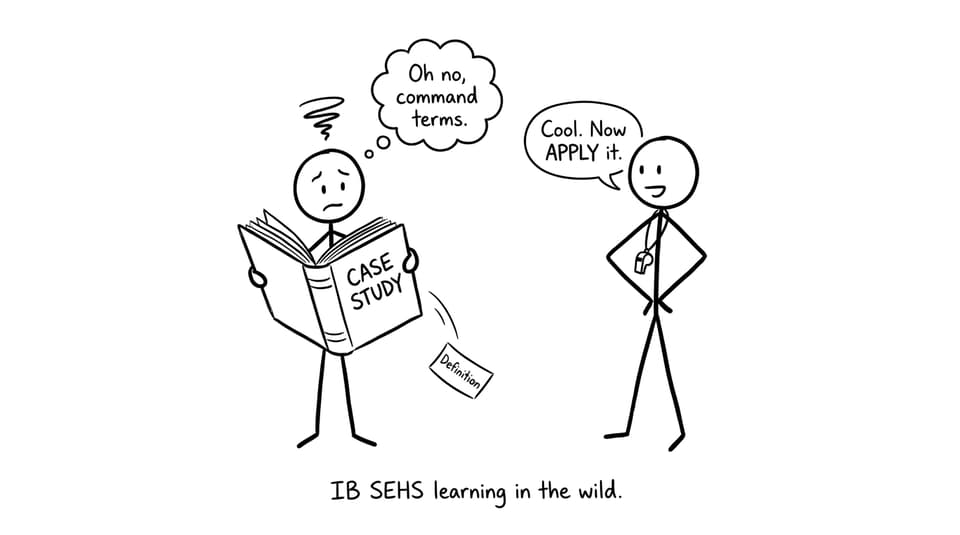
Student opens giant case study binder and panics about command terms
IB SEHS case studies: the quick win checklist
Use case studies in IB SEHS when you want to:
Make theory feel real and testable, not just readable
Remember tricky concepts by linking them to a narrative
Strengthen coursework thinking for IA/EE style writing
If you want the whole subject organized around application, start from the SEHS hub and work outward: IB SEHS resources.
Why case studies work in IB SEHS (even when you’re tired)
Most students revise IB SEHS like it’s a glossary. But examiners reward the student who can answer, “What does this look like in a real body, in a real season, under real constraints?”
Overtraining syndrome becomes more than symptoms; it becomes a timeline of training load, fatigue, performance decline, and recovery decisions.
Nutrition and hydration becomes more than recommendations; it becomes a plan that succeeds or fails depending on timing, environment, and athlete compliance.
Injury and rehab becomes more than stages; it becomes trade-offs between return-to-play speed, reinjury risk, and psychology.
To build a strong case-study bank, it helps to revise by syllabus topic and attach examples as you go. A good place to start is a content-heavy section like Hydration and nutrition notes and practice.
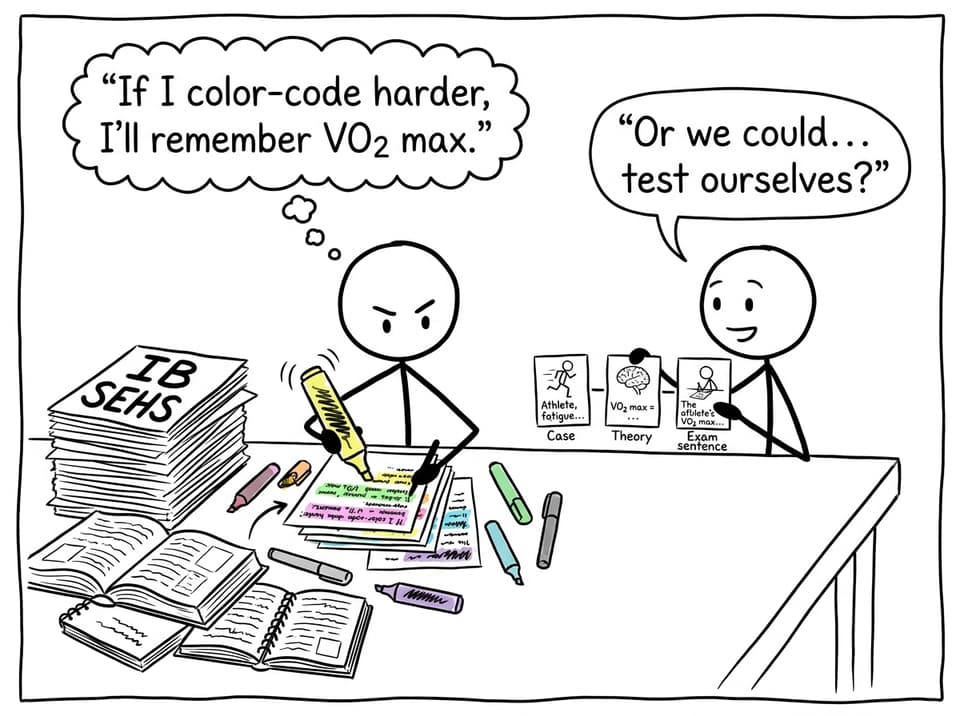
Two students debate color-coding vs testing with case-theory-exam cards
How to build exam-ready examples using case studies in IB SEHS
Here’s a simple method that makes IB SEHS case studies usable in minutes.
The “3 sentence case study” template
Context: Who/what is the scenario? (athlete type, sport, environment)
Theory link: Which concept explains what’s happening? (and why)
Exam sentence: A tight applied statement that could drop into a 6--10 marker
Example structure (you can adapt this to any topic):
Context: endurance athlete increases training volume rapidly
Theory link: insufficient recovery leads to maladaptation and fatigue
Exam sentence: performance can decline alongside increased injury risk and chronic fatigue markers, showing the cost of sustained overload
When you practise this format, your answers stop sounding generic. They start sounding like IB SEHS.
Case studies that improve your IA and coursework thinking
Even if you’re in full exam mode, coursework skills still matter because IB SEHS rewards scientific thinking: evidence, variables, controls, and interpretation.
Case studies help you:
Frame a research question with real relevance
Compare your findings to published patterns or athlete scenarios
Discuss limitations with more credibility because you’ve seen complexity in context
You can also learn by inspecting strong samples and structures: SEHS coursework exemplars. If you need rubric clarity, the IB SEHS EE Grader shows what “good evaluation” looks like in plain English.
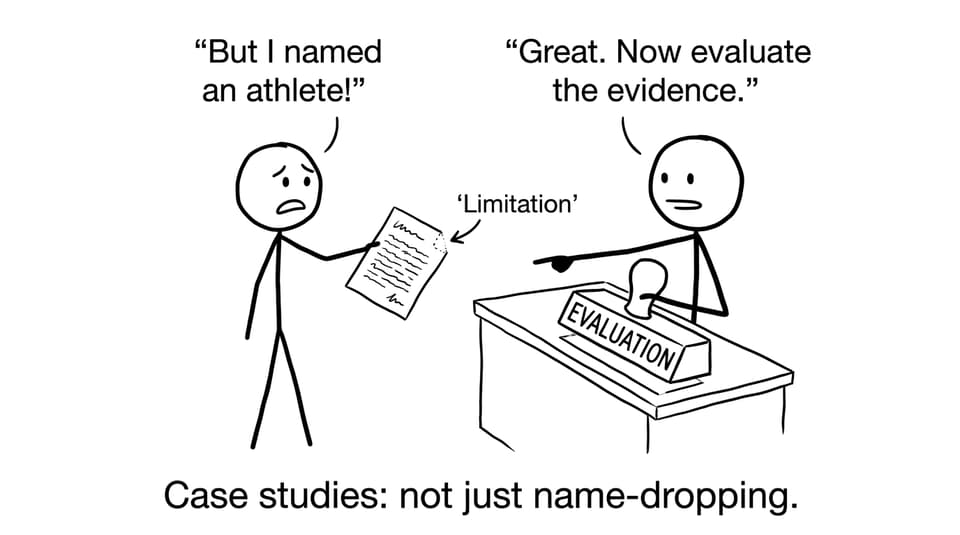
Examiner demands evaluation beyond naming an athlete
Where RevisionDojo makes IB SEHS case studies easier
A case study only helps if you can turn it into practice. RevisionDojo is built for that loop:
Use the SEHS subject hub to move from topic to topic: IB SEHS resources
Conclusion: make IB SEHS feel like real life, then take the marks
Case studies are the quiet advantage in IB SEHS: they make theory retrievable, answers specific, and evaluation easier because real scenarios naturally have complications. Build a small, high-quality case bank, practise the three-sentence template, and then pressure-test it with exam-style questions.
When you’re ready to make that loop simple, use RevisionDojo as your home base: Study Notes to clarify, Flashcards to retain, Questionbank to apply, AI Chat to refine, and Predicted Papers and Mock Exams to rehearse performance. That’s how IB SEHS stops being content you “covered” and becomes marks you can reliably earn.
IB SEHS goal setting in sport made simple: goal types, SMART targets, common mistakes, and exam-ready tips using RevisionDojo practice tools.