
A week before the exam, most people don’t realise they’re studying two different subjects.
One subject is IB SEHS. The other is anxiety management.
You open your notes, reread a paragraph, highlight a sentence, and feel briefly comforted. But comfort is not the same thing as recall. And in IB SEHS, marks usually go to the student who can explain mechanisms, interpret data, and use precise language under time pressure.
This guide shares revision strategies that work for IB SEHS exams, built around one idea: train your brain the way you train your body, with stress that is controlled, repeated, and reviewed.
IB SEHS revision quick checklist
Keep this short list on your wall while you revise IB SEHS:
-
Use active recall daily (not just reading)
-
Use spaced repetition to stop forgetting
-
Do exam-style questions under time
-
Build topic maps to connect physiology, biomechanics, psychology, and nutrition
-
Turn labs into reusable examples for evaluation
-
Protect sleep and recovery so your memory can “adapt”
For a structured home base, start with the IB Sports, exercise and health science (SEHS) resource hub.
Active recall: the engine of IB SEHS memory
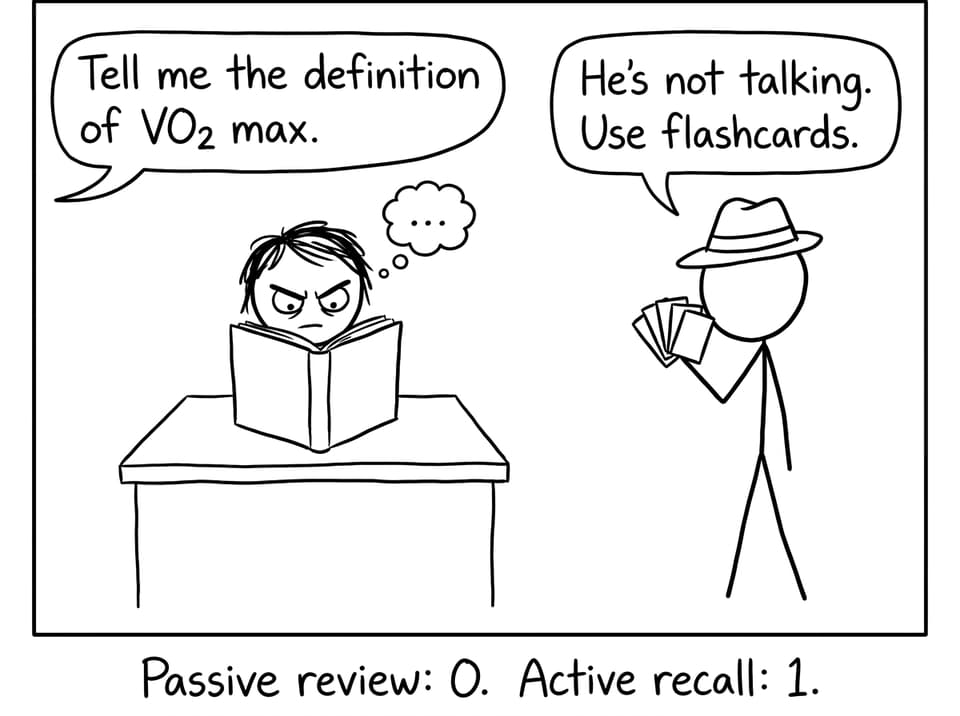
Passive review feels productive because it is easy. IB SEHS doesn’t reward easy.
Active recall means forcing retrieval:
-
Cover your notes and define key terms (e.g., VO₂ max, stroke volume, lactate threshold)
-
Write short “explain” answers from memory, then check for missing steps
-
Use flashcards for definitions, processes, and command-term phrasing
If you want premade and syllabus-aligned practice, use IB SEHS Flashcards and then build your own cards for your personal weak spots.
A useful rule: if you can’t say it without looking, you don’t know it yet (in the exam sense).
Spaced repetition: stop the forgetting curve in IB SEHS
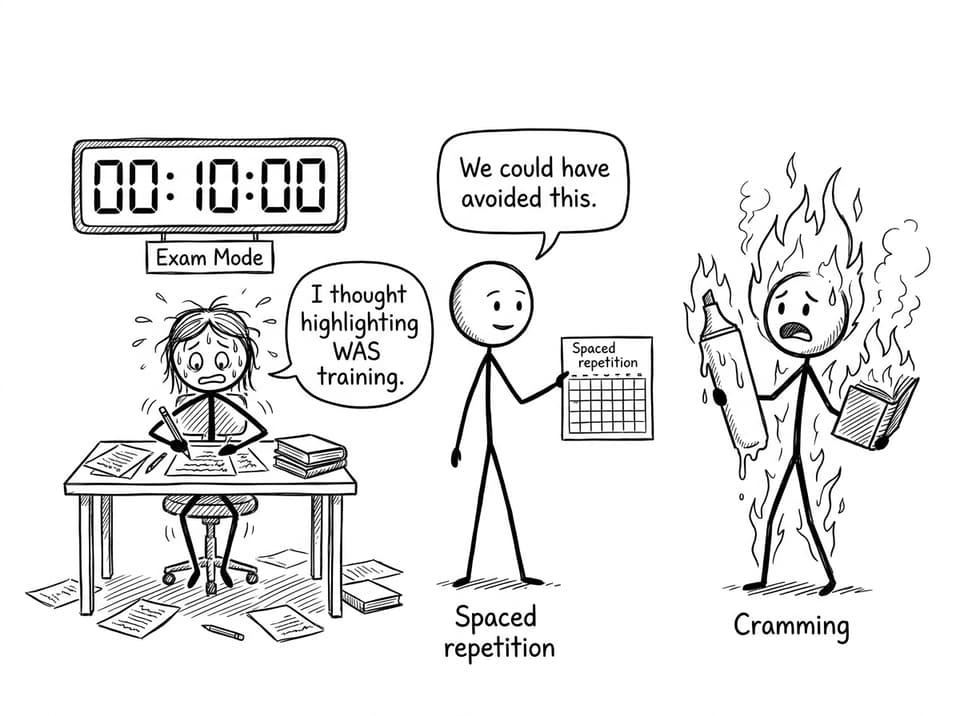
Cramming is like doing one brutal workout and expecting lifelong fitness. In IB SEHS, spacing your review is what makes knowledge stick.
Try this simple spacing rhythm:
-
Day 1: learn + active recall
-
Day 3: quick retrieval practice
-
Day 7: mixed-question session
-
Day 14: timed mini-section
RevisionDojo supports this loop naturally: learn with Study Notes, lock it in with Flashcards, and prove it with the Questionbank. For a fast content refresh, the SEHS Cheatsheets are great for quick recaps before recall practice.
Exam practice: make IB SEHS answers sound like marks
Knowing content is step one. Scoring marks in IB SEHS is step two.
Do exam-style questions like training blocks:
-
Set a timer and answer without notes
-
Compare your response to what the question is actually asking
-
Rewrite your answer with sharper structure and command terms
You can practise targeted sets through a topic Questionbank, like A.3 Response Questionbank or C.1.2 Mental Toughness Questionbank.
When you get stuck mid-question, use RevisionDojo’s AI Chat to ask, “What would a top-band ‘evaluate’ look like here?” then try again from memory.
Topic maps: the fastest way to unlock IB SEHS application marks
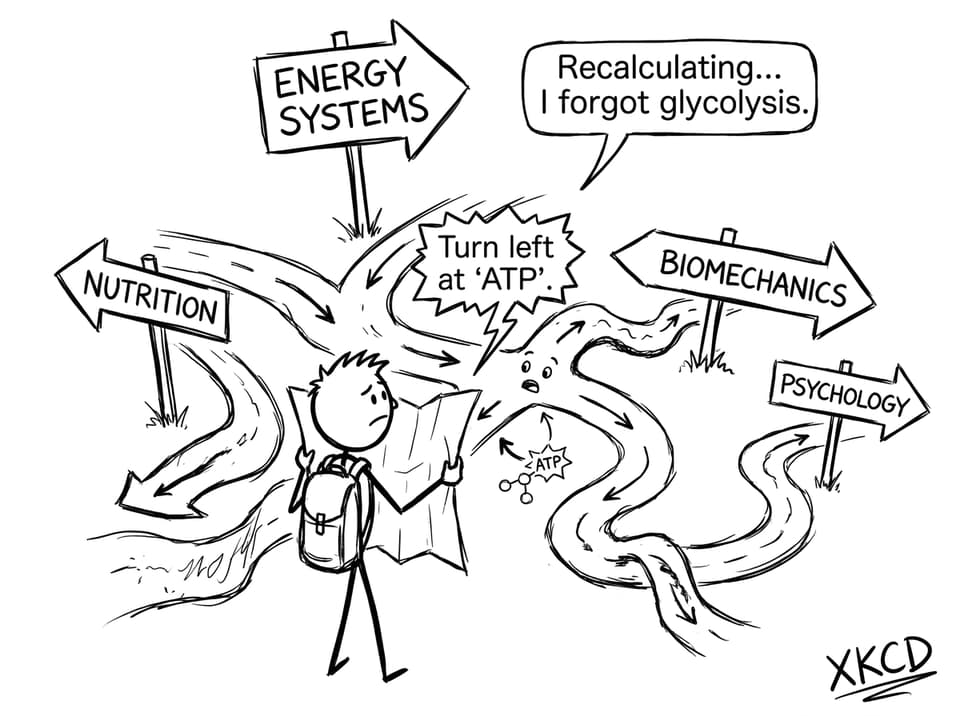
IB SEHS often rewards connections: energy systems to nutrition, biomechanics to forces, psychology to performance.
Make one topic map per unit:
-
Put a central idea in the middle (e.g., fatigue)
-
Branch into mechanisms (energy supply, neuromuscular factors)
-
Add one real athlete example and one data point you could reference
A strong place to start mapping is A.2.3 Energy Systems, because it connects everywhere.
Turn labs into reusable evidence (the IB SEHS advantage)
Your practical work isn’t just coursework. In IB SEHS, it becomes credibility.
Build a “lab examples” page:
-
What you measured (variables and controls)
-
What the pattern showed (trend, anomaly, limitation)
-
How you would evaluate validity and reliability
Even one strong lab example can upgrade an otherwise generic explanation into an applied answer.
If you are also working on coursework, RevisionDojo’s Grading tools (and the IB SEHS IA Grader) help you see what examiners value, and that mindset transfers to exam responses.
Closing: revise IB SEHS like training, not like hoping
The students who do best in IB SEHS aren’t always the ones who study the longest. They’re usually the ones who build a repeatable system: active recall, spaced repetition, exam-style practice, and honest review.
If you want that system in one place, RevisionDojo gives you the full setup for IB SEHS: Study Notes, Flashcards, Questionbank practice, AI Chat support, Grading tools, Predicted Papers, Mock Exams, and even Tutors when you need a human reset. Start at the IB SEHS resource hub and turn your next revision session into something that actually transfers to exam day.