
When you first meet IB SEHS, it can feel like a neat set of definitions living in tidy textbook boxes. But sport is rarely tidy. A player shows up tired, the weather turns, the heart-rate data looks “off,” and suddenly the most important skill isn’t memorising a term; it’s deciding what the data means and what to do next.
That is the real point of IB SEHS. It trains you to move between controlled science and messy performance. And in exams, that ability to translate theory into context is often the difference between “knows the content” and “answers like a sport scientist.”
IB SEHS in one glance: a practical translation checklist
Use this quick checklist when revising IB SEHS topics, or when you’re stuck in an exam answer.
-
What does the lab measure? (variable + unit + method)
-
What changes in the real world? (equipment, environment, motivation, fatigue)
-
What stays true? (the underlying physiological/biomechanical principle)
-
How would you adapt the test? (validity vs feasibility trade-off)
-
What decision does it support? (training, recovery, injury prevention, tactics)
If you want a clean home base for the whole course, start with the IB SEHS resource hub, where RevisionDojo connects Study Notes, Flashcards, the Questionbank, and exam practice in one workflow.
From lab measures to field decisions in IB SEHS
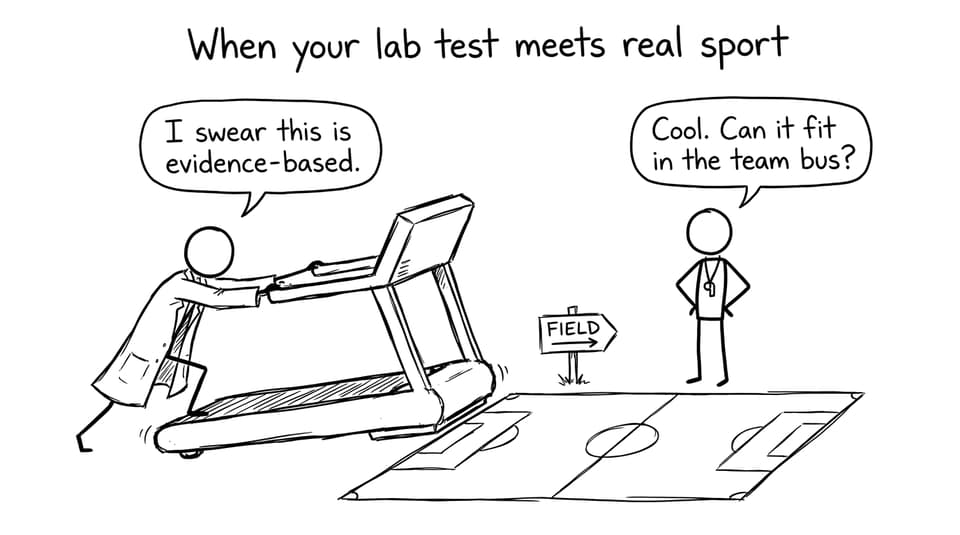
A lab is designed to protect the measurement. A training ground is designed to challenge the athlete. IB SEHS sits in the middle.
VO2 max, shuttle tests, and “good enough” data
In theory, VO2 max testing is precise and controlled. In practice, a team might use a multi-stage fitness test because it’s quick, cheap, and repeatable. Your job in IB SEHS is to explain that shift without losing scientific credibility.
That’s why RevisionDojo’s Ultimate Guide to IB SEHS HL and SL pushes application early: you learn the mechanism, then you practise describing how it would look in a realistic setting.
Hydration and nutrition: the topic that leaves the classroom immediately
Hydration is a perfect example of IB SEHS “lab to field” thinking. Controlled conditions might track body mass changes and fluid intake. Real matches add heat, nerves, and inconsistent drinking behaviour.
For targeted revision, use the A.2 Hydration and Nutrition notes and practice to build the definitions, then practise explaining decisions (pre-hydration, electrolyte strategies, recovery drinks) with exam-style precision.
Monitoring, intervention, and feedback: what IB SEHS looks like week to week
Most performance improvements happen quietly, across weeks of consistent training and small adjustments. IB SEHS helps you justify those adjustments using evidence.
Training response: turning trends into explanations
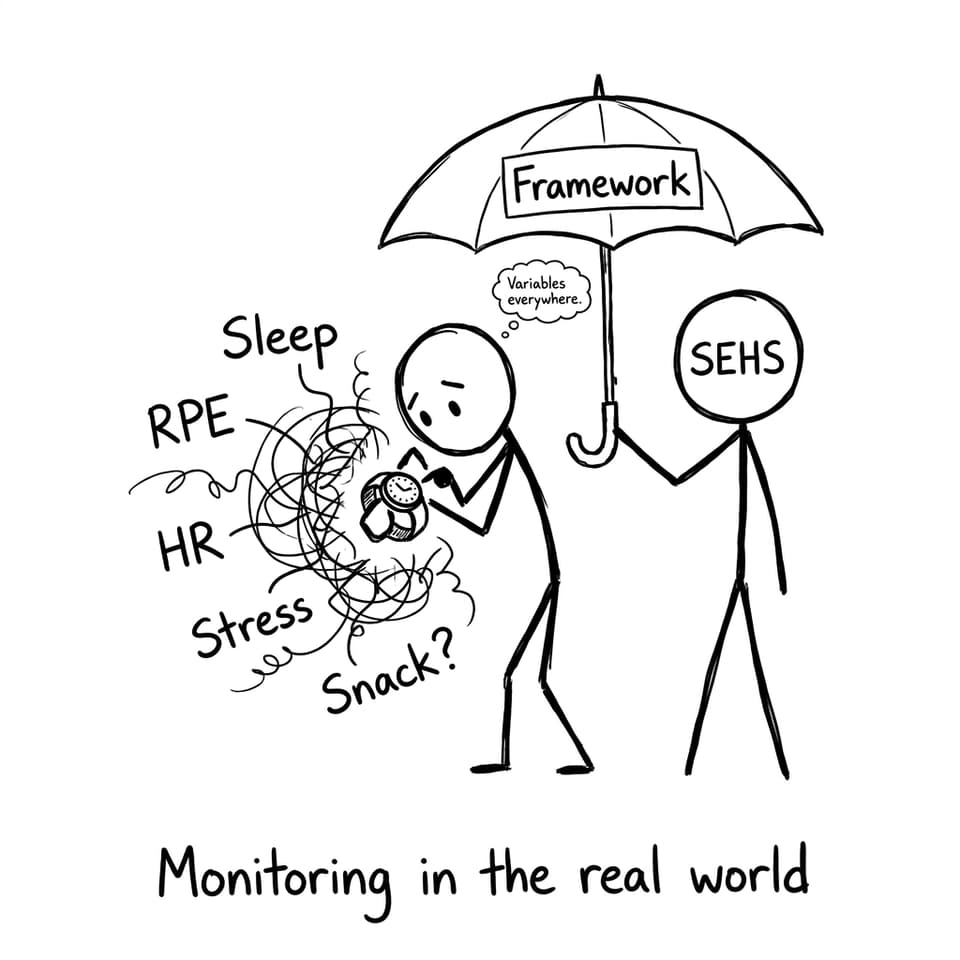
One session rarely tells you the truth. Patterns do. Monitoring heart rate, perceived exertion, or recovery markers lets coaches adjust load before the athlete breaks.
To sharpen this, revise the A.3 Response notes and practise interpreting data like an examiner expects: define the variable, describe the trend, then connect it to physiology.
Motor learning and psychology: invisible skills with visible results
A lot of IB SEHS is about what you can’t see directly: decision-making, focus, arousal control, feedback timing. In real training, those ideas show up as better consistency under pressure.
Build this bridge using C.2 Motor learning lessons and the Psychology of Sport hub. Then lock it in with active recall using RevisionDojo Flashcards and apply it under time pressure with the Questionbank.
Case studies: the fastest way to score application marks in IB SEHS
Definitions are the entry ticket. Case studies are where you earn the higher marks.
Altitude training, for example, becomes more than “physiology at high elevation” when you describe what actually happens: performance fluctuations, changes in recovery needs, and psychological effects of living and training away from home. The same is true for injury management, skill acquisition, and return-to-play decisions.
A simple routine: pick one topic per week and build a mini case study around it. Use RevisionDojo Study Notes for accuracy, then test yourself with the Questionbank until you can answer unfamiliar scenarios confidently.
For more context and examples, read IB SEHS: More Than Fitness Knowledge and explore more posts in the IB SEHS blog tag.
Closing: the point of IB SEHS is the bridge
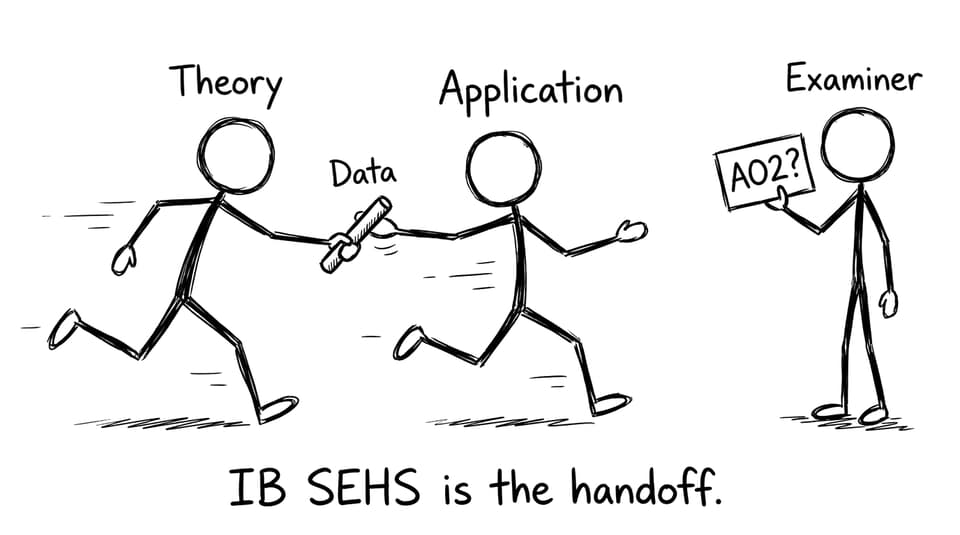
The most useful way to think about IB SEHS is as a bridge: lab clarity on one side, real performance on the other. If you can explain how a controlled measure becomes a field decision, and what you gain or lose along the way, your answers will sound confident, applied, and examiner-ready.
Build that skill intentionally. Use the IB SEHS resource hub to learn the theory, then practise application with RevisionDojo’s Questionbank, Flashcards, Predicted Papers, and Mock Exams until translating “lab to field” feels automatic.