



The moment you realize the “exam” is already happening
Most IB students can picture an exam hall: clocks, silence, invigilators, the weird fear that your pen will run out of ink. Then you open the assessment outline for IB Group 6 Arts and feel a different kind of pressure. Not sharper, just… longer.
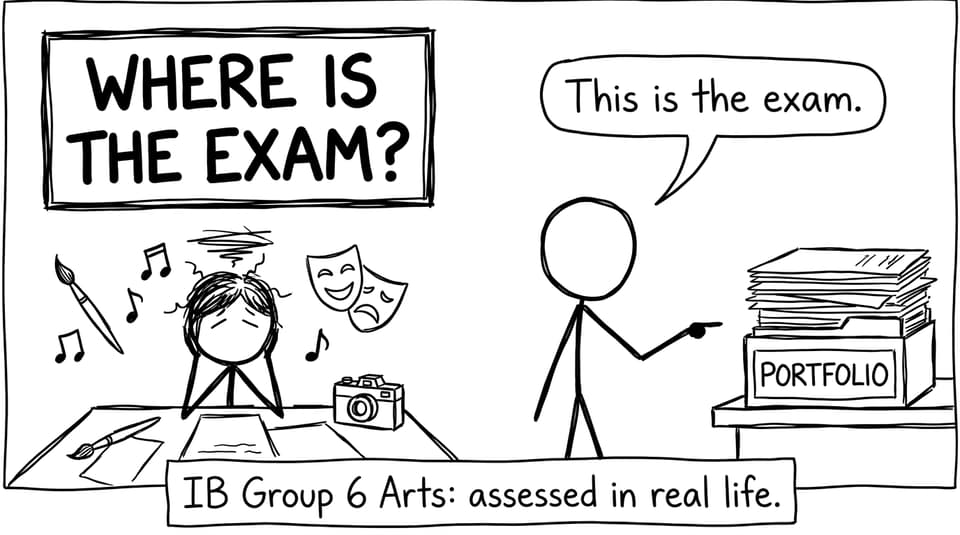
Because in IB Group 6 Arts, the grade isn’t hiding at the end of the year. It’s quietly accumulating in drafts, rehearsal clips, experiment pages, annotations, and the way you explain your choices. If you’ve been wondering whether Group 6 has traditional exams, here’s the truth: assessment in IB Group 6 Arts is mostly built around coursework, portfolios, performances, and externally assessed written or recorded components (depending on the subject). The “test” is the evidence you build.
IB Group 6 Arts assessment, in one checklist
Use this fast map before you plan any revision week:
-
Identify your components (portfolio, performance, investigation, commentary, etc.).
-
Separate internal assessment (IA) tasks (teacher assessed, IB moderated) from externally assessed tasks.
-
Track deadlines like they’re exam dates.
-
Document process weekly (experiments, iterations, rehearsals, production logs).
-
Build reflection into your workflow, not as an afterthought.
If you want a broader overview of the syllabus landscape, keep Discover the Creative Spectrum: IB Group 6 Syllabus Overview open as a reference.
What “assessment” means in IB Group 6 Arts
Here’s the mindset shift that helps most: IB Group 6 Arts rewards repeatable creative behavior more than last-minute performance. Examiners are looking for clear intention, technical development, and thoughtful evaluation of your decisions.
That’s why reflection is not “extra writing.” It is often part of what you are graded on. If you struggle to know what to say beyond “I liked this,” read The Role of Reflection in IB Group 6 Assessment and borrow its language for your own commentary.
Subject snapshots: how assessment works across Group 6
Each course has its own architecture, but the pattern stays similar: you make, you analyze, you reflect, and you present evidence.
Visual Arts
Visual Arts tends to be portfolio-heavy and process-driven. You’ll typically be judged on how your work develops over time, not just whether the final pieces look polished.
Common components include:
-
Comparative Study (externally assessed): analyzing artworks from different contexts with visual and written comparison.
-
Process Portfolio (internally assessed): documenting experimentation, technique, and decision-making.
-
Exhibition (internally assessed): curating resolved pieces with a clear curatorial rationale.
For planning support, What Is Coursework in Group 6? is a useful anchor for what “counts” as assessable work.
Music
Music assessment often blends performance and creation with analytical thinking.
Typical components include:
-
Listening paper (externally assessed in many outlines): responding to musical excerpts.
-
Musical Links Investigation (externally assessed): a research-based comparison across cultural contexts.
-
Creating and performing (internally assessed): compositions and performances, teacher assessed and IB moderated.
Theatre
Theatre assessment tends to reward collaboration, research, and the ability to articulate theatrical intention.
You may encounter:
-
Collaborative project (internally assessed): devising and performing work with a group.
-
Director’s notebook (externally assessed): documenting vision and directorial process.
-
Research presentation (externally assessed): exploring a theatre tradition in context.
If you’re still choosing between routes, IB Film vs IB Theatre: Which Group 6 Subject Is Right for You? can clarify the difference in workload and assessment style.
Dance
Dance often balances performance with choreographic intention and written analysis.
Common components include:
-
Performance (internally assessed): solo and group work.
-
Composition and analysis (internally assessed): creating and evaluating dance.
-
Dance investigation (externally assessed): research comparing dance styles and contexts.
Film
Film assessment usually blends practical production with analytical writing and comparison.
You may complete:
-
Textual analysis (externally assessed): writing about a film extract.
-
Comparative study (externally assessed): presenting cross-cultural film comparisons.
-
Film portfolio (internally assessed): production exercises showing skill development.
-
Collaborative film project (internally assessed): producing a short film as a team.
For wider scoring habits across IB Group 6 Arts, see Scoring in IB Group 6 Subjects: Strategies and Insights.
How to “revise” for IB Group 6 Arts (without pretending it’s Group 4)
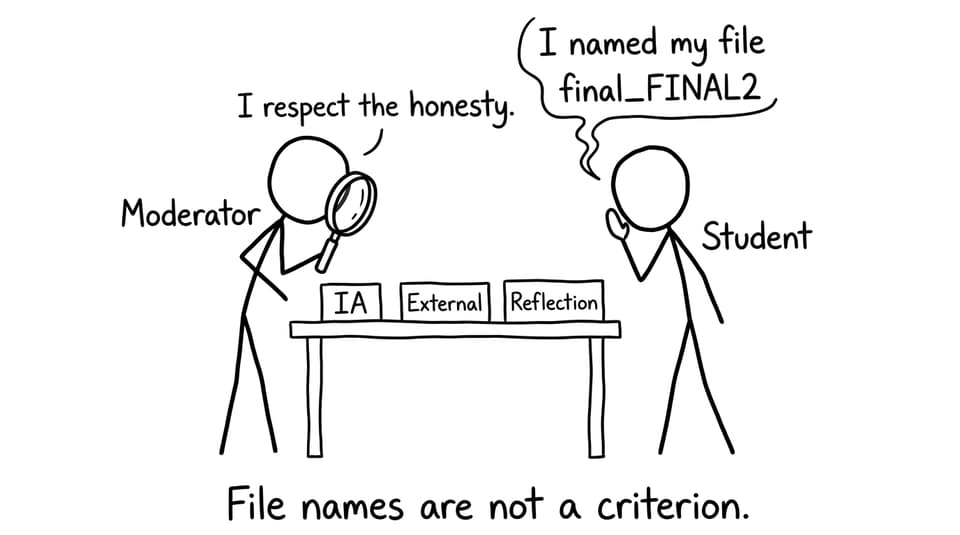
Revision in IB Group 6 Arts is less about cramming and more about tightening.
-
Tighten your evidence: pick 2-3 weak pages/clips and improve them with targeted feedback.
-
Tighten your explanation: rewrite reflections so they connect intention, technique, and outcome.
-
Tighten your logistics: export files correctly, label clearly, and keep versions organized.
A surprisingly effective strategy is to run short feedback cycles. How to Get Effective Feedback on Your IB Group 6 Work shows how to ask for critique that actually moves your markband.
If you’re unsure what deserves most of your time, Is Coursework More Important Than Exams in Group 6 Arts? helps you prioritize realistically.
A calmer way to approach IB Group 6 Arts
The hidden gift of IB Group 6 Arts is that it teaches you something exams rarely do: how to improve a piece of work through attention, feedback, and revision. Your grade is not a single day. It’s the trail you leave behind.
If you want that trail to be clearer, stronger, and easier to manage, build your workflow inside RevisionDojo: track components, sharpen reflections, practice analysis, and use feedback cycles until your evidence speaks for itself. That’s how IB Group 6 Arts becomes less mysterious and more manageable.