

UCAS Clearing moves the way exam time does: suddenly the clock is loud, your phone feels heavier, and every decision seems permanent.
If you’re an IB student, that intensity lands on top of months of revision, predicted grades, and the quiet fear of “what if my results shift everything?” The good news: UCAS Clearing rewards calm more than panic. Calm helps you listen properly, speak clearly, and choose a course you actually want, not just the first option that answers.
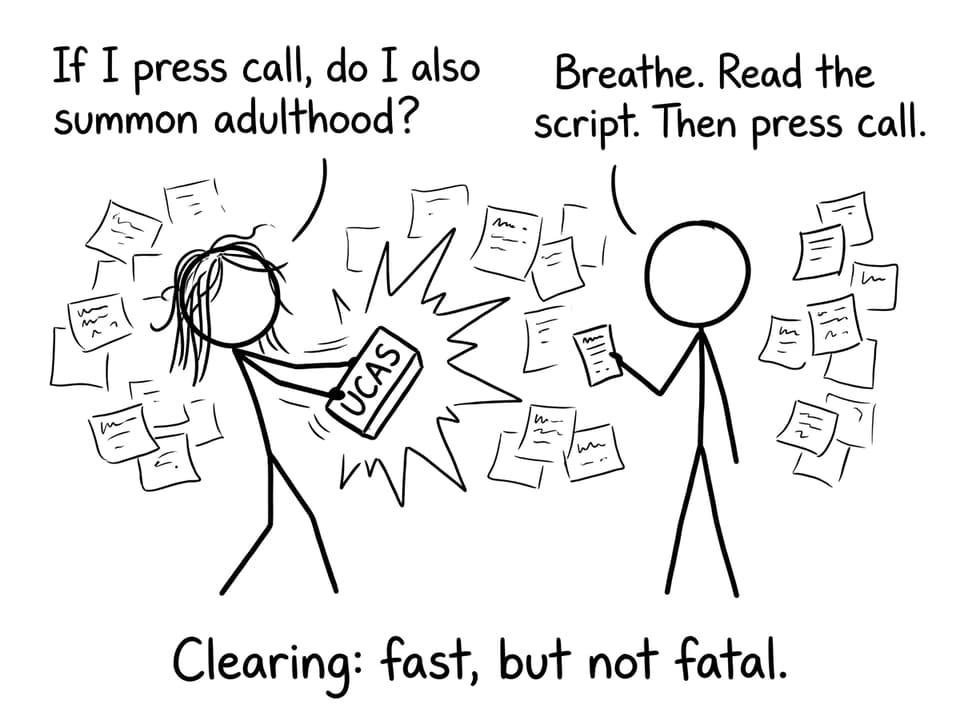
A quick calm-down checklist for UCAS Clearing
-
Open UCAS Hub and confirm your status (before making any calls).
-
Write a shortlist of 5-10 courses you’d genuinely accept.
-
Keep your UCAS ID, Clearing number, and results in one place.
-
Use one breathing reset before every phone call.
-
Record every offer and question in a single notes page.
If you want the bigger step-by-step map of UCAS Clearing itself, keep this open in another tab: UCAS Clearing Explained: Step-by-Step.
Why UCAS Clearing feels so stressful (and how to shrink it)
Stress usually isn’t caused by “a lot to do.” It’s caused by uncertainty. UCAS Clearing compresses uncertainty into hours: courses update, vacancies change, and your brain tries to solve everything at once.
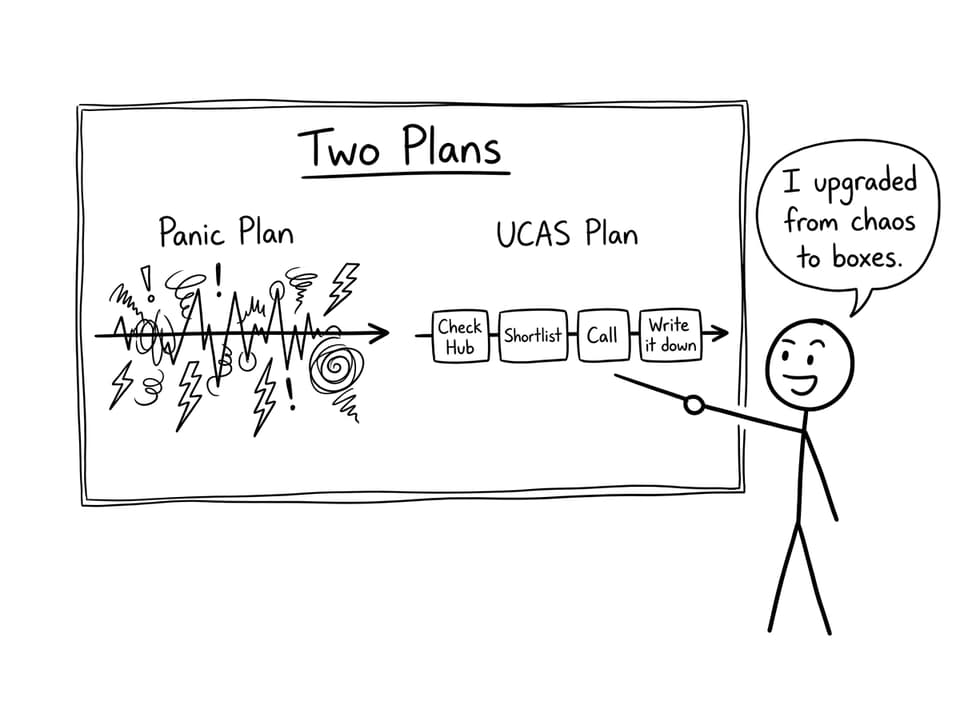
Shrink the problem into one next action:
-
First, check you’re eligible.
-
Then, shortlist.
-
Then, call.
-
Then, write it down.
That’s it. A sequence is calming because it stops your mind from spinning in circles.
Prepare your “call kit” the night before
The fastest way to stay calm during UCAS Clearing is to remove micro-decisions. Have your details ready, and your confidence rises because you’re not scrambling.
Use this checklist: UCAS Clearing Checklist 2025: What to Prepare Before You Call.
As an IB student, also keep one extra page of “proof points” you can mention naturally: Extended Essay topic, IA themes, relevant coursework, and any subject-specific strengths. If you’re unsure what counts as a strong strength, this helps: How to Highlight Skills and Experience in UCAS Applications.
Use a 60-second reset before every UCAS call
A calm voice isn’t a personality trait. It’s physiology.
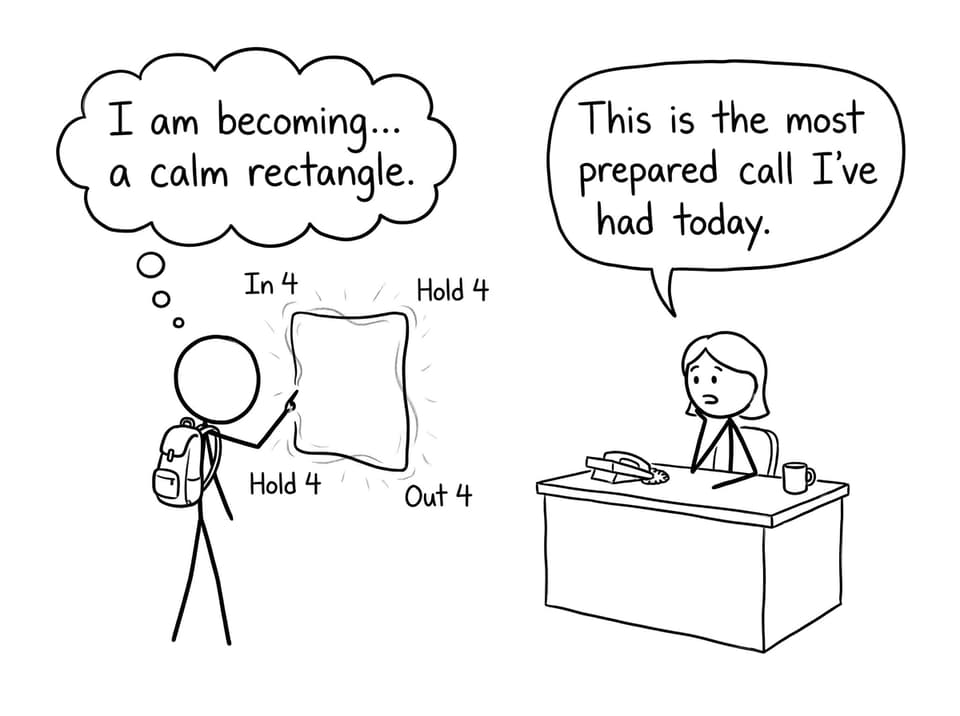
Try box breathing once:
-
Inhale 4
-
Hold 4
-
Exhale 4
-
Hold 4
Then read a tiny script: name, UCAS ID, course, and one reason you’re a fit. You can even rehearse it like you’d rehearse an oral presentation.
If you want more techniques for staying steady under pressure, pair this with: How to Stay Calm During IB Exams.
Make decisions like an IB student: evidence first
UCAS Clearing decisions feel emotional, so give yourself an evidence frame:
-
What entry requirements are realistic for my results?
-
What modules actually interest me?
-
What would my week look like there (city, commute, costs)?
-
If I accept this, will I still feel good in two weeks?
If you need to negotiate or ask about flexibility, read: How to Negotiate Offers During UCAS Clearing Calls.
Common mistakes that spike anxiety
-
Refreshing endlessly instead of calling.
-
Calling without writing notes (you’ll forget details under stress).
-
Treating rumours as facts.
This myth-check is grounding when UCAS talk gets noisy: Common UCAS Myths Busted. And if you want to avoid avoidable errors across the whole process, keep this for later: Mistakes Students Make During UCAS Applications.
A calm ending (and a practical next step)
UCAS Clearing can feel like an emergency, but it’s really a fast decision day. If you prepare your call kit, use a reset routine, and follow a simple sequence, you’ll sound more confident and choose more wisely.
And while you’re finishing IB exams, keep RevisionDojo as your steady base: use the Questionbank for focused practice, Study Notes for quick clarity, Flashcards for daily recall, AI Chat for last-minute explanations, and Mock Exams and Predicted Papers to make pressure feel familiar. If coursework stress is still lingering, the Coursework Library and Grading tools reduce uncertainty, and Tutors can help you plan calmly.
When UCAS moves quickly, you don’t need to move faster; you need to move clearer.