


The moment your IA becomes real
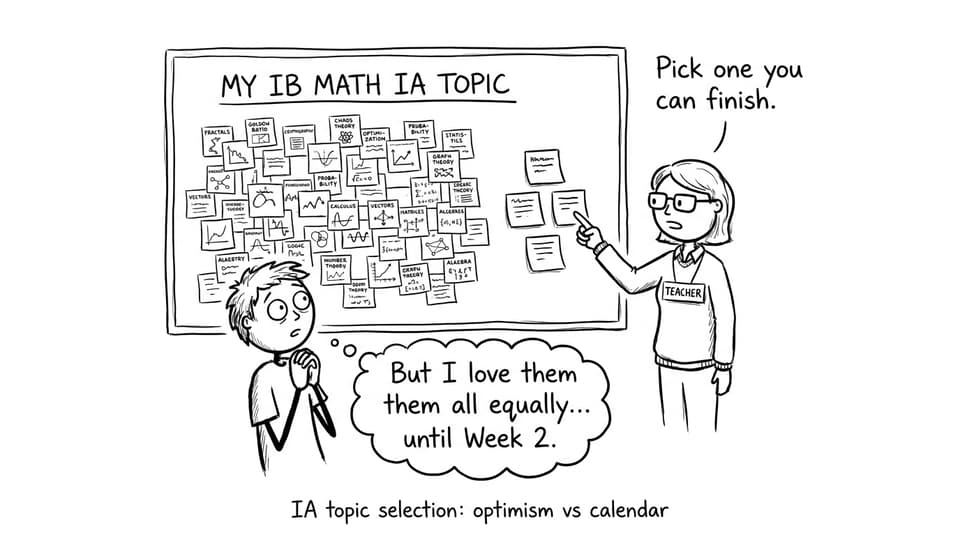
Your IA usually starts the same way: a blank document, a bold title, and the quiet belief that you’ll find the “perfect” idea by tonight.
Then the idea list grows. So does the stress.
Because an IA isn’t just a topic. It’s weeks of decision-making: what to model, what to measure, what to explain, what to cut. The right IB Math IA topic doesn’t feel like a genius move. It feels like a topic you can carry calmly from first draft to final reflection.
If you want quick inspiration, browse The Best IB Math IA Topics for 2025. If you want to choose wisely, keep reading.
A fast IA topic checklist (save this)
Before you commit, run your IA idea through five filters:
-
Interest: Would you still explore it if nobody graded it?
-
Math-first: Can you show real mathematics, not just commentary?
-
Scope: Can you finish it cleanly in the allowed length?
-
Data/tools: Do you have reliable data or a defendable way to generate it?
-
Reflection: Will the topic naturally create limitations, assumptions, and improvements?
For extra examples of what “works,” compare with Successful IB Math IA Topics: Examples That Score.
Start with curiosity, then force it to become a question
A strong IA usually begins with something personal: a sport, a routine, a game, a commute, an obsession with charts. But personal doesn’t mean vague.
Your job is to turn “I like this” into “I can investigate this.” A good sign is when you can write the research question in one sentence and immediately name the techniques you’ll use (regression, calculus, probability, sequences, geometry).
If you need a bank of directions to test your curiosity against, skim IB Math IA Ideas (AA & AI).
Keep the IA small on purpose (scope is a grade)
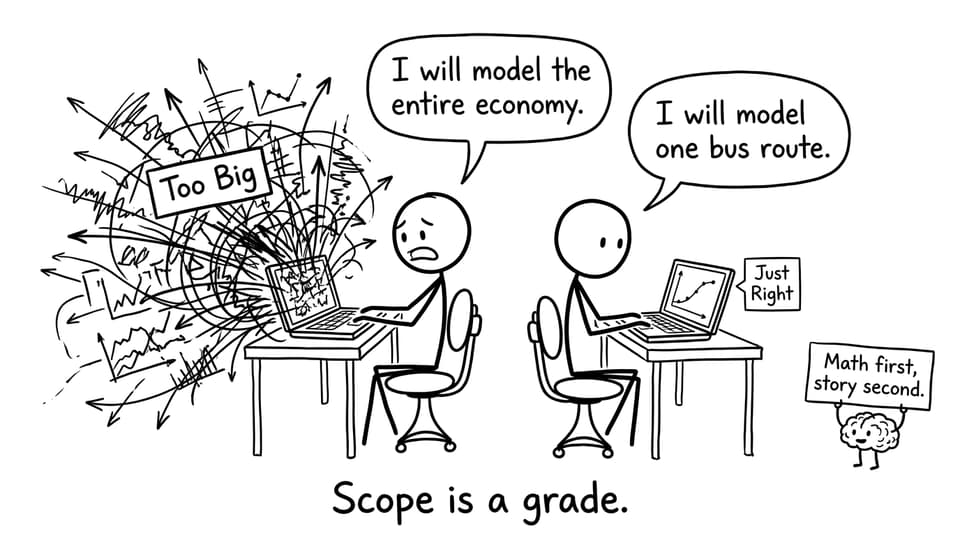
Most IA ideas fail for one reason: they try to be a documentary.
A topic like “model the entire stock market” sounds impressive, but it becomes shallow fast. Examiners reward clarity and mathematical depth, not an oversized storyline.
Instead, shrink the frame:
-
One player, not an entire league
-
One neighborhood, not a whole city
-
One variable you can control, not ten you can’t
If you’re not sure what “manageable” looks like, this guide is a calming reference: Simplest Math IA Topics for IB Math Success.
Choose math you can explain, then extend it thoughtfully
Here’s a secret: your IA score rises when your explanations get better, not when your math gets harder.
Pick techniques you can genuinely teach to someone else. Then add sophistication through:
-
comparing two models
-
testing assumptions
-
analyzing residuals/error
-
discussing reliability and limitations
If you’re unsure which syllabus areas you can draw from, use RevisionDojo’s subject hubs to anchor your choices:
Data decides whether your IA is smooth or painful
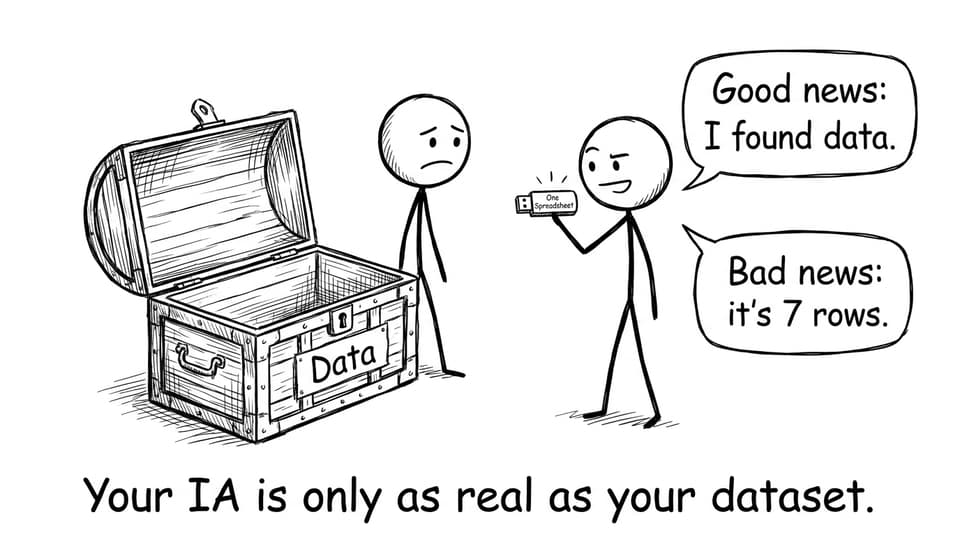
A beautiful topic with weak data becomes a messy IA.
Before you commit, prove one of these is true:
-
you can access a dataset with enough rows to model meaningfully
-
you can collect data reliably within a week
-
you can simulate data with clearly justified assumptions
If your topic relies on data you “might” find later, pause. Your future self will not thank you.
Use feedback early, not only at the end
The best time to get feedback on your IA topic is when changing direction is still cheap.
Bring your teacher two or three options, each with:
-
a one-sentence research question
-
the planned math techniques
-
where the data will come from
Then refine quickly.
RevisionDojo can speed this up using a full workflow: Study Notes to confirm concepts, the Questionbank to practice the methods you’ll use, AI Chat to unblock steps, and Tutors if you need a second set of expert eyes.
To build the same “diagnose then improve” habit for exams, use IB Math: Targeted Revision Using the Questionbank.
Bring it home: choose an IA you can finish well
A strong IA topic is rarely the flashiest idea in the room. It’s the one with stable data, clear math, and a scope small enough that you can explain every step without rushing.
If you want to choose your IA topic with less guesswork, use RevisionDojo as your loop: explore ideas in guides, confirm techniques with Study Notes, practice methods in the Questionbank, and pressure-test your confidence with Mock Exams and Predicted Papers (for exam prep) while your IA develops.
When you’re ready for a topic shortlist, start with How to Choose the Right Mathematical Topic for Your IB Math IA and commit to an IA you can finish calmly and proudly.