


You don’t fall behind in IB Theatre in one dramatic moment.
It happens quietly.
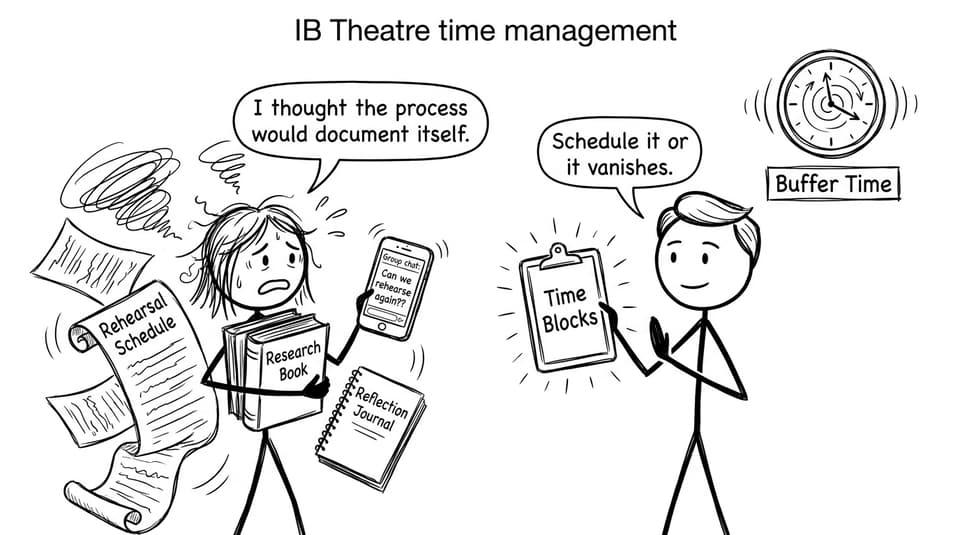
One rehearsal where you “just run it” without notes. One research session where the tabs multiply. One Sunday night where you promise you’ll write the reflection later, when you feel more articulate, more certain, more… like the kind of student who has their life together.
Then the deadline arrives and you realise the scariest part of IB Theatre isn’t performing in front of people. It’s trying to reconstruct your process from memory.
This guide gives you practical time management tips for IB Theatre coursework and rehearsals, built for IB students who are also preparing for exams and juggling everything else.
Quick checklist: the minimum viable IB Theatre plan
Use this as your weekly baseline for IB Theatre:
-
Put every Theatre deadline and rehearsal in one master calendar.
-
Split each assessment into weekly micro-deliverables (research, practical tests, reflection).
-
End every session with a 10-15 minute reflection capture.
-
Schedule buffer time for cancellations, illness, and group rescheduling.
-
Run a weekly criteria check so you don’t over-rehearse the wrong thing.
If you want a broader system you can copy across subjects, see Best Time Management Hacks for IB Students.
Why time management matters in IB Theatre (more than you think)
In many IB subjects, the final performance is the exam.
In IB Theatre, the final performance is only part of the story.
What gets rewarded is proof: proof you planned, tested ideas, collaborated with intention, and learned from feedback. When time management slips, students usually don’t lose marks because they “forgot theatre.” They lose marks because the evidence of their thinking is thin.
You can protect yourself by building a system that captures process as you go. A simple upgrade is to keep your practical work and your written work in the same rhythm. If you’re unsure how the course is structured, anchor yourself with Dive into the World of IB Theatre: An In-Depth Syllabus Overview.
IB Theatre time management tip: build one master calendar (then zoom in)
Start with the big picture.
Create a master calendar that includes:
-
Your assessment deadlines (from your teacher and school calendar)
-
Rehearsal blocks (group and solo)
-
“Documentation blocks” (short, frequent sessions)
-
Exam prep blocks (because Theatre rarely exists alone in your timetable)
Then zoom in weekly.
Each Sunday, pick 2-3 outcomes that would make you feel safe by Friday. Not “finish everything.” Specific outcomes like:
-
Test one staging convention and write a reflection paragraph.
-
Research one practitioner and turn notes into flashcards.
-
Record one run-through and annotate changes.
A time management system only works if it tells you what to do on a random Tuesday.
IB Theatre coursework: split process into three lanes
Most IB Theatre students underestimate how many different types of work they’re doing. Try this three-lane approach.
Research lane (clarity)
Research is not a weekend activity. It’s a drip-feed.
Aim for two short sessions per week (30-45 minutes) where you collect sources and write tight notes you can actually reuse. If you’re choosing traditions or practitioner angles, Best World Theatre Traditions to Research for IB Theatre Assessments helps you avoid topics that are exciting but hard to evidence.
To make research stick, convert key terms and conventions into spaced recall using Flashcards.
Practical lane (proof)
Rehearsal time is precious, so treat it like a lab.
Before you rehearse, write one sentence:
- “Today we are testing ______ to create ______ impact on the audience.”
After you rehearse, write what changed.
That one loop turns rehearsal into assessable evidence. If your group work needs structure, borrow warm-ups and debrief prompts from Best Ensemble-Building Exercises for IB Theatre.
Reflection lane (marks)
Reflection is where rushed students bleed marks.
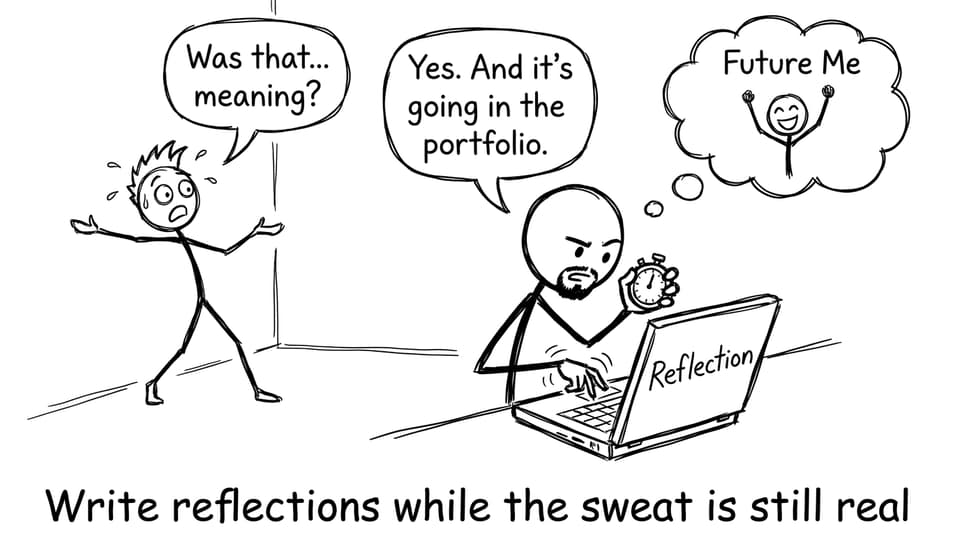
Don’t schedule reflection as “someday.” Schedule it as the last 10-15 minutes of the same session. If you want your reflection to sound analytical (not diary-like), model your writing on IB Theatre: Write Analytically About Your Solo Piece.
IB Theatre rehearsals: run timed blocks, not endless sessions
An open-ended rehearsal expands until everyone is tired and nothing is documented.
Try this structure instead:
-
10 minutes: ensemble warm-up + objective for the session
-
35 minutes: focused work (blocking, character, design integration)
-
10 minutes: run a short section under “performance conditions”
-
10 minutes: feedback + notes + what you’ll change next time
Timed blocks protect energy and make it easier to write reflection while details are still sharp.
Common time traps in IB Theatre (and the fix)
Trap: “We rehearsed a lot, so we’re fine”
Fix: rehearse less, document more. Evidence beats vibes.
Trap: saving all portfolio writing for the final week
Fix: write micro-reflections immediately. Even rough notes become polished later.
Trap: overcommitting to extra productions during deadline peaks
Fix: add buffer time and be honest about collision weeks.
Trap: focusing only on performance and neglecting academic depth
Fix: balance weekly time across research, practical exploration, and reflection.
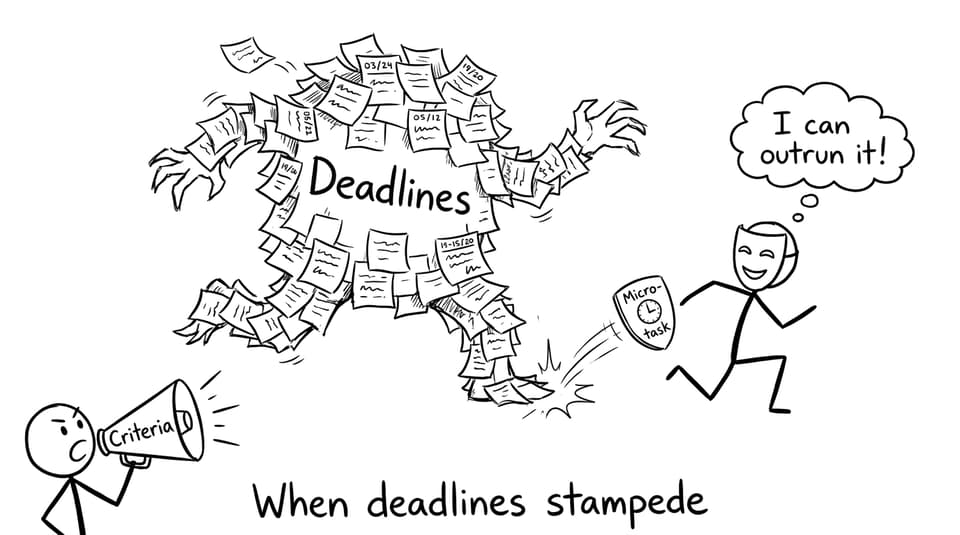
When deadlines start to stampede, shrink the task into the next micro-action, not the whole mountain.
How RevisionDojo helps IB Theatre students stay on track
The fastest time management wins come from reducing friction.
RevisionDojo is built to remove the “where do I even start?” problem:
-
Use the Study Notes mindset from the wider platform workflow in RevisionDojo App: The Smarter Way to Prep for IB Exams to keep your learning tight and syllabus-aligned.
-
Use Flashcards for quick daily recall so Theatre terminology, conventions, and practitioner principles stay accessible.
-
Use Jojo AI Chat when you’re stuck turning practical work into clear analysis.
-
Use Grading tools to check whether your writing is actually doing what the rubric rewards.
-
Use the Coursework Library and IB Coursework Examples to see what “good evidence” looks like before you guess.
-
Use Mock Exams and Predicted Papers across your other subjects so Theatre rehearsal weeks don’t destroy your exam momentum.
Time management in IB Theatre isn’t about doing more. It’s about keeping your best work visible.
Closing: the calm version of IB Theatre is built, not wished for
The students who look calm in IB Theatre aren’t magically more organised.
They just made one decision earlier than everyone else: they stopped trusting memory, and started trusting a system.
Build the master calendar. Protect timed rehearsal blocks. Capture reflection while it’s fresh. Use RevisionDojo to reduce friction with Flashcards, AI Chat, Grading tools, the Coursework Library, and exam-prep features like Questionbank, Mock Exams, and Predicted Papers.
If you want your work to feel lighter and score higher, make your next rehearsal the start of a better record, not just a better run-through.