




If you’ve ever stared at your subject choices thinking, “This is just one more exam,” you’re missing the quiet power move.
IB Languages aren’t only about grammar and vocab lists. They’re a kind of career amplifier: the same hours you spend training reading speed, register, and cultural awareness can later translate into research access, internships, and credibility in international rooms. And the best part is that you don’t need to have your whole life mapped out to make a smart choice. You just need a direction: STEM or humanities.
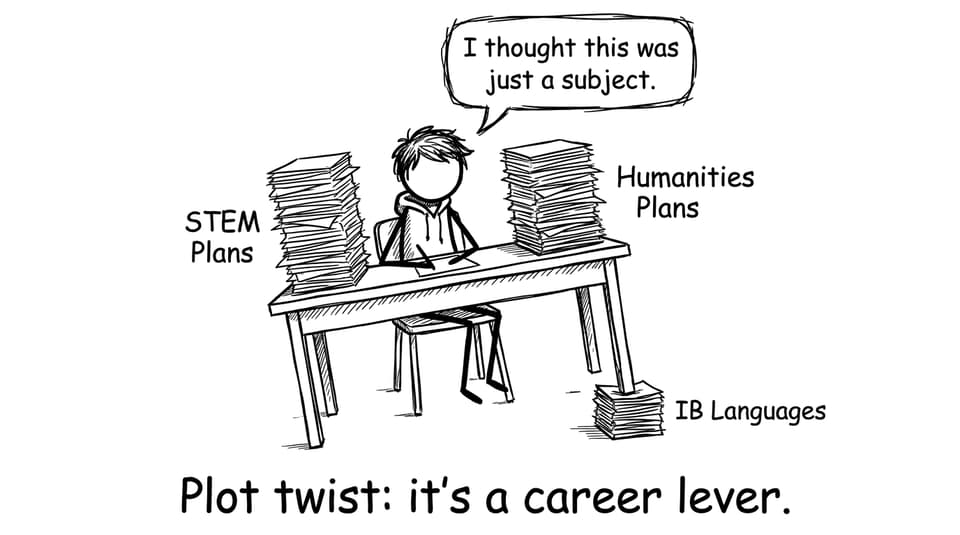
Quick decision checklist for IB Languages
Use this as a fast filter before you commit:
-
Pick your likely lane: STEM vs humanities (you can switch later).
-
Ask: will this language help me access research, universities, markets, or communities?
-
Check motivation: can I tolerate the “boring middle” of learning?
-
Choose an exam plan: reading/listening + writing structures + oral routines.
-
Build a revision system using RevisionDojo tools, not just willpower.
If you need a home base, start with RevisionDojo for IB and the IB Languages tag hub to keep your IB Languages revision focused.
Best IB Languages to learn for STEM careers
STEM is global, but it’s also practical. The best IB Languages for STEM tend to do one of two things: they help you collaborate with major research and manufacturing ecosystems, or they give you access to technical culture where innovation clusters.
Mandarin Chinese for tech, manufacturing, and scale
Mandarin matters because China sits at the intersection of manufacturing, engineering, and fast-moving technology sectors. Even if most journals you read are in English, Mandarin can help in internships, partnerships, and navigating real workplaces where the “informal” conversations decide outcomes.
If you’re studying a language like Mandarin, treat your revision like skill training: short daily exposure plus exam-style practice. RevisionDojo’s workflow of Study Notes + Flashcards + Questionbank is designed for that rhythm. For language-specific resources, you can also browse Top Language Learning Tools for IB Students.
German for engineering, research culture, and precision
German is a strong bet for engineering-heavy environments. It’s the language of a country known for technical training and industry where processes matter and documentation is taken seriously. For many STEM students, German also feels like a structured language that rewards consistent practice.
To keep IB Languages revision efficient, build writing templates early (openings, connectors, closings) and then drill them under time pressure. The strategy guide in IB Language B Exams: Format, Timing, Strategy makes this process feel less mysterious.
Japanese for robotics, design thinking, and tech ecosystems
Japanese can be a niche advantage in robotics and certain technology sectors. But even when you don’t use it professionally every day, it can signal long-term discipline and cultural literacy. That combination matters more than people admit.
Russian for maths, physics, and deep technical traditions
Russian has a long association with maths and physics communities. For some students, the benefit is less about “using it daily” and more about accessing sources and networks that others can’t easily enter.

Best IB Languages to learn for humanities careers
Humanities careers often reward nuance: the ability to interpret, argue, and persuade across cultural contexts. The best IB Languages here tend to expand the number of worlds you can read from the inside.
French for diplomacy, law, and intellectual history
French is a classic humanities multiplier: diplomacy, international institutions, law-adjacent fields, and a vast literature tradition. If you’re in French B, RevisionDojo’s IB French B resources help you turn themes into usable vocab and exam-ready structures.
Spanish for reach, journalism, and cultural breadth
Spanish gives you access to an enormous range of cultures across continents. It’s useful for international relations, history, media, and community-facing work. If Spanish is your track, use the IB Spanish B resources to keep IB Languages practice aligned to what actually gets marked.
Arabic for politics, history, and global literacy
Arabic can open doors in politics, history, and regional studies. It also trains you to handle complex writing systems and registers, which builds serious academic stamina.
Latin for law, linguistics, and analytical discipline
Latin isn’t “useful” in the casual sense. It’s useful in the deep sense: it trains precision, logic, and close reading. For humanities students, that shows up later as clearer writing and stronger argument control.
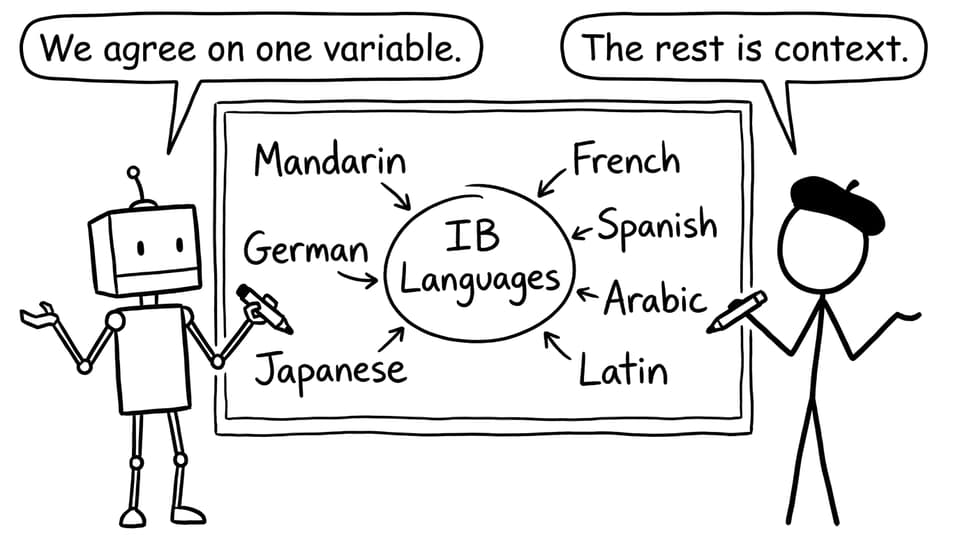
How to choose the right IB Languages path (without overthinking)
Here’s the honest truth: most students won’t use their language every day in adulthood. But many will use the skills every day: structured writing, careful reading, and confident speaking.
A simple decision rule:
-
If you want STEM, lean toward languages tied to engineering and tech ecosystems (Mandarin, German, Japanese, Russian).
-
If you want humanities, lean toward languages tied to diplomacy, literature, and cultural reach (French, Spanish, Arabic, Latin).
-
If you’re unsure, pick a language you can stay consistent with for two years. Consistency beats “perfect strategy.”
To make consistency easier, use RevisionDojo’s connected loop: Study Notes for clarity, Flashcards for recall, Questionbank for exam-shaped practice, AI Chat when you’re stuck, Grading tools for feedback, plus Predicted Papers and Mock Exams to build calm under time pressure. The platform overview in RevisionDojo App: The Smarter Way to Prep for IB Exams shows how it fits together.
Conclusion: choose IB Languages like you’re choosing future leverage
The best language for your future isn’t the one that sounds impressive at a dinner table. It’s the one you’ll still practice when the semester gets loud.
For STEM, IB Languages like Mandarin, German, Japanese, and Russian can connect you to technical ecosystems and collaboration advantages. For humanities, French, Spanish, Arabic, and Latin can deepen cultural literacy and sharpen argument skills. Whichever path you take, RevisionDojo helps you turn language learning into marks: a tight system of Study Notes, Flashcards, Questionbank, AI Chat, Grading tools, Mock Exams, Predicted Papers, the Coursework Library, and Tutors when you want a human push.
If you want your next step to feel simple, pick one target theme and build a 7-day routine inside the IB Notes hub. Your future self will feel the difference in the exam room, and later, when opportunity shows up speaking faster than your textbook ever did.