
The hardest moment is often not when your child asks for help. It is when you can see the answer, the deadline is close, and taking over would be faster.
Your concern is reasonable. IB Diploma parents want to reduce stress without weakening independence. The clearest answer is this: support without doing the work by improving the conditions around learning, asking questions that help your child think, and directing subject-specific problems to teachers or trusted IB resources. Your role is to provide stability and perspective. The planning, decisions, explanations, and final work must remain your child's.
That boundary is not withdrawal. It is a more durable form of help. Research on parental involvement generally distinguishes autonomy-supportive behavior from controlling or intrusive help. The former encourages students to make decisions and regulate their own learning; the latter can make ownership less clear. The IB also expects submitted work to be authentic and recommends that families help students understand academic integrity and plan a manageable workload.
A quick checklist for IB parents
When your child is revising or completing an assignment:
- Ask whether they want listening, planning help, or academic guidance.
- Help make deadlines and priorities visible.
- Discuss the next small action rather than solving the whole task.
- Protect sleep, meals, breaks, and a workable study environment.
- Let teachers or IB-specific resources handle subject expertise.
- Never write, calculate, edit, or select evidence on their behalf.
- Check progress at an agreed time instead of monitoring continuously.
- Escalate persistent academic or emotional difficulties to the school.
This is the essential division of responsibility: parents support the system; students produce the work.

What helpful support actually looks like
Support becomes easier when it is defined by function rather than by how involved you feel.
| Parent can support | Student should own |
|---|---|
| A quiet place and reasonable household routines | Choosing what to study within agreed priorities |
| A shared view of major deadlines | Breaking assignments into specific actions |
| Questions about the plan or rubric | Developing arguments and selecting evidence |
| Access to teachers, resources, or tutoring | Writing, calculating, researching, and revising |
| Encouragement after a disappointing result | Reviewing errors and applying feedback |
| A conversation about wellbeing | Communicating academic questions to teachers |
For example, helping your child put exam dates and coursework deadlines on a calendar is structural support. Deciding the argument for an essay is academic ownership. Listening while your child explains a concept is useful. Rephrasing that explanation into a submission-ready paragraph is not.
The distinction can feel narrow in the moment. A reliable test is to ask: Will this action leave my child more capable of taking the next step alone? If the answer is no, pause.
Ask before you help
Many unproductive study conversations begin with an assumption. A parent sees frustration and starts offering solutions. The student experiences those solutions as criticism or control. Both people intended to help, yet the room becomes tenser.
Begin with one question:
“What kind of support would be useful right now?”
If the answer is unclear, offer three choices:
- “Would you like me to listen?”
- “Would it help to organize the next few steps?”
- “Do you need someone with subject expertise?”
These options respect autonomy while preventing the vague promise to “help” from expanding into taking over. They also reveal the real problem. A child who says they cannot do Chemistry may understand the content but feel overwhelmed by five competing deadlines. Another may have a precise conceptual gap that requires a teacher, tutor, or IB-focused explanation.
If your child regularly feels buried by unfinished tasks, the guide for helping IB students who feel behind offers a useful framework for restoring clarity without increasing pressure.
Use coaching questions instead of giving answers
A good coaching question returns the thinking to the student. It does not disguise an answer as a question.
Try prompts such as:
- “What is the question asking you to demonstrate?”
- “Which part can you already do?”
- “What does the rubric require here?”
- “Where did your method stop making sense?”
- “What resource could help you check that?”
- “What will you try before asking for more help?”
Avoid leading questions that contain your preferred conclusion, such as, “Don't you think the second example proves the argument better?” That may sound gentle, but it still selects the evidence for them.
After a test or practice session, ask about process rather than identity. “Which error appeared more than once?” invites analysis. “Why are you careless in exams?” turns a correctable behavior into a personal label. Students can build a practical review cycle with these step-by-step IB exam preparation strategies.
Give structure without becoming the project manager
IB revision involves many moving parts, so some family structure can be helpful. The danger begins when the parent's calendar becomes more detailed, urgent, and emotionally charged than the student's.
A short weekly check-in is usually more constructive than daily surveillance. Keep it to questions such as:
- What are the important deadlines this week?
- Which task is most likely to become stuck?
- When will you complete a timed practice block?
- Is anything unclear enough to ask a teacher?
- What recovery time needs protecting?
Let your child enter the tasks and choose the study sequence. You can notice an impossible plan, but invite them to repair it: “There are six hours of work in a three-hour window. What would you change?”
For deadline clusters, use the practical ideas in this parent guide to IB deadline stress. If the problem is a sustainable revision routine, studying for IB exams without burning out explains how shorter cycles of understanding, recall, application, and review can replace exhausting study marathons.
Know when assistance crosses the line
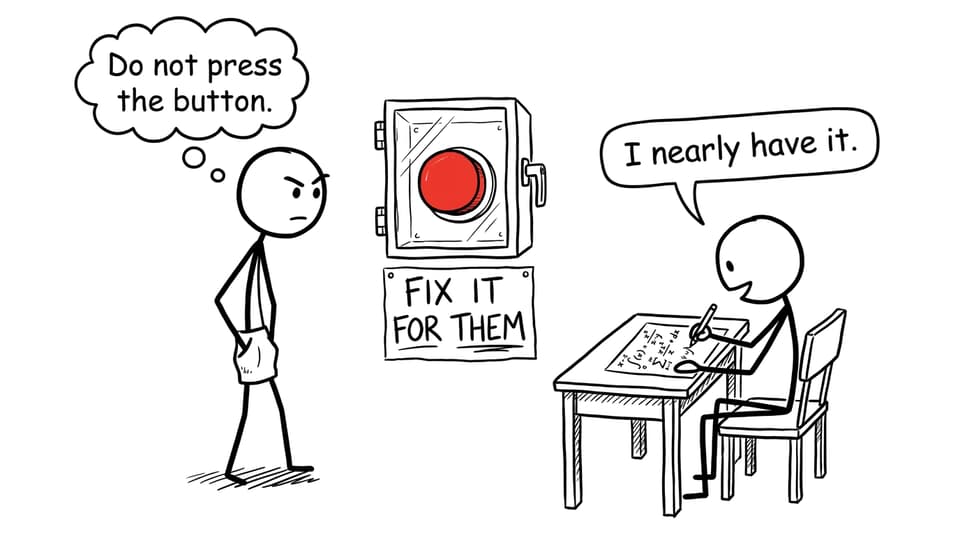
Taking over is not limited to writing an entire assignment. It can happen gradually through small interventions:
- rewriting sentences until they no longer sound like the student;
- correcting every mistake before a teacher can see genuine understanding;
- finding and selecting sources for an essay;
- completing calculations “as an example” that remain in the final response;
- repeatedly prompting the student through each step;
- using feedback tools to generate material the student submits without understanding.
The IB expects authentic work that reflects the student's own abilities. Schools also have their own academic integrity policies, so families should ask the IB coordinator or subject teacher when a boundary is uncertain. This is especially important for assessed coursework, where permitted feedback can be limited by the applicable subject guidance.
A useful household rule is simple: parents may discuss the task, but they do not touch the final document. Your child should also understand every claim, calculation, and revision they submit.
Respond to stress before solving the study problem
A distressed student may not need an improved timetable in the first five minutes. They may need evidence that home remains safe even when school feels difficult.
Start with observation rather than judgment: “You seem exhausted,” or, “This week looks unusually heavy.” Then listen. Once the emotional temperature falls, ask whether your child wants to identify one next action.
Practical IB stress support includes protecting regular meals, sleep, movement, and time away from academic work. It also means noticing when ordinary exam nerves begin interfering with daily functioning. Persistent anxiety, withdrawal, major sleep disruption, hopelessness, panic, or inability to manage normal responsibilities should not be treated as a study-skills problem. Contact the school counselor, coordinator, or an appropriate health professional.
RevisionDojo's guides to supporting mental health during the IB and responding to anxiety during IB can help parents begin these conversations. When the difficulty is concentrated in one class, use the IB subject struggles parent guide to separate a knowledge gap from workload, confidence, or study-method problems.
Let expertise come from somewhere other than the parent
There is a quiet advantage in not being your child's subject expert. It allows you to remain the person who offers steadiness rather than the person who marks every answer.
This is where RevisionDojo's IB support for parents and families helps parents step back without leaving students unsupported. The platform provides the IB-specific explanations, practice, and feedback that families should not have to improvise at the kitchen table.
A student can use Study Notes to clarify a topic, Flashcards to practise recall, and the Questionbank to apply knowledge independently. AI Chat and Grading tools provide targeted explanations and feedback, while Predicted Papers and Mock Exams support timed preparation. For assessed work, the Coursework Library can help students understand standards without borrowing someone else's ideas, and Tutors offer human subject expertise when a gap needs deeper attention.
The RevisionDojo app guide for IB exam preparation explains how these tools fit into a repeatable study loop. The important shift is not merely digital. Feedback comes from an IB-focused resource rather than from a parent hovering over the answer.
Step back in a way your child can feel
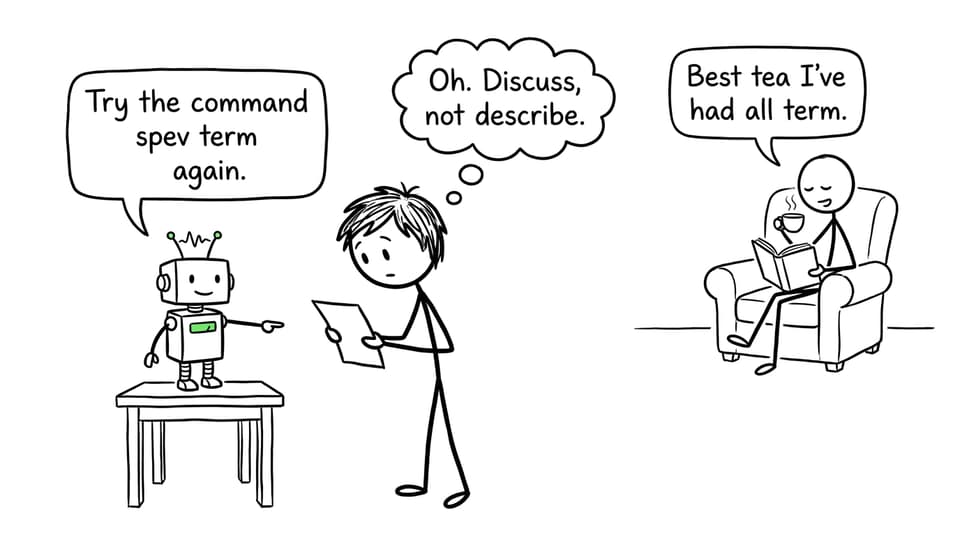
Independence is not created by a sudden announcement that your child is on their own. It grows through repeated moments in which support is available, boundaries are clear, and the student completes the difficult thinking.
Choose one change this week. Replace an unsolicited correction with a coaching question. Move daily reminders into one weekly planning conversation. Or direct a subject-specific problem to RevisionDojo while you focus on encouragement, routines, and wellbeing.
The goal is not to become less supportive. It is to make your support more useful. When the platform provides subject expertise and feedback, the school handles formal guidance, and the student retains ownership, a parent can return to the role that matters most: being calm, interested, and firmly on their child's side.