

It is reasonable to worry when your child appears to be working constantly yet never seems finished. The IB Diploma combines six subjects with coursework, examinations, and core requirements, so an unstructured evening can quickly become a negotiation between competing priorities.
The solution is not to turn your home into another school. A sustainable study routine and space for an IB student should make starting easier, support focused practice, and provide a clear stopping point. Agree on a regular location, plan short sessions around specific tasks, remove predictable distractions, and protect meals, sleep, movement, and family time.
Your role is to create the conditions for good work, not to supervise every answer. That distinction matters. BBC News has reported research linking supportive parental involvement, communication, and interest in education with academic success. Other research covered by the BBC cautions that routinely taking over homework may be ineffective. The useful middle ground is calm structure with growing student ownership.
The quick setup checklist
Start with these practical steps:
- Choose one regular study location with adequate light and a supportive chair.
- Keep the desk clear enough for the current subject only.
- Place the phone outside immediate reach during focused work.
- Record school deadlines, examinations, and personal commitments in one calendar.
- Plan tasks by topic and activity, not vague instructions such as “study Chemistry.”
- Use short, repeatable sessions on school nights.
- Include active recall, questions, and mistake review.
- Set a normal finishing time and protect recovery.
- Review the arrangement together once a week.
This is a starting system, not a permanent contract. The best routine is one your child can maintain and adjust as deadlines change.
Build the routine around real IB demands
A timetable can look impressive and still be useless. Students often plan an ideal week for an imaginary version of themselves who never becomes tired, receives no surprise assignment, and can concentrate equally well at every hour.
Begin with reality instead. Ask your child to place fixed commitments on a weekly calendar: school, travel, meals, CAS, sports, tutoring, and sleep. Then add upcoming coursework and examination priorities. The remaining time is the actual study capacity available.
For a more detailed model, see RevisionDojo’s daily IB study schedule. The central principle is simple: consistency is more useful than designing a punishing schedule that collapses after three days.
Give every session a visible finish line
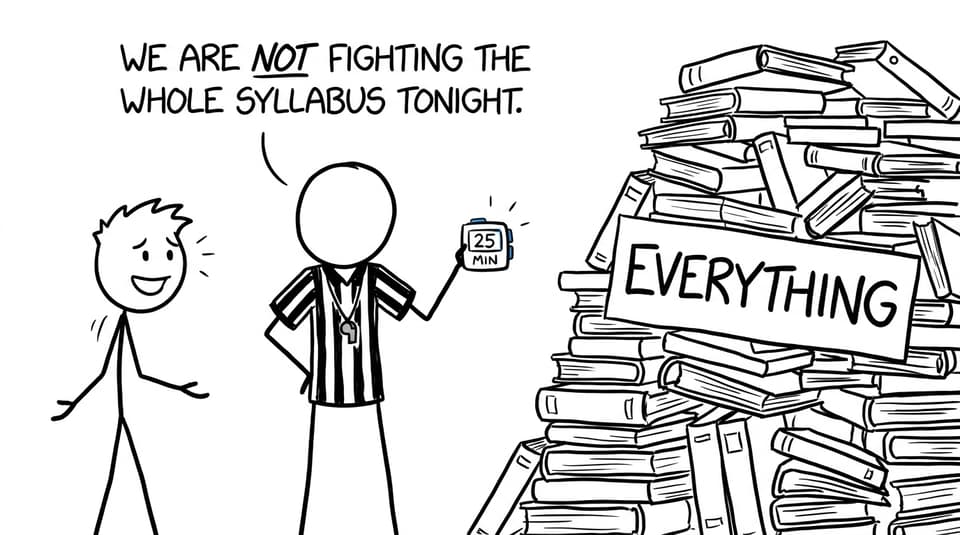
“Revise Biology” is too large to begin. “Complete ten cell respiration questions and record three errors” is concrete.
Each study block should name:
- the subject and exact subtopic;
- the activity, such as recall, calculation, essay planning, or marking;
- the intended output;
- the approximate duration.
A student might review flashcards for 10 minutes, answer targeted questions for 25 minutes, and spend 10 minutes checking mistakes. Longer writing or timed work may need a larger block, but not every evening should become a test of endurance.
Rotate intensity instead of treating every task equally
IB work varies in cognitive demand. A difficult mathematics problem set, an essay outline, and vocabulary flashcards do not require the same energy.
Place demanding work when your child is usually most alert. Use lower-energy periods for organizing notes, reviewing flashcards, checking feedback, or preparing tomorrow’s materials. RevisionDojo’s guide to building a study routine that works offers additional ways to match tasks with attention and energy.
A practical school-night pattern could look like this:
| Stage | Approximate time | Purpose | | --- | --- | | Settle | 5 minutes | Choose the task and prepare materials | | Focus | 25 to 40 minutes | Complete one defined learning activity | | Break | 5 to 10 minutes | Move, drink water, and leave the screen | | Apply | 20 to 35 minutes | Answer questions or produce a response | | Review | 10 minutes | Check errors and choose the next step |
These durations are options, not universal rules. Some students work well in 25-minute intervals; others need longer to enter deep concentration. Judge the structure by the quality of work and your child’s ability to repeat it.
Use spacing and retrieval, not endless rereading
A routine should decide not only when a student works, but also how learning happens.
A 2022 review in Nature Reviews Psychology described spacing and retrieval practice as effective learning strategies across different ages and subject areas. Spacing means revisiting material over time rather than concentrating all contact into one sitting. Retrieval means trying to recall or apply knowledge before looking at the answer.
At home, that could mean:
- learning a concept on Monday;
- recalling its key steps without notes on Wednesday;
- answering related questions on Friday;
- checking it again the following week.
The precise gap can vary with the material and examination date. The important point is that the calendar deliberately brings important knowledge back. RevisionDojo’s IB revision tips explain how active recall, command terms, and exam-style application can fit into this process.
Create a study space that reduces friction
A productive space does not need to be large or expensive. Its job is to remove small barriers between deciding to work and beginning.
Prioritize:
- Light: Position the workspace so reading and writing are comfortable.
- Posture: Use a stable chair and desk arrangement that does not encourage studying from bed.
- Access: Keep necessary stationery, chargers, calculator, and current materials nearby.
- Noise: Agree on quieter household periods or provide an alternative location when possible.
- Visual simplicity: Store unrelated books and loose papers away from the immediate work area.
- Digital boundaries: Close irrelevant tabs and move the phone out of reach.
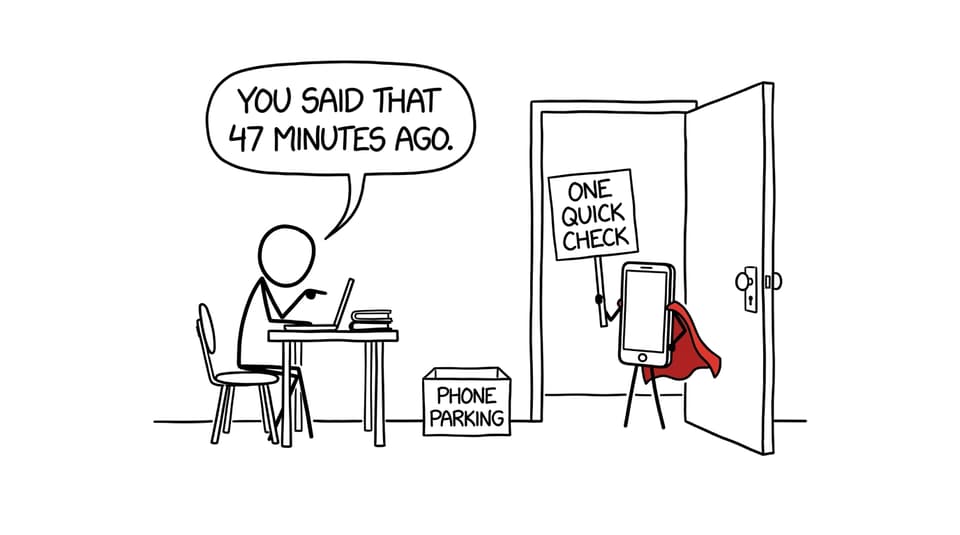
The IB has advised students to consider switching off phones during examination preparation to reduce temptation. This does not require a household-wide technology battle. Agree on a “phone parking” location for each focus block, then allow normal use during breaks.
If your child studies in a bedroom, create a visible end-of-day ritual: close the laptop, place materials in a tray, and switch to softer lighting. A physical transition helps stop schoolwork from occupying the entire evening.
Support without becoming the study manager
Many IB diploma parents face the same tension: intervene too little and the workload may drift; intervene too much and every evening becomes a confrontation.
Try a weekly planning conversation rather than repeated daily reminders. Ask:
- What deadlines matter most this week?
- Which topic currently feels least secure?
- What kind of help would be useful?
- Which evening needs to remain lighter?
- Is the current plan still realistic?
Then let your child choose the sequence of tasks. A parent can protect quiet time, supply materials, listen to an explanation, or help locate appropriate support. The student should still do the thinking, make academic decisions, and communicate with teachers.
If conversations about revision regularly become tense, RevisionDojo’s guidance on supporting an IB student without adding pressure can help reset the relationship.
Make wellbeing part of the timetable
Rest should not be what remains after every task is complete. In the IB, there may always be another useful thing to do. Without boundaries, “finished” can disappear entirely.
Include meals, movement, social time, and a consistent sleep window in the weekly plan before filling every open space with revision. The IB’s wellbeing guidance encourages movement, positive relationships, enjoyable activities, and calmer approaches during examination periods.
Watch for sustained changes such as persistent sleep disruption, withdrawal, inability to concentrate, or anxiety that interferes with ordinary life. A study timetable is not a treatment plan. Encourage your child to speak with a teacher, IB coordinator, school counsellor, or qualified healthcare professional when distress is persistent or overwhelming. RevisionDojo also provides parent-focused guidance on supporting mental health during the IB and responding to IB anxiety.
Review the system every Sunday
A routine should respond to evidence. Once a week, spend 10 minutes reviewing what happened without turning the conversation into a performance assessment.
Keep what worked. Move sessions that repeatedly failed. Reduce unrealistic task sizes. Give more time to weaknesses revealed by questions, teacher feedback, or mock results. Leave some open capacity for unexpected schoolwork.
It can help to use three questions:
- What did I complete consistently?
- Where did I lose time or attention?
- What is the smallest useful change for next week?
This creates a feedback loop rather than a cycle of blame. For examination periods, the RevisionDojo guide to managing IB exam stress shows how planning, targeted practice, recovery, and mistake analysis can work together.
Turn the routine into a repeatable learning loop
Once the environment and schedule are stable, resources should fit inside the routine rather than expand it. RevisionDojo is designed for short, connected daily sessions: clarify one idea with Study Notes or AI Chat, retrieve it with Flashcards, apply it through the Questionbank, and inspect mistakes with Grading tools.
A longer weekly session can use Mock Exams or Predicted Papers to practise timing. The Coursework Library can help students understand quality and structure without replacing their own work, while Tutors offer human guidance when a persistent problem needs diagnosis. The RevisionDojo IB exam preparation app brings this workflow together without demanding marathon sessions.
The best home setup is rarely the strictest one. It is the one that quietly answers four questions every day: Where will I work? When will I begin? What exactly will I do? When will I stop?
Set up one clear workspace and agree on tomorrow’s first short session. That small, repeatable beginning is how a calmer home routine becomes reliable preparation.