
A week before your portfolio check-in, it can feel like your MYP life splits into two versions of you.
One version is calm, doing exam revision, finishing assignments, sleeping like a reasonable human.
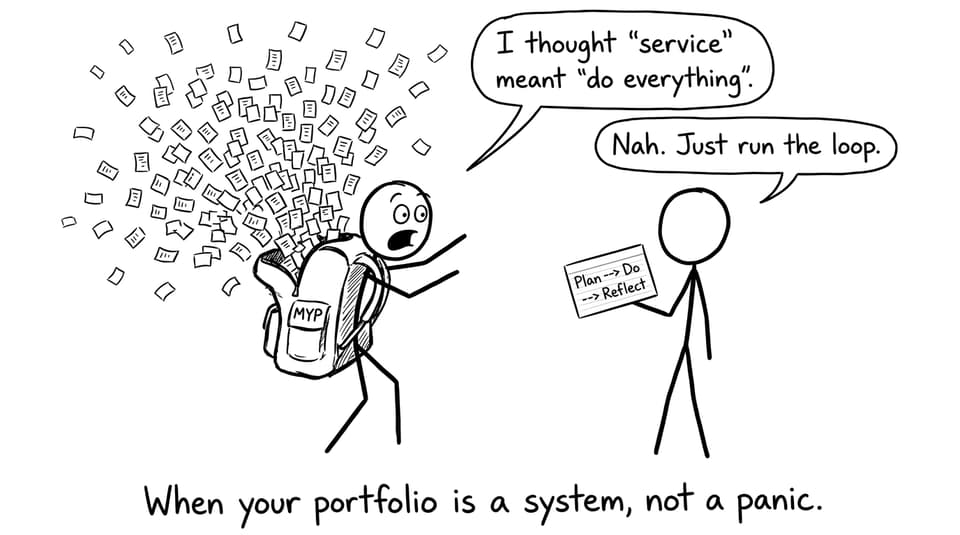
The other is sprinting through a last-minute “mega service project,” trying to reconstruct what happened from old photos and half-remembered messages.
Most students think the difference is motivation.
It isn’t.
It’s systems.
In the MYP, Service as Action is designed to build the same habits that raise your grades: self-management, reflection, communication, and steady progress. If you approach it with the same structure you use for exam prep, your MYP service requirements stop being a surprise deadline and become a simple weekly routine.
The easiest way to complete MYP service requirements
Here’s the high-yield checklist. If you do only this, you will meet your MYP service requirements with less stress and better reflections:
-
Pick one theme for the term (something you actually care about)
-
Run a simple loop: Plan --> Do --> Reflect
-
Collect small evidence weekly (not a mountain at the end)
-
Tie each experience to ATL skills and a Global Context
-
Write reflections that explain change (in you, in others, in your thinking)
For a quick overview of how RevisionDojo supports your broader MYP workflow, start with the Middle Years Program (MYP) hub.
Understand what MYP Service as Action is really asking
Many students treat Service as Action like a timer: “If I do enough hours, I’m done.”
But most MYP schools look for something closer to a learning story: evidence that you investigated a need, took action responsibly, and learned from it over time. That’s why reflections and documentation matter so much.
If you want the clearest picture of how schools typically review your work, read How Is Service as Action Evaluated in IB MYP?. It’s a helpful reality check: quality beats quantity, and proof beats promises.
Strategy: Choose “service that fits your exam season”
The secret to meeting MYP service requirements easily is choosing actions that survive your busiest weeks.
That usually means:
-
Projects that take 30--60 minutes at a time
-
Activities with built-in evidence (messages, drafts, sign-up sheets, feedback)
-
Work you can repeat weekly (so your portfolio shows growth)
Examples that tend to be portfolio-friendly and exam-friendly:
-
Micro-tutoring: 20 minutes after school, same day each week
-
Study resource creation: revision sheets for younger years, shared via your school platform
-
Advocacy with a product: one poster series, one short video, one campaign update each week
-
Research-based service: surveys + a short report that gets shared with a real audience
Notice what these have in common: they’re small, consistent, and easy to document.
If you’re also trying to keep grades steady, pair service planning with your revision routine using MYP Revision Guide: Study Tips for Success.
Strategy: Run the MYP service loop (Plan --> Do --> Reflect)
You don’t need a “big project” to meet MYP service requirements. You need a repeatable cycle.
Plan (10 minutes)
Write three lines before you act:
-
Need: What problem or gap are you responding to?
-
Goal: What does success look like in one sentence?
-
Role: What will you personally do this week?
Do (30--90 minutes)
Take action. Keep it realistic. Consistency is the goal.
Reflect (10--15 minutes)
Answer these prompts in full sentences:
-
What changed because I acted?
-
What challenged me and how did I respond?
-
Which ATL skill did I actually use (with an example)?
-
What will I do differently next time?
If you want deeper project-design guidance, Designing Effective MYP Service as Action Programs breaks the loop down in a way that feels practical, not theoretical.
Strategy: Document your MYP service requirements as you go (the “case study” method)
The easiest portfolio is the one you build in small pieces.
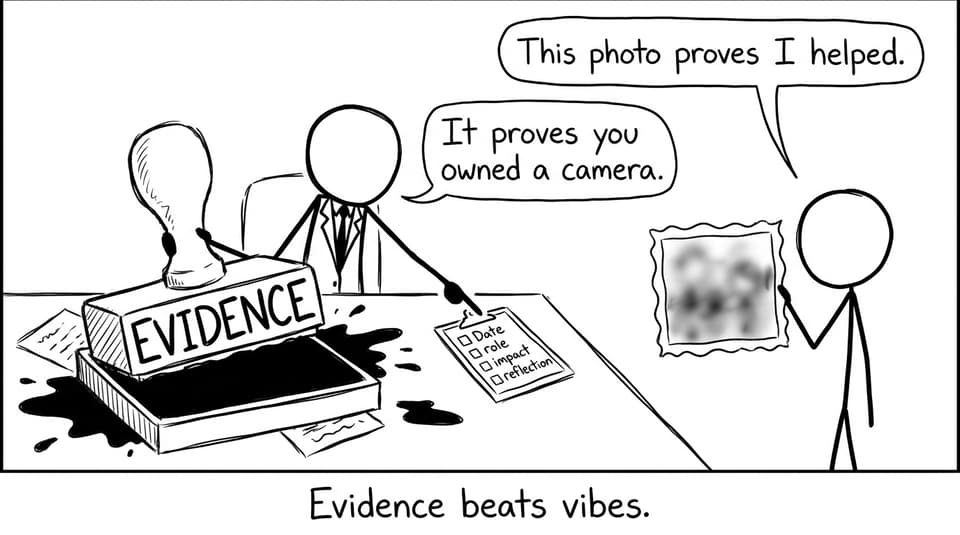
Think of each experience as a mini case study. It needs four things: date, role, impact, reflection.
Evidence ideas that take almost no effort:
-
A screenshot of a planning message
-
A photo of materials you created (not just you standing somewhere)
-
A sign-in sheet or meeting agenda
-
A short feedback quote from someone you helped
-
A quick metric ("12 students attended" / "30 items collected" / "3 posters displayed")
Then store it in one folder with a simple naming system: 2026-09-14_Tutoring_Reflection.doc.
For a portfolio checklist you can use every time, keep How to Document Community Engagement in MYP Portfolio open while you write.
Strategy: Link MYP service to Global Contexts (fast, not forced)
Connecting service to Global Contexts strengthens reflections because it gives you language for meaning.
Pick one context that genuinely fits, and reuse it for a few entries so your portfolio looks coherent:
-
Globalization and sustainability: environmental action, waste reduction, awareness campaigns
-
Fairness and development: access to learning resources, inclusion, equity initiatives
-
Scientific and technical innovation: using tech to solve a local issue
-
Identities and relationships: wellbeing, belonging, mentoring
-
Personal and cultural expression: art, storytelling, language, community identity
-
Orientation in space and time: heritage, intergenerational projects, local history
In your reflection, don’t define the context. Apply it: “This connects to fairness and development because…”
Strategy: Use exam-style habits to make MYP service easy
Here’s the crossover most students miss: the same loop that boosts exam scores also makes MYP service requirements painless.
-
Active recall: After each activity, write 5 bullet points from memory before you look at any photos. Your reflection becomes sharper.
-
Spaced repetition: Revisit one older reflection every two weeks and add a “next step” note.
-
Error logs: If something went wrong (poor communication, unrealistic planning), write one rule: “Next time, I will…”
If you want a structured plan for exam prep that also trains these skills, MYP eAssessments: 30-Day Study Plan That Works is a strong template.
And when you’re building your study system, RevisionDojo’s features are designed for exactly this kind of consistent improvement: Questionbank for targeted practice, Study Notes for clarity, Flashcards for daily recall, AI Chat when you’re stuck, Grading tools for rubric-aligned writing, Mock Exams and Predicted Papers for timed realism, plus the Coursework Library and Tutors when you need examples or a human plan.
Common mistakes that make MYP service requirements feel hard
These are the traps that create the “portfolio panic” week:
-
Choosing a project that’s too big to finish during exam season
-
Writing reflections that describe events but don’t show learning
-
Saving documentation for the end, then losing proof
-
Doing only one type of action (only direct service, only advocacy) without variety
Your fix is boring, and that’s good: small actions, dated evidence, honest reflection.
Closing: make MYP service requirements feel light
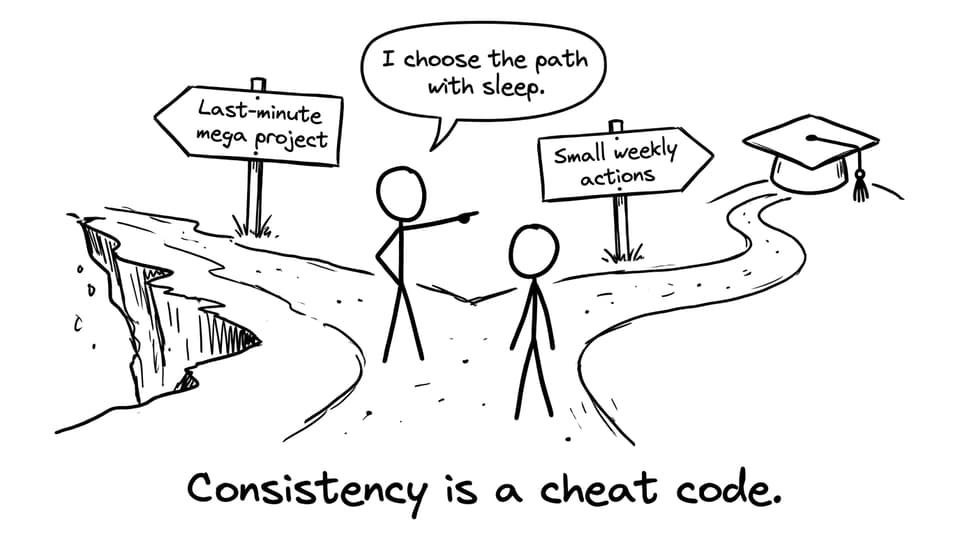
The best part about the MYP is also the hardest to explain: it rewards students who build quiet consistency.
If you plan small, act regularly, and reflect honestly, you will meet your MYP service requirements without drama. More importantly, you’ll end up with a portfolio that reads like a real learning journey--the kind that makes you feel proud, not relieved.
If you want one home base for the academic side of that journey, use RevisionDojo alongside your service routine: practice with the Questionbank, tighten understanding with Study Notes, keep momentum with Flashcards, ask AI Chat the questions you’re embarrassed to ask out loud, and use Mock Exams, Predicted Papers, Grading tools, the Coursework Library, and Tutors when you need the next step to be obvious.
Start today: pick one small action you can repeat weekly. That’s how the MYP becomes easy.
