

In the MYP, Service as Action can feel like the one part of school that’s both deeply human and slightly mysterious. You help someone. You join something bigger than your timetable. Then a question shows up right when you’re trying to focus on exams: How is this actually evaluated?
That uncertainty is normal. Service as Action doesn’t behave like a math test or a language paper. In the MYP, it’s less about points and more about proof of learning: what you noticed, what you changed, what you can now do that you couldn’t do before. The paradox is that the “soft” parts (reflection, ethics, growth) often demand the most precise writing.
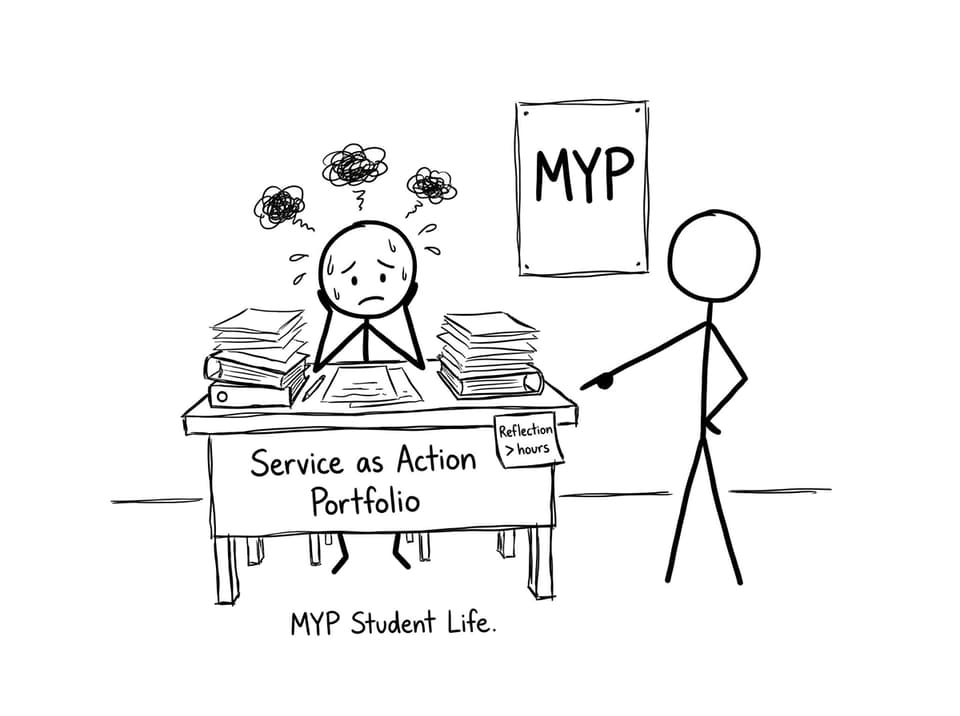
Quick checklist: what MYP schools usually evaluate
In most MYP schools, Service as Action evaluation is qualitative. You’re not being ranked against classmates. Instead, teachers look for evidence that you’re developing across time.
Use this checklist to self-audit before your next portfolio check-in:
-
You can explain why the activity matters (not only what you did).
-
You show progress toward the Service as Action learning outcomes.
-
Your reflection moves beyond description into analysis and next steps.
-
You include clear evidence (photos, drafts, meeting notes, impact data, feedback).
-
You connect to ATL skills and the Learner Profile in specific ways.
If your SaA planning feels messy, start with Strategies to Meet MYP Service Requirements Easily and keep the checklist nearby.
What “evaluation” means in the MYP (and what it doesn’t)
In the MYP, Service as Action exists to connect learning with lived experience. So evaluation is designed to spot learning that’s real, not performative.
That’s why schools typically avoid “hours-only” logic. Hours can be part of your log, but hours alone can’t show thinking, collaboration, ethical awareness, or growth. The aim is closer to a coach reviewing training footage than an examiner marking a final response.
In practice, many schools use descriptors such as Emerging/Developing/Proficient/Exemplary (or a similar scale). Those labels often reflect your consistency and reflection quality across multiple experiences, not one perfect project.
For a broader view of how the MYP is structured overall, the Middle Years Program (MYP) hub is a helpful reference point.
How schools assess Service as Action in the MYP
Every IB World School builds its own system, but the patterns are remarkably consistent across the MYP.
Reflection quality is the main signal
Teachers want to see that your action produced learning. Strong MYP reflection usually includes:
-
A clear account of what happened (brief, accurate, not dramatic)
-
The challenge you faced (real obstacles, not “we were busy”)
-
The decisions you made and why you made them
-
What changed in your thinking, skills, or understanding
-
What you would do differently next time
If you’re unsure what “good reflection” looks like across the programme, Using Student Portfolios for Evidence of Learning in the MYP gives a useful portfolio lens that transfers perfectly to Service as Action.
Evidence matters more than big claims
In the MYP, “impact” isn’t only a big number or a viral campaign. It can be small and still meaningful. What matters is that you can show it.
Examples of evidence that tends to work well:
-
A before/after photo set with dates and a short caption
-
Planning documents, role lists, or meeting notes
-
Feedback quotes from participants or a supervisor
-
A simple results table (attendance, items collected, money raised, survey responses)
-
Screenshots of advocacy posts or research summaries
Consistency across years beats one intense month
A common misunderstanding in the MYP is thinking you need one huge project to “cover everything.” Schools usually prefer steady engagement across time: different service types, different roles, and growing maturity.
If you want a practical way to structure consistency, borrow an exam habit: small sessions, often. That mindset is also why MYP eAssessments: 30-Day Study Plan That Works feels surprisingly relevant to Service as Action. The same rhythm of planning, doing, reviewing, and improving applies.
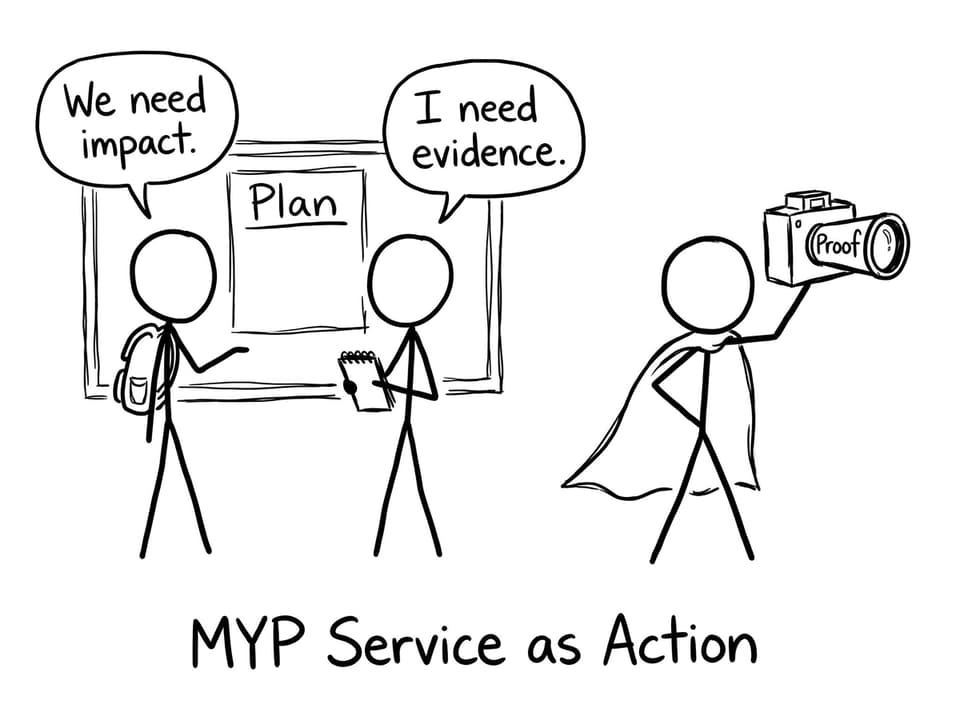
The seven Service as Action learning outcomes (what assessors look for)
Most MYP Service as Action evaluation maps to seven learning outcomes. You don’t need to “finish” all seven in one activity. Think of them as a long-term map: over multiple experiences, you build evidence across the set.
Identify strengths and areas for growth
A strong reflection names a specific strength and a specific improvement area. Not “I’m good at teamwork,” but “I kept the group on track by summarizing decisions at the end of meetings.”
Undertake challenges and develop new skills
Teachers look for genuine stretch: a new tool, a harder role, a risk you managed. “I learned Canva” is fine if you show how it changed your effectiveness.
Discuss, evaluate, and plan activities
Planning is part of learning in the MYP. Show how you evaluated what was needed, planned steps, then adjusted when reality intervened.
Show commitment and perseverance
Perseverance isn’t staying late one day. It’s staying engaged when motivation drops, when turnout is lower than expected, or when your first attempt doesn’t work.
Work collaboratively (skills and benefits)
Collaboration is more than dividing tasks. Reflect on communication, conflict resolution, and how you used other people’s strengths.
Engage with issues of global significance
Global significance can be local action connected to a wider theme (sustainability, equity, health, education). Link your experience to broader patterns without turning it into a speech.
Consider ethics of choices and actions
This is often the difference between average and excellent MYP reflections. Discuss consent, dignity, unintended consequences, and whether your action truly matched community needs.
If you want language for ATL and learning behaviors that sound precise (not vague), Linking ATL Skills to Conceptual Understanding in the MYP is a strong companion.
The Service Portfolio: your evaluation “case file” in the MYP
Your Service Portfolio is usually the central artifact teachers review in the MYP. It’s less like a scrapbook and more like a structured case file: each claim needs evidence.
A strong portfolio typically includes:
-
A log of experiences (dates, brief description, your role)
-
Short reflections after smaller actions
-
Deeper reflections after major experiences
-
Evidence attachments and captions
-
Explicit links to ATL skills and the Learner Profile
Students who manage portfolios well usually don’t have better lives. They just collect evidence as they go, the way you’d save working for a science investigation rather than trying to recreate it later.
RevisionDojo can help you keep that system calm alongside exam prep: use Study Notes to model clear explanations, Flashcards to remember ATL vocabulary, and AI Chat to turn messy reflections into structured thinking without losing your voice. When you need to rehearse exam stamina at the same time, Mock Exams and Predicted Papers keep your revision realistic while SaA stays organized.
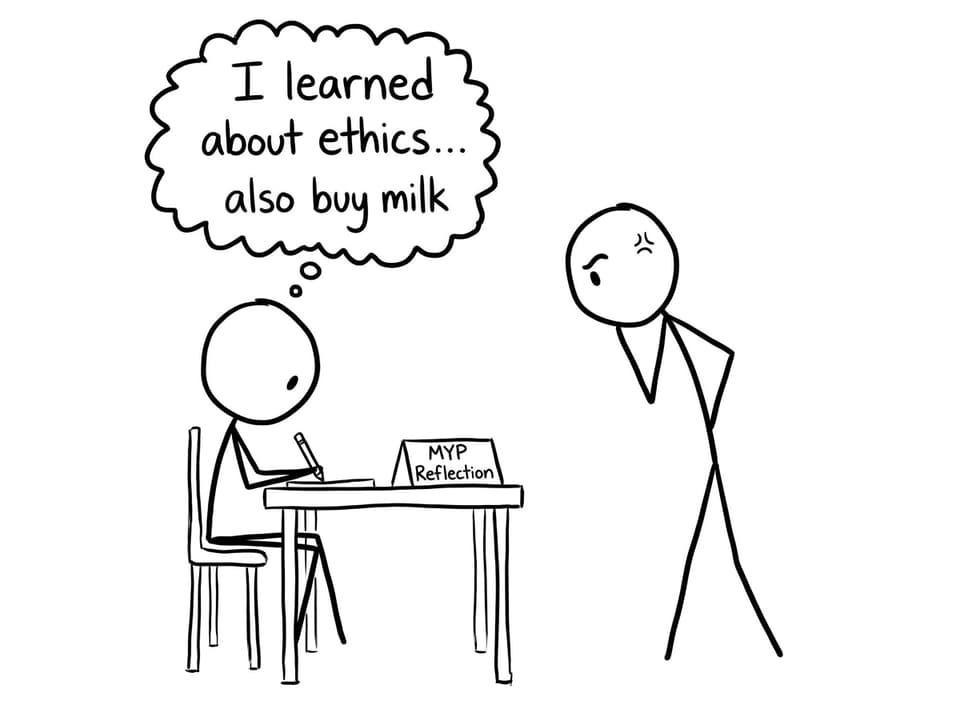
Common mistakes that lower MYP Service as Action evaluations
Even strong students slip into predictable traps in the MYP:
-
Writing a diary instead of a reflection: feelings without learning are hard to evaluate.
-
Collecting evidence at the end: it looks incomplete, even if the action was real.
-
Overclaiming impact: “We changed the community” with no proof creates mistrust.
-
Forgetting ethics: ignoring unintended harm, consent, or dignity weakens the learning.
-
No learning language: if you can’t name the skill, it’s harder to show growth.
A simple fix is to treat Service as Action like a subject you train for: plan, act, reflect, improve. That’s the same loop you build with the RevisionDojo Questionbank, just applied to real life.
Bringing it all together: your MYP advantage
Service as Action evaluation in the MYP is a quiet test of something exams can’t always measure: whether you can turn experience into insight. The students who do best aren’t necessarily the busiest. They’re the ones who can prove learning with evidence, reflection, and honest ethical thinking.
If you want one place to keep both sides of school steady--Service as Action and exam prep--use RevisionDojo as your home base. Build confidence with the Questionbank, keep concepts tight with Study Notes, lock in learning language with Flashcards, pressure-test yourself with Mock Exams and Predicted Papers, and use AI Chat plus Grading tools to sharpen reflections and written work. When you need extra support, the Coursework Library and Tutors make the process feel guided instead of guessy.
In the end, the MYP doesn’t ask you to be perfect. It asks you to be awake to what you did, why it mattered, and what you became while doing it.