

Social media feels like air. You don’t notice it until something changes: a post disappears, your feed turns strangely angry, or a harmless search follows you for days.
That moment of friction is exactly where IB Digital Society begins. The course asks you to treat social media less like an app you use and more like a digital system you can map, explain, and evaluate. When you do that, your exam responses stop sounding like personal reflections and start sounding like analysis.
In this IB Digital Society guide, you’ll learn a simple, exam-ready way to break social media into components (interfaces, algorithms, data, policies, users), then link those components to outcomes like visibility, identity, power, and ethics.
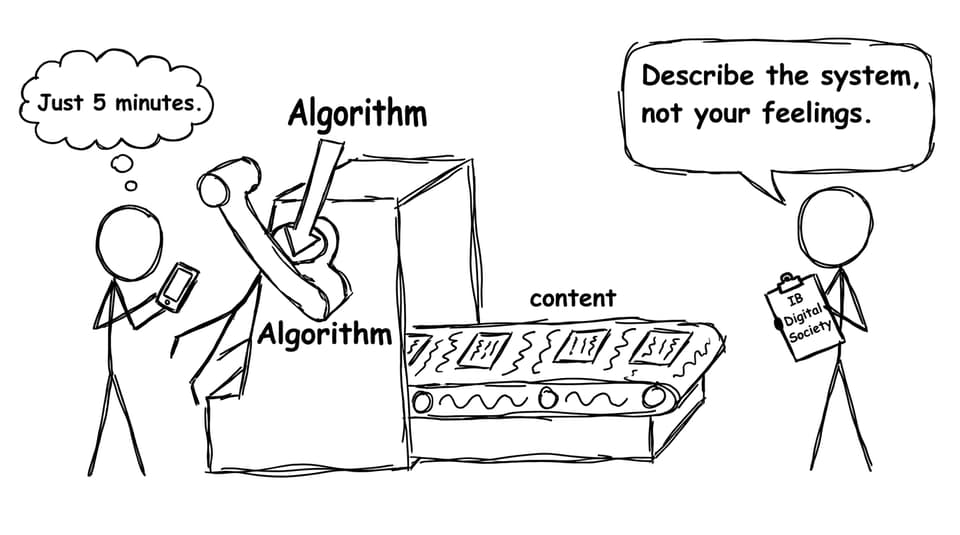
Quick checklist: how to analyse social media in IB Digital Society
Use this checklist whenever a stimulus mentions TikTok, Instagram, X, YouTube, Reddit, or “a platform” in general. It’s built for IB Digital Society exam paragraphs and IA planning.
-
Define the digital system (what platform/feature are you analysing?)
-
Identify components: interface, algorithm, data, rules/moderation, communities
-
Explain the system goal (engagement, safety, profit, growth, retention)
-
Trace a mechanism (how does the system produce an outcome?)
-
Name stakeholders (at least two groups affected differently)
-
Separate impacts (now) from implications (later)
-
Evaluate ethically (benefits vs harms, responsibility, accountability)
For a structured home base while you revise, keep the IB Digital Society Resources hub open in a tab.
Why social media counts as a “digital system” in IB Digital Society
In IB Digital Society, social media is not just communication. It’s a system of interacting parts that produces predictable patterns in attention and behaviour.
A useful way to write it in exams is:
Social media is a digital system where platform design, algorithms, and data practices shape what content becomes visible, which influences identity, power, and ethical outcomes.
That sentence works because it does what IB Digital Society rewards: it moves from “people post content” to “system design creates incentives and outcomes.” If you want extra support for this systems lens, browse the IB Digital Society tag archive and build your own mini case-study bank.
Move beyond personal experience (without sounding robotic)
Examiners don’t need to know your screen time. They need to see that you can reason.
Personal experience can still help, but only as a starting point. The high-mark move in IB Digital Society is to turn “I notice…” into “the system causes…” and then justify it.
A practical method:
-
Start with a neutral claim (not a rant)
-
Explain the mechanism (algorithm, ranking, data signals)
-
Show different stakeholder impacts
-
Add a balanced counterpoint
-
End with a judgment linked to ethics or power
If your writing slips into opinion, RevisionDojo’s IB Digital Society: Key Themes Explained helps you anchor paragraphs in course concepts.

Algorithms and visibility: who gets seen, and why
The most exam-friendly system feature is algorithmic visibility. In social media, ranking systems decide what appears first, what spreads, and what disappears.
In IB Digital Society, you can analyse algorithmic visibility as a feedback loop:
-
The platform ranks content (output)
-
Users react (behaviour changes)
-
The system collects that behaviour (new inputs)
-
Rankings shift again (new output)
Over time, this can amplify certain voices while shrinking others, creating power imbalances that feel “natural” because they’re hidden inside the feed.
To revise this topic efficiently, use IB Digital Society: Algorithms Explained for Exams and then practise with RevisionDojo’s Questionbank filters inside the platform.
Data collection and profiling: the quiet engine of the system
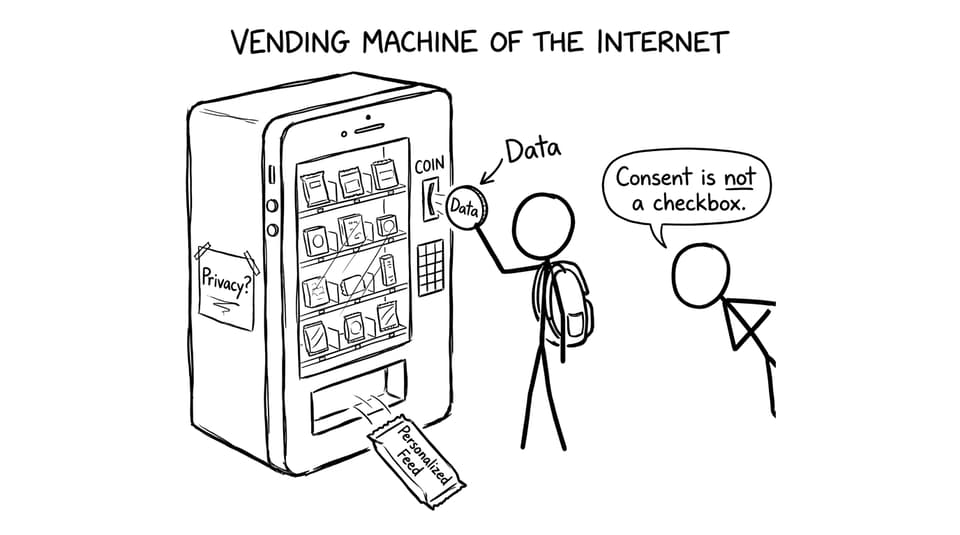
Social media platforms run on constant data collection: clicks, likes, dwell time, follows, device signals, and sometimes location. In IB Digital Society, your job is not to list data types, but to explain what data does inside the system.
Data supports:
-
Personalisation (feeds, recommendations)
-
Prediction (what you’ll watch next)
-
Targeting (ads, content, trends)
-
Moderation (flagging, takedowns, shadow effects)
This raises classic IB Digital Society ethics questions: consent, transparency, and whether users meaningfully understand the trade they are making.
If you’re building IA evidence, read Using Evidence Effectively in the IB Digital Society IA to avoid the common trap of dumping research without analysis.
Identity in social media systems: performance meets prediction
Social media shapes identity in two ways:
-
User-created identity: bios, posts, curated images, language, communities
-
System-generated identity: inferred interests, categories, “similar users,” predicted behaviour
In IB Digital Society, stronger answers link identity back to design choices: likes, follower counts, filters, trends, and community norms. Identity becomes a negotiation between what you want to be and what the system rewards.
For a clear identity framework and exam checklist, use Digital Identity and Self-Presentation Online in IB Digital Society.
Power, control, and ethics: the platform is not neutral
Power in social media systems is often centralised:
-
Platforms set the rules and enforce moderation
-
Platforms own the data and decide access
-
Platforms control transparency (or the lack of it)
That is why IB Digital Society expects you to evaluate responsibility: who should be accountable when misinformation spreads, harassment escalates, or biased outcomes appear?
To strengthen this lens, connect your social media examples to the wider concept of digital influence in Media Platforms and Digital Influence in IB Digital Society.
How to use this in exams and the IA (without going too broad)
In exams, social media often appears as an unseen example. Your advantage is that the system components are familiar. Your risk is that you generalise.
In IB Digital Society, aim for a narrow target:
-
One feature (For You page, reels, trending tabs, reporting tools)
-
One mechanism (ranking, data profiling, moderation)
-
Two stakeholder groups (e.g., teenagers vs advertisers; activists vs government)
For IA planning, keep your scope tight from the start. RevisionDojo’s How to Choose a Strong IB Digital Society IA Topic and the IB Digital Society Internal Assessment Guide help you turn a huge topic into a question you can actually evaluate.
Closing: turn familiarity into marks
Social media is familiar, but familiarity can make your thinking lazy. IB Digital Society rewards the opposite: the ability to pause, map the system, and explain how design choices shape identity, power, and ethics.
If you want to revise with less stress and more structure, build a simple loop on RevisionDojo: learn with Study Notes, lock definitions with Flashcards, practise with the Questionbank, and test timing with Mock Exams and Predicted Papers. That’s how IB Digital Society stops feeling like “common sense” and starts feeling like a subject you can score highly in.


