

Digital identity is the only “folder” about you that keeps growing while you sleep.
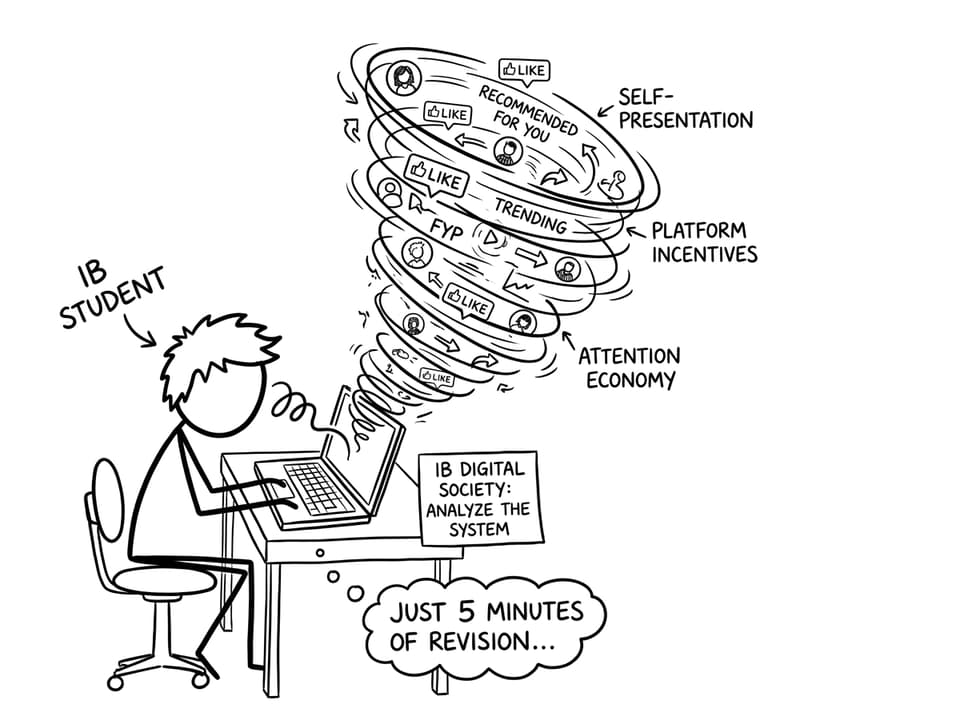
One day you post a harmless photo. A week later, an algorithm decides you’re a “travel person,” a “gym person,” or a “politics person.” And suddenly the internet starts talking back to you as if that label has always been true.
That quiet shift--from “who I say I am” to “who the system thinks I am”--is exactly why IB Digital Society treats digital identity and self-presentation as more than personal choice. In IB Digital Society, the strongest students don’t just describe profiles and posts. They explain how platforms, data, and power structures co-create identity.
Quick exam checklist for IB Digital Society
Use this quick checklist when a source, case, or scenario mentions identity:
-
Define digital identity as both user-created and system-generated
-
Identify the platform features shaping self-presentation (likes, follower counts, filters, anonymity)
-
Explain the data trail (clicks, dwell time, location, device signals)
-
Link to power (who categorizes, who benefits, who is visible)
-
Evaluate ethics (consent, transparency, bias, harm)
-
Discuss impacts on individuals and communities
If you need a syllabus-aligned home base while revising, start with IB Digital Society Resources and keep it open as your anchor page.
What digital identity means in IB Digital Society
In IB Digital Society, digital identity is the representation of a person or group inside digital systems. That includes:
-
What you deliberately show: usernames, bios, posts, highlights, comments
-
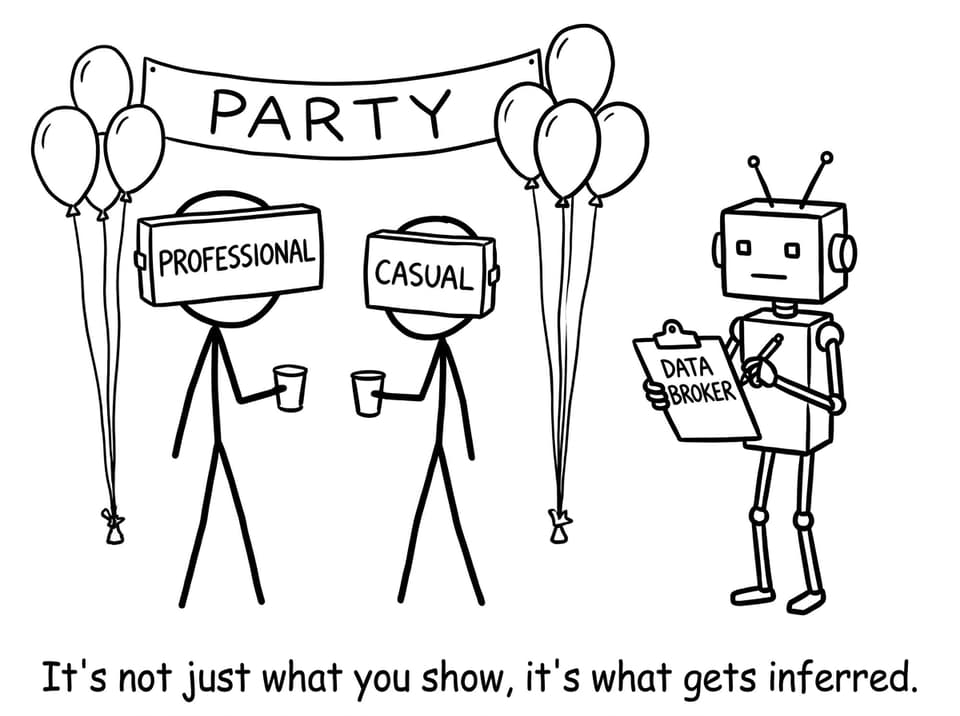
What gets inferred: interests, demographics, risk scores, “similar users,” predicted behavior
A useful way to phrase it in IB Digital Society exam responses is: identity is performed by users but also processed by systems.
RevisionDojo’s Defining Identity notes for IB Digital Society are a fast way to lock the vocabulary and avoid vague explanations.
Self-presentation online: performance under platform rules
Self-presentation is impression management: deciding what to reveal, what to hide, and what to emphasize. Online, that performance is nudged by design.
Think about how differently you behave across platforms: formal on one, chaotic on another, quiet in group chats, bold in anonymous spaces. In IB Digital Society, the point is not “people are fake online.” The point is that digital spaces create incentives. The interface offers tools (filters, captions, disappearing stories) and feedback loops (likes, shares, streaks) that shape what feels “worth posting.”
For wider framing, connect identity to culture using Technology and Culture in IB Digital Society. That’s an easy way to show conceptual range in IB Digital Society essays.
How platforms shape identity (the part examiners love)
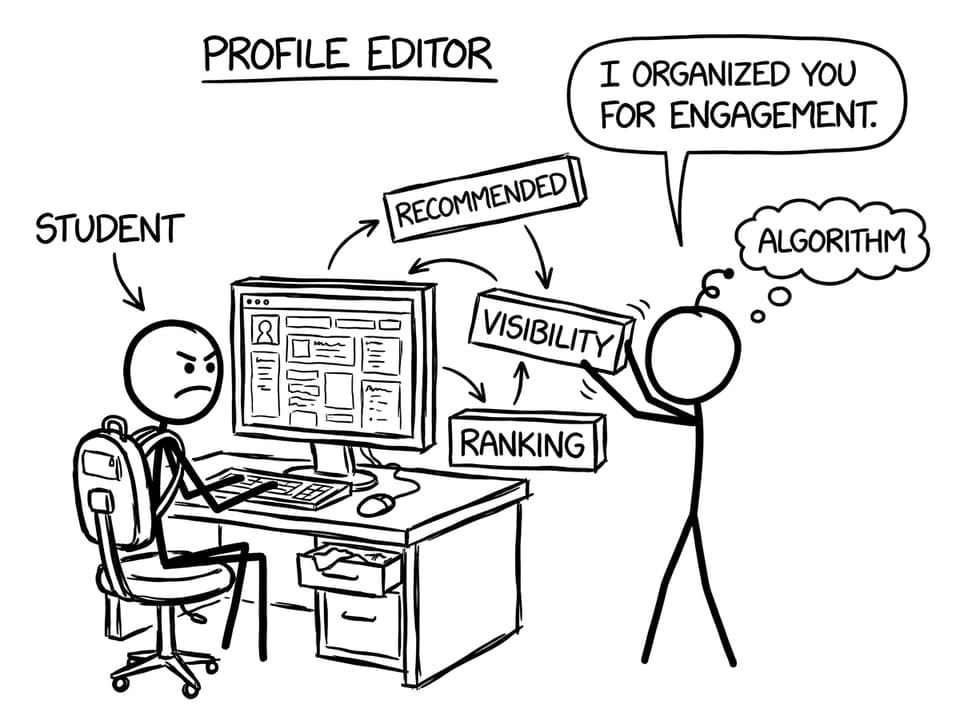
Platforms don’t just host identity--they organize it.
In IB Digital Society, you can score higher by naming mechanisms:
-
Ranking systems decide what becomes visible and what disappears
-
Recommendation engines steer attention toward certain communities and aesthetics
-
Policy and moderation define “acceptable” identity signals and language
-
Data collection turns behavior into categories (sometimes wrong, often unchallengeable)
This matters because visibility is social currency. If the algorithm rewards a certain style of post, students, influencers, and ordinary users learn the rules quickly. Over time, self-presentation becomes partially optimized for the system.
To practice writing about these mechanisms with exam timing, use RevisionDojo’s IB Digital Society Questionbank and drill short responses that link feature -- impact -- ethical issue.
Power, control, and the “invisible biography”
A good IB Digital Society paragraph often turns on one uncomfortable idea: you may control your profile, but you rarely control your data double.
Power shows up when:
-
Platforms build categories you cannot see or correct
-
Third parties buy and sell identity signals
-
Automated decisions shape opportunities (ads, visibility, recommendations)
That’s why IB Digital Society pushes you toward systemic analysis. Ask: who benefits from identity being measurable? Who is harmed when identity is simplified into a label?
Impacts on individuals and communities
In IB Digital Society, impacts are strongest when you balance gains and harms.
Individuals might experience:
-
Exploration and belonging (trying identities safely, finding niche communities)
-
Pressure and comparison (performing a “postable” life)
-
Reduced agency (identity inferred from data, not chosen)
Communities might experience:
-
Stronger group identity and mobilization
-
Stereotypes being reinforced through viral templates
-
Exclusion through moderation, harassment, or biased categorization
Want an exam-friendly way to keep your analysis structured? Build a loop: platform feature -- behavior change -- impact -- ethical evaluation. RevisionDojo’s Key Themes in IB Digital Society helps you pick the right lens quickly.
Ethical angles you can evaluate (without ranting)
Ethics in IB Digital Society isn’t about moral outrage. It’s about justified judgment.
Strong ethical evaluation might ask:
-
Was data use transparent and understandable?
-
Did users give informed consent or just click “agree”?
-
Are categories biased or harmful to certain groups?
-
Is there meaningful accountability when identity inference causes harm?
If your exam response includes authenticity or verification (for example, fake accounts, scams, or trust), you can connect to Digital Certificates and PKI as supporting context.
Using IB Digital Society tools for exam and IA prep
Digital identity is a great IB Digital Society IA direction when you choose a specific digital system and a measurable mechanism (ranking, moderation, verification, data inference).
Two practical ways to make that easier:
-
Use the IB Digital Society IA Guide to shape a focused inquiry and avoid overly broad claims.
-
Use How to write a strong IB Digital Society IA research question to turn “identity online” into something analyzable.
For day-to-day revision, RevisionDojo is built like a calm loop: Study Notes to clarify concepts, Flashcards to lock definitions, the Questionbank to practice exam-style responses, and AI Chat to test whether your evaluation is actually evaluation. When you want realism, add Mock Exams and Predicted Papers. When coursework drafts get messy, use Grading tools and the Coursework Library, and if you want a human plan, book Tutors.
Closing: Make the system visible
The internet makes identity feel personal, but IB Digital Society teaches you to notice the machinery behind the mirror. Self-presentation is what you do. Digital identity is what gets built from you.
If you’re revising IB Digital Society for exams, your edge is simple: keep asking how platform design, data, and power shape what people can be online. Then train that skill with RevisionDojo’s Study Notes, Flashcards, and Questionbank, and pressure-test it with Mock Exams and Predicted Papers. When you do that, “identity online” stops being a vague topic and becomes an analysis you can score with.