


The move from MYP to the Diploma Programme can feel strange because the student has not suddenly changed, but the scale of the work has. Curiosity is still valuable. Reflection still matters. Yet six subjects, greater depth, the DP core, coursework, and increasingly demanding assessments must now fit inside the same week.
The RevisionDojo MYP to DP transition approach makes that change manageable by connecting familiar MYP skills to DP-specific demands. Students use Study Notes to close knowledge gaps, Flashcards to strengthen recall, the Questionbank to practise application, and feedback tools to improve work against clearer assessment expectations. Mock Exams and Predicted Papers can then introduce timed pressure gradually rather than leaving it until exam season.
This is not about abandoning the MYP mindset. It is about adding the structure, precision, and repetition that DP success requires.
The transition at a glance
A useful MYP-to-DP plan should help students:
- identify which MYP knowledge and Approaches to Learning skills remain useful
- understand the depth expected in their chosen SL and HL subjects
- turn criterion-based reflection into assessment-aware improvement
- develop reliable recall rather than depending on recognition
- practise DP command terms and mark-earning responses
- manage six subjects alongside TOK, the Extended Essay, and CAS
- build timed assessment stamina in controlled stages
- seek targeted support before confusion becomes a backlog
Students who want to understand the wider curricular change can begin with this comparison of MYP and DP differences and progression. The essential point is simple: MYP provides many of the right learning habits, while DP asks students to apply those habits with greater depth, independence, and consistency.
What actually changes between MYP and DP?
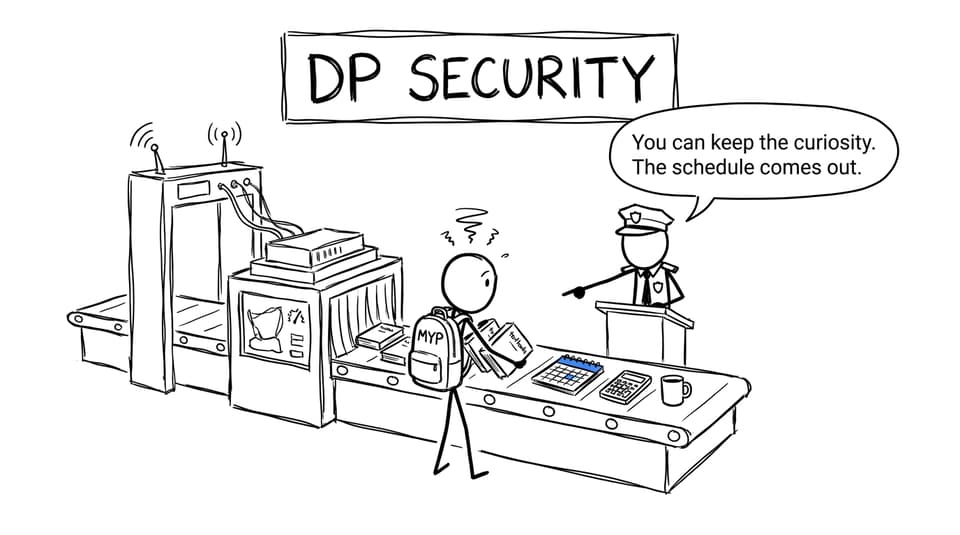
The IB describes the MYP as a programme for students aged 11 to 16 and the DP as a programme for students aged 16 to 19. The programmes share concept-based learning, international-mindedness, inquiry, reflection, and criterion-related assessment. That continuity matters, but it should not hide the practical differences.
The DP curriculum comprises six subject groups and a core containing Theory of Knowledge, the Extended Essay, and Creativity, Activity, Service. Assessment includes externally assessed examinations in most subjects as well as internally assessed work, with the precise balance depending on the course. Students are expected to retain knowledge, apply methods, evaluate arguments, interpret evidence, and communicate within subject conventions.
In other words, understanding an idea is only the beginning. A DP student must retrieve it accurately, select it under pressure, and express it in the form the question demands.
| MYP strength | New DP demand | Practical bridge |
|---|---|---|
| Conceptual inquiry | Greater subject depth | Connect each concept to precise syllabus content |
| Criterion-based reflection | Assessment-specific improvement | Record exactly why each mark was missed |
| Personal Project independence | EE and coursework management | Divide research, drafting, and revision into milestones |
| Interdisciplinary thinking | TOK analysis and synthesis | Compare how disciplines create and justify knowledge |
| Application in unfamiliar contexts | Timed examination application | Progress from untimed questions to full simulations |
| Broad subject exposure | SL and HL specialisation | Diagnose prerequisite gaps before courses accelerate |
RevisionDojo helps make those bridges visible. Its MYP syllabus and subject resources can be used to check foundations, while the broader IB resource library supports the move into DP-level learning and practice.
Turning MYP skills into DP subject performance
The transition becomes easier when students stop thinking of readiness as one general quality. Readiness is subject-specific. A student may be prepared for literary analysis but need to strengthen algebraic fluency, scientific data handling, or academic vocabulary in a language.
Mathematics: from explaining a method to using it fluently
MYP mathematics encourages reasoning, communication, and application in unfamiliar situations. Those habits remain valuable. DP mathematics, however, requires students to handle a larger connected body of content while choosing methods efficiently and showing mathematically meaningful working.
RevisionDojo Study Notes can repair a missing concept before the student attempts focused Questionbank sets. The student should then classify errors: misunderstanding, method selection, algebra, calculator use, notation, or timing. This is more useful than recording only whether an answer was wrong. The guide to what changes from MYP Math to DP Math offers a more detailed subject bridge.
Sciences: from investigation to precise explanation
MYP science develops inquiry, evaluation, and awareness of how science operates in context. DP science preserves those habits while demanding more detailed subject knowledge, accurate terminology, quantitative reasoning, and careful interpretation of data.
A sensible bridge starts with retrieval. Use Flashcards for definitions, processes, equations, and relationships, but follow them immediately with application. A remembered definition is useful only if the student can recognise when and how to use it. Jojo AI Chat can clarify a misconception, while Questionbank practice tests whether the explanation survives contact with an unfamiliar question.
Languages and individuals and societies: from ideas to disciplined arguments
MYP students often arrive with valuable experience analysing texts, sources, perspectives, and global contexts. DP responses usually require tighter control: a defensible argument, selected evidence, sustained analysis, and direct attention to the command term.
Students can practise one component at a time. One session might focus on thesis statements; another on integrating evidence; another on distinguishing explain, compare, and evaluate. RevisionDojo Grading tools can support a feedback loop, while Tutors can help when the difficulty involves judgement, argument quality, or recurring writing habits rather than a single missing fact.
A study loop that grows with the student
A common transition mistake is to respond to greater difficulty by spending longer reading. Reading feels productive because everything looks familiar. Examinations are less forgiving: the page is closed, the clock is moving, and the student must produce an answer.
RevisionDojo supports a four-part loop:
- Understand: Use syllabus-aligned Study Notes for one narrow topic.
- Recall: Retrieve the idea with Flashcards or a blank-page summary.
- Apply: Complete targeted questions in the Questionbank.
- Review: Use feedback to classify errors, correct the response, and schedule a retest.
The value lies in completing the loop. Notes without retrieval can create false confidence. Questions without review can rehearse the same mistake. Feedback without a second attempt becomes information rather than improvement.
The RevisionDojo app exam-preparation workflow shows how these tools can operate within one system. Students beginning earlier can also use the MYP revision guide to establish the reflection and active-practice habits they will need later.
Preparing for DP coursework and the core
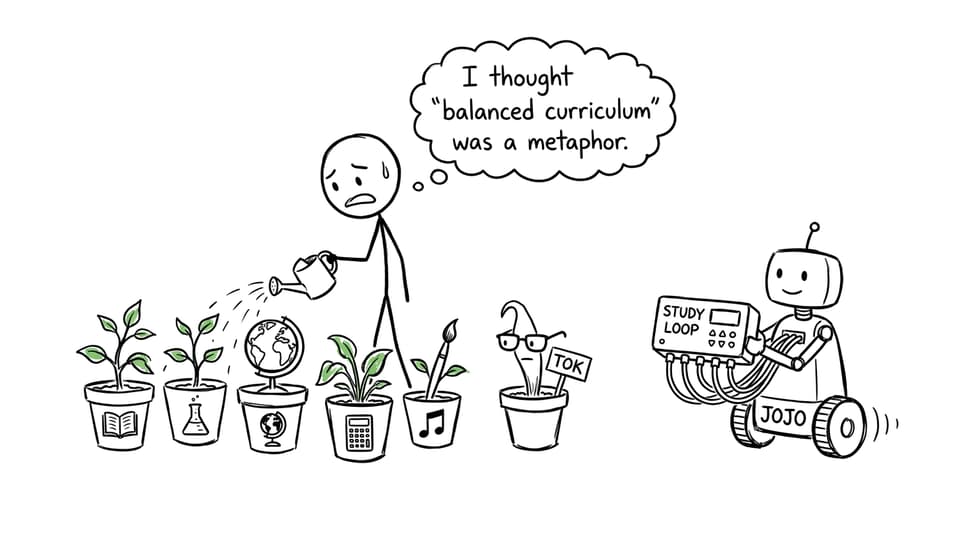
The Personal Project offers a useful first experience of sustained, self-directed work. It requires a goal, planning, research, creation, evidence, and reflection. The Extended Essay is not simply a longer Personal Project, however. It has its own academic expectations, subject conventions, supervision process, and formal requirements. Students should carry forward the workflow, not assume the tasks are identical.
RevisionDojo’s Personal Project guide can help students recognise which planning habits are transferable. In DP, the Coursework Library can expose students to the structure of strong work, while Grading tools can provide criterion-aware feedback on drafts. These resources should support original thinking and revision, never replace school guidance or the student’s authorship.
TOK benefits from another MYP strength: asking how context, perspective, assumptions, and methods shape understanding. The shift is toward more disciplined epistemic analysis. Instead of merely noticing that perspectives differ, students must examine why claims are justified and what their limits may be.
CAS adds a different challenge. It is completed alongside academic study and involves evidence and reflection, even though the IB does not formally grade it. A calendar matters because small, regular actions are easier to manage than reconstructing months of activity later.
Building examination readiness without creating panic
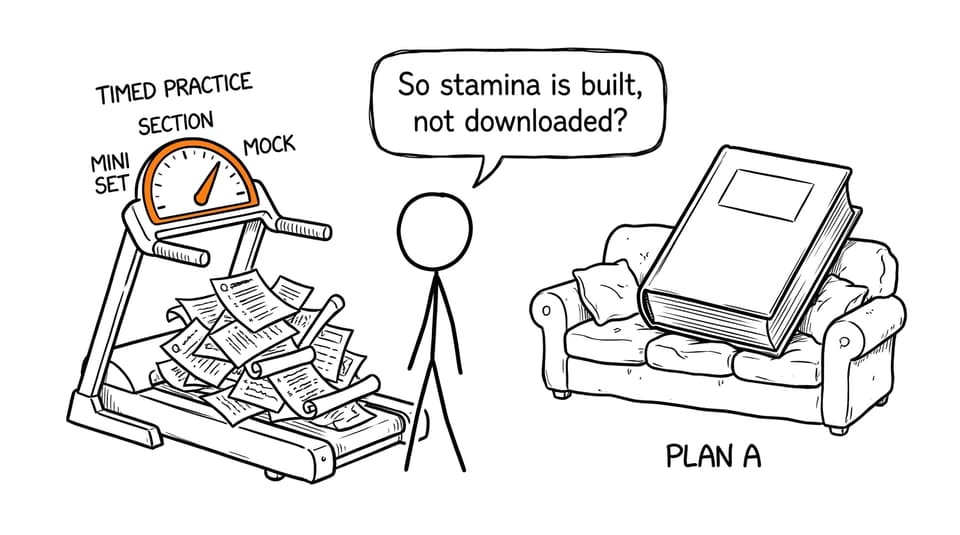
Timed performance should be trained progressively. Beginning with a full simulation before a student understands the content often measures distress more than readiness.
A better progression is:
- untimed topic questions for accuracy
- short timed sets for decision speed
- mixed-topic sections for switching skills
- Mock Exams for pacing and stamina
- Predicted Papers, where available, for additional format-aligned practice
- detailed review followed by a targeted retest
RevisionDojo’s Mock Exams and Questionbank make the pressure adjustable. A student can begin narrowly, identify recurring weaknesses, and increase difficulty as accuracy stabilises. The platform’s guide to DP exam readiness explains how command-term practice, reflection, and progress data can work together.
A practical transition routine
During the months around the transition, students do not need an elaborate productivity system. They need a repeatable week.
Before DP begins
- Review prospective subject choices with the school’s DP coordinator.
- Check current official subject briefs and presumed prior learning.
- Diagnose two or three foundation gaps in each likely HL subject.
- Practise planning one week that includes study, rest, and commitments.
- Keep reading, writing, calculation, and language practice active.
During the first DP term
- Convert each subject guide into a topic checklist.
- Use Study Notes only where understanding is incomplete.
- Review Flashcards briefly and regularly.
- Complete focused Questionbank practice every week.
- Keep an error log organised by cause, not merely topic.
- Schedule coursework milestones before deadlines become urgent.
- Ask Jojo AI Chat or a Tutor for help when a problem remains unresolved.
Subject guides, assessment arrangements, and available resources can change, so students should confirm current requirements with their teachers and official IB materials. RevisionDojo provides the study infrastructure, but a school remains the authority for an individual student’s courses, deadlines, and assessment session.
Carry the mindset, upgrade the system
The MYP has already taught students something important: learning is not passive reception. It is inquiry, application, feedback, and reflection. The DP does not invalidate that lesson. It raises the price of applying it inconsistently.
RevisionDojo becomes the ultimate IB resource by bringing the transition into one connected workflow. Students can rebuild foundations with Study Notes, retain knowledge with Flashcards, apply it through the Questionbank, ask questions in AI Chat, and improve coursework with Grading tools and the Coursework Library. As assessments approach, Predicted Papers and Mock Exams develop realism, while Tutors provide human support when a student needs deeper explanation or accountability.
Start with one subject and one honest diagnostic set. Find the gap, repair it, and try again. A successful transition is rarely one heroic leap. It is a series of small bridges, crossed early enough that the other side no longer feels unfamiliar.