In the week before mock season, you notice something odd.
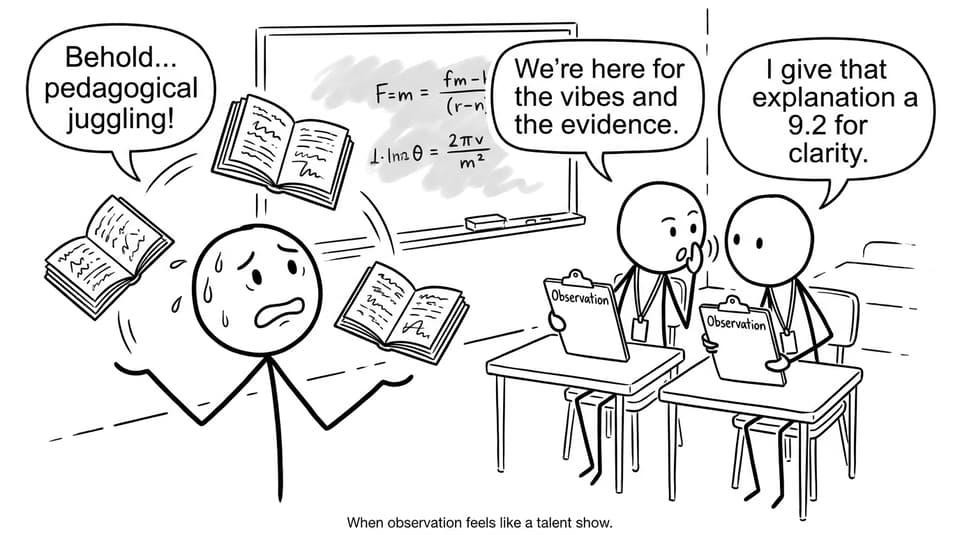
A teacher you like suddenly becomes… shinier. The instructions get extra polished. The board work turns into calligraphy. The lesson feels like a demo, not a day.
Somewhere in the background, you hear the reason: “There’s an observation today.”
In many schools, classroom observation can feel like a spotlight pointed at the teacher. But the IB was built on a different idea: reflection is not a performance review. It’s a way of seeing more clearly. And the moment you understand that, you can borrow the same reflective lens for your own IB exam prep.
Because here’s the quiet truth: when observation becomes reflective instead of evaluative, it stops being about catching mistakes and starts being about finding patterns. That’s also the fastest way to improve in the IB.
A quick IB checklist: turning observation into exam advantage
Use this short checklist to translate reflective classroom observation into a practical IB study habit.
-
Clarify the purpose: Are we looking for “good teaching” or “evidence of learning”?
-
Collect evidence, not vibes: What did students do, say, write, or change?
-
Ask one high-quality question: “What caused the outcome?” beats “What went wrong?”
-
Pick one next step: One adjustment you can test within 48 hours.
-
Record it briefly: Reflection that isn’t retrievable is just a mood.
If you want a ready-made structure for that loop, start with the RevisionDojo ecosystem: Questionbank, Study Notes, Flashcards, AI Chat, Grading tools, Predicted Papers, Mock Exams, Coursework Library, and Tutors.
Why IB students should care about classroom observation
Even if you’re not the person being observed, observation shapes the air you breathe in class. When it’s evaluative, everyone gets tense. Participation turns cautious. Risk-taking disappears.
But the IB rewards thoughtful risk. It rewards students who try, miss, adjust, and try again. That’s why reflective observation matters to you: it models the same cycle you need for IB exams.
Reflective observation focuses on:
-
How learning happens (process)
-
What evidence shows growth (proof)
-
Which adjustment would change the next attempt (action)
If you’re building your own reflection habit, the best companion reads are:
From evaluation to inquiry: the IB move that changes everything
Evaluative observation asks: “Was this lesson good?”
Reflective observation asks: “What did students actually learn, and why?”
That single shift is powerful for IB revision because it replaces self-judgment with diagnosis.
Instead of:
- “I’m bad at Paper 2.”
You get:
- “My Paper 2 responses lose marks because I summarize instead of evaluate, and I don’t build a clear line of argument.”
Inquiry creates a problem you can solve.
To train that skill, use the RevisionDojo Questionbank as your observation lab: do a small set, inspect what happened, then deliberately change one variable (timing, structure, command terms, definitions, diagram labels) and retest.
Pre-observation reflection: do this before you study
In strong reflective observation, the most important conversation happens before the lesson.
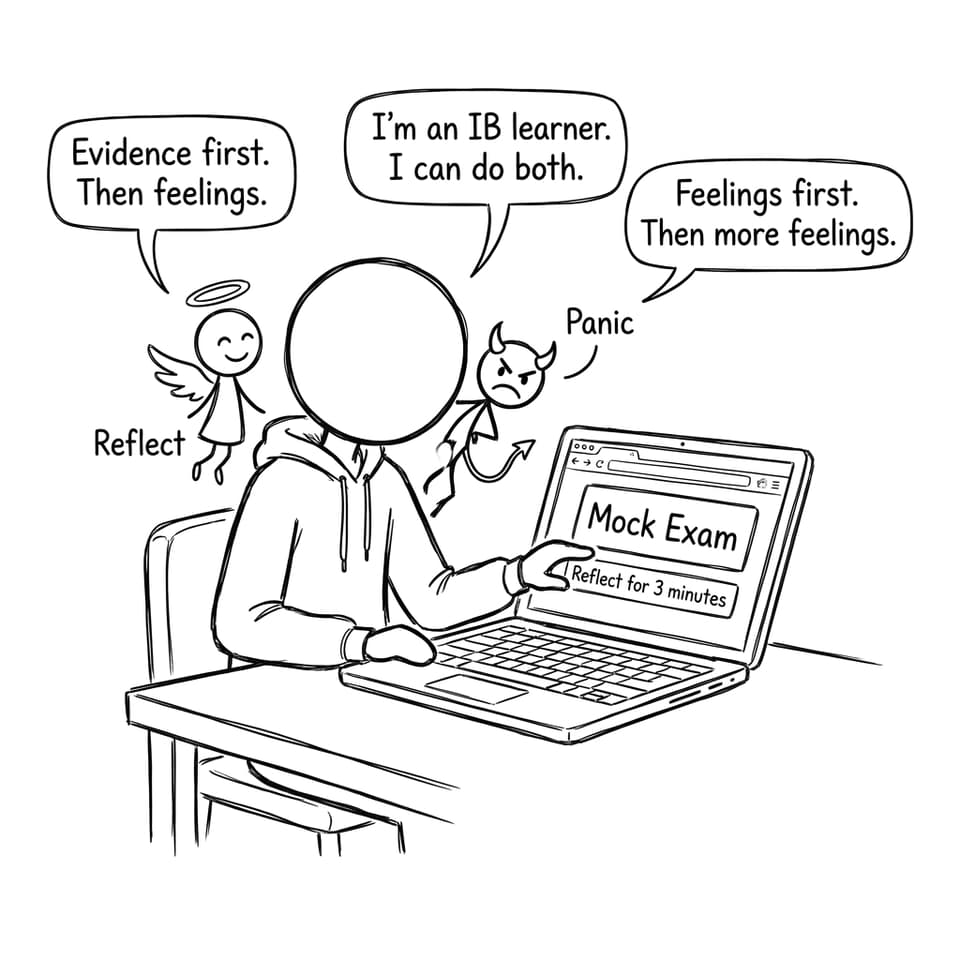
For IB students, that’s your “pre-study reflection.” It’s two minutes, and it saves you forty.
Ask:
-
What is the specific outcome I want from this session?
-
What is the risk I’m taking (timed writing, unfamiliar topic, harder questions)?
-
What feedback do I want to collect (accuracy, structure, speed, clarity)?
Then choose the right tool:
-
Use Study Notes to rebuild understanding when you’re foggy.
-
Use Flashcards when the issue is recall.
-
Use Mock Exams when the issue is stamina and pacing.
-
Use AI Chat when you’re stuck but don’t want to lose momentum.
If you want a full routine that blends those steps, keep this bookmarked:
Observing through the IB Learner Profile (without being cheesy)
The IB Learner Profile can feel like poster language until you use it as a lens.
In reflective observation, the lens matters because it changes what you notice.
Try these simple “observer prompts” for your own work:
-
Inquirer: Did I ask better questions after feedback, or just do more questions?
-
Thinker: Did I explain the reason behind my answer, or only state it?
-
Communicator: Would a tired examiner understand my structure quickly?
-
Risk-taker: Did I practice under pressure at least once this week?
-
Reflective: Did I name one controllable cause and one next step?
To deepen this in a very practical way, read:
The IB is not asking you to “be reflective.” It’s asking you to produce evidence that you can adjust.
During the observation: collect evidence like an examiner
Good observers don’t write: “Nice pace.” They write: “Six students changed their claim after the hinge question.”
That’s the exam mindset.
In IB preparation, your evidence might be:
-
Which command term you missed
-
Which step you skipped in a method
-
Where your explanation became vague
-
When time pressure made you abandon evaluation
This is where RevisionDojo becomes more than motivation. The platform is built to turn your practice into evidence: the Questionbank produces attempts, Grading tools clarify what marks want, AI Chat helps you fix misconceptions, and Predicted Papers plus Mock Exams simulate real pressure.
For reflection as a system (not a vibe), explore:
Post-observation dialogue: how to debrief your own IB practice
The most useful part of reflective observation is the conversation after. Not the “feedback sandwich.” The honest debrief.
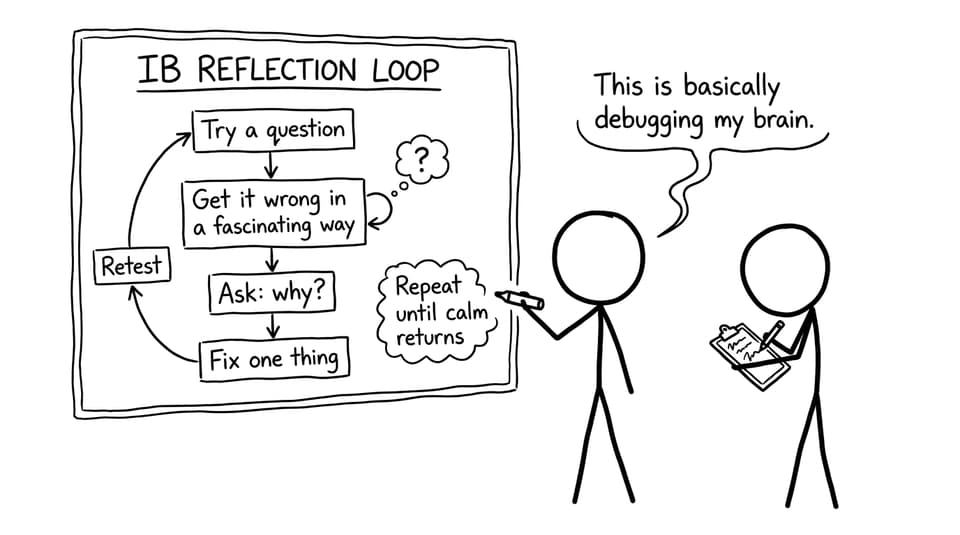
After a study block, ask yourself:
-
What surprised me?
-
What did I do that clearly worked?
-
What was the single biggest cause of lost marks?
-
What is one change I can test within 48 hours?
Then act immediately:
-
Patch a concept with Study Notes.
-
Lock recall with a small Flashcards set.
-
Retest with 10 similar Questionbank items.
If you’re unsure how to turn your reflection into a concrete action, this helps:
Peer observation, but for students: steal the best parts
Peer observation sounds like a teacher thing, but it maps perfectly onto IB study.
Do one session a week where you and a friend “observe” each other’s thinking:
-
You write one timed paragraph.
-
They only comment on evidence: structure, command terms, clarity.
-
Then you switch.
If you need extra support beyond peers, RevisionDojo Tutors can act like expert observers: they help you spot patterns you can’t see yet, and they turn feedback into a plan you can repeat.
Conclusion: make observation your private superpower in IB
The best classroom observation is quiet. It doesn’t make people perform. It makes people notice.
That’s the reflective lens the IB is pointing you toward, whether anyone says it out loud or not. Use it on your own work: collect evidence, name a cause, test one change, repeat.
If you want one place to run that loop without juggling tabs, build your routine with RevisionDojo: Questionbank, Study Notes, Flashcards, AI Chat, Grading tools, Predicted Papers, Mock Exams, Coursework Library, and Tutors. Start here and make reflection measurable: RevisionDojo | IB & MYP Resources.

