
A report is a story you can prove
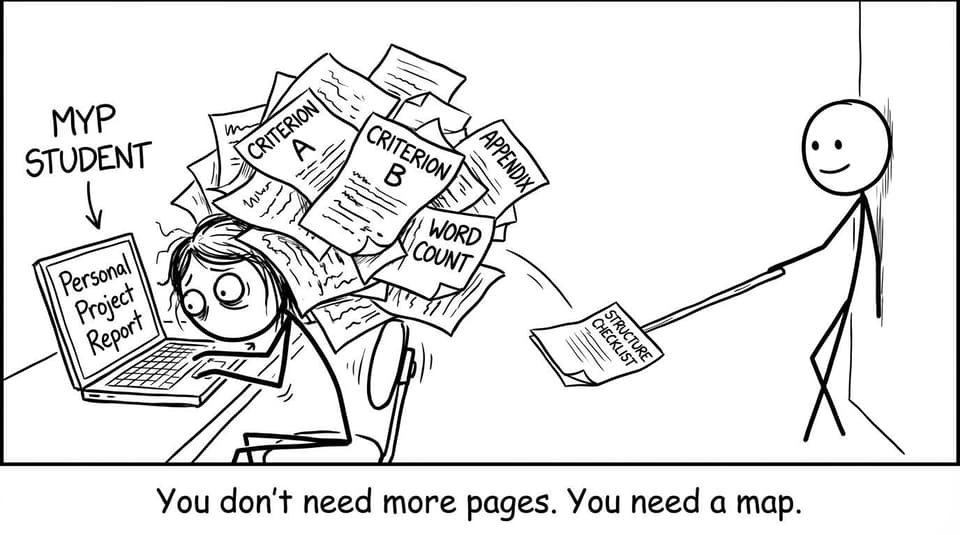
The night before an MYP deadline has a particular kind of silence. It isn't peaceful. It's the silence of a document that keeps growing while your confidence keeps shrinking. You scroll past screenshots, half-finished reflections, a bibliography you'll "fix later," and you realize the scary part: you did a lot of work, but the report doesn't show the learning.
That's what the MYP Personal Project report really is: not a scrapbook of effort, but a story you can prove. The structure is what turns messy evidence into marks. Once you understand that, writing stops feeling like guesswork and starts feeling like assembly.
To keep your structure rubric-aligned, it helps to think in two layers:
- the MYP project cycle (Investigate, Plan, Act, Reflect)
- the four criteria (A--D) that assess how well you communicate that cycle
If you want a full walkthrough of the Personal Project journey, keep this open in another tab: MYP Personal Project Ultimate Guide. This post focuses on the report structure specifically, and how to build it like a calm, predictable system.
The fast checklist (what your MYP report must include)
Before we go section-by-section, here's the simple checklist that keeps most MYP reports from falling apart:
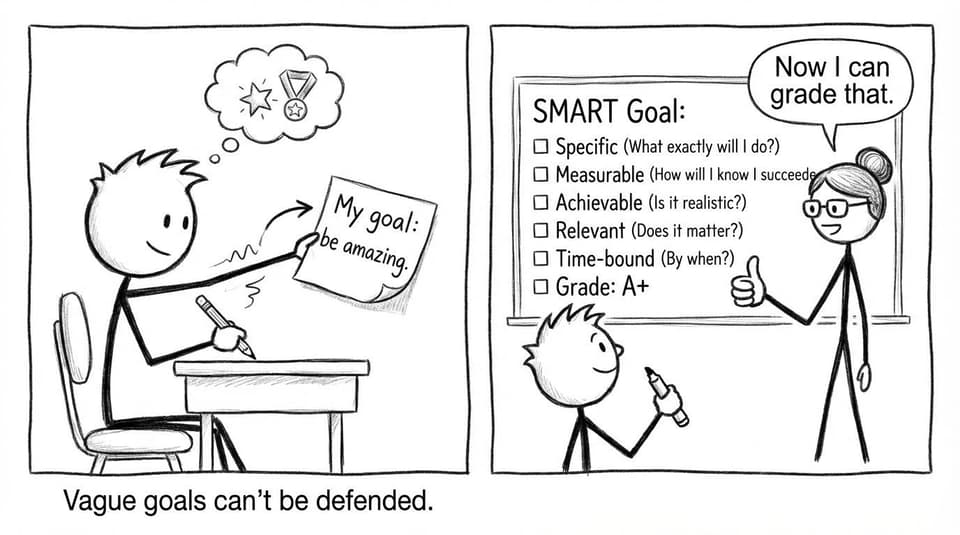
- A goal that is specific enough to evaluate later (Criterion A)
- One Global Context, explained and revisited (Criterion A)
- Research that clearly influences decisions (Criterion A)
- A timeline with milestones, resources, and changes (Criterion B)
- Evidence of action: drafts, prototypes, feedback, iterations (Criterion C)
- Evaluation against success criteria, with proof (Criterion D)
- Reflection on ATL skills with real examples (Criterion D)
- A bibliography and clean citations (academic honesty)
If any line above feels fuzzy, you don't need more writing time. You need clearer structure.
For exemplar-level models, browse a few high-quality samples and notice how they organize evidence: IB Personal Project (MYP) Exemplars.
The core MYP Personal Project report structure (clean and gradeable)
Most schools allow different formats (written report, digital portfolio, slides with commentary). But the MYP assessment logic stays the same: you're being marked on A--D. The best structure makes that obvious to the reader.
A reliable structure looks like this:
Title page + project snapshot (optional but powerful)
This is not where you earn most marks, but it reduces friction for the assessor.
Include:
- project title
- your goal (one sentence)
- chosen Global Context
- your product/outcome (one sentence)
- a short "what changed" sentence (signals reflection early)
Think of it like the abstract of a research paper: quick clarity.
Introduction (Criterion A: Investigating)
Your introduction should answer a simple question: what is this project, and why does it matter?
Strong MYP introductions usually include:
- personal motivation (but not a diary entry)
- a focused goal (not a theme)
- the Global Context and why it fits
- a preview of your research direction
A common mistake is treating the introduction like a dramatic backstory, then realizing later that Criterion A needed a clear, assessable goal. If you're still picking a goal, use this companion guide: MYP Personal Project: How to Choose a Strong Topic.
Research and investigation (still Criterion A)
This section is where many MYP reports become "Wikipedia summaries." Don't do that. Research is only valuable if it changes what you do.
A high-scoring structure:
- 2--4 key research questions
- a short summary of what you found (not everything you found)
- what you decided because of each finding
- citations embedded as you go
Instead of writing:
"I researched healthy eating and learned about macronutrients…"
Write:
"Because research showed teenage athletes need higher carbohydrate intake during training weeks, I adjusted my plan from 40% to 55% carbs and added a pre-training snack test."
That one sentence communicates inquiry, decision-making, and action alignment--which is exactly what the MYP wants.
Planning section (Criterion B: Planning)
Planning isn't a promise you kept. It's a system you managed.
Your MYP planning section should include:
- timeline (weekly milestones work well)
- resources (tools, materials, people, websites, books)
- success criteria (how you'll judge the final result)
- risks and adjustments (what went wrong, what you changed)
- ATL skills used (self-management, research, communication, etc.)
The hidden mark booster: document changes to your plan. The MYP rewards adaptation when it's justified and recorded.
If you're also preparing for MYP eAssessments, keep your study system steady while your project runs. RevisionDojo's Middle Years Program (MYP) hub keeps your subject revision organized in parallel.
Taking action section (Criterion C: Taking Action)
Criterion C is where students often say, "But I built the thing." And the assessor thinks, "Yes, but where's the evidence that shows how?"
Your MYP action section should be built like a highlight reel of iterations:
- version 1 (what you did, what happened)
- feedback or test data
- version 2 (what changed and why)
- repeat until the final product/outcome
Evidence ideas that grade well:
- prototype photos
- annotated screenshots
- draft excerpts with comments
- user surveys and short analysis
- tables of test results
- short reflections after each milestone
If your evidence is scattered, use a "process journal index" inside the report: a mini table that lists entries and what criterion they support. It makes the report feel intentional, which is exactly how top MYP work reads.
Reflecting and evaluating (Criterion D: Reflecting)
This is the section that turns the project into learning.
A strong MYP Criterion D structure:
- restate your goal and success criteria
- evaluate: what met the criteria, what didn't (with evidence)
- explain challenges and how you responded
- reflect on ATL skills with real examples
- explain how your understanding changed
- what you would do differently next time (specific actions)
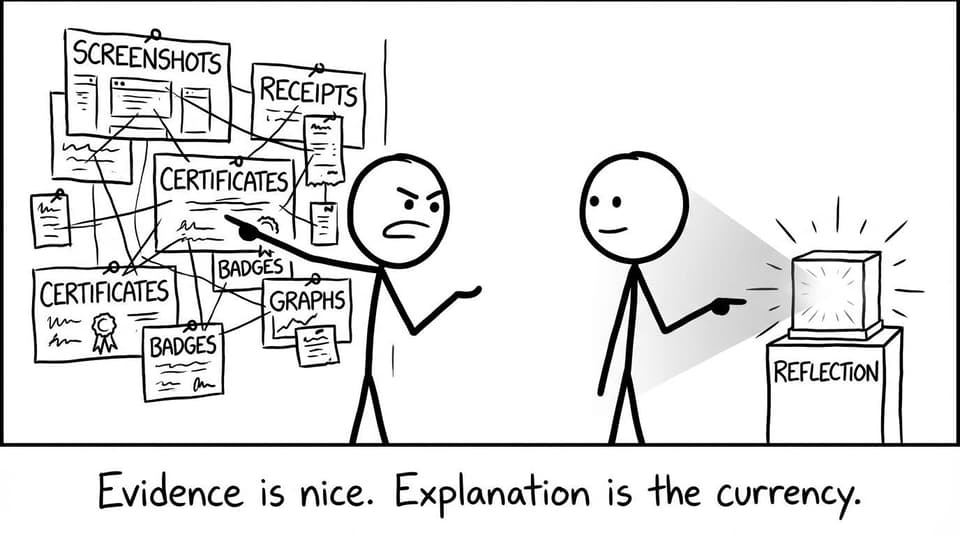
The key word is evidence. If you claim improvement in time management, show the before/after: screenshots of your timeline revisions, logs of missed deadlines early on, and the system you adopted later.
For a deeper rubric-aligned breakdown, see: MYP Personal Project: Report Writing Breakdown.
Bibliography + appendices (support, not stuffing)
Keep citations clean and consistent (MLA/APA depends on your school). Appendices should only include items you referenced in the report.
A simple rule: if an appendix item doesn't support a Criterion A--D claim, it probably doesn't need to be there.
How to map headings directly to MYP Criteria (a simple template)
If you want the safest structure, label your sections so the criteria are obvious:
Criterion A: Investigating
- Project goal and personal interest
- Global Context connection
- Research questions and findings
- How research influenced decisions
Criterion B: Planning
- Success criteria
- Timeline and process management
- Resources and tools
- ATL skills applied in planning
- Adjustments to plan
Criterion C: Taking Action
- Development process and iterations
- Evidence of product/outcome creation
- Feedback and refinements
- Challenges and solutions
Criterion D: Reflecting
- Evaluation against success criteria
- What you learned about the topic
- What you learned about yourself
- ATL skills growth with examples
- Next steps and improvements
This template feels almost too simple, which is the point. The MYP is not trying to trick you. It's trying to see if you can be clear.
The exam-season connection: why MYP structure helps your future DP self
If you're an IB student reading this while also thinking about exams, here's the quiet truth: the MYP Personal Project is training the same muscle that later helps with DP coursework and timed writing.
- Investigating teaches you to avoid shallow research.
- Planning teaches you to build timelines you can actually follow.
- Taking action teaches you to create evidence, not just outcomes.
- Reflecting teaches you to evaluate with criteria, not vibes.
That's why students who do the MYP report well often feel less lost later.
To keep your subject study strong while you write, RevisionDojo gives you a stable backbone: Study Notes for clean explanations, Flashcards for active recall, AI Chat for quick clarification, and the Questionbank for exam-style practice.
A good place to start if you want to systemize revision alongside your project: MYP Revision Guide: Study Tips for Success.
Using RevisionDojo to write a stronger MYP report (without writing more)
The easiest way to improve a MYP report is to reduce uncertainty. That's what good tools do: they make the next step obvious.
Here's a practical workflow many students use:
Use exemplars to calibrate your structure
Spend 15 minutes comparing your headings to a top sample. You'll spot gaps instantly.
Get rubric-aligned feedback before submission
If your school allows external support tools, use a rubric-aligned checker to find weak strands early:
Keep exam prep moving in parallel
When your project is intense, your other subjects can drift. Build a "minimum viable revision routine" using RevisionDojo Questionbank, Mock Exams, and Predicted Papers so you're not rebuilding confidence later.
For subject hubs (examples):
Closing: make the MYP report easy to grade
The best MYP Personal Project reports feel calm because they are built for the reader. Clear headings. Evidence that's chosen, not dumped. Reflections that evaluate against success criteria. A story you can prove.
If you want to make that process faster, use RevisionDojo as your structure partner: check samples in the Coursework Library, get rubric-aligned feedback with the MYP Personal Project Grader, and keep your wider revision consistent using Questionbank, Study Notes, Flashcards, AI Chat, Grading tools, Predicted Papers, Mock Exams, and Tutors. The goal is simple: let your MYP learning show up clearly on the page, so your marks match the work you actually did.
